

Complications after nose thread lifts
Remove the threads, preserve the nose
Threads with repeated inflammation or protrusionPreparing for rhinoplasty
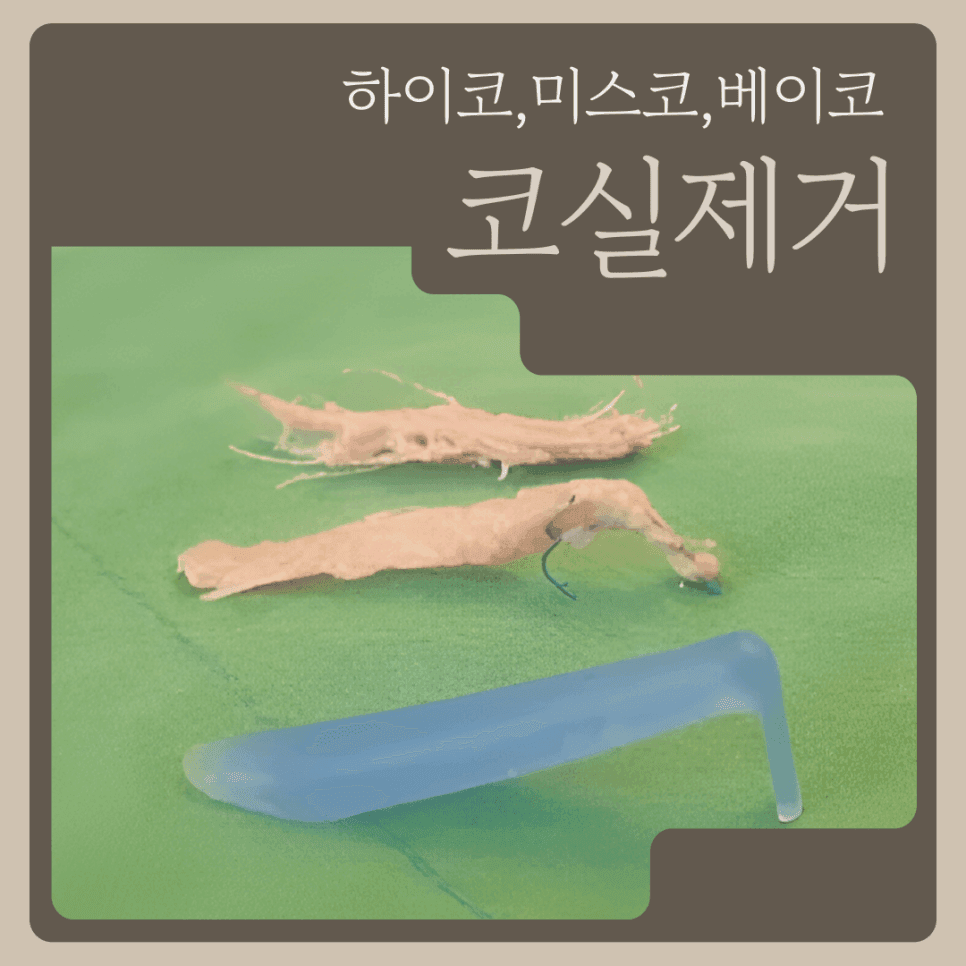
Removal of common thread-lift materials
Treatment of inflammation and extrusion
Removal and revision planned together
Minimal tissue damage
KOWON's thread removal principles
Where possible, threads, inflammatory capsules and foreign material are removed together to limit tissue damage.
kowon plastic surgery
What guides thread removal at KOWON?
How the surgery proceeds
STEP 01
Why threads have to come out
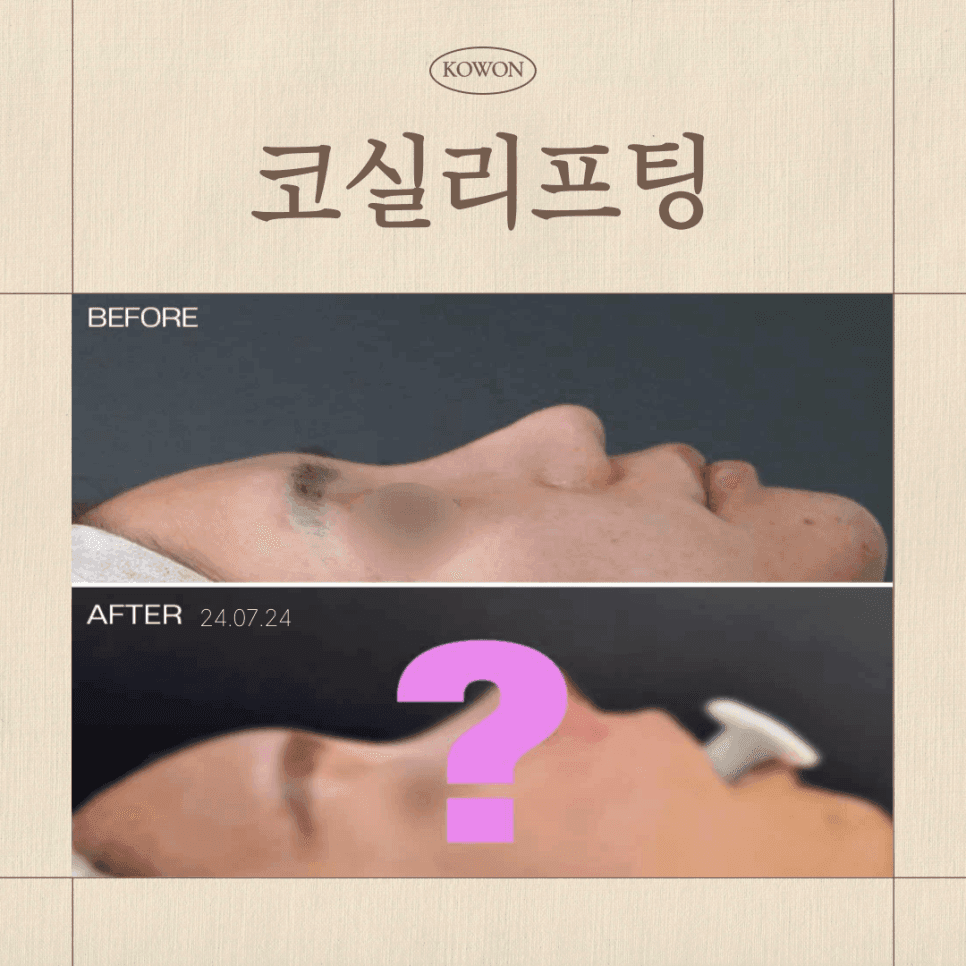
Threads used in nose lifts are described as dissolvable, but in practice they often remain for years or generate inflammatory tissue around them. Retained threads can cause inflammation and swelling, thinning of the skin at the tip, thread extrusion and deformity — and they interfere with accurate surgery later on.
STEP 02
Why they should come out in one go
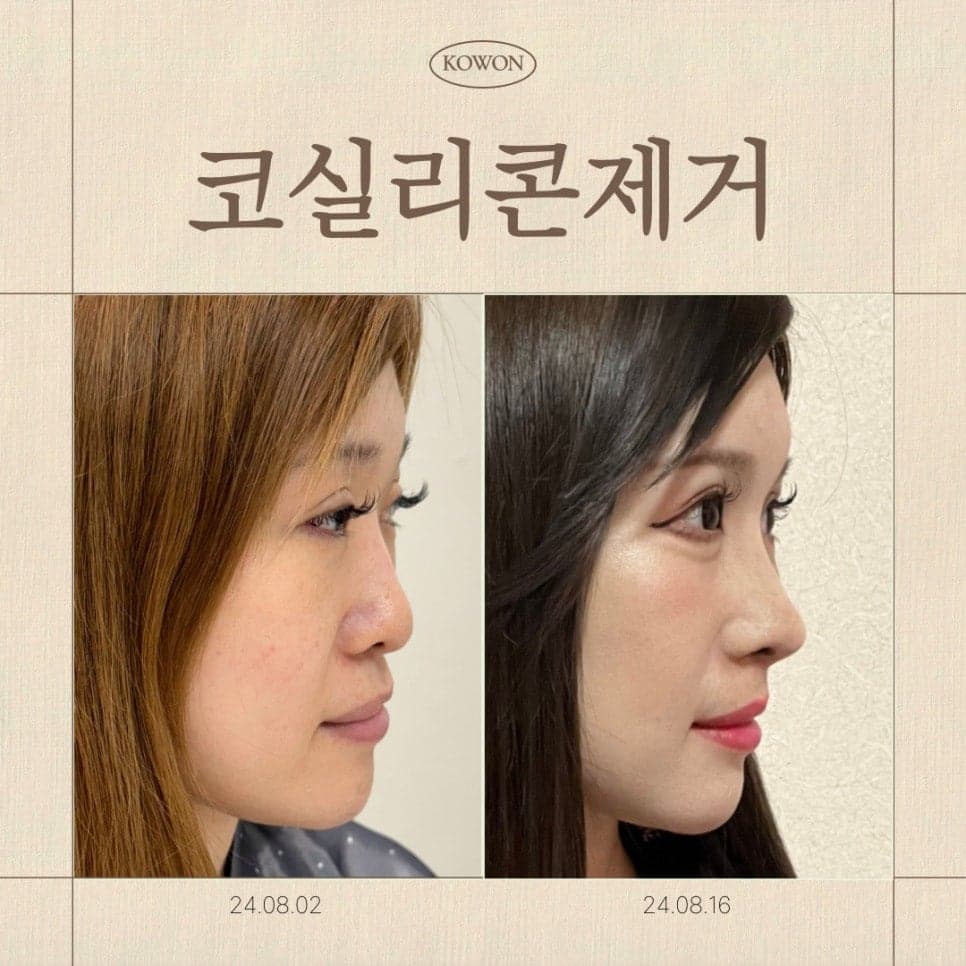
Removing threads piecemeal leaves inflammation and adhesion recurring around what remains, increasing tissue damage. We remove the threads, the inflammatory capsule and any foreign material in a single procedure wherever possible, keeping tissue damage to a minimum and leaving healthy tissue for rhinoplasty afterwards.
STEP 03
Rhinoplasty after thread removal
Where the tissue is in good condition, rhinoplasty can be carried out at the same time as removal. Where there is inflammation or significant tissue damage, we allow a recovery period and proceed in stages. Dr. Kim assesses the tissue himself and judges the timing and the method.
STEP 04
Signs you should come in for
If the tip is red or painful to press after a thread procedure, if you can feel or see threads under the skin, if the shape of your nose is gradually deviating or dropping, or if you are planning rhinoplasty after a thread procedure, we recommend an early assessment.
KOWON Youtube
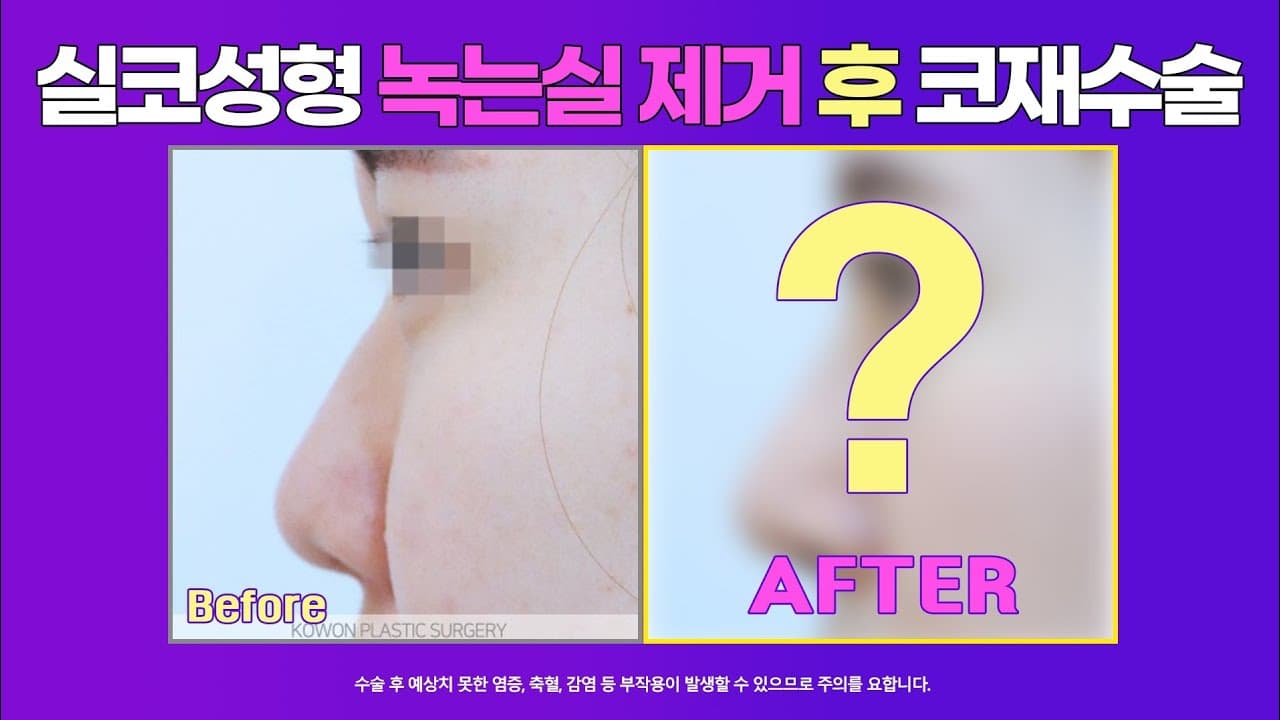
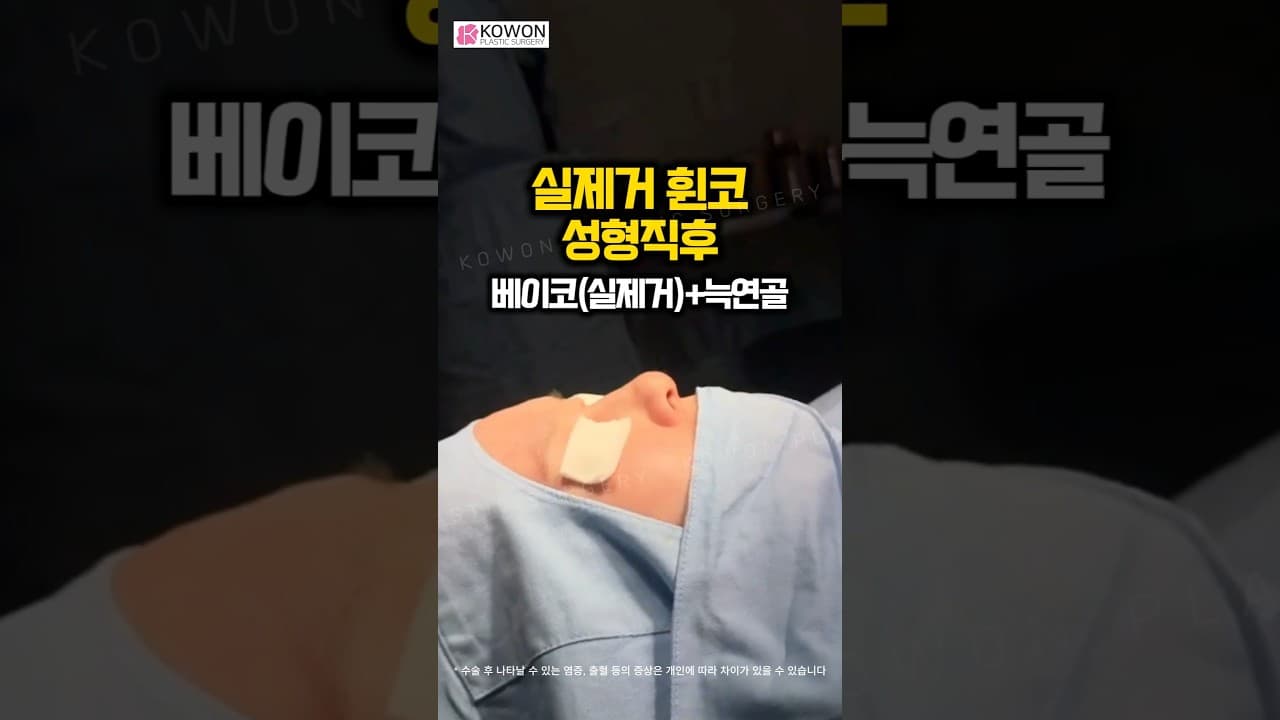
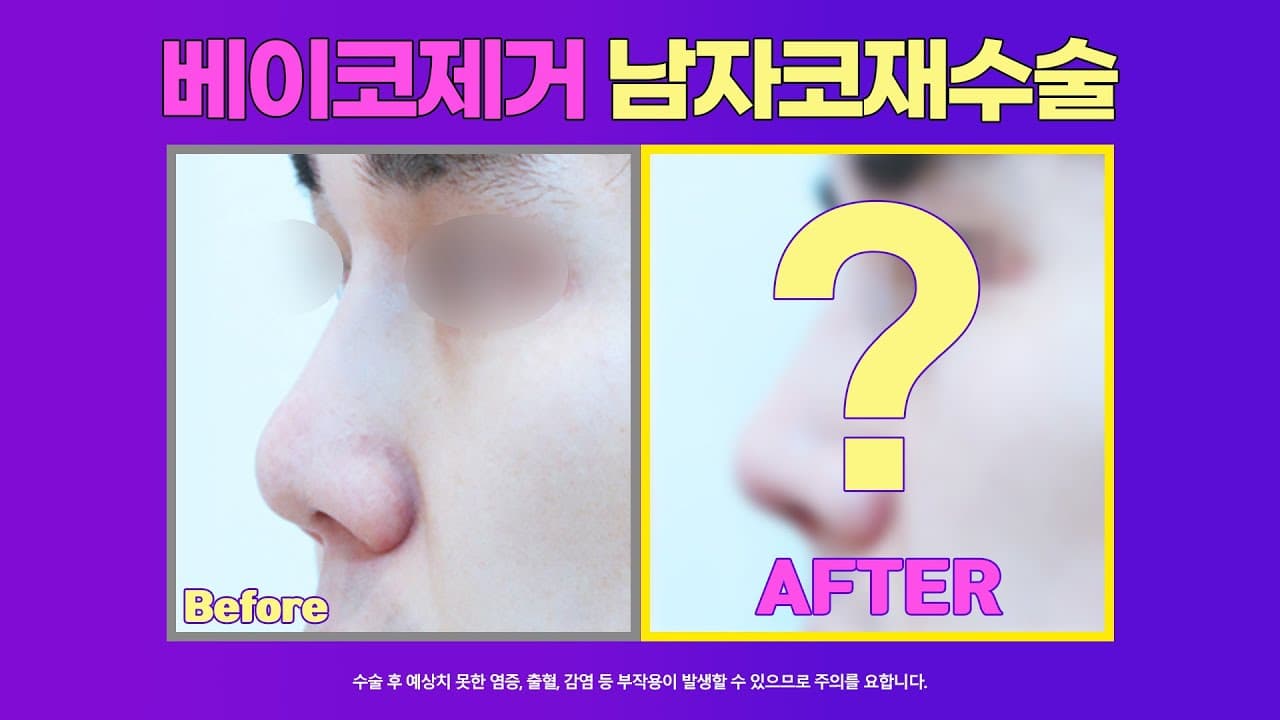
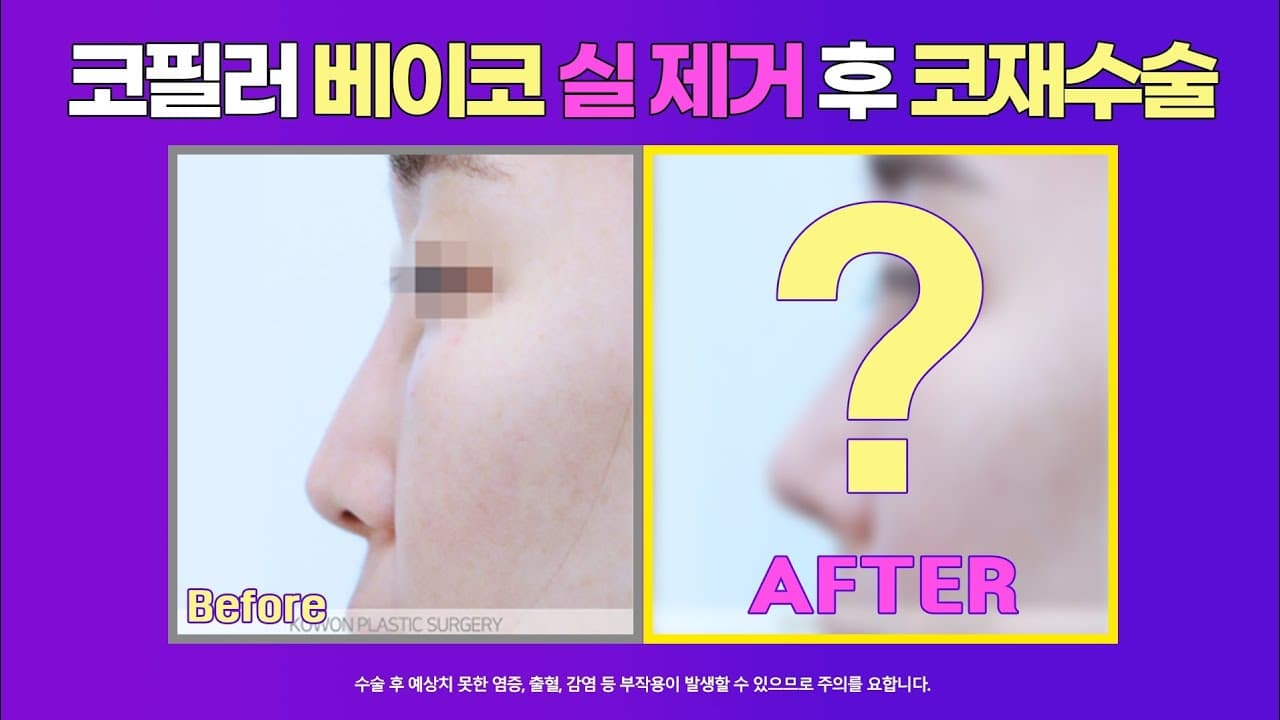
Thread removal — 78 videos in which Dr. Kim explains the technique and real cases
Video 1 · Thread removal · Revision rhinoplasty (Korean original)
Frequently asked questions
Where there are no symptoms, observation is sometimes possible. But if there is inflammation, extrusion or deformity, or if you are planning rhinoplasty, removal is necessary. Retained threads reduce surgical accuracy and raise the risk of complications.
If there is no inflammation and the tissue is in good condition, yes. Where inflammation is active, it is safer to remove the threads and inflamed tissue first and carry out rhinoplasty once the tissue has settled.
They are identified and removed under direct vision during surgery, with imaging where needed. Where a fragment has fully adhered to tissue, complete removal can be difficult; in that case we prioritise removing whatever is causing the inflammation.
Go deeper with columns by the doctor
115 columns on Thread removal — the questions that come up most in the consulting room, written up by the doctor himself.
01
Before a rhinoplasty consultation, should I mention previous nasal filler or thread lifting?
#Threadremoval
2026. 10. 16.
 02
02Nose thread lifting — why removal is harder than insertion: side effects and what to check before deciding
#Threadremoval#Revision
2026. 6. 23.
 03
03Revision after nasal silicone removal — how autologous tissue types differ: roles by material
#Threadremoval#RIBFIT™ribcartilage
2026. 2. 19.
 04
04Nasal thread removal — why you can't just pull them: lingering scar tissue and judging post-removal reconstruction
#Threadremoval
2025. 12. 14.
 05
05One week after nose surgery, when the result feels strange and disappointing — what to check before deciding on silicone removal·revision
#Threadremoval#Revision
2025. 8. 12.
 06
06Making a straight nose with revision rhinoplasty — can filler be combined too? Answering 5 Naver Knowledge iN questions
#Threadremoval#Revision
2025. 8. 7.
 07
07Revision after removing nose filler·threads — why must petit-procedure traces be removed first?
#Threadremoval#Revision
2025. 6. 12.
 08
08A foreign object came out when blowing the nose for congestion after nose surgery — the check order
#Threadremoval#Revision
2025. 5. 15.
 09
09HiKo thread-lift removal — three reasons removing threads all at once is better
#Threadremoval
2025. 4. 4.
 10
10Foreign body removal after Veko nose thread lifting — why does it happen: when the threads become a problem
#Threadremoval#Revision
2025. 3. 18.
Related procedures
Consultation
The threads out, the nose intact
Dr. Kim Hyung-taek takes personal responsibility from diagnosis through surgery and aftercare.
Book a 1:1 consultationOutcomes and side effects vary from person to person. Bleeding, infection, swelling and asymmetry may occur. Please consult our medical team before making a decision.