
KOWON Blog
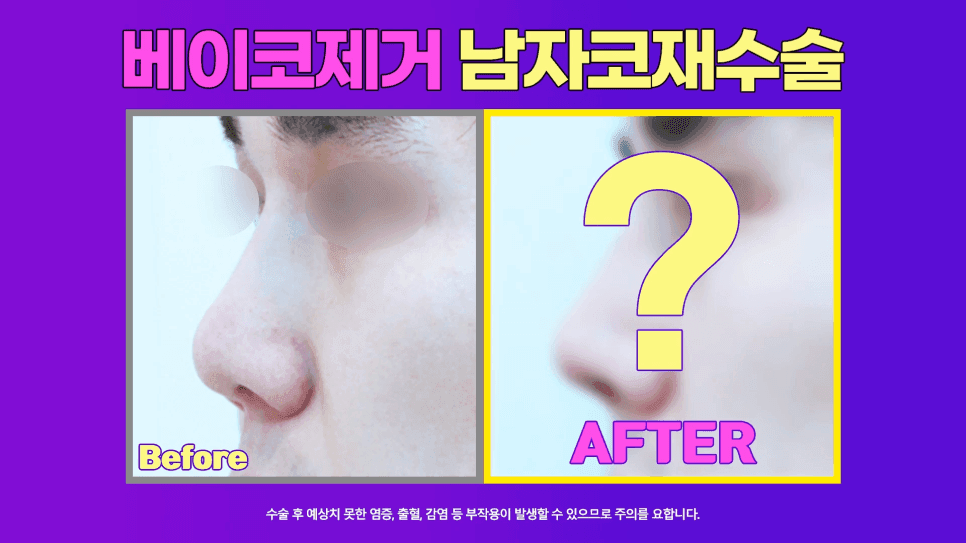
Revision after removing nose filler·threads — why must petit-procedure traces be removed first?
Deliberating revision after nose thread lifting (Voco threads)·semi-permanent filler — why foreign material must be removed first (tissue adhesion·inflammation), why septal extension gets used for a short nose, and criteria deciding bridge·tip materials (custom silicone·ear cartilage) — organized.
Key points
- Threads remaining in the nose (Voco threads etc.) and semi-permanent filler can be tangled with tissue or trigger inflammation — removal before revision is mandatory.
- When removing, foreign material gets cleared while preserving inner nasal tissue as much as possible — then restoring to a state where nose surgery is possible comes first.
- Reinforcing a short nose by implant alone can droop over time — so the plan centers on septal extension firmly supporting the tip.
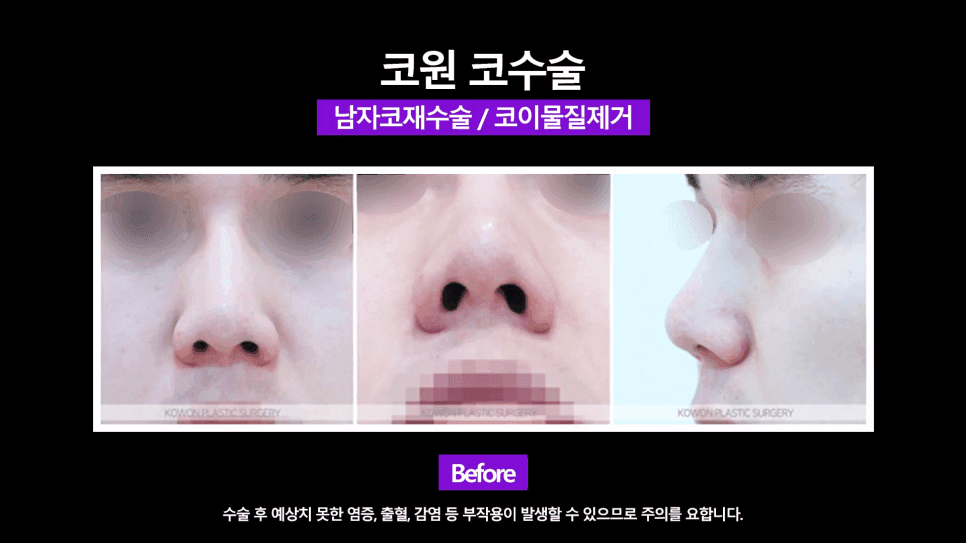
Some got petit procedures like nose thread lifting and semi-permanent filler, then look into revision unsatisfied with the result. Many decide because discomfort keeps going — foreign-body sensation or shape change appearing over time.
This article organizes in what order revision proceeds on a nose with Voco threads and semi-permanent filler remaining, and why removal comes first.
01
Why must threads and filler be removed first?
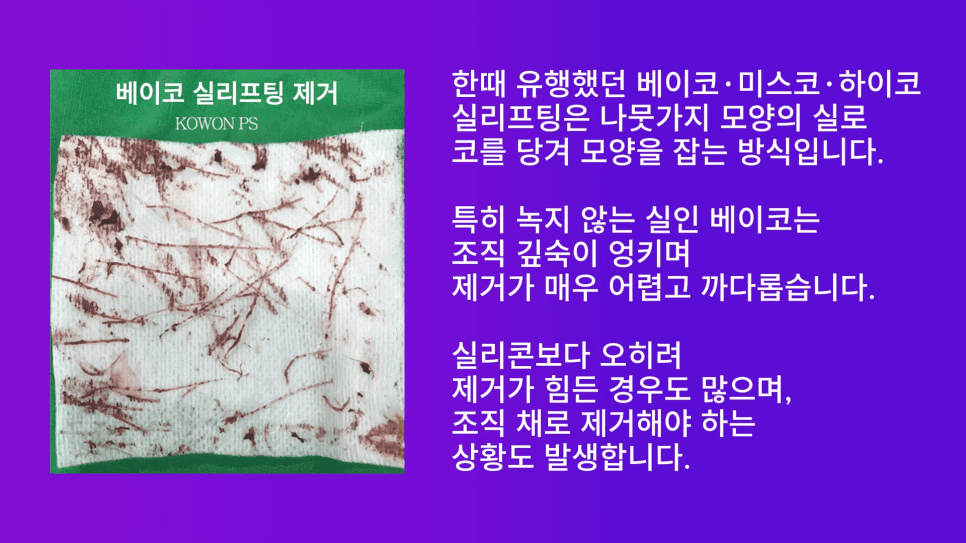
Previously placed Voco threads and semi-permanent filler can be tangled with tissue or trigger inflammation — removal before revision is mandatory. Because building a new structure with foreign material remaining carries that risk along.
In the removal process, foreign material gets safely cleared while preserving inner nasal tissue as much as possible — then comes restoring to a state where nose surgery is possible. If curious about thread removal itself, more detail is in the thread-removal procedure guide.
02
How does revision proceed after removal?
Once removal·restoration finishes, the main surgery gets planned. If the nose is short and blunt, it proceeds centering on septal extension.
Reinforcing a short nose by implant alone sets the shape — but it can droop over time. Septal extension is a surgery firmly supporting the tip and making the overall line stable — becoming the core in revisions needing support.
03
How do bridge and tip materials get decided?
Each area needs different traits — materials get judged separately too.
| Area | Material used | Reason |
|---|---|---|
| Tip support | Septal extension | Supports the tip and keeps the line stable |
| Bridge | Custom silicone | Role of setting the bridge shape |
| Tip reinforcement | Ear cartilage | Autologous tissue — almost no foreign-body reaction; suits a soft, natural tip |
Ear cartilage is autologous tissue — almost no foreign-body reaction — and can be used for the tip's delicate shape control. During surgery, design gets checked at each step and the nose's height and angle get adjusted — proceeding meticulously to approach the wanted line organized in consultation.
Still, rather than simply raising height, a plan considering whole-face balance is needed. So in revision, accurate diagnosis, a meticulous surgery plan, and experience matter. Overall revision judgment criteria can be seen in the revision guide.
04
Summary — removal and restoration are half of revision
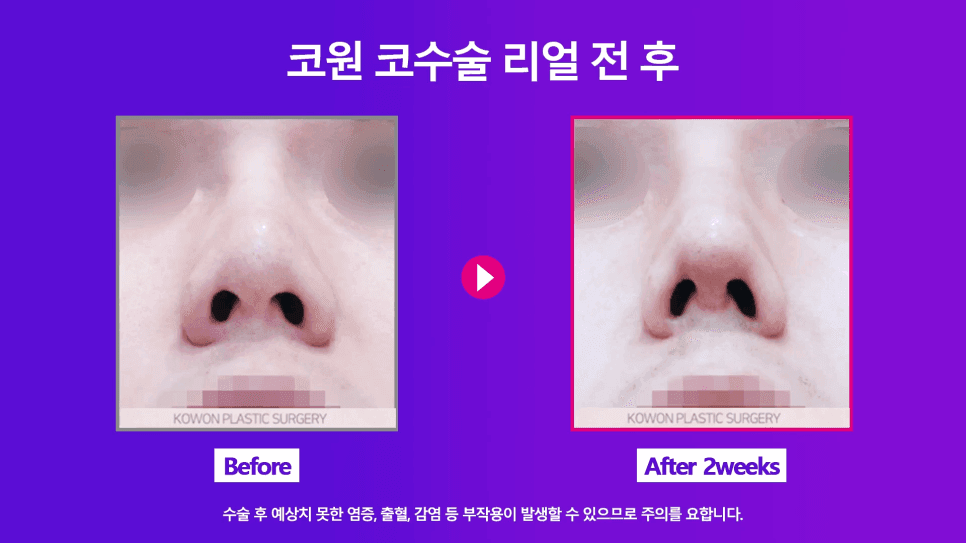
Revision on a nose with petit-procedure history has a long prior stage before creating a new shape. Clearing threads and filler without tissue damage, restoring to a surgery-possible state — only then can septal extension and per-area materials be planned. Keeping the order relates to both revision safety and result stability.
If curious what order your nose's state needs, it can be checked in a 1:1 video consultation.





Frequently asked questions
Answers to common questions patients ask before a consultation.
Not recommended. Threads and semi-permanent filler can be tangled with tissue or trigger inflammation — planning revision after removing first and restoring to a surgery-possible state is safe.
Reinforcing a short nose by implant alone sets the shape but can droop over time. So the plan centers on septal extension supporting the tip, and bridge·tip materials get decided separately by each area's need.
Because ear cartilage is autologous tissue — almost no foreign-body reaction — and suits making a soft, natural tip. It gets used for the tip's delicate shape control.
Responses to treatment and recovery progress vary by individual. Outcomes and side effects vary from person to person. Bleeding, infection, swelling and asymmetry may occur. Please consult our medical team before making a decision.
Consultation