
KOWON Blog
Hump rhinoplasty — certain types can go implant-free. Type classification and surgical methods
Depending on type, hump noses can be planned with implant-free correction. Three type classifications, the pseudo-hump nose, cases needing osteotomy, and autologous cartilage selection criteria — the decision order for hump rhinoplasty organized.
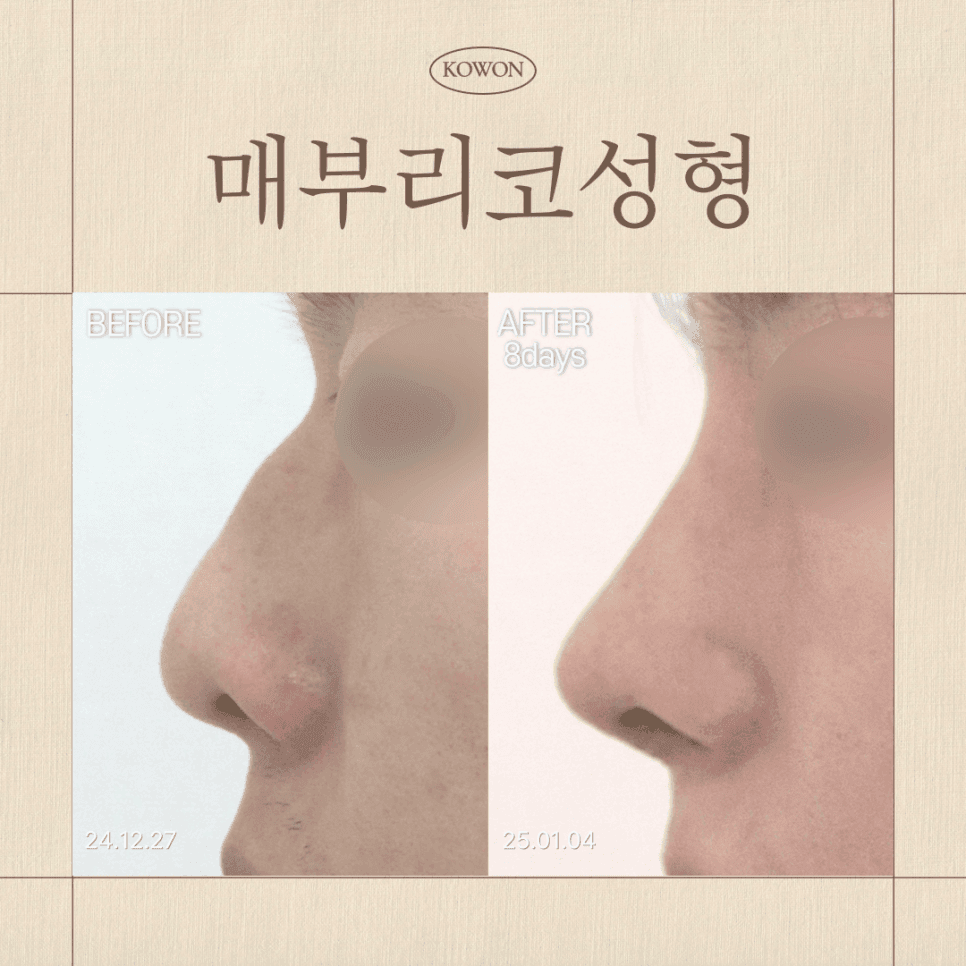
Key points
- Not every hump nose means shaving bone and inserting an implant. Depending on type, there are noses where correction can be planned implant-free alone.
- If it's a pseudo-hump nose — where the dorsum isn't protruding but the drooping tip makes it look high — tip correction gets checked before hump shaving.
- Osteotomy and implant use aren't the same meaning — whether implant-free is possible and whether osteotomy is needed are both decided by diagnosing the current nasal structure.
"Doesn't a hump nose always mean shaving bone and inserting an implant?"
Among people researching hump rhinoplasty, more come in knowing this than you'd think. In reality, depending on the type, correction can be planned sufficiently with implant-free alone. Still, the same method doesn't fit every hump nose — so accurately identifying which type your nose is becomes the starting point.
This article organizes hump nose type classification and how the surgical method differs by type.
01
How does the surgical method differ by hump type?
Hump noses can be broadly divided into three types.
| Type | Feature | Correction direction |
|---|---|---|
| Type 1 | High bridge with only the hump protruding | Consider implant-free correction |
| Type 2 | Low glabella with protruding hump | Consider autologous cartilage together |
| Type 3 | Low glabella and tip with protruding hump | Consider implant use together |
Type 1 is sometimes planned by trimming the protruding part without an implant. Type 2 is a structure where the glabella is low with a protruding hump — since trimming the hump alone won't organize the bridge flow, a direction using autologous cartilage together gets reviewed. Conversely, Type 3 requires seeing overall height and tip balance together, so autologous tissue or an implant gets reviewed together.
On top of that, there are cases that are actually pseudo-hump noses — a structure where the dorsum isn't protruding but the drooping tip makes the dorsum look relatively high. In such cases, whether the line organizes through tip correction gets confirmed before shaving the hump.
02
How does hump removal actually proceed?
Hump correction isn't a surgery that just shaves the convex part. It generally proceeds in this order:
- 01Confirm the protrusion degree of bone and cartilage
- 02Remove the hump within the needed range
- 03Refine the dorsum line
- 04Check for open roof
- 05Combine osteotomy and tip correction if needed
Open roof is a phenomenon where the nose's roof structure opens after bone and cartilage are removed. Left as-is, the bridge can look wide from the front — so whether osteotomy is needed gets judged together.
Also, hump noses often come with tip drooping. This is why hump removal and tip correction get planned together.
03
Why is autologous cartilage used in implant-free correction?
Implant-free hump rhinoplasty plans surgery using one's own autologous cartilage. Since no artificial implant is used, autologous tissue reinforces the nose's support structure — and which cartilage is used gets decided by the current nasal structure and the amount of cartilage needed.
| Category | Septal cartilage | Ear cartilage | Rib cartilage |
|---|---|---|---|
| Harvest site | Inside the nose | Behind the ear | Chest |
| Strength | Medium | Soft and elastic | Strong with high support |
| Selection criteria | Tip support, line design | Reinforcement when septum is insufficient | Cartilage shortage, revision |
Practicing centered on nose surgery for over 20 years, I've often felt that what matters more than which cartilage is used is how accurately the current nasal structure is grasped and planned. Which noses the implant-free approach applies to can be seen in more detail in the implant-free rhinoplasty guide.
04
When is osteotomy needed?
Many people worry as soon as they hear the word osteotomy. But osteotomy isn't a needed step in every hump nose.
- Cases where osteotomy is considered — structures where the hump is large and the nasal bones spread apart on both sides after removal, or where the nasal bone width is wide or asymmetric
- Cases planned without osteotomy — structures where the hump isn't large and post-removal width change is small
Osteotomy isn't simply cutting bone — it's a process of organizing the nose's axis and width to set the line. Whether osteotomy is needed gets confirmed while analyzing the pre-surgery structure, and it's fully explained through consultation.
05
If osteotomy is done, must an implant be used too?
The point to note is that whether osteotomy is done and whether an implant is used aren't the same meaning. There are cases planned implant-free while doing osteotomy, and cases using autologous cartilage together by the nasal structure even when osteotomy isn't needed.
06
Summary — identifying the type comes before the method
In hump rhinoplasty, choosing a method fitting the current nasal structure matters more than whether it's implant-free. Before choosing a surgical method, it's also good to see how closely the current nasal structure gets analyzed and how clearly the results are explained. Setting a plan that fits your nose can be the first step leading to a natural result.
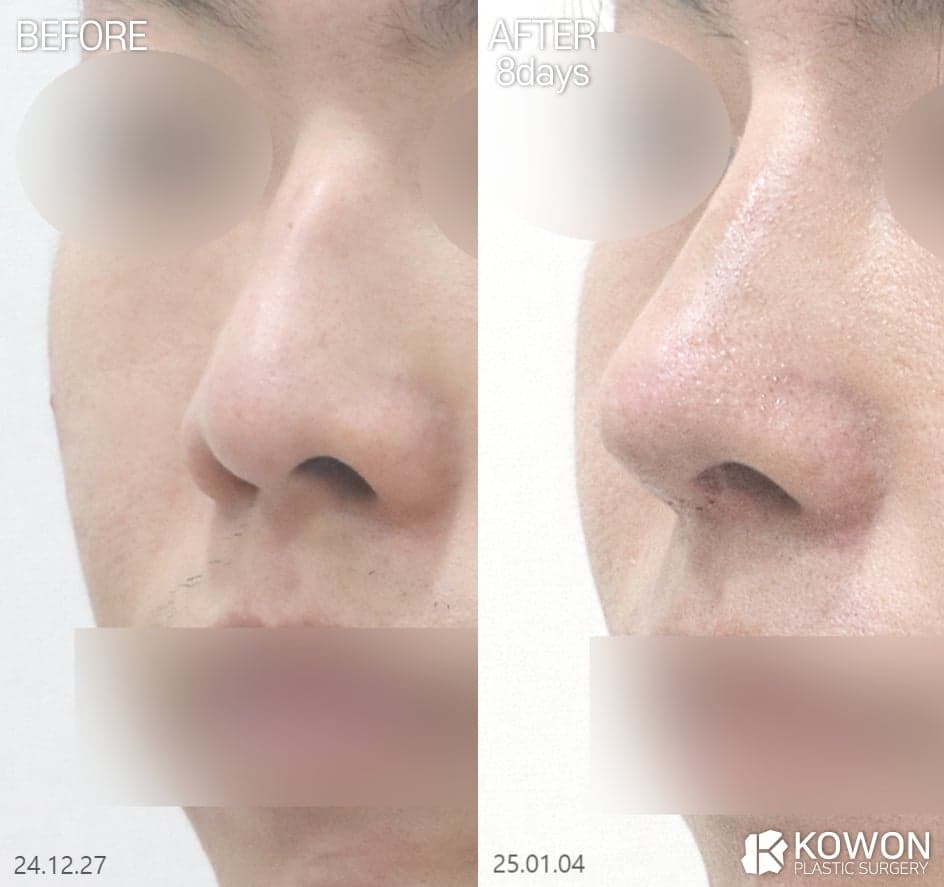
If you're curious which type your nose is, it can be checked in a 1:1 video consultation. Actual correction cases can be seen in the before & after photos.
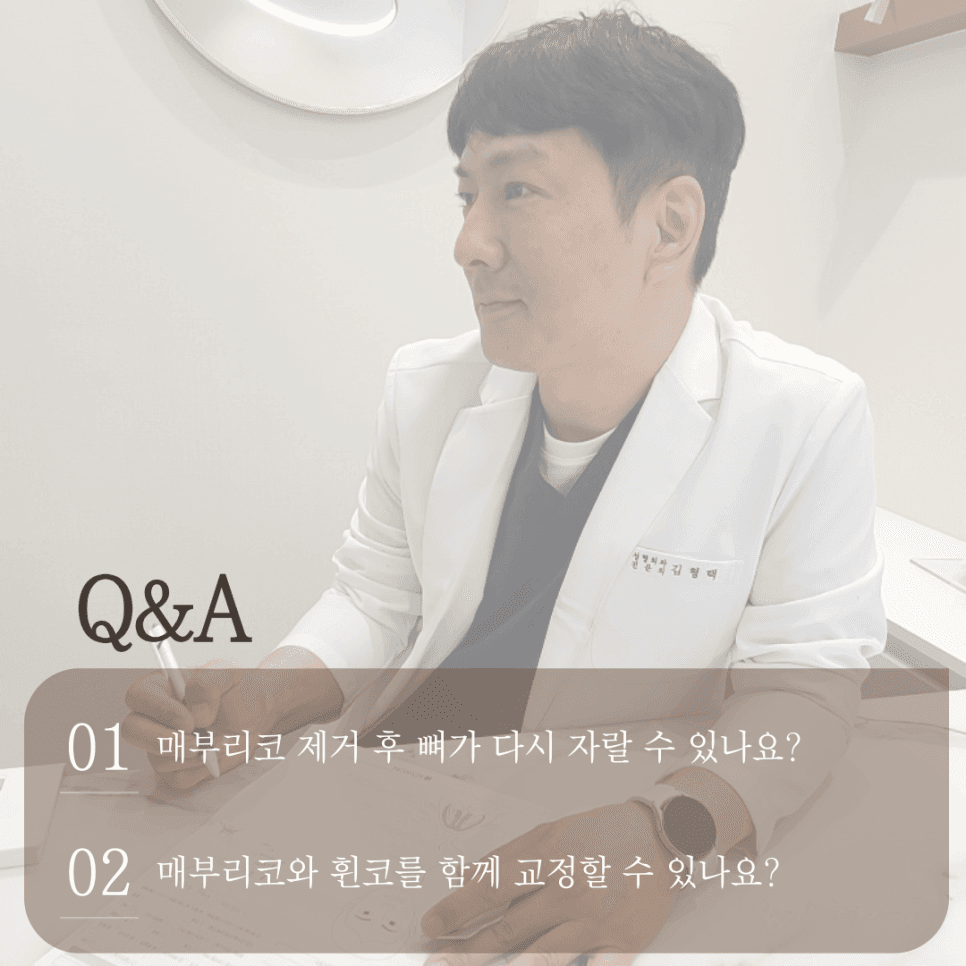
Frequently asked questions
Answers to common questions patients ask before a consultation.
The bone itself doesn't grow back. Still, depending on surgical scope and cartilage state, it can come to look like the original form over time — so the initial surgical plan matters.
Most can be corrected at once. Surgery straightening the bent nasal bone and cartilage proceeds simultaneously with hump removal, and the surgical scope is decided by the nose's central axis and asymmetry degree.
Even if they look similar outside, the hump's cause, tip height, and nasal bone form all differ. If it's a type with a high bridge and only a protruding hump, implant-free correction can be considered — but whether implant-free is possible and whether osteotomy is needed gets decided through sufficient diagnosis.
Responses to treatment and recovery progress vary by individual. Outcomes and side effects vary from person to person. Bleeding, infection, swelling and asymmetry may occur. Please consult our medical team before making a decision.
Consultation