
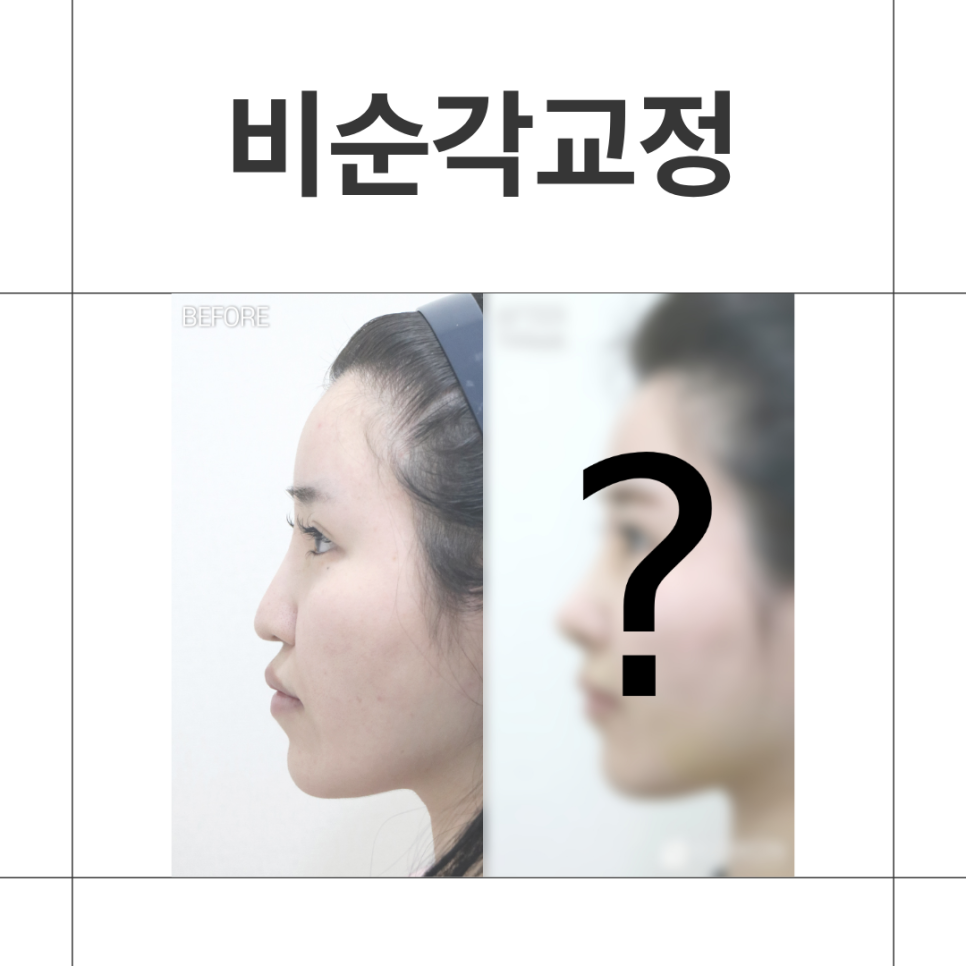
Gangnam Nasolabial Angle Correction: The Effect of Nose Surgery on Protruding Mouth Correction
When viewed from the side, the mouth appears to protrude—will this change if this surgical method is applied?
There are people who ask such questions.
It is difficult to say that a prominent mouth always has the same cause.
First, it is necessary to distinguish whether the actual position of the mouth is the cause, or if the nasal tip or columella is positioned inward, making the mouth appear more prominent by comparison.
For nasolabial angle correction, it is important to first examine the relationship between the current nose and upper lip, rather than simply thinking of it as a surgery to increase the angle.
Today, I will explain what the nasolabial angle is, how it relates to the appearance of a protruding mouth, and why the columella and nostril wing should be considered together, and discuss these points.
Table of Contents
1. Where exactly is the nasolabial angle?
2. If the nasolabial angle is narrow, does that mean it is a protruding mouth?
3. For nasolabial angle correction, is it enough to just widen the angle?
4. Why do we look at the columella and nostril wing together?
5. What criteria should be checked when considering nasolabial angle correction?
Where exactly is the nasolabial angle?
The nasolabial angle refers to the angle at the area where the columella (the nasal pillar) and the upper lip meet when viewed from the side,.
Generally, an ideal nasolabial angle is considered to be about 90–95 degrees for men and 95–105 degrees for women,.
However, judgment is not made based solely on the angle's numerical value.
Depending on the position of the nasal tip and columella and how they connect with the upper lip, even the same nasolabial angle can give a different impression from the side, so in nasolabial angle correction, the positional relationships of the surrounding areas must be examined together.
If the nasolabial angle is narrow,
does that mean it is a protruding mouth?
A narrow nasolabial angle does not immediately mean a protruding mouth.
There are cases where the teeth or lips are actually protruding,
but if the nasal tip or columella is positioned further back, the mouth may appear more prominent by comparison.
Therefore, when considering nasolabial angle correction, it is important to first distinguish whether the protrusion is due to the mouth itself or is caused by the nose.
Nasolabial angle correction is not the same as correcting the protruding mouth itself.
The causes of a mouth that appears protruded can be considered as follows.
• The protrusion is centered on the mouth itself
→ The cause is not determined by the nasolabial angle alone.
• The nasal tip or columella is positioned backward, making the mouth appear more prominent → The positions of the nasal tip and columella are examined together.
• The connection between the nasal tip and upper lip appears awkward
→ The nasolabial angle and the position of the columella are checked together.
Rather than deciding on nasolabial angle correction based only on the impression that the mouth appears protruded, it is necessary to distinguish which area's position is affecting the side profile.
For nasolabial angle correction,
is it enough to just widen the angle?
Nasolabial angle correction is not determined by simply making the angle larger just because it is small.
If the columella is rolled inward, it is necessary to examine the cause of the inward appearance and the position of the nasal tip,
while if the columella has descended significantly downward, further lowering the columella in the same direction may not be appropriate.
It is more important to distinguish whether the columella is retracted or descended than to focus on the size of the nasolabial angle when determining the direction of correction.
Observed condition
Area to be examined together
Assessment
Columella appears retracted inward
Nasal tip, columella
Check the cause of the retracted appearance
Columella has descended significantly downward
Columella, nostril wing
Check the distance and position of both areas
Mouth appears relatively protruded
Nasal tip, upper lip
Distinguish from actual mouth protrusion
Nostril exposure is prominent
Columella, nostril wing
Check the positional relationship of both areas
At our clinic, we perform nasolabial angle correction without using implants, by making incisions inside the nose, and nasolabial angle correction is performed.
We examine the positional relationships of the nasolabial angle, ACR, and nasal tip, and adjust the necessary areas accordingly,.
Especially if the skeletal protrusion of the gums and teeth is not severe and the mouth appears relatively protruded due to the shape of the nose—so-called 'perceived protruding mouth', nasolabial angle and ACR correction may be considered.
On the other hand, if there is significant skeletal protrusion, simply adjusting the nasolabial angle is a different treatment target, so the cause of the protrusion must be distinguished first.
Why do we look at the columella and nostril wing
together?
In nasolabial angle correction, the positional relationship between the columella and nostril wing must also be considered.
This is called ACR It is called the (Alar-Columellar Relationship).
Simply put, it is the standard for observing the relative positions of the nostril wing and columella when viewed from the side. This is the criterion used to assess their positions.
The columella is positioned about 1–2 mm below the nostril wing and the standard is that these two areas should connect naturally.
If the columella descends excessively or is retracted inward, it can change the degree to which the nostril is exposed or make the nose appear longer, so rather than looking only at the nasolabial angle value, you should also check the ACR together.
It is also necessary to look at the appearance from the front.
If the columella is curled inward and appears almost in a straight line with the nostril wing, it can make the nose look wider or the philtrum appear relatively longer, which may give such an impression.
On the other hand, if the columella is significantly descended, a different correction approach is needed than simply bringing out the columella.
Even if a retracted columella and a significantly descended columella create similar concerns on the surface, the positions that need adjustment are different.
When considering nasolabial angle correction,
what standards should be checked?
If you are looking for a place in Gangnam that is good at nasolabial angle correction, rather than just checking if only specific numbers are presented, it is important to see whether they explain why your current side profile appears that way and whether they distinguish and explain the causes.
Since it is not just a matter of looking at the nasal tip alone, it is important to determine whether the current shape of the nose, columella, nostril wing, and upper lip are assessed together. This is important.
With over 20 years of clinical experience focusing on the nose, this is why it is difficult to explain the nasolabial angle by isolating a single angle.
Because the positions of the nasal tip, columella, and nostril wing differ for each person, it is necessary to first distinguish which area affects the side profile.
Only then can the necessary correction range be determined according to the current condition.
Some people may have even considered orthodontics or double jaw surgery because their mouth appears to protrude.
However, considering major treatments can be burdensome, and it is not easy to simply ignore the side profile that keeps bothering you.
In reality, for some people, it is not that the mouth itself protrudes significantly, but rather the position of the nasal tip or columella makes the mouth appear more prominent.
Rather than deciding from the beginning which surgery to undergo,
it is better to first distinguish whether the appearance you are concerned about is due to the mouth itself or the way the nose and mouth connect. This would be a good starting point.

Hyung-taek Kim, Chief Director of KOWON Plastic Surgery
I always provide consultations with this mindset.
We will help you find a nose that suits your face.
Preview virtual surgery results with a 1:1 video consultation

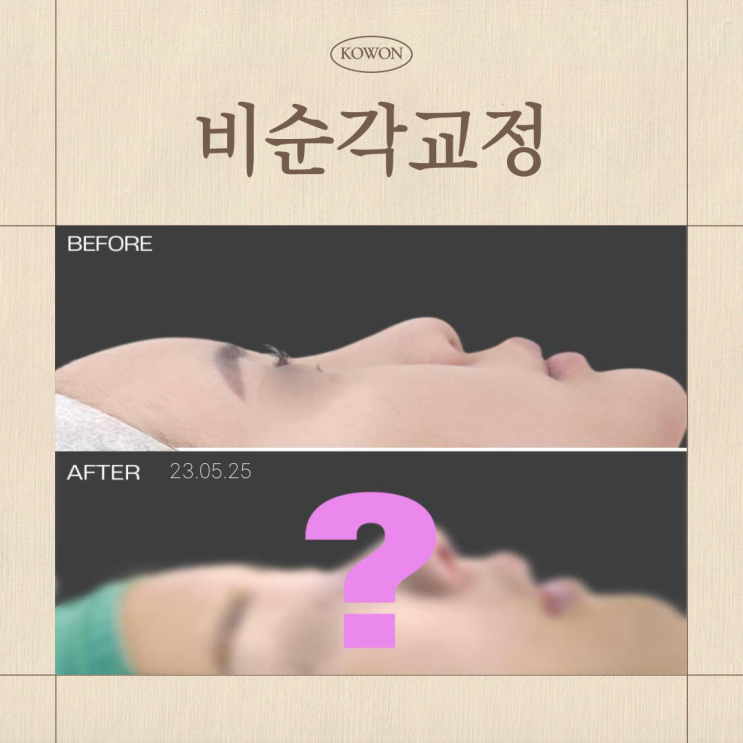
Nasolabial angle correction, differences from cat surgery and criteria for when it is needed
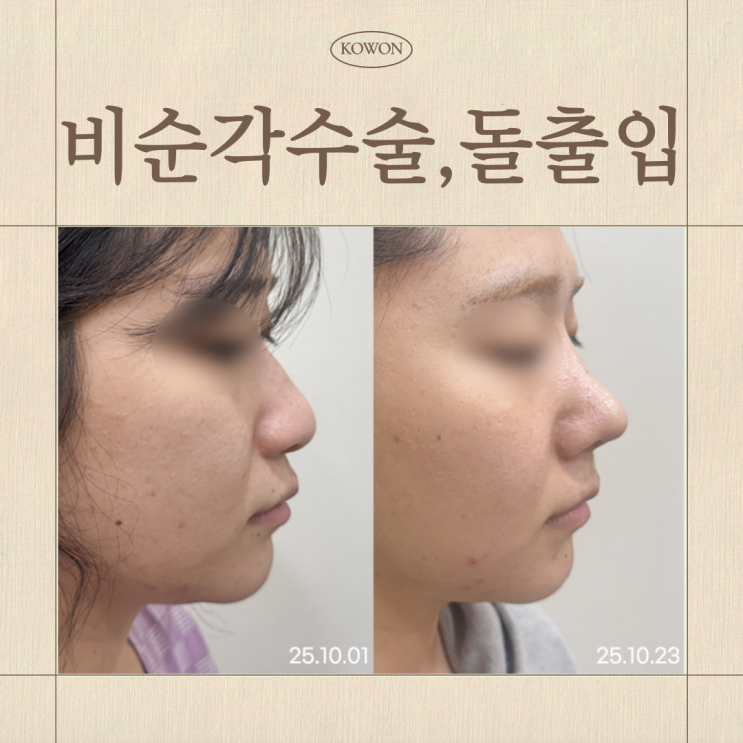
Nasolabial angle surgery: Why does the mouth look protruded even if it is not?
KOWON Plastic Surgery
2nd Floor, KBL Center, 110 Dosan-daero, Gangnam-gu, Seoul

View the original Naver blog post
This procedure/surgery may cause side effects such as bleeding, infection, swelling, or asymmetry depending on the individual. Please consult with medical staff for accurate information before making a decision.
— Dr. Hyung-taek Kim, KOWON Plastic Surgery