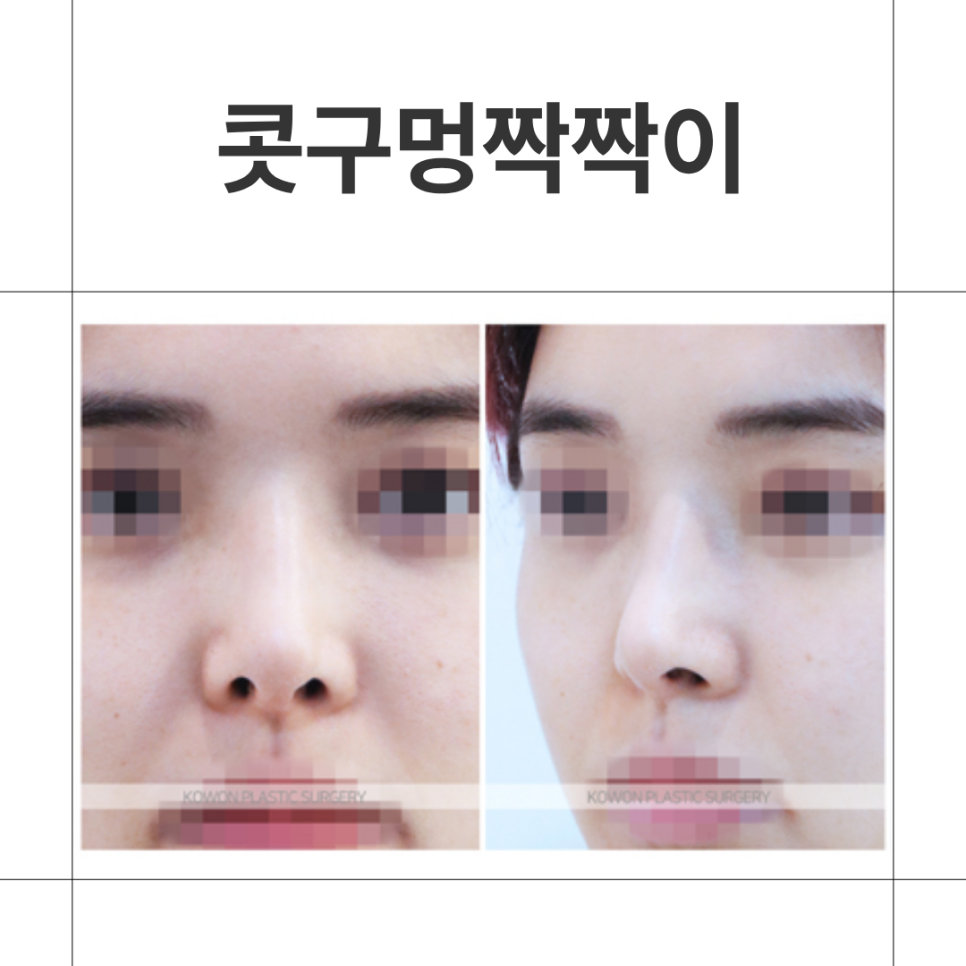
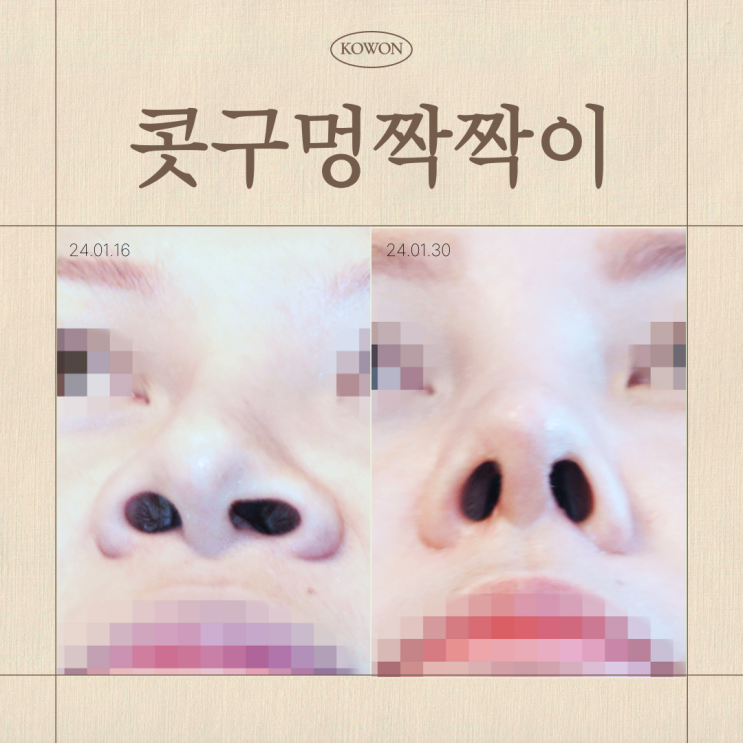
After nose surgery, how long should you monitor asymmetrical nostrils?
Was the surgery done incorrectly?
My nose seems to be bent to one side. Do I need another surgery?
After nose surgery, seeing different shapes on both sides in the mirror can be more surprising than expected.
Before surgery, it wasn't a big concern, but after surgery, when the difference becomes noticeable, the worry grows.
At this time, what you should check first is not just the appearance you see now, but how much time has passed since the surgery.
This is because the time for visible swelling and the time for internal tissue stabilization in the nose are different.
Not all differences seen after surgery occur for the same reason.
Especially, the appearance in the early recovery period and the appearance after the tissue has fully stabilized should be considered separately.
Let's examine step by step which stage you are currently in.
Table of Contents
1. Why do both sides look different in the early stage after surgery
2. Why you should wait to judge during 1–4 months
3. What to check if differences remain over time
4. When to start considering another surgery
Asymmetrical nostrils after nose surgery,
You should check the swelling first
If asymmetrical nostrils become noticeable soon after surgery, check the swelling first.
The swelling in the nose does not always subside at the same rate on both sides.
If swelling remains more on one side, the height or shape may look different, and from the front, the nose itself may seem tilted to one side.
Therefore, it is too early to judge that the nose is actually bent just by looking at asymmetrical nostrils immediately after surgery.
Most of the visible major swelling subsides within one or two months.
However, just because the appearance has become somewhat natural does not mean that all the internal tissues of the nose are stabilized.
Inside, the tissues take a longer time to recover and settle into place.
This is why you should not judge the results too quickly based only on visible changes.
Post-surgery period
What to check first
Early after surgery
Whether swelling subsides differently on each side
1–4 months
Whether scar tissue remains and affects the shape
After sufficient recovery
Difference between the nasal axis and the left-right sides of the face
When considering another surgery
Whether the tissue is fully stabilized
During 1–4 months, you should also check for scar tissue
If asymmetrical nostrils are visible even after one or two months,
"Hasn't all the swelling subsided by now?"
is a common thought.
However, during 1 to 4 months, scar tissue remains, so it is difficult to judge the final appearance of bending, asymmetry, nasal bridge line, and nasal tip shape.
During this period, one side may feel firmer or more swollen.
From the front, the nasal axis may seem off-center, or from below, the asymmetrical nostrils may appear more prominent.
Therefore, you should check the following points together.
• How many months post-surgery is it now
• Whether swelling remains especially on one side
• Whether the left-right difference is decreasing over time
• Whether it is a period when scar tissue remains
As swelling and scar tissue change over time, the visible shape also changes.
In the early stage, rather than comparing your appearance in the mirror day by day, it is better to observe how it changes during recovery.
Over 20 years of focused nose care I have met quite a few people who worry about needing another surgery because of their immediate post-surgery appearance.
That is why, the waiting period for recovery is also a part of rhinoplasty and I hope you remember this.
If it still looks different after time has passed,
what should you check?
If asymmetrical nostrils continue to stand out even after sufficient recovery, you should not only look at the lower shape, but also examine the nose and face together.
A person's face is not completely symmetrical.
There are slight differences in the height of the eyes, the size of the cheekbones, and the position of the jaw.
If the nasal axis is also tilted to one side, the asymmetry felt in the face becomes more pronounced.
Conversely, if the face itself has left-right differences but only the nose is mechanically aligned to the center, it may feel awkward.
At this time, it is necessary to check four things separately.
1. Has the swelling and scar tissue fully subsided?
2. Is the nasal axis tilted to one side?
3. Was there a left-right difference in the face even before surgery?
4. Do the differences seen from the front and below persist?
You should not judge that you can fix the issue just by correcting the visible part because asymmetrical nostrils remain.
You need to check together which direction the nose is tilted, how the center of the face and the center of the nose appear, and how much left-right difference originally existed.
If you are not satisfied,
should you have revision surgery right away?
If you are bothered by uneven nostrils after surgery, it is easy to think you need to fix it quickly.
However, revision surgery is generally recommended to wait at least 6 months, and usually about 1 year after the first surgery.
What you need to check, as much as the numbers 6 months or 1 year, is whether the tissue inside the nose has actually stabilized. That is the key point.
If you operate again before stabilization, it is difficult to determine what needs to be corrected because the current appearance is not the final result.
If you touch tissue that has not yet settled, the damage may increase and recovery may take longer.
Especially if there was inflammation or an implant was removed, you must wait until the area settles and the skin and tissue are sufficiently stabilized.
In summary, you can think of it this way.
If uneven nostrils are visible right after surgery,
→ First, check for differences in swelling between left and right.
If the nose looks crooked between 1 and 4 months,
→ Check not only for swelling but also whether scar tissue remains.
If differences persist even after enough time has passed,
→ Check both the central axis of the nose and facial asymmetry.
If you are considering revision surgery,
→ Do not just look at how many months have passed, but check if the tissue has actually stabilized.
In the end, there is no need to judge the surgical result from the beginning just because the difference in shape between both sides is noticeable.
First, you need to check how much time has passed since surgery, and how much swelling and scar tissue remain, before making a judgment.
If differences persist even after sufficient recovery, you should also examine the central axis of the nose and the left-right differences of the face to distinguish the cause.
Since it is a surgery you expected and received, the waiting time may feel long if there is something that bothers you every time you look in the mirror.
Especially since you see your face every day, even small changes can affect your mood.
In such cases, rather than deciding the result based on just one scene you see today, I hope you also observe how the swelling changes compared to the beginning, and how the left-right differences change over time, together.
Especially in the early stages of recovery, small differences can appear large, so it is better not to judge the result based only on the current appearance.
Recovery takes time.
After spending enough time, you need to check what remains to make the next judgment.
Rather than making a conclusion right now,
I hope you consider even the waiting time as part of the rhinoplasty process.
Hyung-taek Kim, Chief Director of KOWON Plastic Surgery Clinic
I always provide care with this mindset.
A nose that suits your face, we will find it together.
Preview virtual surgery results with 1:1 video consultation

When should you check for uneven nostrils or nostril asymmetry?

Revealing the method to reduce rhinoplasty swelling quickly
KOWON Plastic Surgery Clinic
2nd floor, KBL Center, 110 Dosan-daero, Gangnam-gu, Seoul

View the original Naver blog post
This procedure/surgery may cause side effects such as bleeding, infection, swelling, and asymmetry depending on the individual. Please make your decision after consulting with medical staff for accurate information.
— Dr. Hyung-taek Kim, KOWON Plastic Surgery