

Hello, this is Hyung-taek Kim, Director of KOWON Plastic Surgery.
The case I will show this time involved a patient with an upturned nasal tip, resulting in significant nostril exposure from the front (upturned nose), along with features of yongko (a short and upturned nasal tip).
The alar base also appeared flared outward, exposing the nostrils and giving an overall light and somewhat awkward impression.
When improving this type of shape, I do not simply approach it by reducing the size of the nostrils or narrowing only the width of the alar base. I believe it is important to consider the direction the nasal tip is pointing and how the surrounding cartilage and structures are related, in order to achieve overall proportional balance.
First, I organized the structure of the elevated nasal tip through nasal tip cartilage repositioning and cartilage suturing. Additionally, I created a support between the nasal tip cartilages to reinforce structural strength so that the nasal tip could be stably positioned downward. When I perform nasal tip correction at KOWON Plastic Surgery, I also place great importance on these structural aspects.
Through this process, I was able to alleviate the excessive upward rotation of the nasal tip seen in upturned nose and yongko, and also naturally reduce the excessive nostril exposure from the front. As a result, the nasal tip became more stable, and the overall impression softened.
Another important area to consider is the columella. If the columella appears short or flat, the alar base may look more prominent by comparison, so it is necessary to check the relationship between the columella and the nasolabial angle rather than correcting only the nasal tip.
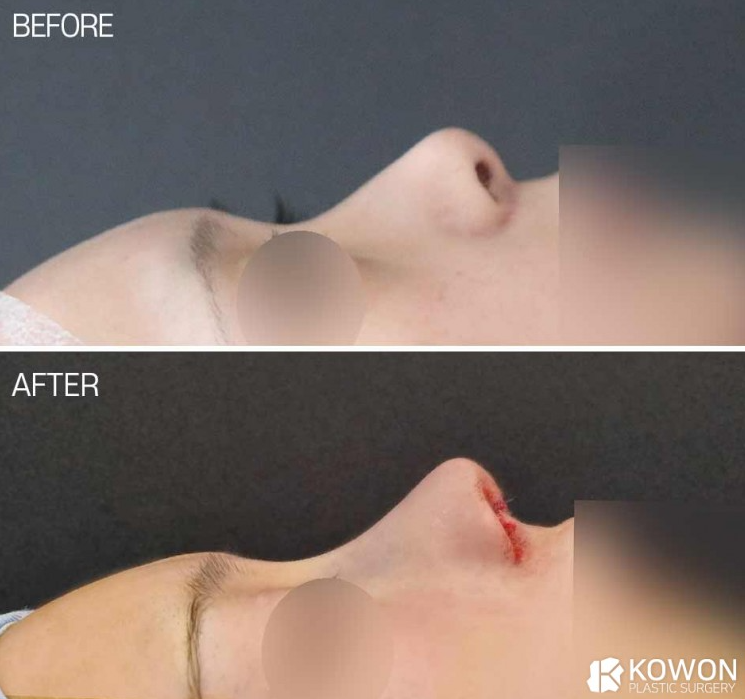
These before-and-after photos are used with the patient's consent.
In this case, I adjusted the columella while also supplementing the length of the nasal tip to balance the lower part of the nose. I planned the alar base surgery with the aim of refining the nostril shape more naturally while also improving the previously wide alar base.
"Just because the alar base appears wide does not mean you should reduce the alar base itself from the start."
This is because simply bringing the nasal tip together can also organize the width of the lower nose. Therefore, by first correcting the nasal tip structure, you can often expect the flaring of the alar base to be naturally alleviated.
However, if the alar base itself is flared outward as in this case, the situation may be different. Especially if the muscles maintaining the current position of the alar base are strong, it may be difficult to achieve the desired shape with nasal tip structure alone. In such cases, we consider methods to adjust the position and shape of the alar base using cartilage, which is called alar base surgery.
Therefore, when correcting shapes like yongko or upturned nose, where the nostrils are highly exposed from the front, it is more important to comprehensively examine the direction of the nasal tip, internal structure, and the relationship between the columella and nasal tip, rather than simply reducing the size of the nostrils. When I consult on such cases at KOWON Plastic Surgery, I prefer to first check the overall structural balance of the lower nose rather than focusing only on the visible part.
Ultimately, the important thing is not to separately reduce the excessively exposed nostrils and flared alar base, but to harmoniously organize the overall structure, including the nasal tip and columella.
In this case as well, by taking this approach, both the nostril exposure and alar base flaring were corrected, resulting in a more stable and balanced nasal shape. If necessary, considering alar base surgery is also one way to achieve this structural balance.
[See related cases together]
A case with a short and upturned nasal tip, asymmetry with the tip deviated to one side, and flared alar base on both sides. In particular, since the alar base was flared outward rather than the nasal tip itself being wide, I determined that it was more appropriate to adjust the width of the alar base together rather than only reducing the nasal tip.
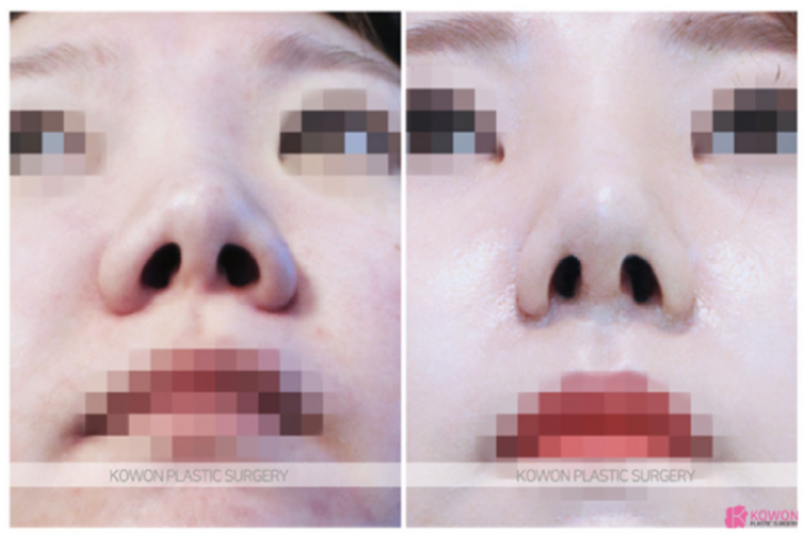
These before-and-after photos are used with the patient's consent.
In surgery, I first supplemented the short nasal tip to an appropriate length and refined the flared tip shape, while also performing alar reduction to naturally narrow the width of the lower nose. Additionally, I corrected the asymmetry of the nasal tip that was deviated to one side, improving the appearance of the nose being bent from the front. For the low and petite nasal bridge, I appropriately used silicone to enhance the overall three-dimensionality and balance of the nose.
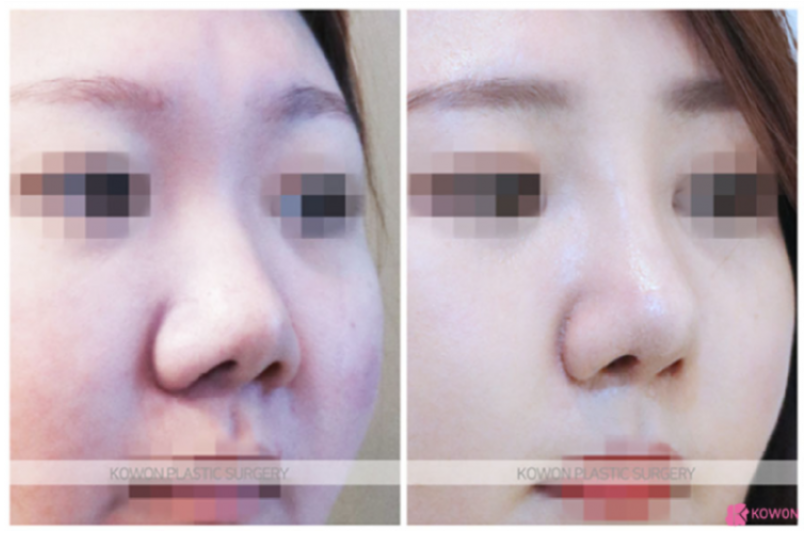
These before-and-after photos are used with the patient's consent.
As a result, the previously short and upturned nasal tip became more naturally elongated, and the flared alar base and nasal tip were neatly refined. With the improvement of asymmetry, the nose appeared more stable, and from the side and 45-degree angles, the overall nasal line became cleaner, resulting in a softer and more natural impression.
For more of the director's surgical journals

Dr.kim Rhinoplasty Review - Rhinoplasty, nosejob, plastic surgery in Korea
Rhinoplasty, nosejob, plastic surgery in Korea
[What I consider important in surgery]
"In cases like upturned nose or yongko, where the nostrils are highly visible and the alar base appears flared, it is important to examine not only the visible parts but also the direction of the nasal tip, cartilage structure, and the relationship between the columella and alar base."
During consultations and surgery, I first consider which parts and how to adjust within the existing nasal structure to improve overall balance, rather than simply making the nose smaller. Especially when the relationship between the nasal tip and alar base is important, I carefully determine the necessary scope of correction to achieve a natural change without overdoing it.
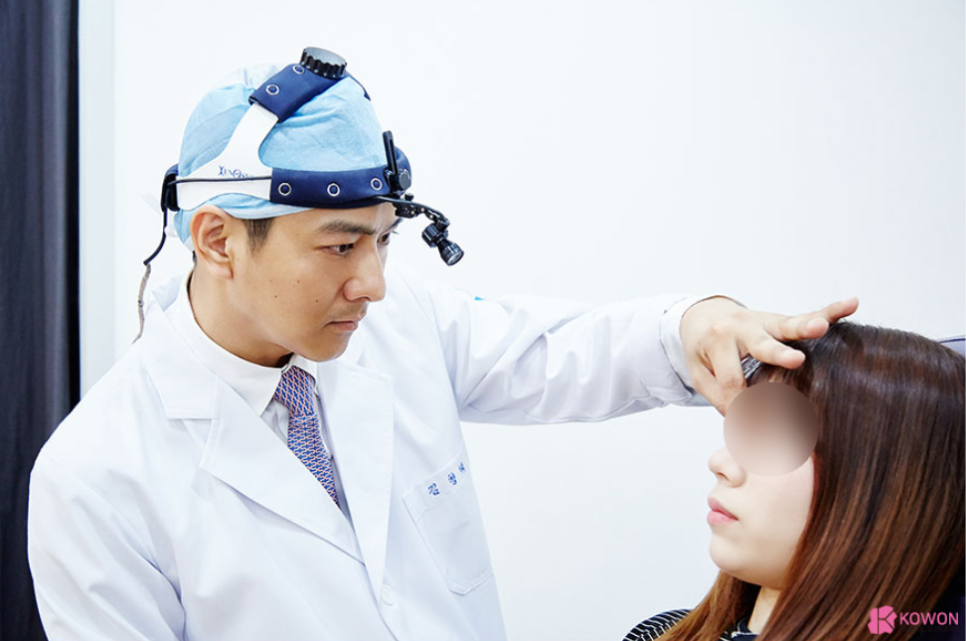
Since even small changes to the nose can greatly alter the impression from the front and side, it is important to consider the harmony of the entire nose rather than correcting only one part. At KOWON Plastic Surgery, we also create surgical plans tailored to each individual's nasal shape and structure based on these considerations.
Ultimately, the important thing is not to simply make the nostrils less visible or narrow the alar base, but to balance the nasal tip, columella, and alar base so they blend naturally. I will continue to carefully examine these structural aspects to create a natural and stable nasal shape.
KOWON Plastic Surgery Clinic
2nd Floor, KBL Center, 110 Dosan-daero, Gangnam-gu, Seoul
View original post on Naver Blog
This procedure/surgery may cause side effects such as bleeding, infection, swelling, or asymmetry depending on the individual. Please consult with medical professionals for accurate information before making a decision.
— Dr. Hyung-taek Kim, KOWON Plastic Surgery