
KOWON Blog
A nose that had Radiesse filler — is surgery possible after removal? The order of checks when an undissolvable filler remains
Whether a nose with Radiesse — which has no dissolving injection — can still be operated on: why many clinics are reluctant, how height is adjusted together since full removal is difficult, and cases of surgery after foreign-material removal.

Key points
- Unlike hyaluronic-acid fillers, Radiesse cannot be dissolved with an enzyme, so remaining extent and tissue reaction are checked before judging removal·surgery feasibility.
- Surgery isn't always impossible, but the plan changes with the removable range and any inflammation·adhesion.
- Don't pre-assume full removal — you should be told, based on imaging·examination and surgical history, about material that may remain.
"There's no dissolving injection for Radiesse — some places say they can remove it and operate, but I've also heard it's strongly discouraged. Is surgery possible?"
This question came from someone who got Restylane filler a year ago, saw it absorb quickly, then maintained Radiesse touch-ups every 3–4 months for a year. No side effects so far, but now they want a full plump-nose rhinoplasty — and worry whether surgery is possible with filler still in place.
Based on the answer given to that question, this article organizes how surgery is judged when an undissolvable filler is in the nose.
01
Why do many clinics hesitate to operate after Radiesse removal?
Unlike hyaluronic-acid fillers, Radiesse can't be dissolved with an enzyme — so the remaining location, amount, and tissue adhesion must be checked. Surgery isn't always impossible, but difficulty and planning change with the removable range and any inflammation.
02
If it can't be fully removed, how is surgery planned?
Whether full removal is possible depends on how far the material spread and the tissue condition — it can't be decided in advance. Surgery is planned in this order.
- 01Check remaining material and inflammation·adhesion range via imaging and examination.
- 02Define the safely removable range, then plan height and material premised on the tissue state that remains.
The questioner asked, "Is there a clinic that specializes only in operating on Radiesse-injected noses?" — there is no clinic that specializes solely in operating on filler-injected areas. We recommend visiting several plastic-surgery clinics and confirming through direct consultation whether the result you want is achievable.
03
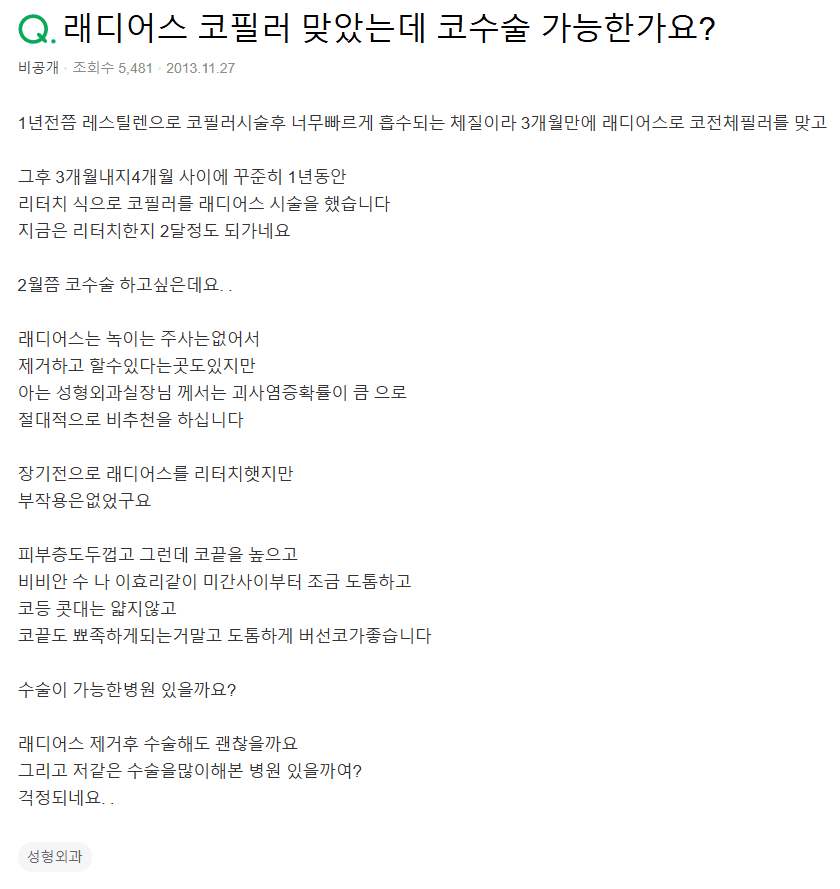
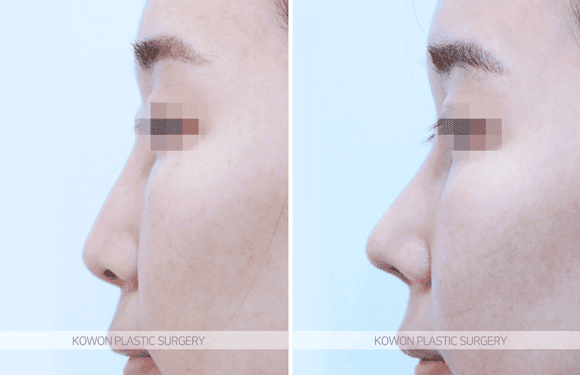
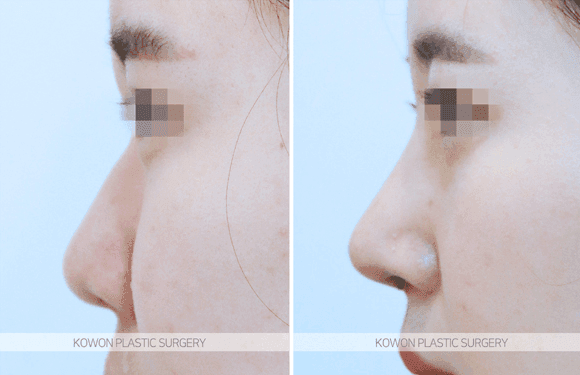
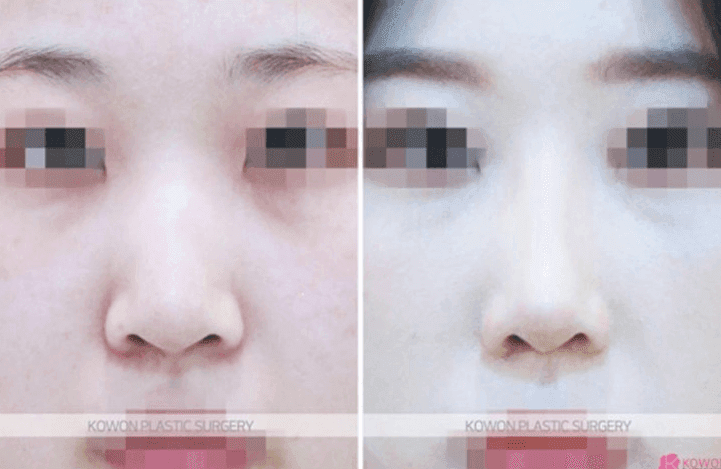
What cases involved removing foreign material and then operating?
These are cases where removal and surgery proceeded together while foreign material — filler or thread — was in the nose.
| Pre-surgery state | Surgery performed |
|---|---|
| Scafolder thread + Artecoll filler present, shape unsatisfactory | Removed all foreign material, then tip-only implant-free surgery — tip cartilage tying·septal extension |
| After petit procedures the tip drooped and the glabella-side dorsum was low | Removed as much thread as possible, tidied tip shape with septal cartilage — the low glabella dorsum rose naturally |
| Nose filler dissolved, reduction surgery needed | Removed the tip-depressor muscle to eliminate the downward-pulling feel, with tip cartilage tying |
As in the first case, even when thread and filler coexist, a natural nose shape can be planned after removal via tip cartilage tying·septal extension. Criteria for judging when thread removal is needed are in thread·foreign-material removal.
04
Summary — plan premised on removal's limits
If Radiesse remains in the nose, check the range and tissue reaction via imaging and examination, then judge surgical feasibility premised on what can be safely removed and what may remain.
If you're curious whether surgery is possible on a nose with filler·foreign material, get checked in a 1:1 video consultation; actual removal·surgery cases are in before & after photos.
Frequently asked questions
Answers to common questions patients ask before a consultation.
It can't be ruled out outright. After checking the remaining location, amount, and inflammation·adhesion, we judge whether removal and surgery can be planned together.
Full-removal feasibility depends on spread range and tissue condition. Height and material should be planned only after you're told the safely removable range and the material that may remain.
No clinic specializes solely in operating on filler-injected areas. The realistic route is direct consultation at several plastic-surgery clinics to confirm whether the result you want is possible given your condition.
Responses to treatment and recovery progress vary by individual. Outcomes and side effects vary from person to person. Bleeding, infection, swelling and asymmetry may occur. Please consult our medical team before making a decision.
Consultation