
KOWON Blog
Sorting criteria before a male rhinoplasty consult — not which surgery, but which criteria to choose by
For men's noses, impression, line, and harmony matter more than height. Includes: when a concern deserves structural reading, pre-consult criteria, three things to check before choosing an artificial implant, and when autologous tissue · RIBFIT™ gets reviewed.
Key points
- For men's noses, impression, line, and harmony matter more than height — so the more information consumed, the harder judging can get.
- Before consultation, rather than "which surgery is good," a process of first sorting "by which criteria to choose" is needed — angle-specific dissatisfaction, concern duration (6+ months), and whether styling can compensate are the starting points.
- Artificial implants and autologous tissue (RIBFIT™) get judged not by good/bad but by whether they fit skin thickness, bone structure, and desired impression.
Among those coming for male rhinoplasty consultations, many carry concerns like "can I change it unnoticeably" or "would doing it make my impression stronger instead."
Especially for men's noses, impression, line, and harmony matter more than height — so consuming more information can make judging harder. So if a consultation is ahead, rather than asking which surgery is good, a process of first sorting by which criteria to choose is needed. This article organizes criteria you can self-check when deliberating about a male nose, and the flow worth knowing before choosing implant vs autologous tissue.
01
From when does a male-nose concern deserve structural reading?
Through consultations, similar concerns repeat. The point where overall facial impression starts bothering more than the nose itself — for example, avoiding certain angles in photos, or often hearing that your impression looks strong because of the nose.
In such cases, sorting first by the criteria below helps.
- Whether dissatisfaction is felt only at specific angles
- Whether thoughts about the nose shape don't change over time
- Whether styling or hair can hardly compensate
If two of these apply and the concern has persisted 6+ months, it may be the point to consider structural factors together — not just mood.
02
Which criteria should be read first before consultation?
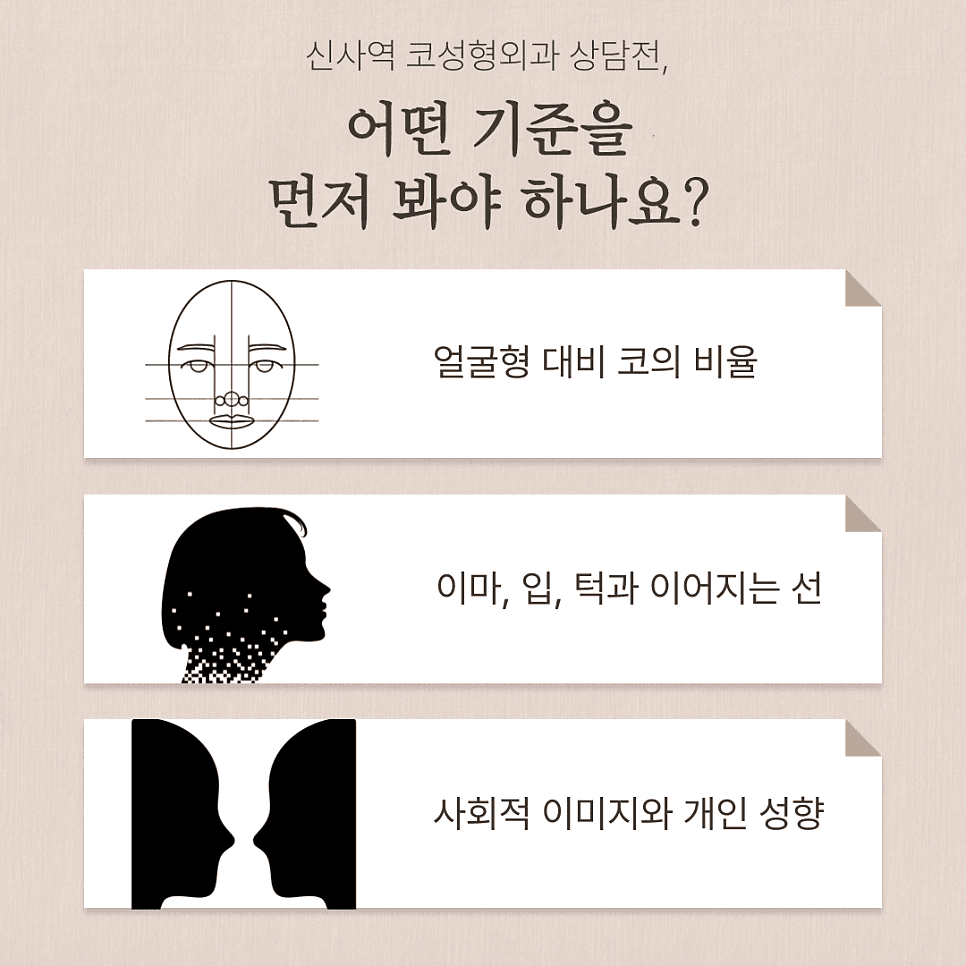
What I've felt practicing rhinoplasty exclusively for nearly 20 years since board certification in 2007: there's no single right answer for men's noses. In male noses especially, the following factors must be considered together.
- Nose proportion against face shape
- The line continuing from forehead, lips, and chin
- Social image and personal disposition
So in consultation too, the question "how far is natural?" often becomes a more important criterion than "how high can it go." What to ask and confirm at consultation is organized in the consultation prep guide.
03
Are artificial implants a disadvantageous choice for male noses?
Artificial implants are still a widely used method. But in male noses, edge visibility or foreign-body sensation can stand out more depending on skin thickness or bone structure. Check the following items first.
- 01Whether skin is thin and tissue firm
- 02Whether you've experienced discomfort with past implants
- 03Whether natural impression matters most to you
If two or more apply, hearing explanations of options besides artificial implants together is needed. I've continuously researched toward raising the autologous-tissue share to reduce inflammation and contracture possibilities, and hold as principle explaining each material's pros, cons, and limits as-is during consultation.
04
When is autologous tissue · RIBFIT™ considered?
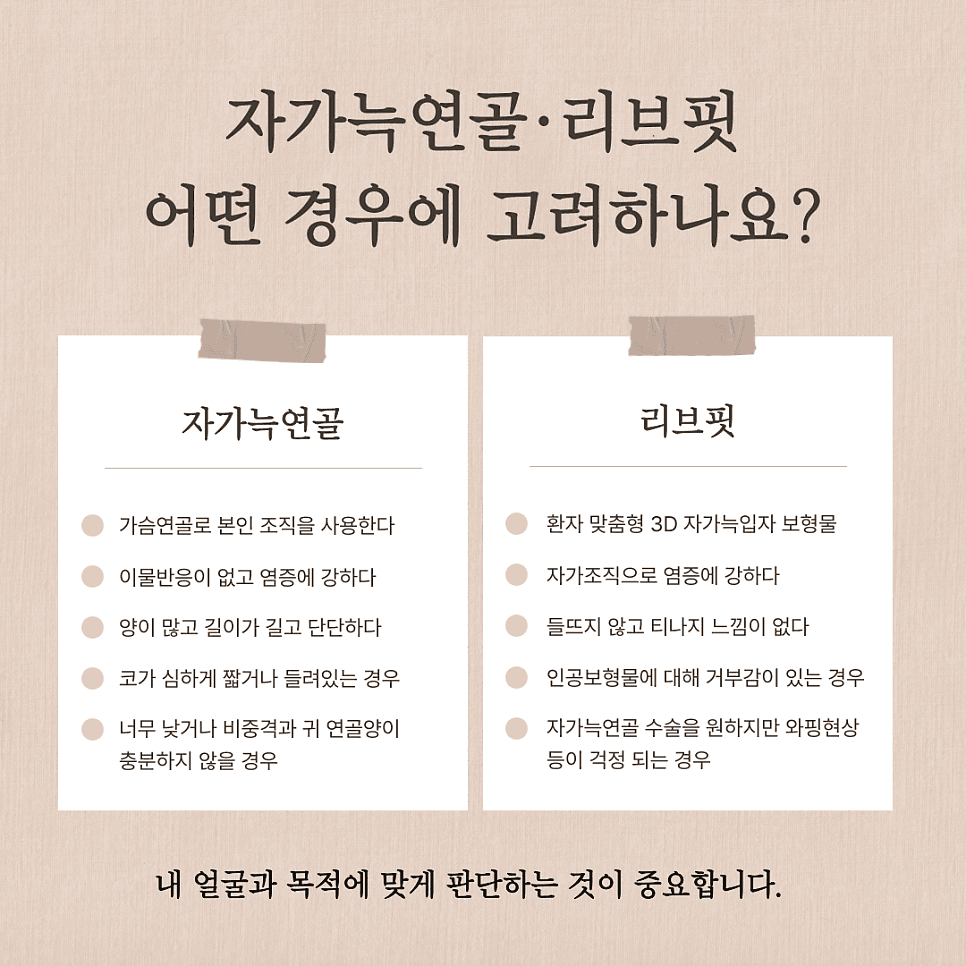
Autologous rib cartilage has the advantage of lowering inflammation risk by using your own tissue. RIBFIT™ is a method processing and compressing autologous rib cartilage to fit individual structure — reviewed as an option for cases like male noses where straight lines and stability matter. Details of the implant-free method can be seen in the implant-free procedure details.
But it isn't a method applied identically to every male nose — CT-based structural analysis and consultation first judge whether this method truly fits. For those wanting large height or lacking sufficient tissue allowance, other methods may fit better. So RIBFIT™ also gets judged not by good/bad but by whether it fits your face and purpose.
05
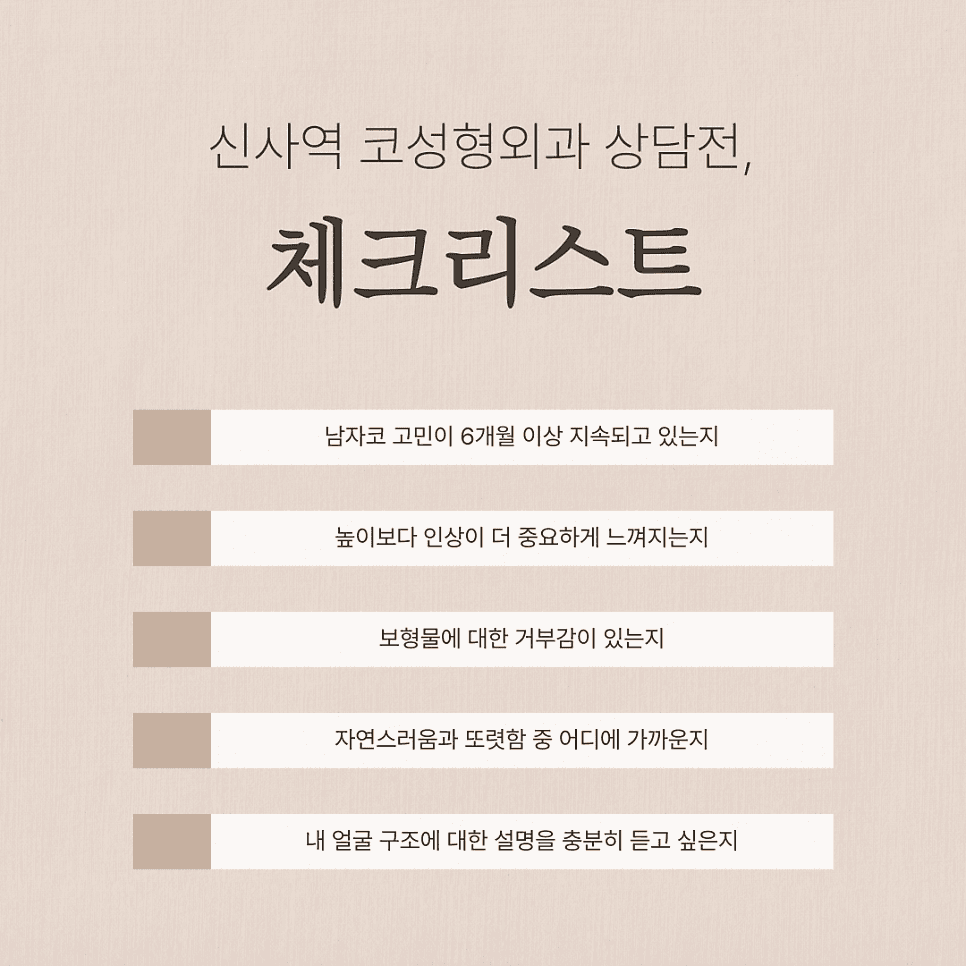
A checklist to answer yourself before consultation
Before a male-nose consultation, we recommend answering the questions below yourself once.
| Check item | Your answer |
|---|---|
| Has the male-nose concern persisted 6+ months? | |
| Does impression feel more important than height? | |
| Do you have resistance to implants? | |
| Are you closer to natural or defined? | |
| Do you want a sufficient explanation of your facial structure? |
06
Summary — the process of setting criteria comes first
A male rhinoplasty consult is closer to a process of setting criteria about your own face than deciding surgery. Surgery ultimately starts from the patient's courage, and the direction our care aims for is explaining surgery's limits and possibilities honestly so that courage isn't wasted — sharing the responsibility of choice together.
If curious about criteria fitting your nose, you can hear an explanation of your facial structure directly in a 1:1 video consultation.
Frequently asked questions
Answers to common questions patients ask before a consultation.
No. Artificial implants are also a widely used method, and judgment differs by skin thickness, bone structure, past implant experience, and desired impression. When two or more check items apply, we recommend hearing explanations of options beyond implants together.
No. Suitability gets judged first via CT-based structural analysis and consultation — for those wanting large height or lacking sufficient tissue allowance, other methods may fit better.
Sort by three criteria: whether dissatisfaction appears only at specific angles, whether thoughts don't change over time, and whether styling can hardly compensate. If two apply and it's persisted 6+ months, it may be time to check structural factors together.
Responses to treatment and recovery progress vary by individual. Outcomes and side effects vary from person to person. Bleeding, infection, swelling and asymmetry may occur. Please consult our medical team before making a decision.
Consultation