
KOWON Blog
Something Transparent Visible Inside the Nostril After Nose Surgery — Is It Silicone or Cartilage?
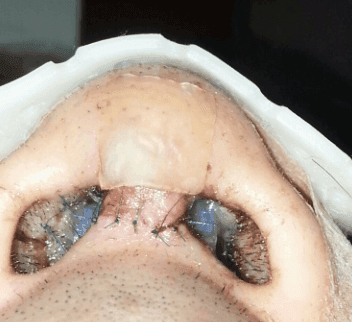
An answer to a question about something transparent and firm visible inside the nostril 4 days after nose surgery — it may be a silicone splint placed inside the nose for a few days to support the septum, and it can simply be confirmed at stitch removal.

Key points
- If something transparent and firm is visible inside the nostril a few days after nose surgery, it may be a silicone splint supporting the septum — but a photo alone cannot confirm it.
- Do not wipe or pull it with a cotton swab — confirm the current appearance and removal schedule with the surgery clinic.
- If pain, bleeding, bad odor, or breathing difficulty worsens or the position seems changed, do not wait until the scheduled stitch-removal day — contact them immediately.
"Something transparent — kind of bluish — is visible inside my nostril. Is it silicone? Cartilage?"
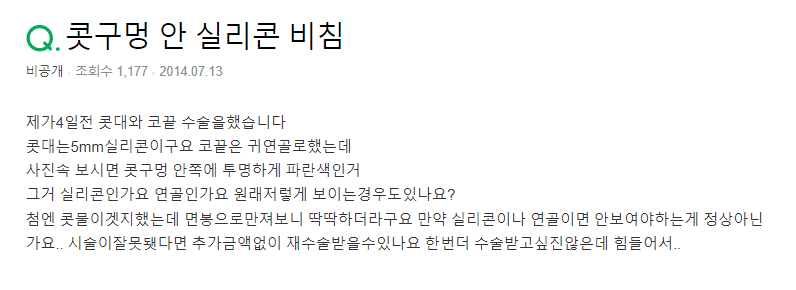
A question from someone who had bridge and tip surgery 4 days ago. 5mm of silicone was placed on the bridge and ear cartilage was used for the tip — and something visible inside the nostril was making them anxious. At first they thought it was a runny nose and tried to wipe it with a cotton swab, but touching it, it was firm — and they worried whether silicone or cartilage shouldn't be visible, and whether they'd need revision surgery if the surgery had gone wrong.
Based on the answer to that question, this article organizes what that thing visible inside the nose right after surgery is.
01
What is the firm thing visible inside the nostril?
A transparent, firm material may be a silicone splint supporting the septum from both sides. Still, a photo alone cannot confirm the material and position.
Just as a splint is placed on the bridge after surgery, it is common to place silicone inside the nose for a few days so things can settle into position. In other words, rather than the bridge implant or the tip's ear cartilage being exposed, it may be something temporarily placed for recovery.
| The feared possibility | The situation as the answer saw it |
|---|---|
| The bridge silicone is showing through | It may be a splint supporting the septum, but a photo alone cannot confirm it |
| Cartilage is exposed | The surgery clinic must check, including the possibility it is an intranasal splint |
| The surgery went wrong | The surgical outcome cannot be judged from the visible material alone |
02
Can I leave it alone, or should I ask the clinic?
Rather than wiping or pulling it with a cotton swab, it is safer to first confirm the current appearance and removal schedule with the surgery clinic. If pain, bleeding, bad odor, or breathing difficulty worsens or the material's position seems changed, contact them immediately rather than waiting for the scheduled stitch-removal day. Other care points during recovery can also be seen in the rhinoplasty recovery guide.
03
Summary — it may be silicone placed for the recovery period
The transparent, firm thing visible inside the nostril right after nose surgery may be a septal splint — but the material and position cannot be confirmed from appearance alone. Do not touch it directly; confirm with the surgery clinic at the point you notice it, and if warning symptoms appear, do not wait for the scheduled check day.
If a symptom worries you during recovery, it can be checked directly in a 1:1 video consultation.
Frequently asked questions
Answers to common questions patients ask before a consultation.
It may be a silicone splint supporting the septum — but a photo alone cannot confirm it. Do not touch it directly; confirm with the surgery clinic.
Depending on the surgical content, a splint may be placed inside the nose to support the septum or manage bleeding and adhesion. The purpose and duration should be confirmed with the surgery clinic.
At the point you notice it, send a photo or describe the current state to the surgery clinic to confirm the material and removal schedule. If there is pain, bleeding, bad odor, breathing difficulty, or a position change, contact them immediately.
Responses to treatment and recovery progress vary by individual. Outcomes and side effects vary from person to person. Bleeding, infection, swelling and asymmetry may occur. Please consult our medical team before making a decision.
Consultation