
KOWON Blog
Hump nose and a big nose — five questions: is it really big, and how severe is the hump? (Consultation Q&A)
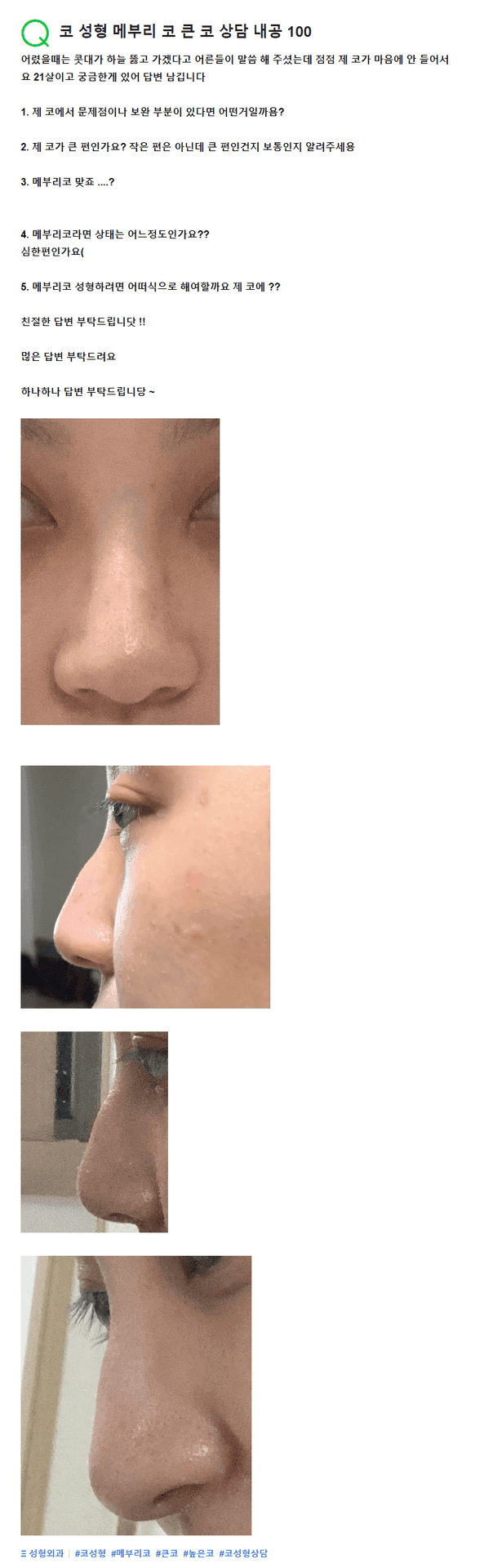
Five questions and answers from a 21-year-old considering big-nose surgery because of a hump — whether the hump is a problem, whether the nose is actually large, how severe it is, and how the tip and glabella change when the hump is removed.

Key points
- A hump nose isn't something that must be fixed by itself — it's an area where removal is considered if it bothers you.
- Even if you've long heard "your nose is big" from people around you, actual checking can find it isn't on the large side — self-perception and actual judgment can differ.
- Removing a hump can make the tip or glabella look relatively higher, so planning looks beyond removal to the changes that follow.
"Since I was young, adults around me said 'your bridge could pierce the sky' — and over time I started disliking my nose too."
This is the consultation content of a 21-year-old posted over hump nose and big nose concerns. With stress built up from words heard for a long time, they asked five things: whether their nose is actually large, how severe the hump is, and how to plan if they get surgery. This article organizes those questions and answers.
01
What were the questions?
The five questions asked and the gist of the answers, organized in a table first:
| Question | Answer gist |
|---|---|
| 1. Does my nose have parts needing improvement or problems? | Nothing particularly problematic — if you dislike the hump, removing it works |
| 2. Is my nose on the large side? | From the photos, it doesn't look large |
| 3. Is it really a hump nose? | Yes, it's a hump nose |
| 4. How severe is the hump? | Not severe — at the level of having a hump |
| 5. How should I plan surgery? | The hump can be removed, and removing it can make the tip or glabella higher |
02
Is a hump nose a problem that must be fixed?
No. For this questioner's nose too, no particular functional problem was confirmed — it was a situation where cosmetic correction is considered when the hump shape bothers the person.
They'd believed their nose was big because of words heard for a long time — but the judgment from photos differed: it didn't look large, and the hump wasn't severe but at the level of 'having a hump.' It's a case showing there can be a gap between self-perception and actual state. So before deciding on surgery, a process of objectively confirming the current state is needed first. What gets checked during consultation can be seen in the consultation guide.
03
If the hump is removed, how does the nose change?
In the original consultation, the answer was that removing the hump can make the tip or glabella look relatively higher, so planning should anticipate the whole line after removal.
In hump noses, the hump can be removed — and if removed, the tip or glabella can become higher. Because once the protruding part at the dorsum's center is organized, the proportions of the tip and glabella that were hidden by the hump look different.
In other words, hump correction planning doesn't end at "remove the hump" — it's set with how the tip and glabella will look after the hump is gone considered together.
04
Summary — checking the state comes before planning
What this consultation shows is one thing. Rather than predetermining "big-nose surgery" or "severe hump correction" from words heard for a long time or your own feeling, the order is to first confirm whether it's actually large and how much of a hump there is — then plan.
If you're curious about your nose's actual state, it can be checked in a 1:1 video consultation. Hump correction cases can be seen in the before & after photos.
Frequently asked questions
Answers to common questions patients ask before a consultation.
No. As this consultation's answer shows, a hump itself isn't a particular problem — removal is considered when it bothers you and you dislike it.
What others say and actual judgment can differ. This questioner had also long heard "your nose is big" but received the answer that it isn't large in photos. The order is to first confirm whether it's actually large before planning reduction surgery.
Removing the hump can make the tip or glabella higher. As the dorsum's protruding part gets organized, surrounding proportions can look different — so planning accounts for that change too.
Responses to treatment and recovery progress vary by individual. Outcomes and side effects vary from person to person. Bleeding, infection, swelling and asymmetry may occur. Please consult our medical team before making a decision.
Consultation