
KOWON Blog
A crooked nose — does private insurance cover it? When insurance applies in functional rhinoplasty and when it doesn't
A question asking whether private insurance applies to functional rhinoplasty for a nose bent by injury — the standard where functional problems like deviated septum and rhinitis correction get coverage while cosmetic improvement doesn't, and why function should be confirmed first at an ENT.

Key points
- Correcting deviated septum and rhinitis for functional problems — a blocked nose or uncomfortable breathing — gets insurance processing.
- Conversely, cases needing cosmetic improvement don't get insurance coverage.
- If judgment is hard, it helps to check the functional part first at a university hospital ENT, then confirm whether private insurance processing is possible.
"I think I injured my nose in middle or high school, and over time it became crooked. They say I need functional rhinoplasty — does private insurance not cover it?"
A question from someone whose nose became crooked and humped after injuring it in adolescence. The ENT said the nose was blocked about 40% beyond normal and that part gets insurance — but they wondered whether doing cosmetic work together would forfeit the insurance benefit.
This article organizes the criteria for when insurance applies in functional rhinoplasty for a crooked nose, plus deviated/humped nose correction cases worth referencing.
01
Must a crooked nose always be operated on?
Whether to operate on a crooked nose is the person's own decision. If it's cosmetically unpleasing, it's corrected through surgery — and especially if one nostril is blocked functionally or breathing through one side is difficult, or if rhinitis is severe, surgery should be considered.
In other words, even for the same crooked nose, 'because it looks bad' and 'because breathing is uncomfortable' are different judgment axes — and whether insurance applies also splits along this division.
02
In which cases does insurance apply?
| Which case | Insurance application |
|---|---|
| Functional problem — correcting deviated septum and rhinitis | Insurance processing applies |
| Case needing cosmetic improvement | Insurance doesn't apply |
When it becomes a functional problem rather than a cosmetic part, correcting deviated septum and rhinitis gets insurance processing. But when cosmetic improvement is needed, insurance doesn't apply.
So like the questioner, if you've received a nasal obstruction finding, visiting a university hospital ENT to check the functional part, then confirming whether private insurance processing is possible, also helps. What to check before surgery can be seen in more detail in the consultation guide.
03
Are there deviated/humped nose correction cases worth referencing?
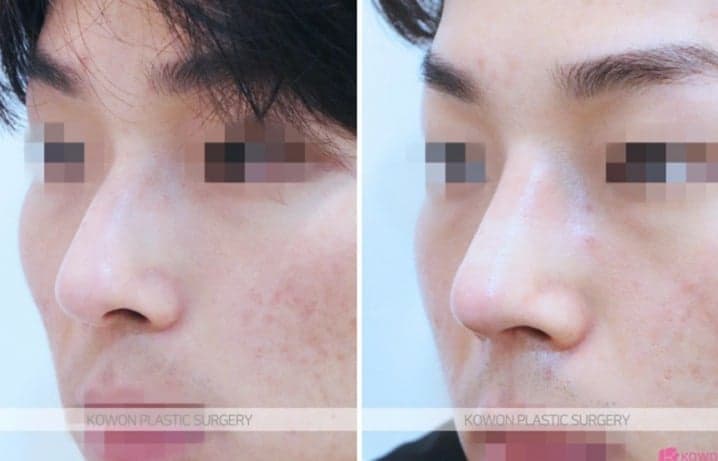
Three cases worth examining together.
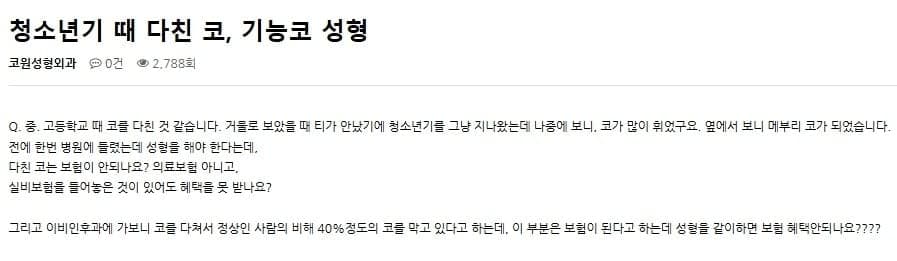
- 01A large, severe hump case — there was also a feeling of the nose being slightly bent from the front; the hump was shaved as smooth as possible through osteotomy and tip cartilage tying was performed, changing the nostril shape slimmer.
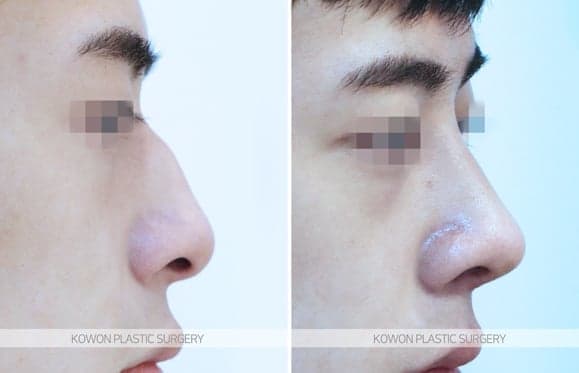
- 02A case with a bent nose plus a bulbous feel — the patient basically had a high bridge, so surgery proceeded without silicone.
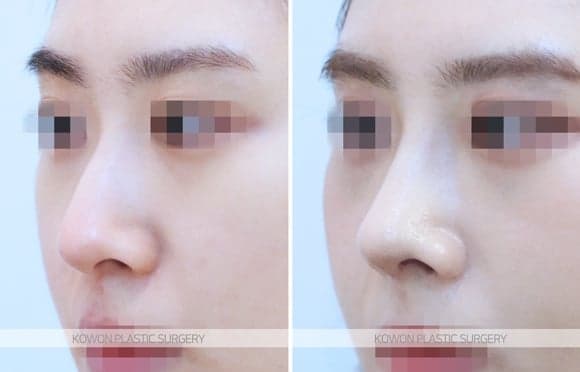
- 03A case where severe deviated septum bent the nose to one side — in such cases nasal function drops and symptoms like rhinitis or obstruction can occur; through deviated septum correction and tip cartilage tying, the degree of nostril visibility from the front could be reduced.
All three cases had different surgical compositions according to the nose's state. Actual changes can be seen in the before & after photos.
04
Summary — checking function and cosmetics separately comes first
The insurance question for a crooked nose is judged not by 'was it injured' but 'is there a functional problem.' Functional problems like correcting deviated septum and rhinitis get insurance processing, while cosmetic improvement doesn't get coverage. If there's a nasal obstruction finding, the safe order is: confirm functional state first at a university hospital ENT, then organize private insurance eligibility and surgical scope based on that result.
If you're curious about your crooked nose's state and correction direction, it can be checked directly in a 1:1 video consultation.
Frequently asked questions
Answers to common questions patients ask before a consultation.
Correcting deviated septum and rhinitis for functional problems gets insurance processing. Still, insurance doesn't apply to parts needing cosmetic improvement — it's good to check the functional part at an ENT, then confirm whether private insurance processing is possible.
What gets insurance application is the part correcting functional problems. Since cosmetic improvement isn't covered, it helps to check function at a university hospital ENT or similar to confirm how far counts as functional correction.
Whether to operate is the person's own decision. Still, if one nostril is blocked or breathing is difficult, or rhinitis is severe, it's a functional problem — surgery needs consideration.
Responses to treatment and recovery progress vary by individual. Outcomes and side effects vary from person to person. Bleeding, infection, swelling and asymmetry may occur. Please consult our medical team before making a decision.
Consultation