
KOWON Blog
What people ask when first considering rhinoplasty — silicone replacement cycle, anesthesia, tip soft tissue, and side effects
Questions frequently asked by those first considering rhinoplasty — whether silicone must be replaced every 10 years, anesthesia and pain, the surgical approach for thick tip tissue, celebrity nose requests, and filler side effect risks. A case of bridge augmentation using ear cartilage is also introduced.

Key points
- Silicone inside the nose doesn't have to be replaced just because 10 years passed — it can be maintained if there's no particular problem.
- The anesthesia method is set according to surgical scope and health status — before surgery, the anesthesia method, pain management, and monitoring plan should be confirmed. If tip soft tissue is thick, it's evaluated together with the cartilage structure.
- A desired celebrity nose can be presented as a reference photo but isn't reproduced identically, and whatever method is chosen — filler included — decide only after understanding the side effect possibilities.
When first considering rhinoplasty, questions pile up — from surgical method to results to safety. "Does silicone have to be replaced every 10 years? Does it hurt even with anesthesia? I have a lot of tip tissue — what surgery should I get? Can I just ask for a nose like a celebrity's? I saw cases of blindness from filler — is it okay?" These are questions frequently asked before the actual consultation stage.
This article organizes answers to those questions one by one, and at the end introduces a case of bridge augmentation using ear cartilage.
01
Must silicone be replaced after 10 years?
No. Using silicone inside the nose doesn't mean it must be replaced once 10 years pass. If there's no particular problem after surgery, it can be maintained — so this part doesn't need excessive worry. Per-material features including silicone can be compared in the materials guide.
02
How is anesthesia done, and is there pain?
The anesthesia method — sedation, general anesthesia, and so on — can differ by surgical scope and individual state. Which method is used, how monitoring during surgery and post-surgery pain are managed — these should be confirmed with the medical team.
03
If there's a lot of tip tissue, what surgery is considered?
If you want the tip tissue reduced, a surgery that organizes the soft tissue in the tip area and gathers the cartilage is considered. This helps make the tip into a more refined shape.
04
Can I just ask for a celebrity's nose shape?
If you want a specific celebrity's nose, it can be presented as a reference photo. Still, it isn't reproduced identically — the result can differ according to overall facial proportions and harmony. So in consultation, planning in a natural direction fitting your own facial image matters. What to prepare and check in consultation is organized in the consultation guide.
05
Isn't filler safer? How common are side effects?
Nasal filler has the advantage of being simple, but rare cases of serious side effects have been reported — a careful choice is needed. That's because various blood vessel and nerve structures exist inside the nose.
This applies to surgery as well. Rhinoplasty also has various side effect possibilities — inflammation, bruising, asymmetry, scarring, and more. Whatever method is chosen, a process of sufficiently understanding these points and confirming through consultation is needed before deciding.
06
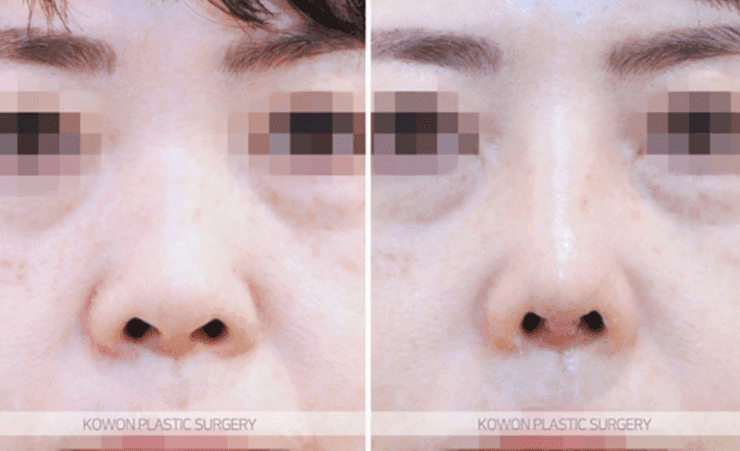
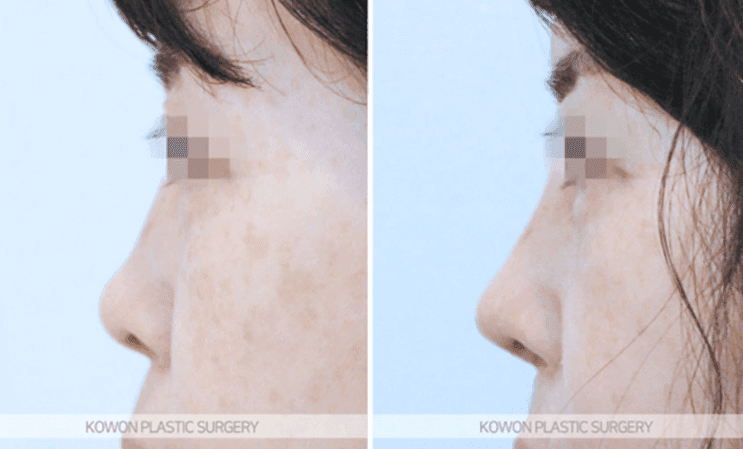
Case — bridge augmentation with ear cartilage and non-incisional alar reduction
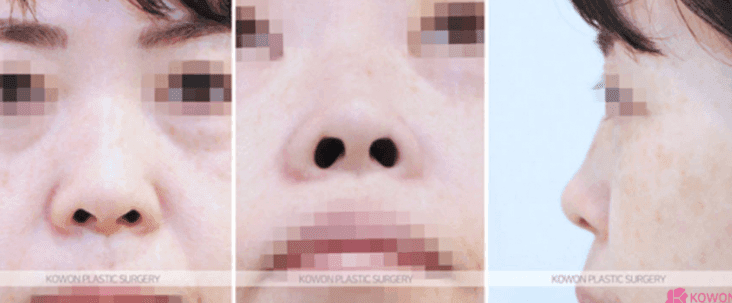
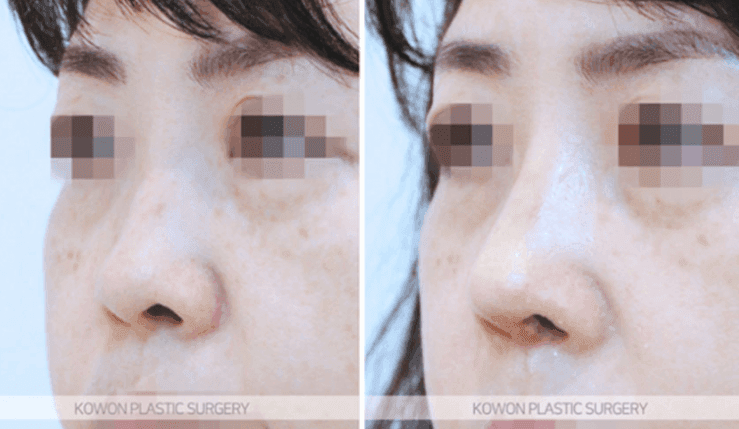
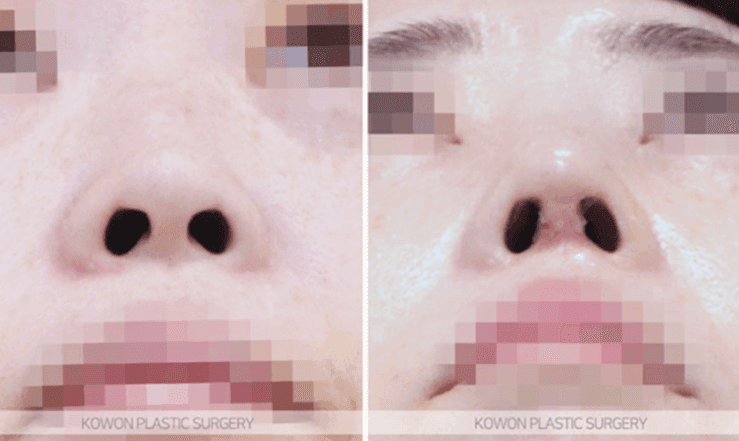
A first-surgery case of a woman of a certain age. The tip was upturned in a short shape with a low bridge, nostril exposure was relatively pronounced from the front, and the alae spread to the sides. The bridge surface was in a bumpy state.
| State confirmed | Method decided |
|---|---|
| Insufficient septal cartilage | Used ear cartilage to proceed with bridge augmentation and tip reinforcement together |
| Bumpy bridge surface, no desire for excessive change | Smoothed the surface and designed a comfortable height with 3mm silicone |
| Alae spread wide | Combined non-incisional alar reduction — advantage of reducing external scar burden |
After surgery, the nose's overall width visible from the front decreased, bridge height and volume were added, and a change was confirmed where bridge and tip form a smooth curve from the side too. Other cases can be seen in the before & after photos.
07
Summary — it's good to organize questions before consultation
Silicone replacement cycle, anesthesia and pain, how tip tissue gets organized, the limits of reference photos, side effect possibilities of filler and surgery each — the questions that come up when first considering rhinoplasty are mostly things confirmable in consultation. What matters is finding a direction fitting your own facial proportions and harmony while understanding each method's advantages along with its side effect possibilities.



Frequently asked questions
Answers to common questions patients ask before a consultation.
No. If there's no particular problem, silicone can be maintained — 10 years passing doesn't mean it's replacement time. Still, whether a problem has occurred is best confirmed through examination when symptoms appear.
When there's a lot of tip tissue, it's approached with a surgery that organizes the tip soft tissue while gathering the cartilage. It's not just reducing tissue — a process refining the tip shape happens together.
The non-incisional approach has the advantage of reducing scar burden since scarring barely shows externally. In the case above too, the non-incisional method was combined to organize widely spread alae.
Responses to treatment and recovery progress vary by individual. Outcomes and side effects vary from person to person. Bleeding, infection, swelling and asymmetry may occur. Please consult our medical team before making a decision.
Consultation