
KOWON Blog
Female hump nose surgery — the line criteria looked at before how much gets shaved
What's checked in female hump nose surgery — existing bridge height, tip direction, bridge width, nostril exposure, and the impression the patient wants to keep. Why removing the hump and organizing it to fit the face are different problems, organized including functional checks.

Key points
- In female hump nose surgery, the important criterion isn't how much of the hump gets shaved — it's where the bridge flow that doesn't look awkward on this face is.
- Existing bridge height, tip direction, bridge width, nostril exposure seen from the front, and the impression the patient wants to keep all have to be checked together.
- If rhinitis or nasal obstruction is present, the internal nasal structure is checked by CT — external shape and functional correction are planned together, not separately.
Doing humped nose consultations, quite a few people come looking only at the externally protruding bridge. Since the bumpy line visible in photos bothers them most, it's easy to think removing just that part will immediately soften the whole impression.
But in female hump nose surgery, the important criterion isn't simply how much hump gets shaved. In reality, existing bridge height, tip direction, bridge width, nostril exposure seen from the front, and the impression the patient wants to keep all have to be seen together. This article organizes those criteria with cases by type.
01
If the hump is fully removed, won't it look obviously operated?
It's actually a frequently asked question. Removing the hump and organizing it to fit the face are slightly different problems.
For some, a smooth near-straight line suits well; for others, leaving a hint of the original bridge strength keeps their vibe comfortably maintained. So in consultation, before the amount of hump to remove, we look at 'where is the bridge flow that doesn't look awkward on this face.' Face length, the angle continuing from forehead to bridge, tip direction, protrusion around the mouth, and the vibe the patient wants all have to be checked together — so answering from a single photo is difficult.
02
With a low hump plus nostril exposure, why does the plan change?
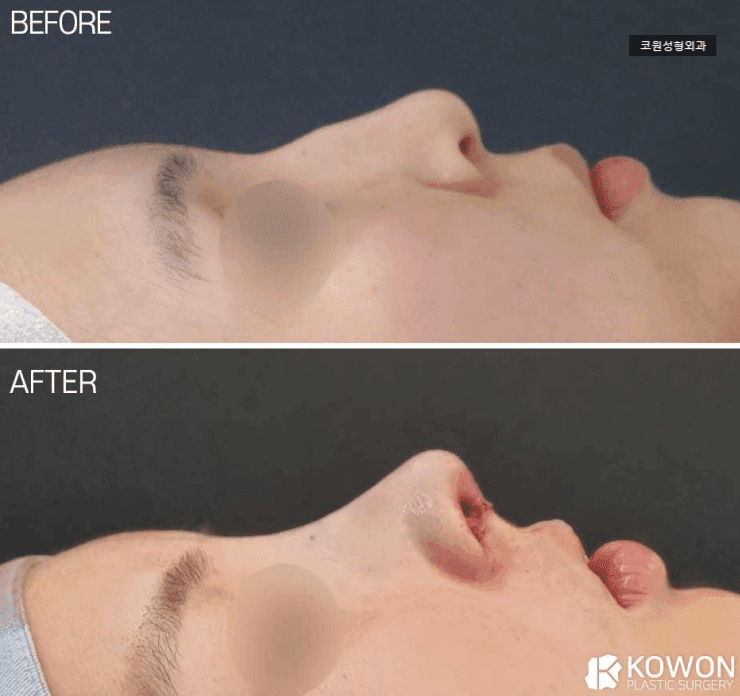
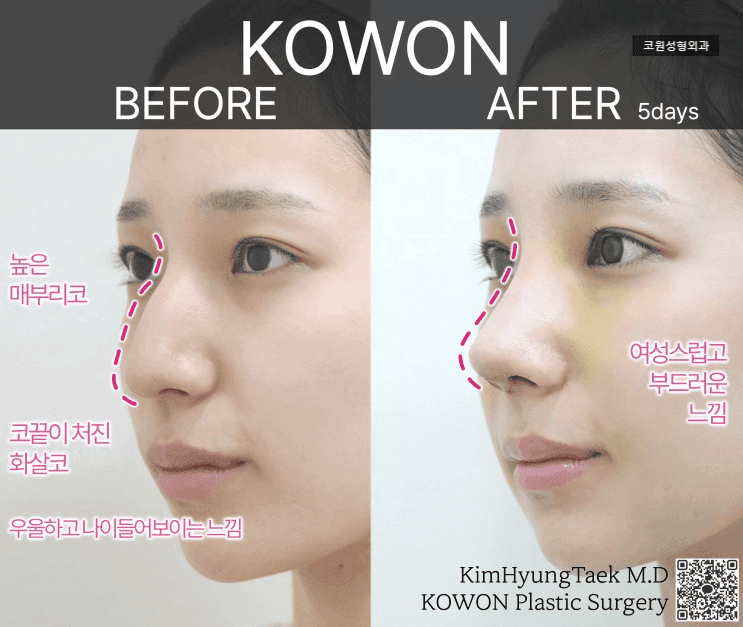
One case was a low hump form with a slightly protruding mid-bridge, together with an upturned-nose pattern where the nostrils showed excessively from the front. Unlike a simply upturned tip, it had a feature where the outer alar curled upward, exposing the nostrils outward. In such cases the tip can look short from the front and the nose's center can look awkwardly floating — and with a low bridge, if only the hump area stands out, the bridge line fails to continue smoothly and dimensionality easily looks lacking.
With this shape, we don't approach by just shaving the hump or just raising the tip. The bridge, tip, alae, and nostrils are connected to each other — changing only one part can leave awkwardness elsewhere. In this case we planned as follows.
- Hump tidying — organizing the hump area to fit facial proportions, planned so the flow from bridge to tip becomes smooth
- Tip — gathering via tip cartilage repositioning and tip cartilage tying, raising naturally using autologous cartilage. Built a support structure between the tip cartilages, considering stability so the raised tip doesn't easily drop
- Nostril lowering — when the outer alar is lifted and the nostrils are exposed, lowering only the tip can be insufficient, so corrected together so the lower alar line comes down naturally
- Side line — adjusting the line continuing from tip to mouth while looking at the columella, nasolabial angle, and philtrum line together. Allowed change toward the mouth looking less protruded than before surgery
Nostril lowering isn't simply a process of covering the nostrils — it's closer to a process of matching the balance of alae, columella, and tip to reduce front-visible exposure and organize toward a stable impression.
03
If the bridge is wide, why is lowering only the hump insufficient?
When planning hump nose surgery, bridge width is also an important criterion. When the bridge is wide and the nose looks overall large, lowering the protruding hump alone can be insufficient — the line continues more naturally when the bridge width is narrowed through osteotomy and the height adjusted to fit the face.
To the question "will my nose look small if only the hump is shaved?" I usually explain that the front and side have to be seen together.
| Viewing angle | What's checked |
|---|---|
| Side | How much the hump reduced, the flow continuing from bridge to tip |
| Front | Bridge width — if the width remains wide, the nose's presence can still feel large |
| 45 degrees | Connection of bridge width and line |
Conversely, narrowing the width excessively can strain the breathing structure, so balance is needed. Line changes in actual correction cases can be seen in the before & after photos.
04
If rhinitis or nasal obstruction is present, what gets checked together?
Among those with humped noses, some complain of rhinitis symptoms or nasal obstruction together. If the internal nasal structure is bent or there's hypertrophied tissue, breathing can be uncomfortable separately from the external problem. In such cases the internal structure is examined via CT and, when needed, functional correction is planned together.
The nose is both a cosmetic structure at the center of the face and simultaneously a breathing organ. The reason we check whether the internal space stays stable even while organizing the hump line and narrowing the bridge is here. In the process of changing the nose's shape, function isn't thought of separately.
05
Summary — not the amount shaved, but a flow fitting the face
Understanding hump nose surgery only as an operation that shaves a lot of protruding bone makes the direction simplistic. But nose surgery isn't a process of making a line exactly as in a photo — it's closer to finding a direction that isn't forced within each person's face. When the current structure is checked through sufficient consultation and the desired change and image to keep are organized together, you can approach a line that isn't excessive yet stays comfortable over time.
What's good to check in consultation is organized in the rhinoplasty consultation guide. If you're curious which type your hump shape and bridge width fall under, it can be checked directly in a 1:1 video consultation.

Frequently asked questions
Answers to common questions patients ask before a consultation.
It isn't decided by a single criterion. Some faces suit a smooth line; others keep their original impression comfortably only when a very slight curve remains. So the direction is set after checking overall facial proportions and the desired vibe together — not from a single photo.
A low hump with nostril exposure and a large long humped nose with a wide bridge require entirely different plans. For some, tip-alar balance is key; for others, osteotomy and internal structure checks matter more.
If rhinitis or nasal obstruction is present, the internal nasal structure can be checked via CT and functional correction planned together when needed. A process that examines external shape and internal structure together, not separately, is needed.
Responses to treatment and recovery progress vary by individual. Outcomes and side effects vary from person to person. Bleeding, infection, swelling and asymmetry may occur. Please consult our medical team before making a decision.
Consultation