
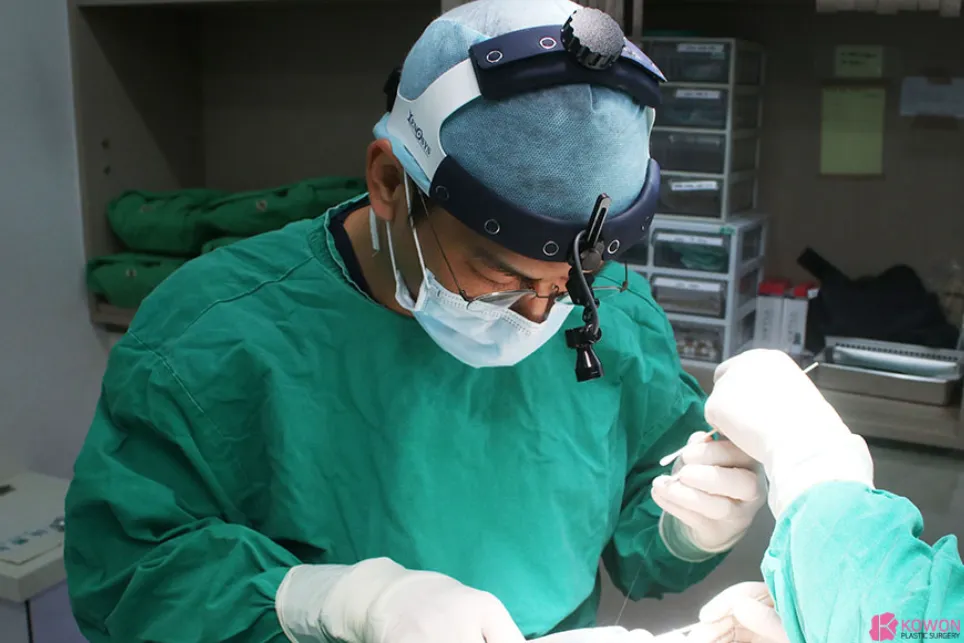
Hello, I am Kim Hyung-taek, director of KOWON Plastic Surgery.
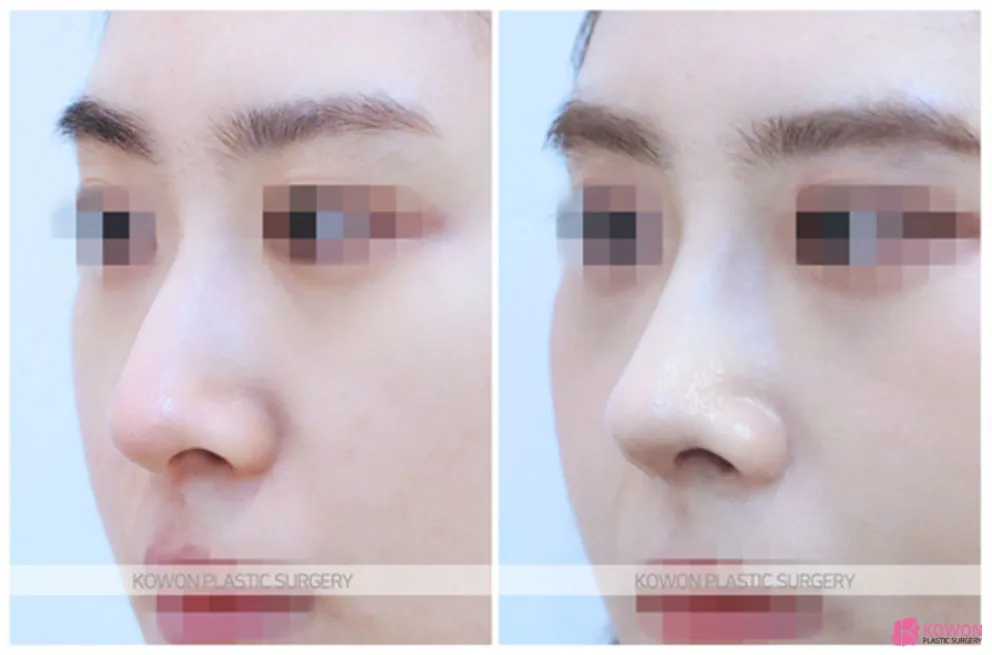
This time, we will examine the actual changes in a patient who underwent nasal tip cartilage surgery.
This patient's nose combined bulbous features with a crooked appearance.
I will explain nasal tip cartilage suturing in detail as we compare the before-and-after appearance.
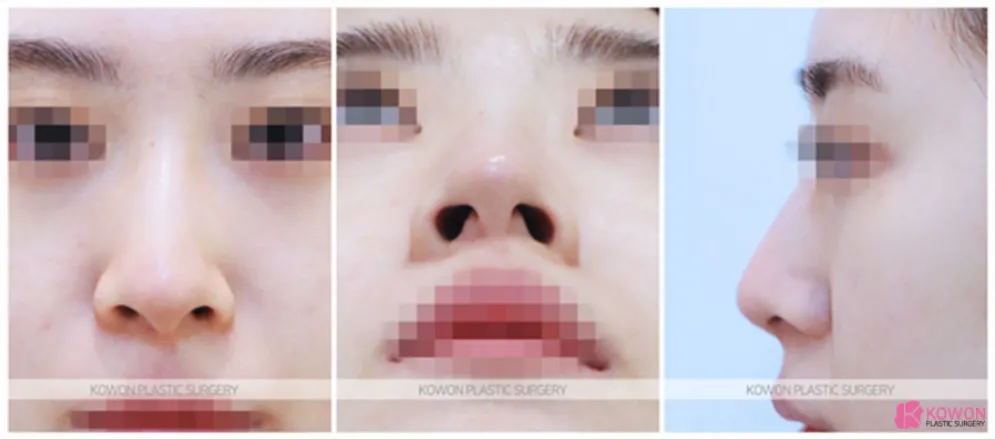
Looking first at the frontal photograph, you can see a slight twist to the right along the nasal bridge line.
We planned and performed nasal tip cartilage surgery to correct this crooked appearance.
Focusing on the lower tip area, you can see a generally blunt, spread-out shape.
The specific cause of this shape can be identified by looking at the photograph taken from below.
The widely splayed tip cartilage on both sides can be considered the main cause.
Appropriate tip cartilage suturing to bring it upright at the center can substantially ease the blunt, wide, bulbous appearance.
The slight downward droop of the tip seen from the front was addressed by correcting the depressor septi nasi muscle.
Because the bridge already had good height, we decided to proceed without adding an artificial silicone implant.
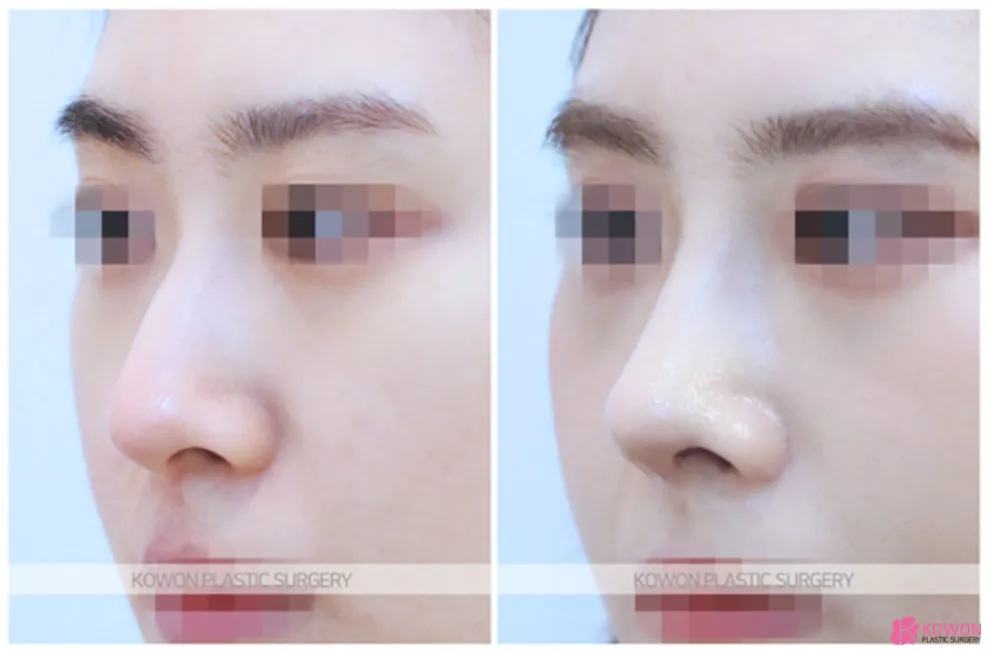
The photograph above shows how the previously visible nasal deviation has been neatly corrected.
Refining the uneven, bumpy line created a more natural contour.
At the same time, the facial features became much more refined and attractive, changing the overall impression too.
The appearance became defined and open, while the line along the nose brings out a more feminine impression.
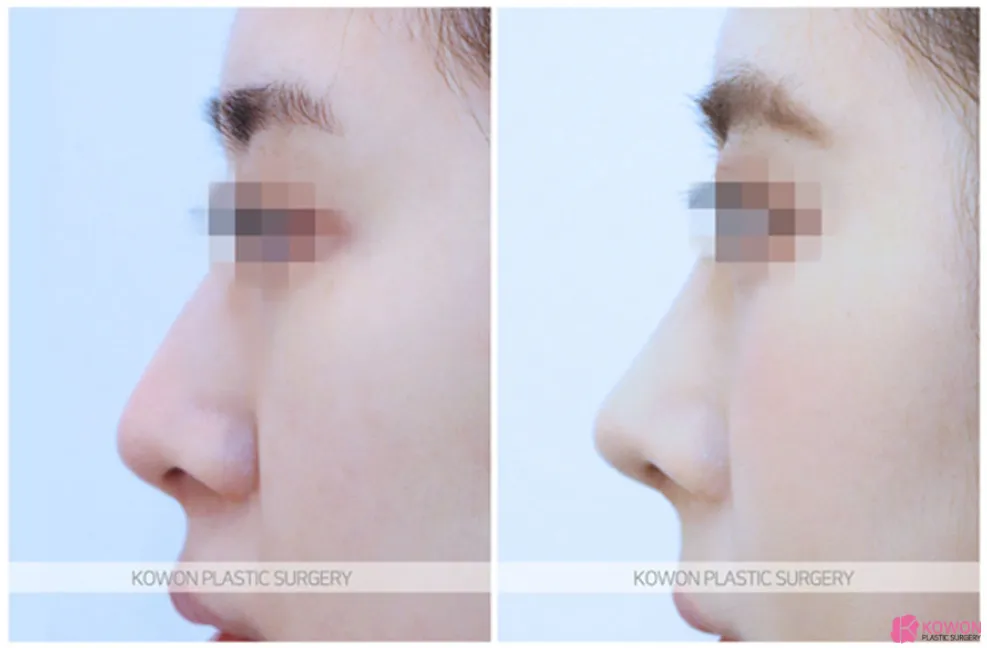
From the side, the increased dimension at the tip is easy to see.
Before surgery at KOWON Plastic Surgery, the mouth tended to look protrusive. As the nasal line became defined, an optical effect made the mouth appear to recede inward.
Although only the nasal shape was refined, the balance of the whole face changed, creating a striking, defined impression.
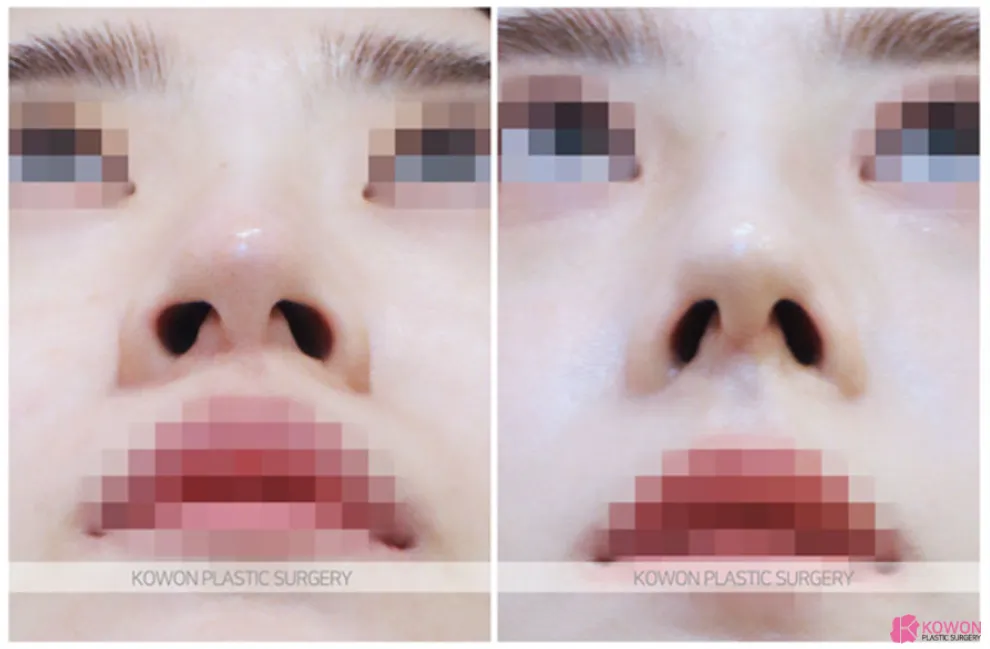
The lower photograph shows that the alar area was initially somewhat widely spread.
Many people assume this always requires incising and reducing the alae, but an incisional approach is not necessarily the only option.
Depending on what is needed, appropriate tip cartilage suturing alone can create a neat, sleek shape like the one above.
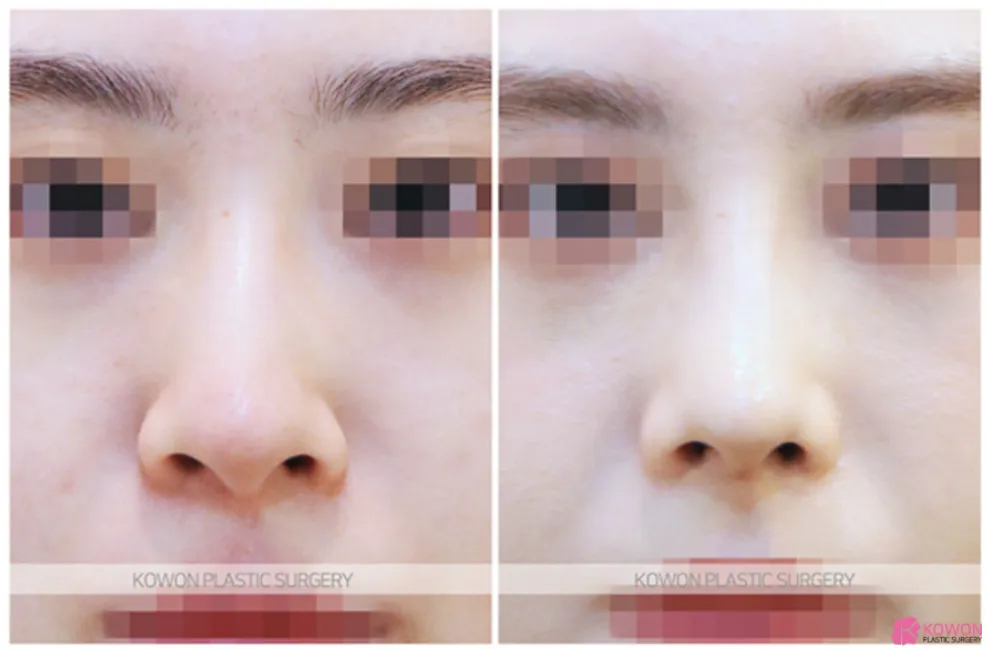
The frontal assessment also showed a slight twist, but careful nasal tip cartilage surgery neatly addressed the crooked appearance.
I hope today's explanation was helpful. Our KOWON plastic surgery blog contains many other cases of improvement, so please feel free to browse.
Thank you for reading this long article to the end. I will return with more useful, informative material on plastic surgery.