
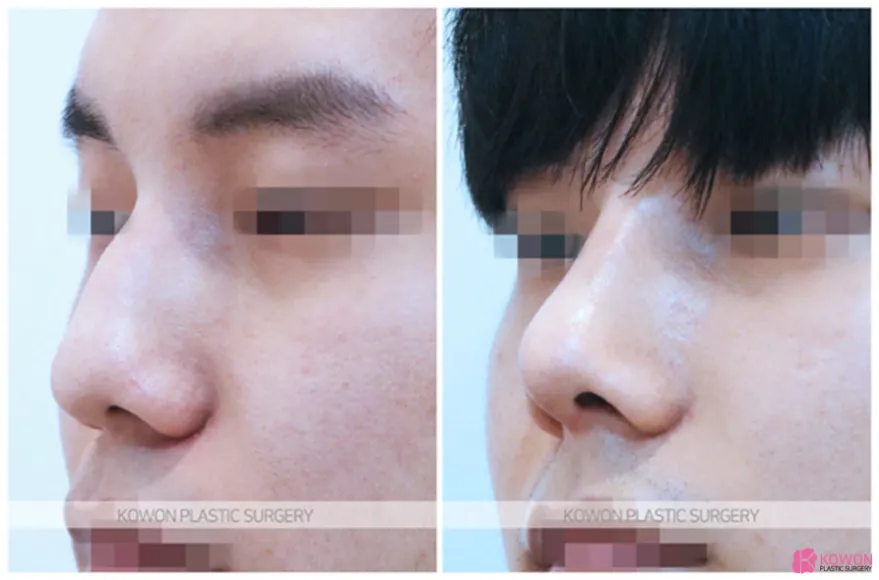
At KOWON Plastic Surgery, we guide people concerned about different nasal shapes toward improvements that consider the harmony of the whole face.
Today I will use an actual case to explain in detail what we assess when correcting a hump nose.
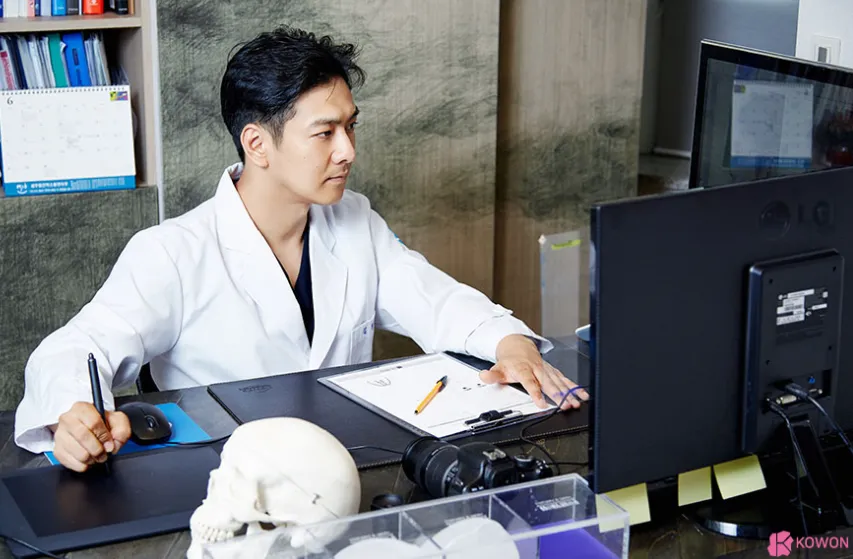
This patient had a visibly protruding nasal dorsum that required hump-nose correction.
The nose was somewhat large relative to the face and was not straight, giving a somewhat awkward overall impression.
In particular, the downward-pointing tip gave a heavy, somber appearance rather than a bright, lively one.
Concerns about nasal shape like these can lead to insecurity about appearance, so it is advisable to explore options suited to the individual's condition.
Crooked nasal bones may also be accompanied by problems such as nasal blockage, rhinitis, or sinusitis, so we need to assess their effect on daily life too.
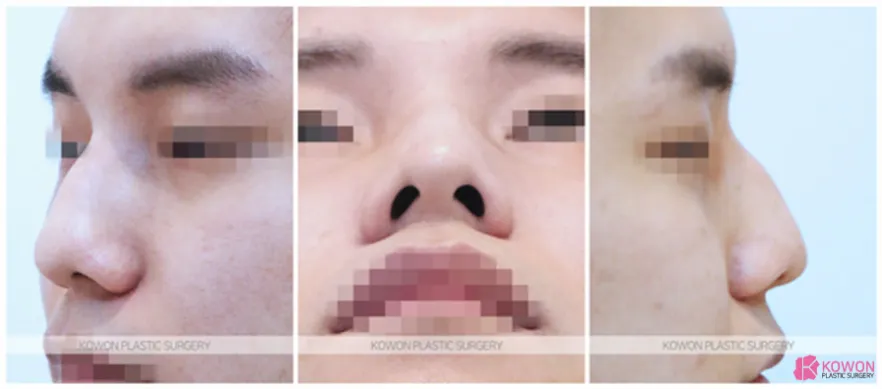
This patient did indeed have crooked nasal bones and discomfort from rhinitis and nasal blockage.
Considering both the size and degree of deviation, I planned to refine the protruding area and correct the position of the nasal bones. We also used septal cartilage to improve tip height and corrected the crooked areas inside the nose.
Before surgery, we photograph the front, both sides, and the underside to assess nasal shape from multiple directions.
People usually look at themselves mainly from the front in a mirror, so photographs from other angles may make their usual nasal shape look unfamiliar.
This patient had a clear protrusion from the middle of the dorsum and a drooping tip, making the overall line look uneven.
The nasal bones' deviation to one side also made the left and right nostrils look different in shape.
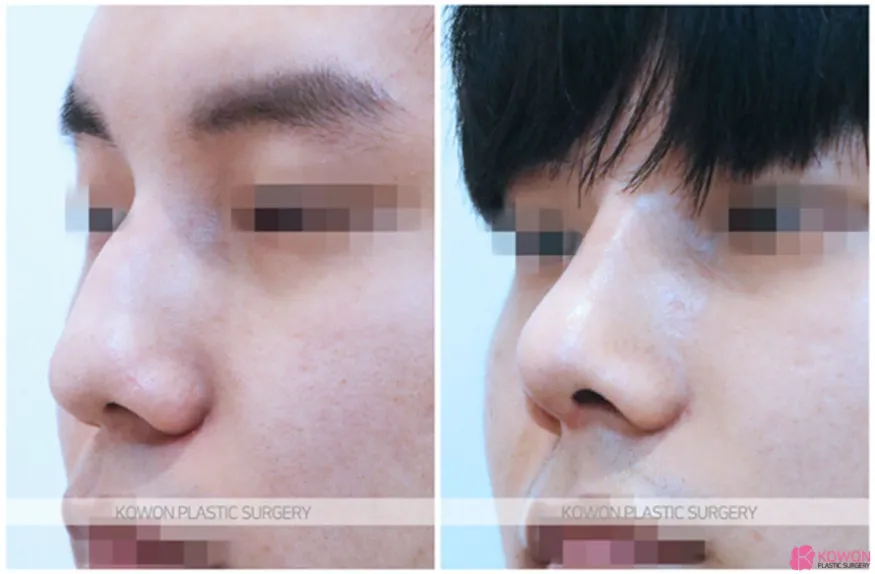
Placing the before-and-after photographs side by side makes changes in nasal shape easier to see.
The bumpy dorsum became straighter and the downward-pointing tip was raised, creating a more refined impression.
Even changing the shape of the nose alone can make the overall facial impression feel different.
We also refined the recessed-looking bridge at the area between the eyebrows to bring out more dimension.
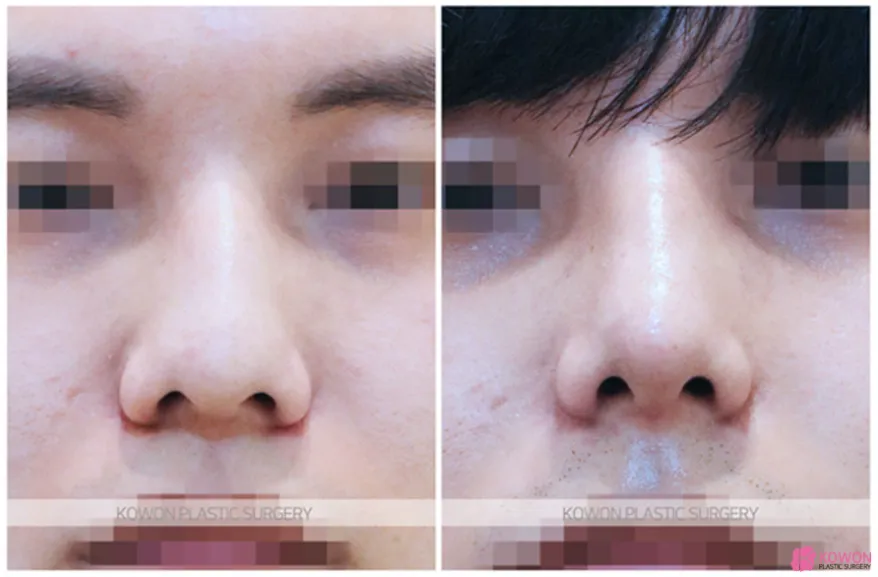
Now let us look at the frontal before-and-after photographs.
The preoperative view shows that the nasal bones lean to one side rather than running straight.
Although we corrected the crooked bones during surgery, we explained beforehand that they might tend to return toward their original state as time passed afterward.
The angle of deviation was particularly greater than usual in this patient, so we explained the importance of continued follow-up after correction.
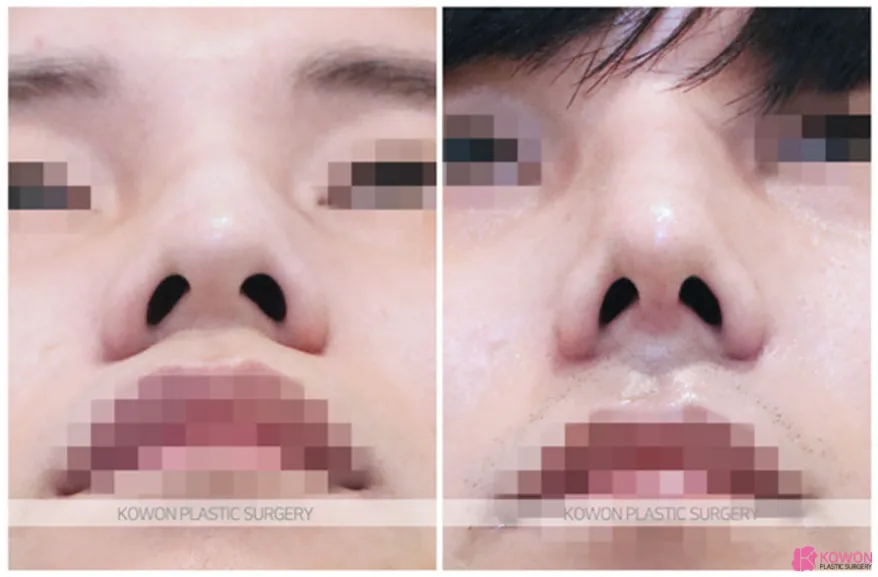
Comparing photographs taken from below makes the changes even clearer.
The nose's one-sided deviation improved, and the previously different-looking nostrils are also more evenly shaped than before.
The change in tip height also made the overall nasal contour more defined.
Viewing the changes from several directions shows that the balance of the whole nose was adjusted, rather than just the dorsum.
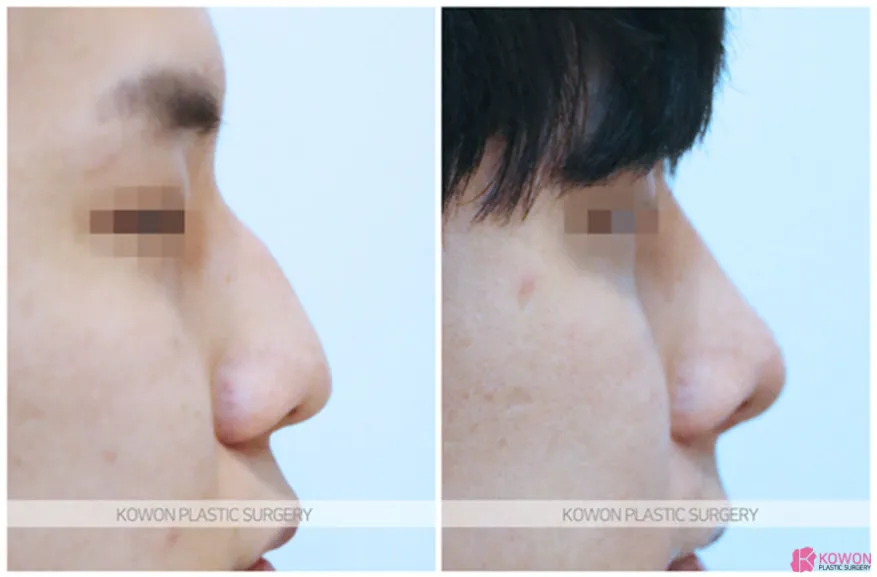
In this hump-nose correction case, we refined the protruding, bumpy dorsum and considered the tip and crooked nasal bones together to shape the whole nose. After surgery, the patient expressed satisfaction with the changed shape.
We have looked at the process of improving nasal shape through an actual case.
At KOWON Plastic Surgery, we plan a suitable shape with each person's facial shape and overall impression in mind, rather than simply changing one particular area.
If nasal shape or functional discomfort concerns you, please first have your condition assessed and discuss an approach suited to you.