
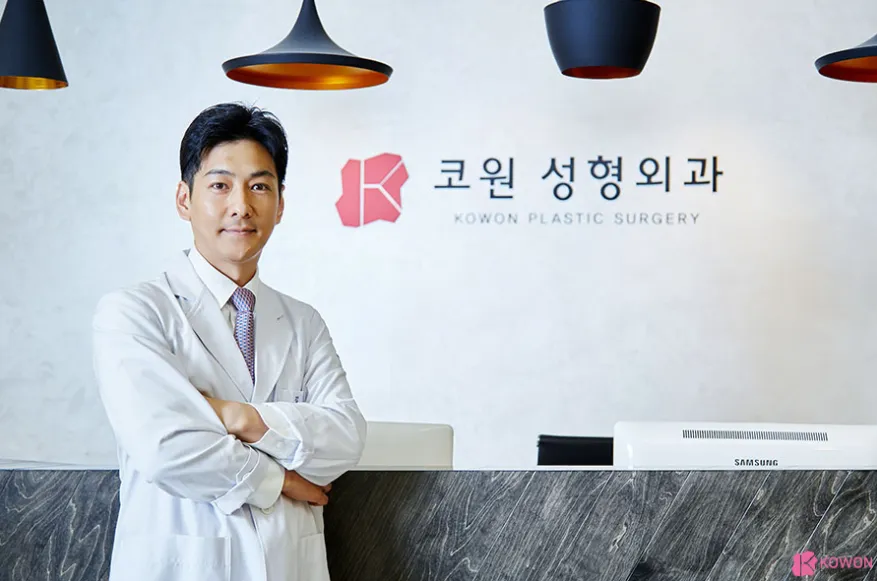
Hello. I am Kim Hyung-taek, director of KOWON Plastic Surgery.
This time we will examine the process of tip elevation for a patient concerned about marked nostril asymmetry and a long nose.
The photographs you will see today were recorded immediately before the actual procedure.
What stood out first was a pronounced hump despite the patient being a woman. The long, slightly tilted nose could give a somewhat somber or strong impression.
The nostril shapes differed markedly when viewed from below, making the concern especially understandable.
When the levels of the base or the structural framework itself differ like this, restoring balance is quite challenging.
Simply trying to straighten the visible shape may leave it looking crooked later and reduce satisfaction. Even if it looks fine at first, it may gradually tend back toward the previous framework over time.
Even if it does not return entirely to the original shape, everyone's main hope is for one correction to provide a sturdy, attractive line that lasts a long time.
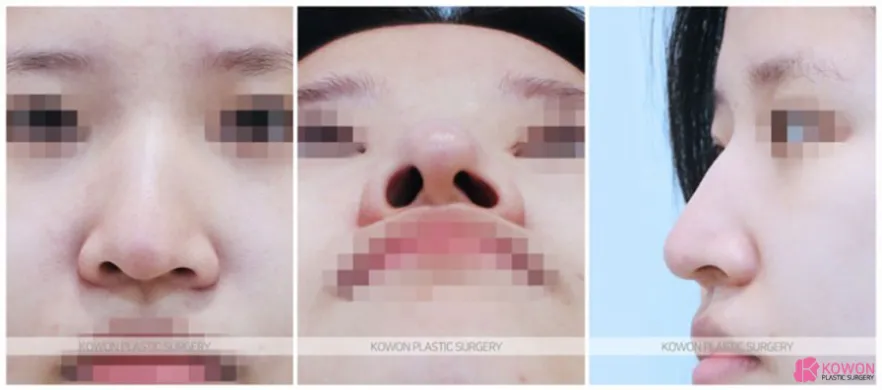
Looking closely at the frontal photograph on the left, the line clearly leans to one side, with one area appearing as though it might collapse.
With this degree of deviation, the internal airway or cartilage framework is also typically bent, so careful assessment is necessary.
In this case, refinement was necessary to address the protruding area and correct the deviated line.
Because there might be insufficient cartilage to support the column firmly, we explained in detail beforehand that ear cartilage would also be used to refine the tip elevation naturally.
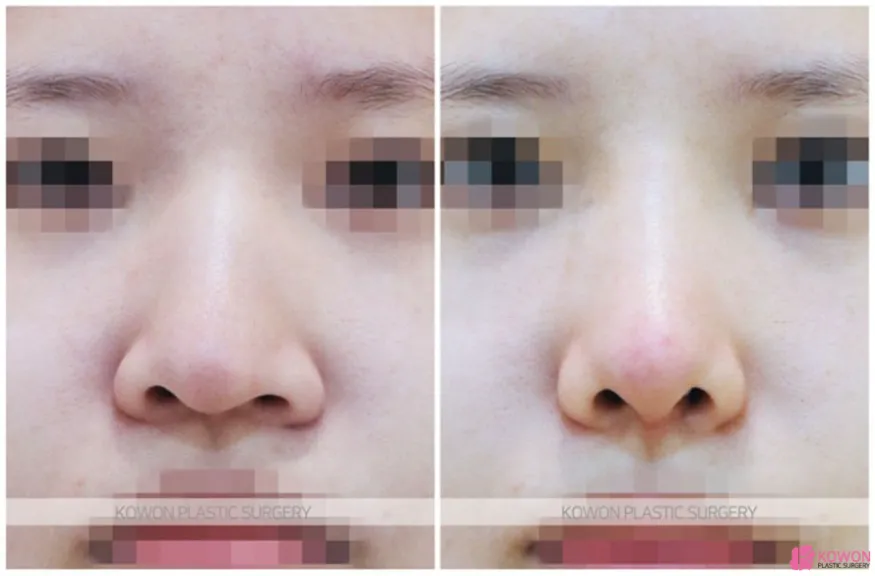
Next, we will compare the appearance immediately after completion at KOWON Plastic Surgery with the earlier appearance.
The right photograph was taken after refining the line, so some swelling and slight redness remain visible.
These signs soon subside and become more comfortable after a little time, so there is no need to worry.
Comparing the two views, the previously awkwardly crooked line is noticeably straighter and neater.
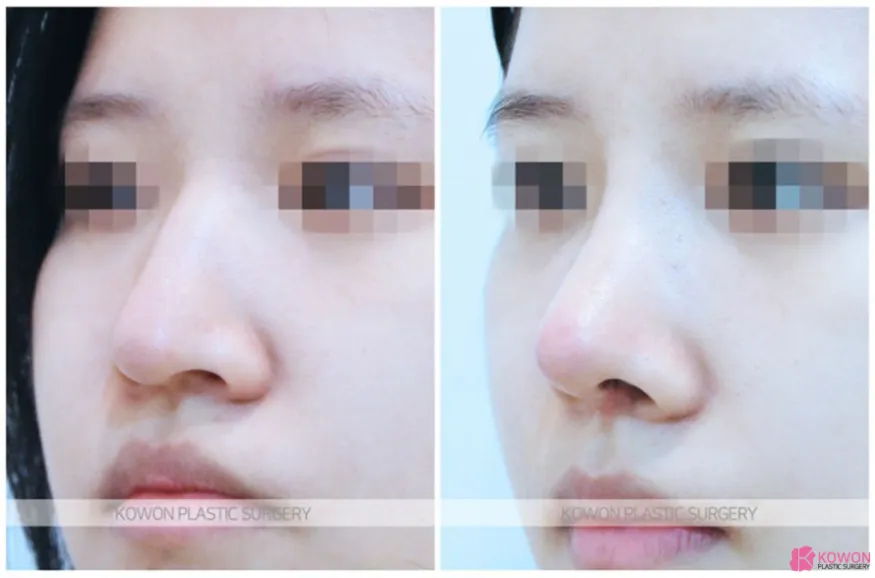
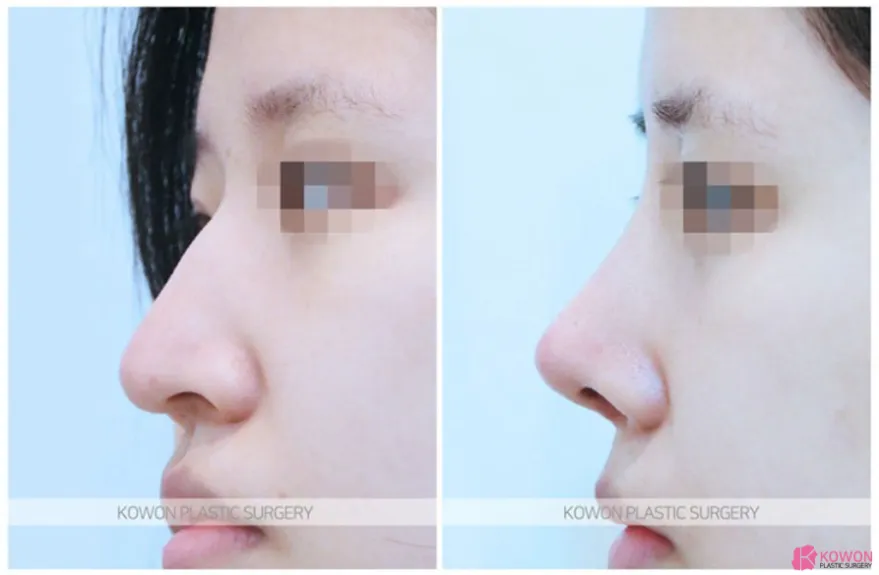
Let us also examine the before-and-after views of tip elevation from a 45-degree angle.
The left view had a strongly protruding, twisted appearance, while the postoperative view on the right shows a smoother, softer line.
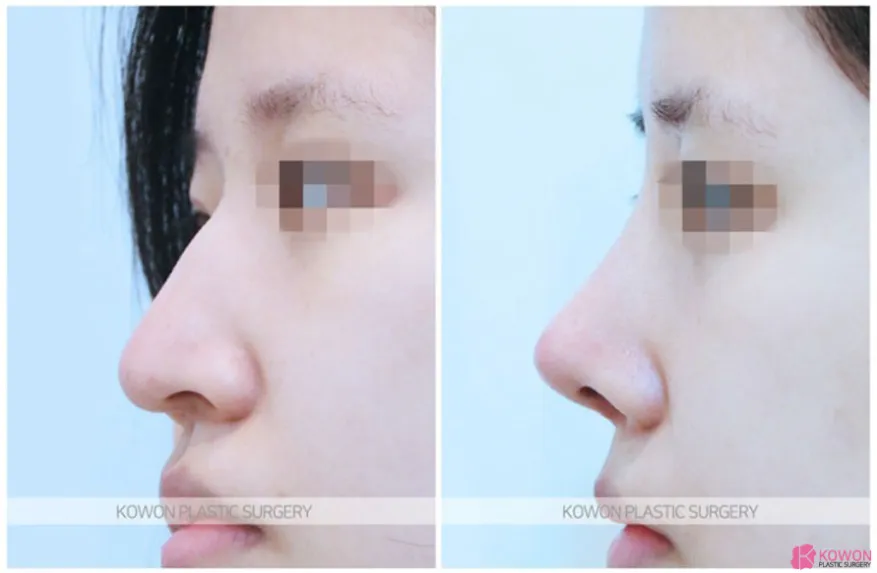
The difference is also clear from the side.
Refining the characteristic central protrusion brought the shape into harmony with the overall facial features.
The underlying bridge was already quite high, so we elevated the tip naturally in proportion to that height.
The shape can generally settle slightly with time, so a little extra initial height is needed to maintain a satisfying shape over the long term.
We also carefully adjusted the downward muscular pull at the same time.
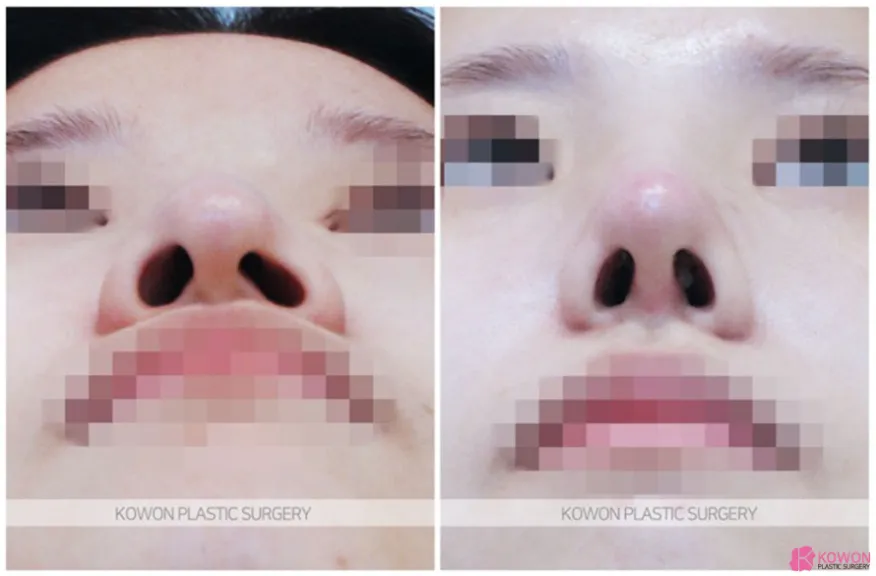
From below too, the previously uneven nostrils look more nearly symmetrical and naturally shaped.
If a nasal hump concerns you or you would like to refine the overall line, you are welcome to visit me for a detailed consultation.
I hope the information shared today has been helpful.