
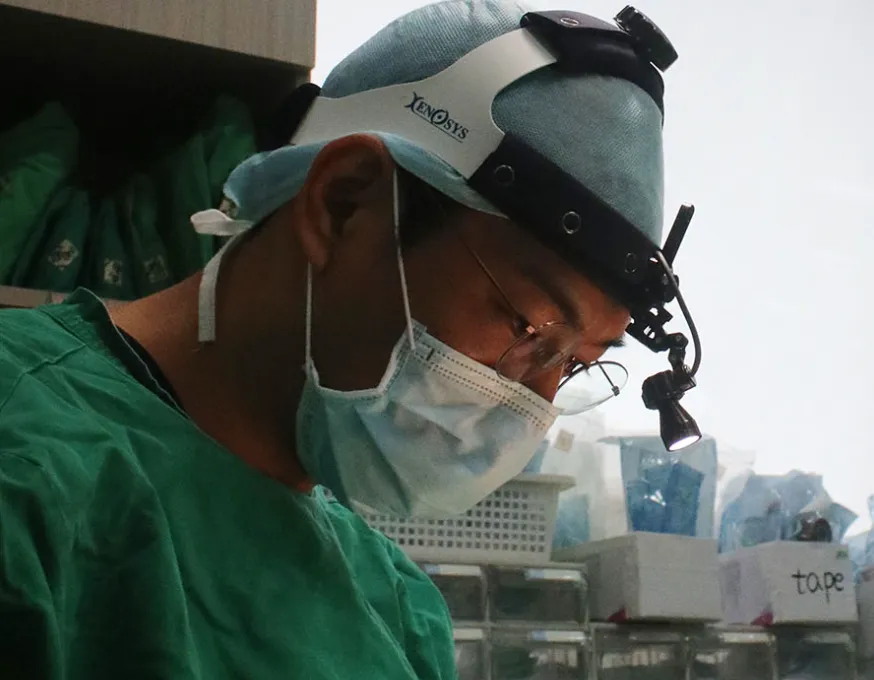
Hello, I am Kim Hyung-taek, director of KOWON Plastic Surgery, which specializes in nasal implant removal and is known for hump-nose surgery.
Today I will discuss a patient who came to me after previously having a thread-based nasal procedure.
In practice, I very often meet people who first choose thread lifting, such as Misko, Hiko, or Beko, or filler treatment because nasal surgery itself feels burdensome or frightening and these procedures seem easier to undergo.
It would of course be nice if threads produced the desired line at once, but frankly, there are clear limits to creating the exact desired nasal shape with threads alone.
Lifting only the tip with threads leaves the dorsum low, which can disrupt overall harmony. Even adding filler to compensate has a short duration and limits in creating a high, dimensional bridge.

Many eventually find that the outcome differs from their expectations and come to our clinic to have the inserted threads carefully addressed and undergo nasal implant removal and revision surgery.
The real problem is that small barbs anchor the threads inside the nose, so they cannot simply be pulled out and must be removed surgically.
Removing the threads inevitably disturbs the internal nasal tissue to some degree, making the operation quite challenging. With that increased difficulty, the care and cost involved inevitably increase as well.
Some people who come after thread procedures say they had casually thought, ‘I will try shaping it with threads first, and if I like it, later I will have the nasal implant removed and get a proper rhinoplasty.’
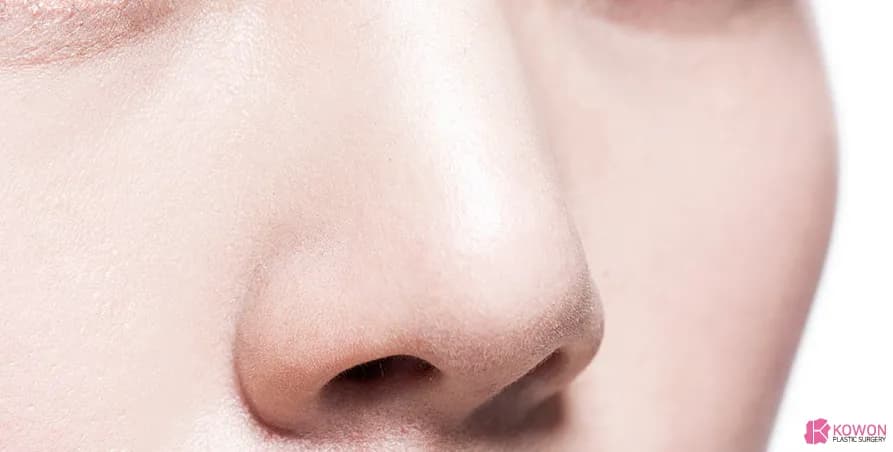
But the inside of the nose is among the body's most sensitive areas and has little tissue to spare.
However simple a procedure may seem, remember that removing remaining threads or implants if problems arise later is never easy. It is advisable to consider the possible side effects carefully before deciding.
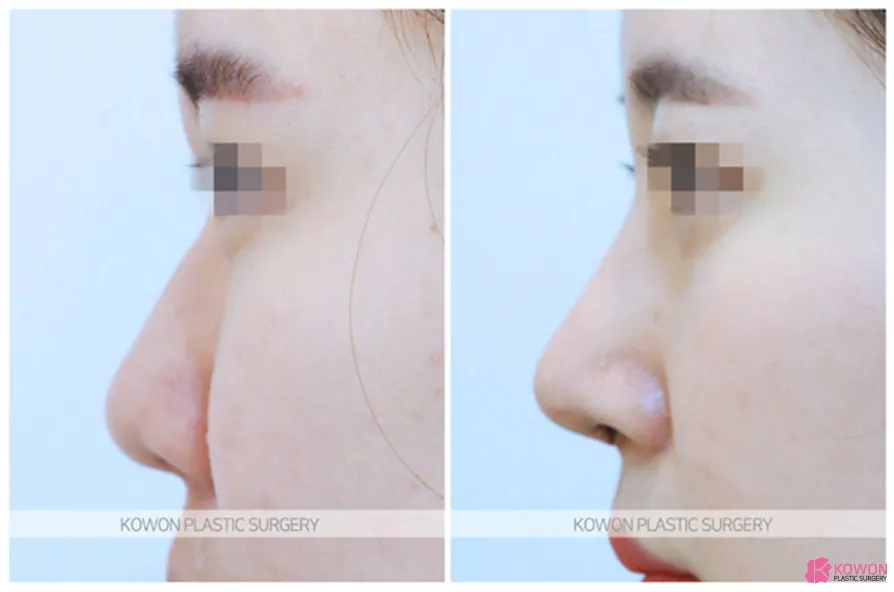
In the preoperative view of a patient I treated, the tip drooped, the dorsum between the eyes was low, and the uneven overall line had a strongly bumpy, hump-like appearance.
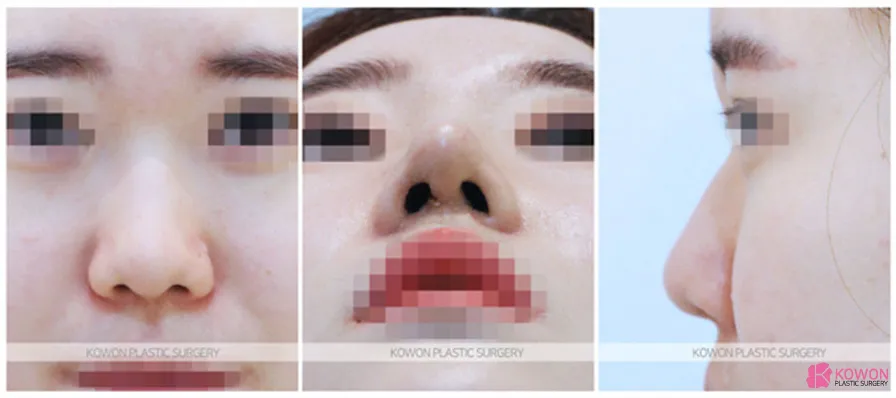
From below, the tip looked bunched together as if tightly tied with thread.
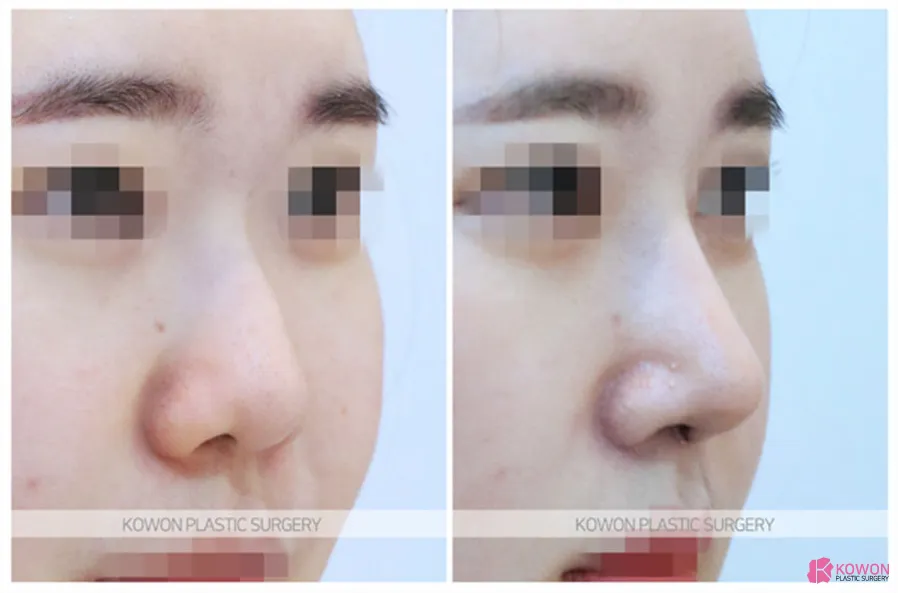
I carefully removed the remaining internal threads and nasal implant through precise surgery, then reshaped a smooth, natural tip line using the patient's own septal cartilage.
Photographs taken approximately 2 weeks after surgery show that the previously blunt, heavy-looking tip has become sleeker and more dimensional.
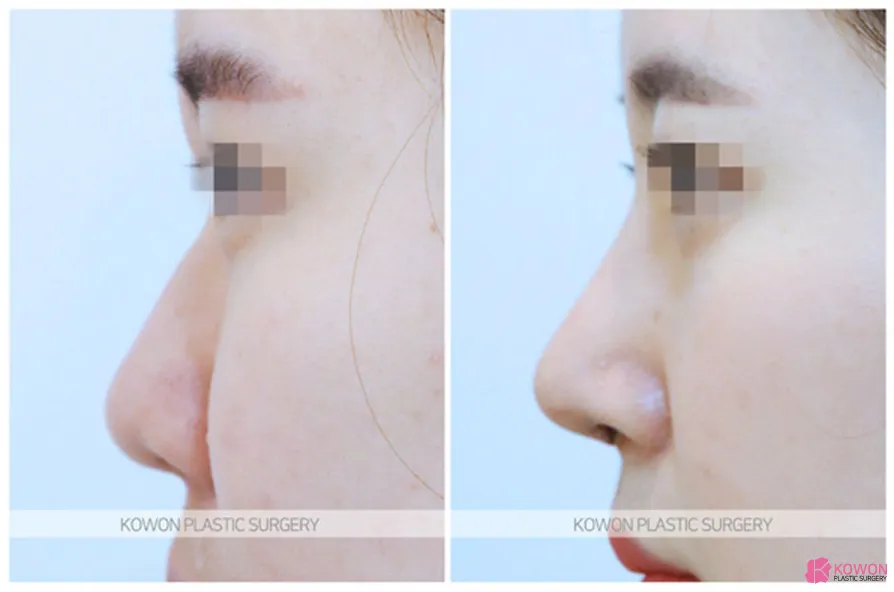
In particular, the dorsum at the area between the eyebrows, which had looked deeply recessed, settled into a very natural, smooth line after the nasal implant removal surgery.
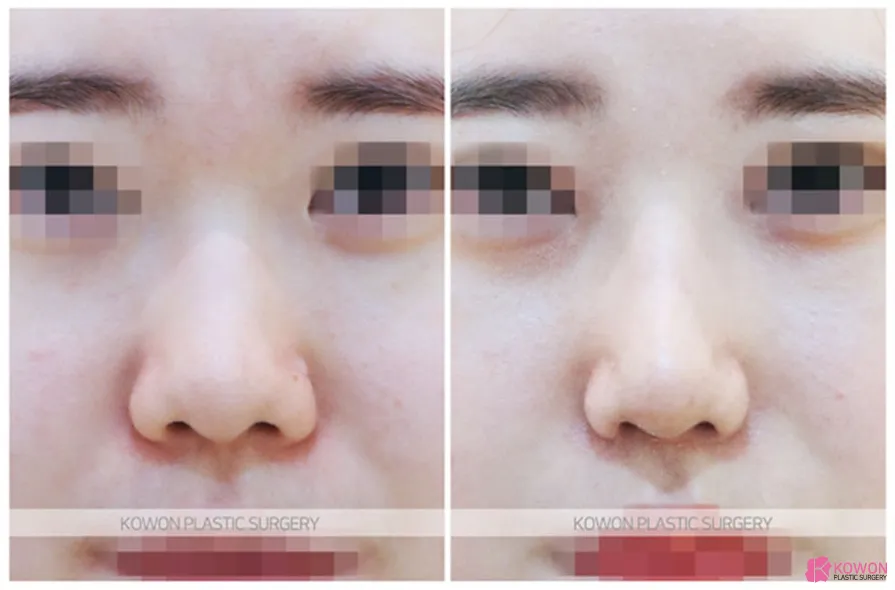
The difference is clear from the front too. The previously broad bridge narrowed into a sleek line, making the overall impression much more defined.
At the same time, the previously blunt tip was refined to look smaller and sharper, creating a more sophisticated line.
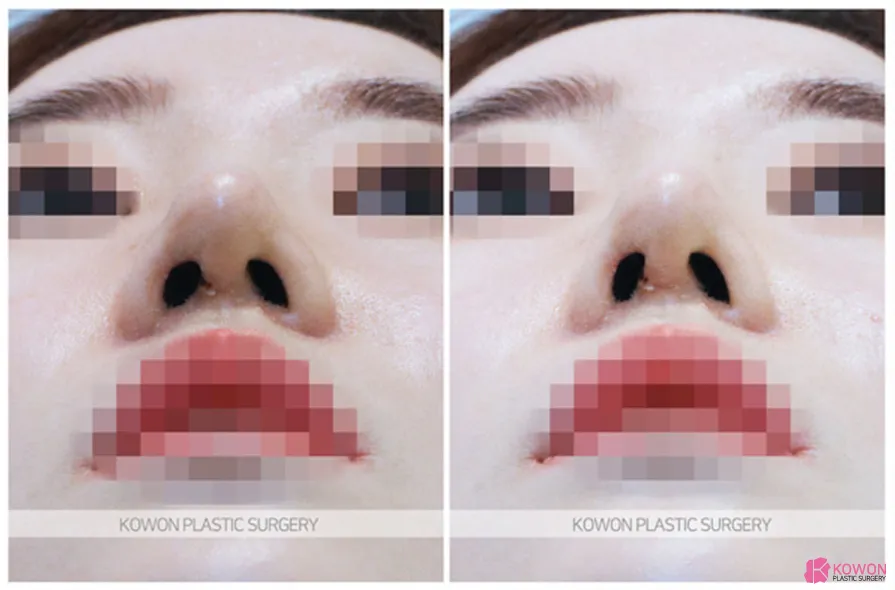
Before surgery, the junction between the alae and tip was deeply pinched inward and looked awkwardly tied together. After surgery, that uncomfortable appearance disappeared and the area joined in a soft curve.
I have now explained nasal implant removal and revision at KOWON through an actual case.
If your nasal shape or a previous procedure has been troubling you, please feel free to visit me, Kim Hyung-taek, for a consultation.