
Hello. I am Kim Hyung-taek, head director of KOWON Plastic Surgery.
Today I will share a case of implant-free nasal surgery that neatly corrected a man's hump nose.
I will explain in detail as we examine the progress photographs of a male patient who actually visited us.
A hump nose is more common than one might think. Because the tip hangs downward, the overall impression can look somewhat dark and somber. Many people therefore identify this as a source of insecurity.
This patient had no major complaint about the original nasal shape itself. However, the nose leaned considerably to the left, with severe septal deviation. Rhinitis and nasal blockage made daily life very uncomfortable, leading the patient to KOWON Plastic Surgery.
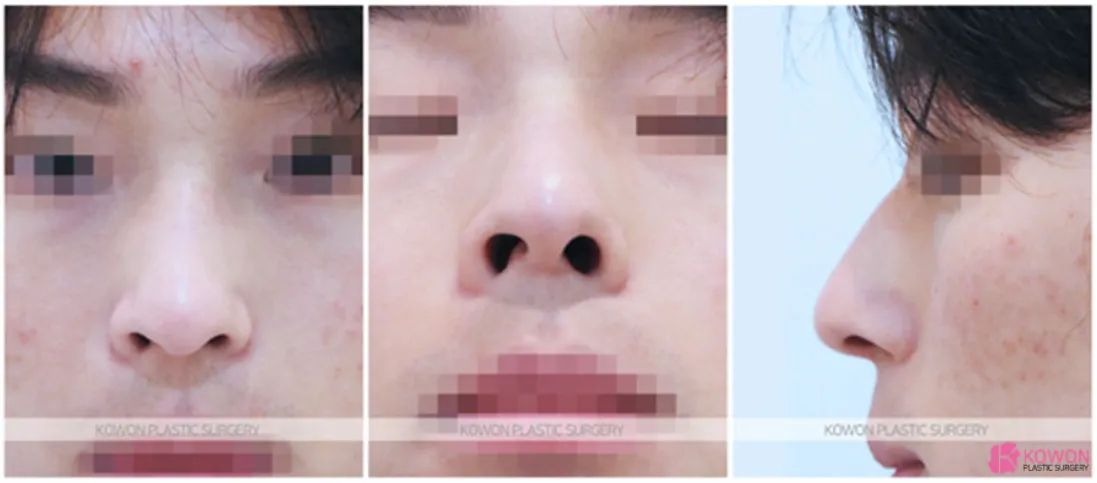
The three photographs above were taken before surgery. The frontal view clearly shows the nasal line curving toward the left.
A crooked nose like this can improve considerably with correction combined with hump osteotomy. However, I explain that making it 100% perfectly straight is realistically difficult.
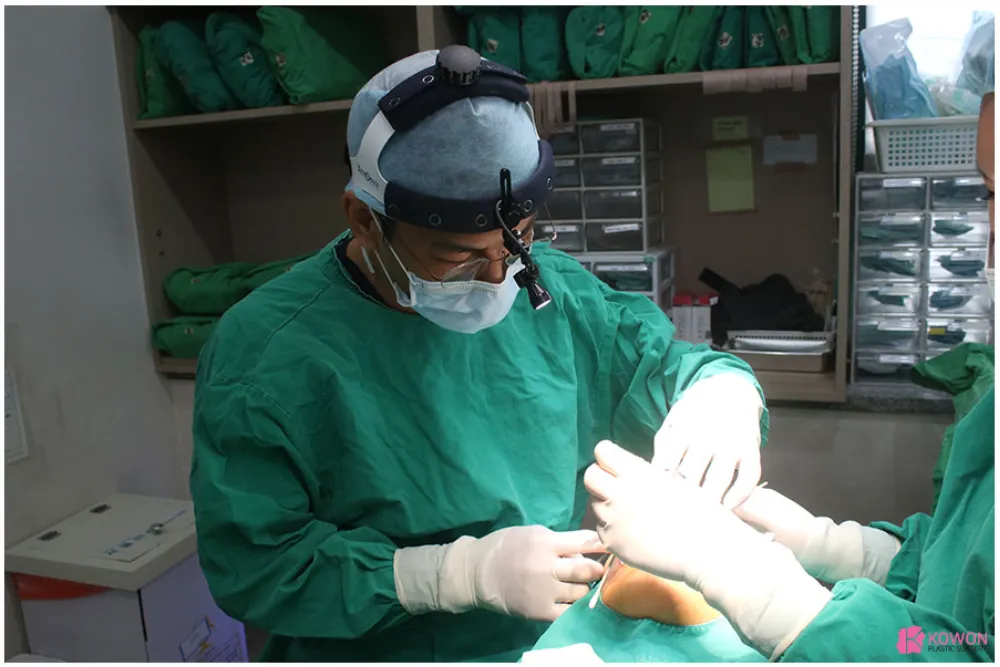
Even if it looks straight immediately after surgery, some possibility of bending again remains over time. We therefore explain this characteristic carefully beforehand so patients can understand it fully.
Correcting septal deviation usually brings noticeable improvement in troublesome rhinitis symptoms. However, rhinitis is also strongly influenced by constitution and the surrounding environment, so there are limits to completely eliminating it at its root.
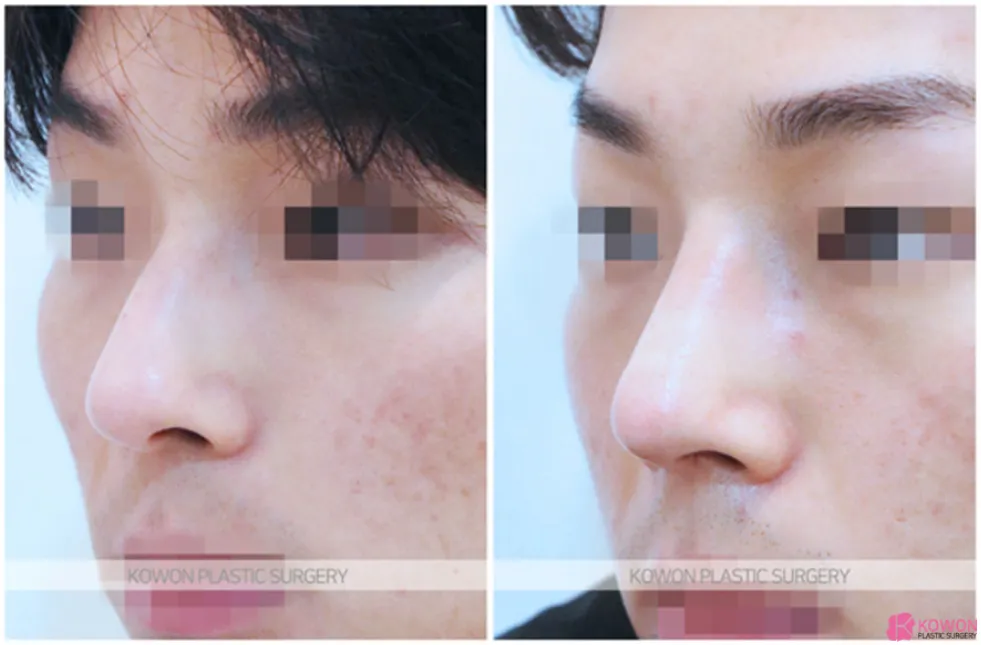
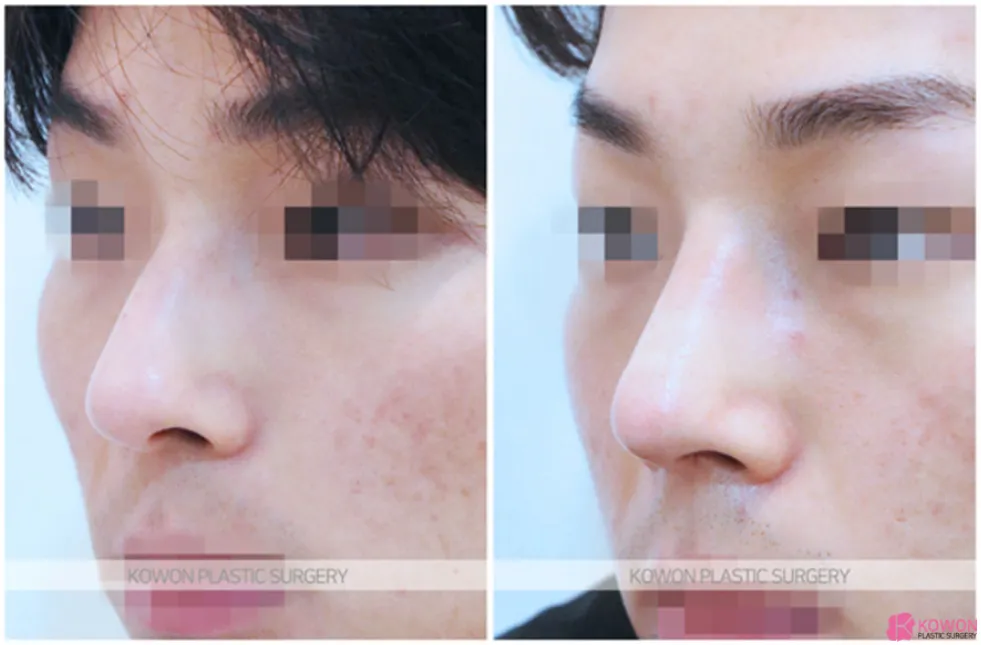
This is the progress after implant-free nasal surgery from a 45-degree side angle. The bridge already had quite good height; after surgery, the straighter line gives a much more refined impression.
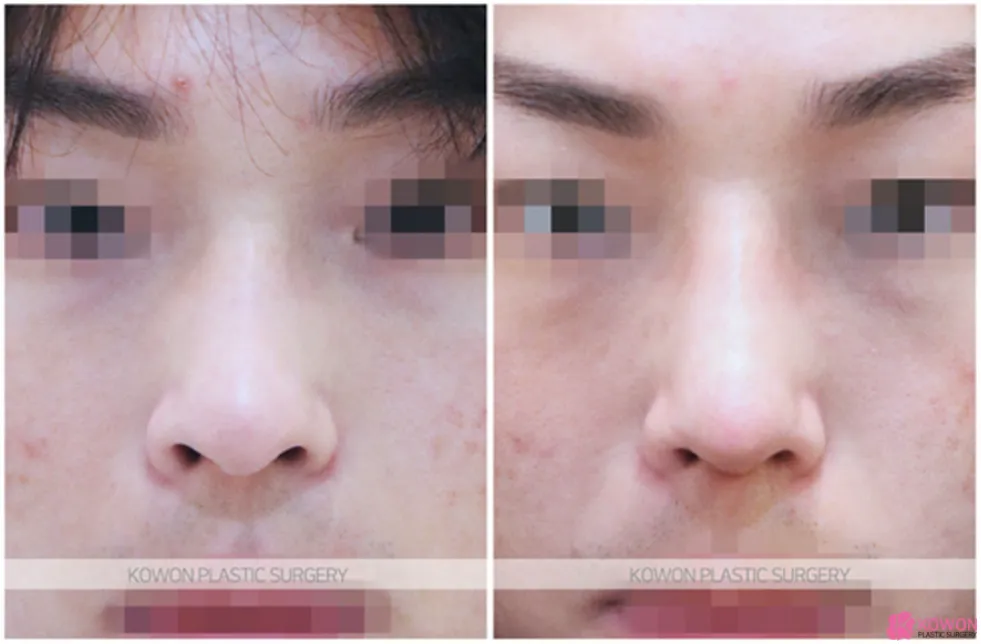
The frontal view shows that the previously conspicuous leftward curve has become straighter and better aligned, without the asymmetric appearance.
As the bridge axis returned to its position, the nostrils that had been clearly exposed from the front became naturally less visible.
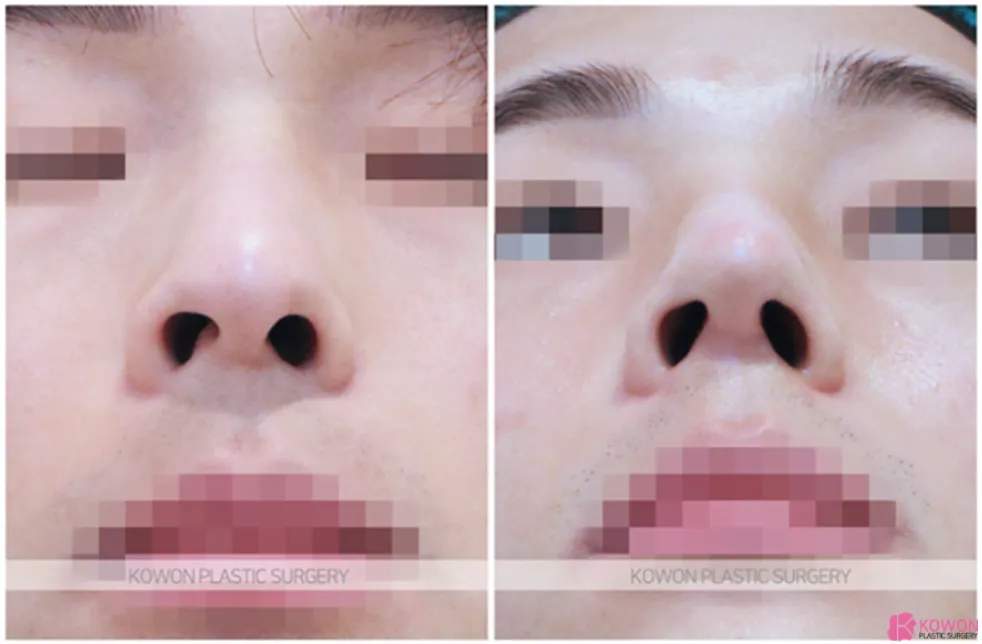
The downward-drooping tip was also raised smoothly and straight through implant-free nasal surgery.
We corrected this area using nasal tip cartilage suturing. The previously blunt, rounded nostrils look sleeker and more refined.
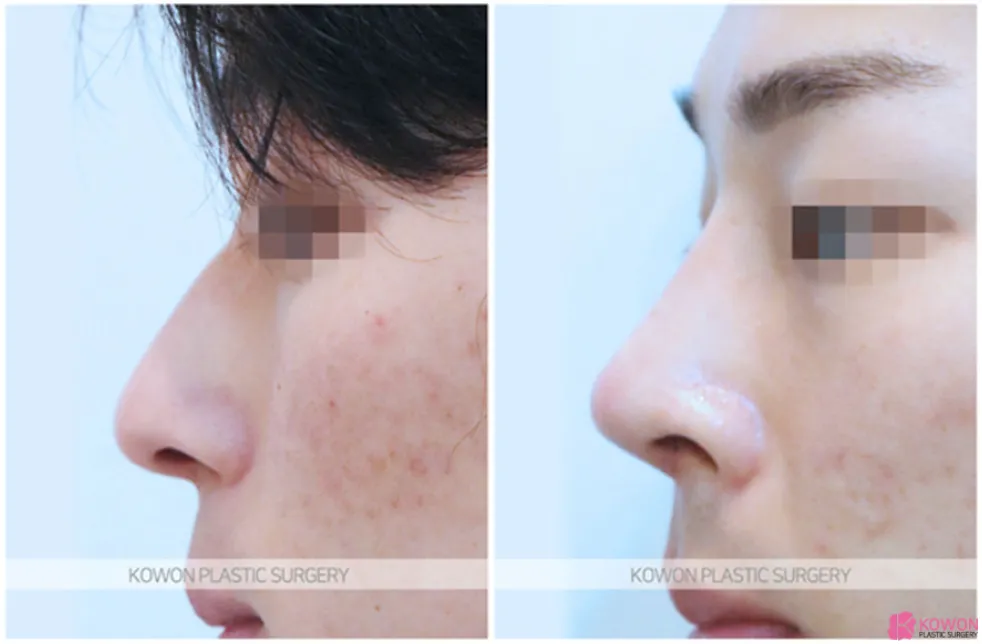
The profile makes the change in nasal shape clear at a glance.
The hump protruding from the middle of the dorsum was neatly refined into a bold, masculine straight line. Restoring the drooping tip made the impression much softer and brighter than before surgery, and the patient was very pleased with the result.
In fact, we mainly recommend implant-free nasal surgery for people whose existing bridge framework is already sufficiently high.
If the surface left after refining the hump feels slightly uneven, a thin layer of silicone is sometimes placed to compensate.
This has been Kim Hyung-taek, director of KOWON Plastic Surgery, explaining male hump-nose correction and implant-free nasal surgery.
If you have questions about rhinoplasty or want to find a line suited to you, please feel free to contact KOWON Plastic Surgery.