
Hello. This is Hyung-taek Kim, director of KOWON Plastic Surgery.
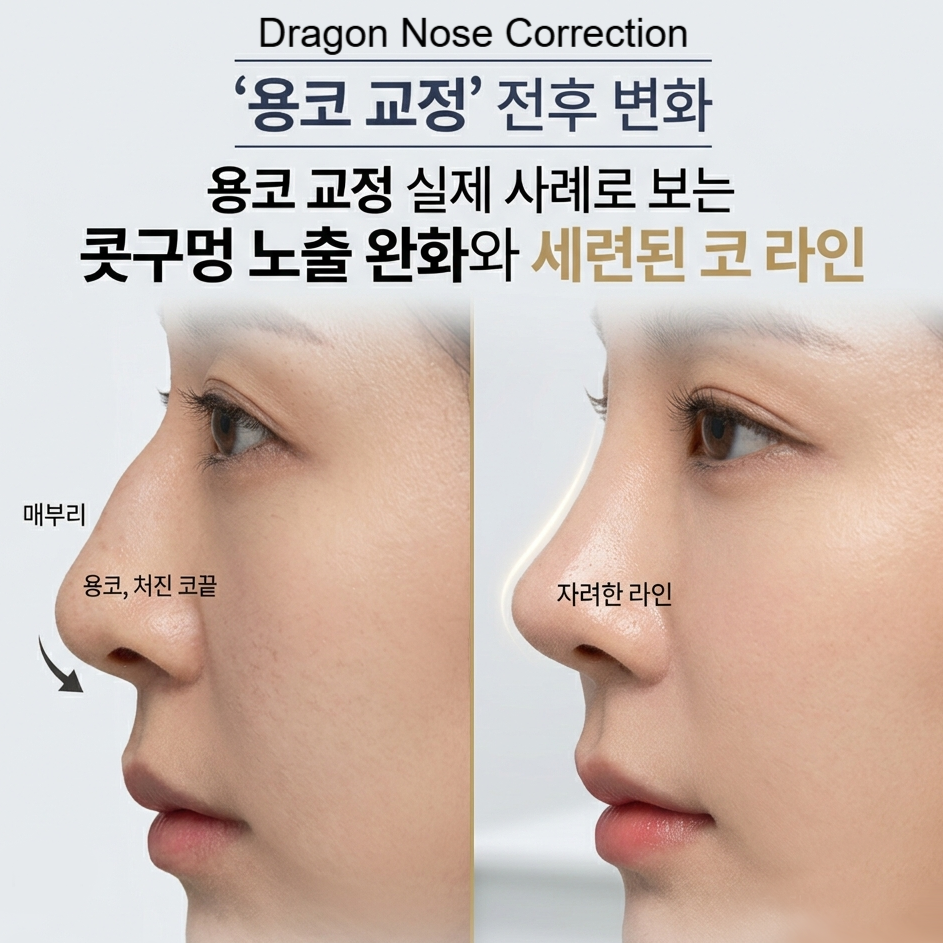
This patient had a prominent hump in the center of the nasal bridge, resulting in an uneven line, and the nasal tip was drooping downward, requiring yongko correction, which made the overall impression appear somewhat strong and shadowed.
In fact, men may not be very concerned about a hump on the nasal bridge, but for women, the raised nasal bridge often causes distress because it can make them look witch-like or sharp.
In addition, due to the direction the nasal tip was pointing and the angle of the nasolabial angle, it was also observed that the nostrils appeared particularly prominent when viewed from the front.
"Simply shaving down the protruding nasal bridge does not solve the problem; the angle of the nasal tip and the overall curve must also be refined for the entire face to appear harmonious."
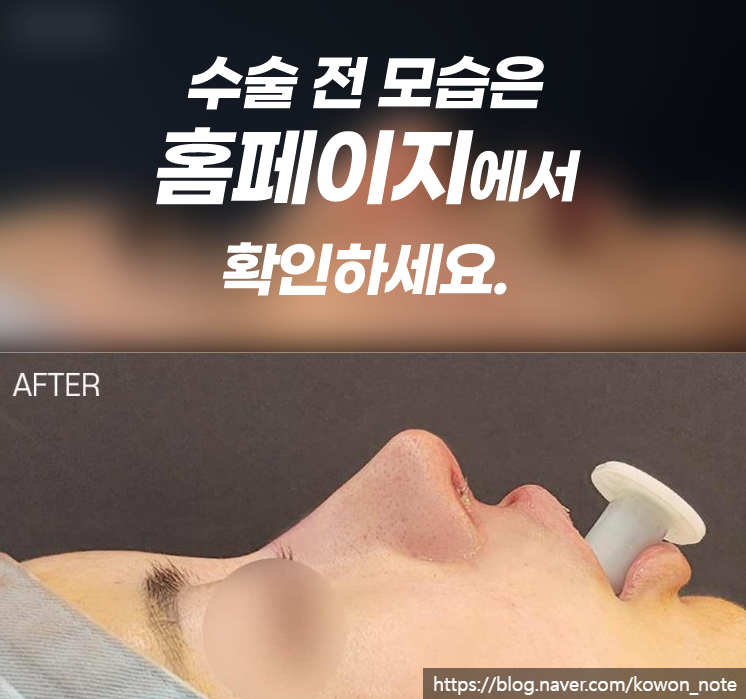
Therefore, after neatly refining the protruding hump to smooth out the nasal bridge, the drooping nasal tip was slightly lifted by applying cartilage repositioning and cartilage suturing, lightening the previously heavy impression.
(These photos are used with the patient's consent.)
Additionally, to ensure that the nasal tip does not droop again over time, a strong support was placed between the cartilages to provide structural stability.
The angle from the columella to the nasolabial angle and then to the philtrum was delicately adjusted to reduce the previously exposed nostrils, and to create a natural and elegant line from every angle.
In particular, the flow from the nasal bridge down to the nasal tip was completed very smoothly.
"For hump nose types with a naturally high nasal bridge, it is essential to sufficiently raise the nasal tip to match that height for a natural look, and the supporting force from below is key."
In situations where the nasal bridge foundation is established like this, the supporting force for the nasal tip is crucial, and during yongko correction, we were able to create a sophisticated and three-dimensional line without exaggeration.
[Related Cases Worth Viewing]
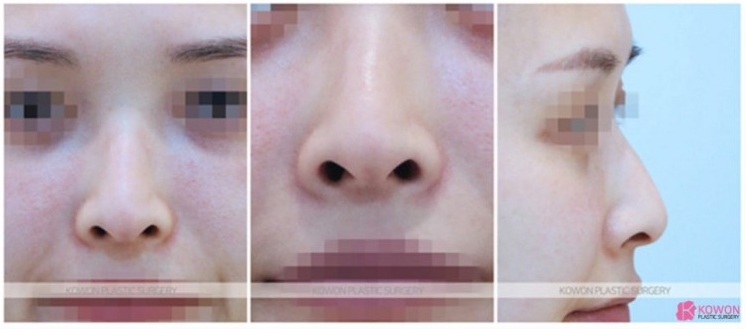
(These preoperative photos are used with the patient's consent.)
In this case as well, the flow of the nasal bridge was not smooth and the nasal tip drooped downward, making the overall impression appear somewhat heavy and stuffy.
Yongko correction was needed to clearly refine the nasal bridge line and enhance the angle of the drooping nasal tip.
To improve the stuffy proportions, we refined the nasal bridge height to harmonize with the facial features and delicately lifted the drooping nasal tip cartilage.
At the same time, we reinforced the support so that the nasal tip could remain stable over time, refined the nasolabial angle, and meticulously addressed nostril exposure.
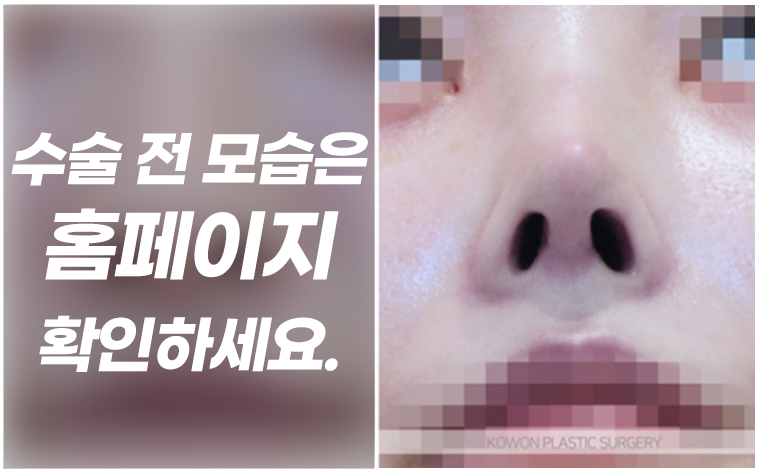
(These photos are used with the patient's consent.)
As a result, the previously drooping nasal tip returned to its proper position, naturally alleviating the issue of prominent nostrils, and the line from the nasal bridge to the nasal tip became more three-dimensional and smooth from both the front and side views.
At KOWON Plastic Surgery, we comprehensively consider everything from the starting point of the nasal bridge to the direction of the nasal tip to create a natural and gentle image transformation from every angle.
[A Word from the Director]
When a hump and a drooping nasal tip appear together, it is not enough to simply refine the protruding nasal bridge,
it is essential to simultaneously correct the support and angle of the nasal tip.
Especially when the nasal bridge foundation is present, a strong support must be formed to prevent the nasal tip from drooping, so that a natural line without interruption can be achieved from both the front and side views.
"The most important thing in plastic surgery is to achieve three-dimensionality and structural stability that harmonize with the overall facial flow, rather than excessive changes."

At KOWON Plastic Surgery, we precisely analyze each patient's cartilage strength and nasal bridge bone structure, and even in challenging cases such as yongko correction, we create a refined line that remains unchanged over time. We promise to continue providing delicate, customized designs that enhance individual charm while satisfying both three-dimensionality and stability.
KOWON Plastic Surgery Clinic
2nd Floor, KBL Center, 110 Dosan-daero, Gangnam-gu, Seoul
View the original post on Naver Blog
This procedure/surgery may cause side effects such as bleeding, infection, swelling, or asymmetry depending on the individual, and accurate information should be confirmed through consultation with medical staff.
— Dr. Hyung-taek Kim, KOWON Plastic Surgery