

Hello, this is Hyung-taek Kim, director of KOWON Plastic Surgery.
In this case, the patient had already undergone several nose surgeries, so the internal structure of the nose was somewhat unstable, and the line did not settle well, resulting in a mismatch in the ratio from the nasal tip to the nasolabial angle, which made the overall impression appear somewhat awkward.
In cases where multiple procedures have been performed like this, the key is not simply correcting the shape, but rather reinforcing the existing internal structure and gradually refining the central axis and flow of the entire nose.
Usually, after experiencing repeated surgeries, patients often notice over time that the nasal tip droops or the overall height decreases.
"The key is not just a simple change in shape, but fundamentally restoring the weakened internal support."
This is because frequent manipulation weakens the cartilage and soft tissues inside the nose, reducing the strength that supports the original shape.
Therefore, rather than just trying to change the appearance, it is most important to calmly reorganize the weakened internal structure and firmly restore its support.
In such situations, it is important to approach with even more caution and precision, carefully examining the condition of each internal tissue.
This is also why we recommend getting a diagnosis at a revision rhinoplasty clinic with extensive experience.
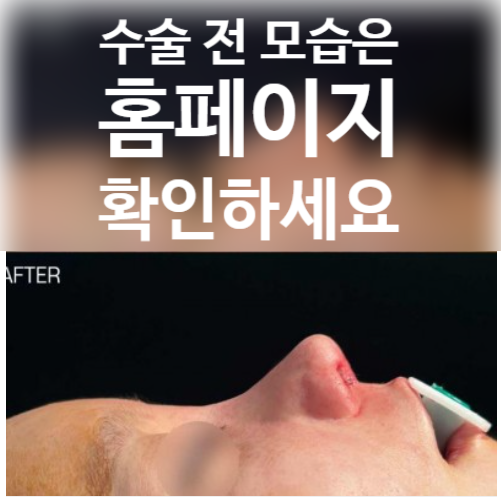
These are reference photos used with the patient's consent.
Due to the effects of previous procedures, the internal shape of the nose had become disorganized, so we tidied it up neatly, and for the nasal tip area, we repositioned and tied the cartilage to create a stable contour.
In addition, by establishing a solid support between the nasal tip cartilages, we reinforced the internal structure so that the sharp shape would be well maintained over time.
"Ultimately, the secret to achieving highly refined results lies not only in the visible line,
but also in meticulously adjusting the internal structure to withstand the passage of time."
Additionally, we balanced the line connecting the columella, nasolabial angle, and philtrum, correcting the protruding appearance of the mouth and helping the boundary from the nasal tip to the philtrum connect more smoothly.
Thanks to the delicate adjustment of the angles, the area around the mouth appears slightly recessed, resulting in an overall soft and sophisticated impression.
These subtle differences are precisely where the expertise of revision rhinoplasty is demonstrated.
[Other cases worth reviewing together]
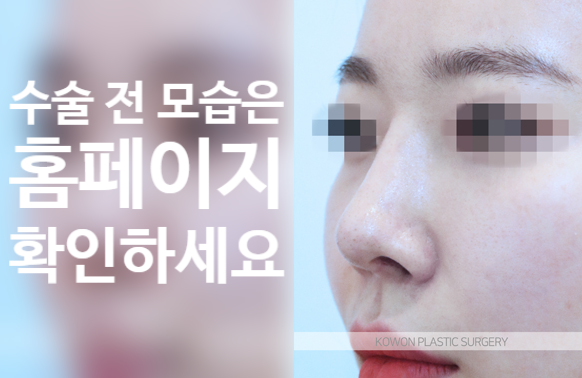
These are reference photos used with the patient's consent.
1. What was the situation
The patient had previously undergone surgery using donor rib cartilage, but over time, cartilage absorption occurred and the internal support became significantly weakened. As a result, the nasal tip gradually drooped and even the nasal bridge line became blurred and dull, leading the patient to visit us with concerns about an overall stuffy appearance.
2. What process was performed
Since reinforcing the internal support structure was most urgent, we harvested autologous rib cartilage to reconstruct the nasal tip support anew. Along with this, autologous rib cartilage particles were carefully placed in the nasal bridge to reduce the burden of implants and to create a natural and smooth nasal bridge line.
3. How it changed
The previously drooping nasal tip was repositioned to stand out again, and a clean, three-dimensional contour smoothly connecting from the nasal bridge to the nasal tip was achieved. This case demonstrates how the expertise in handling autologous tissue in revision rhinoplasty can reduce the risk of complications and significantly improve the outcome, highlighting the importance of precise diagnosis and technical skill in a plastic surgery clinic with extensive clinical experience.
[A word from the director]
"The more difficult and complex the case, the more the answer lies in honest surgery that rebuilds the foundation from the ground up."
Even if the inside of the nose has become very weak due to repeated procedures, if the cause is accurately identified and the internal support structure is gradually reinforced, it is always possible to regain a natural and three-dimensional line.
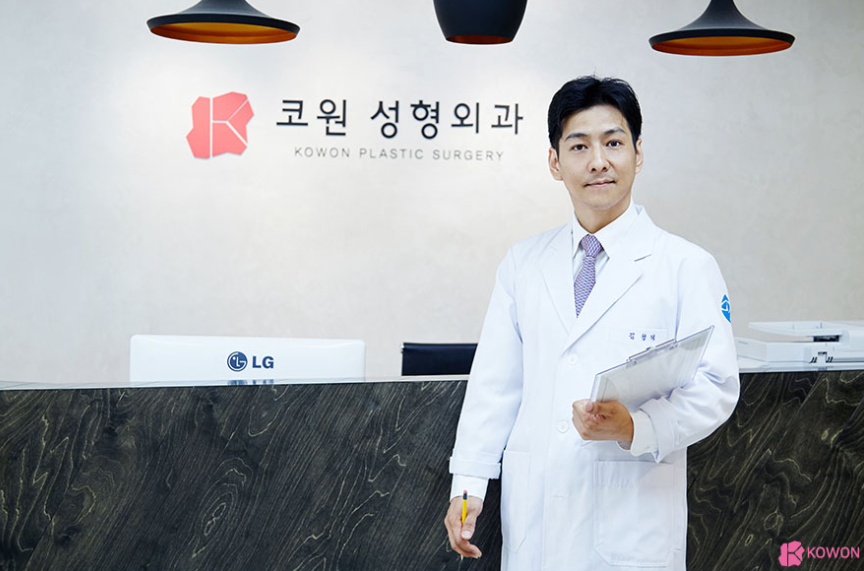
At KOWON Plastic Surgery, based on our extensive experience with revision rhinoplasty and personalized 1:1 diagnosis, we take full responsibility to refine your nose so that not only aesthetic perfection but also structural stability can be maintained in the long term.
The higher the difficulty of the revision surgery, the more crucial the precise use of autologous tissue and delicate technique become. We will always operate with sincerity so that you can achieve safe and satisfying results. If you are concerned about the shape of your nose, we recommend you visit our clinic for a comfortable consultation.
KOWON Plastic Surgery Clinic
2nd Floor, KBL Center, 110 Dosan-daero, Gangnam-gu, Seoul
View original post on Naver Blog
This procedure/surgery may cause side effects such as bleeding, infection, swelling, or asymmetry depending on the individual, and accurate information should be confirmed after consulting with medical staff.
— Dr. Hyung-taek Kim, KOWON Plastic Surgery