

Hello. This is Hyung-taek Kim, director of KOWON Plastic Surgery.
A dorsal hump refers to a shape where the middle part of the nasal bridge is more prominent than other areas, causing the line of the nasal bridge to appear bent in the middle rather than flowing smoothly.
Such a nose may give a somewhat strong impression when viewed from the side, and in some cases, the overall facial atmosphere may feel rough or masculine.
In cases with a dorsal hump, surgery is performed to smooth out the protruding area and refine the flow of the nasal bridge. Therefore, depending on the structure and height of the nose, dorsal hump correction may be possible without a separate implant.
On the other hand, if the height of the current nasal bridge or the overall facial proportions require some augmentation, this must also be considered. Ultimately, rather than using a single fixed method, it is important to plan the surgery according to each individual's nasal structure.
Not all dorsal humps are corrected in the same way.
It is important to examine the current height and shape of the nose, as well as the overall facial proportions,
and to establish a surgical plan that matches these factors.
In this case, not only was there a dorsal hump on the nasal bridge, but the nasal tip itself was also large and thick, showing a bulbous tip shape. Overall, the nose appeared voluminous and heavy.
In such a structure, simply refining the protruding part or only reducing the size of the nasal tip may not be sufficient for an overall change. It is necessary to adjust the nasal bridge and nasal tip as a continuous flow rather than viewing them separately.
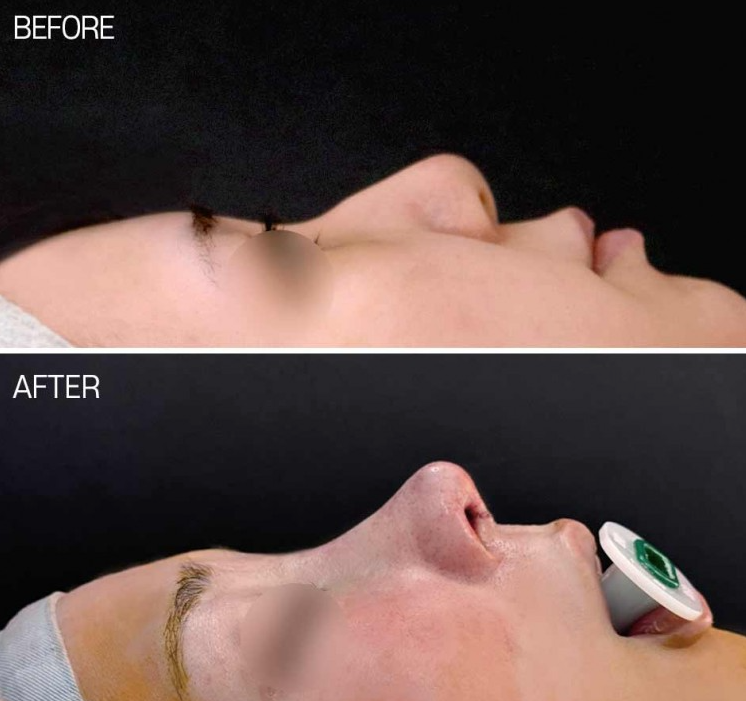
These before and after photos are used with the patient's consent.
First, the protruding dorsal hump was refined to smooth the line of the nasal bridge, and for the nasal tip, cartilage repositioning, cartilage suturing, and removal of soft tissue at the tip were performed together to slim down the previously wide and thick area.
Additionally, a support was placed between the nasal tip cartilages to help maintain the shape stably after surgery.
Furthermore, the overall balance was adjusted so that the line from the nasal bridge to the nasal tip would connect naturally.
Rather than correcting each part separately, dorsal hump correction was performed with consideration for the overall connection of the nose, smoothing the previously uneven nasal bridge and reducing the volume of the thick nasal tip.
In this surgery, rather than correcting the dorsal hump and bulbous tip separately,
the overall line from the nasal bridge to the nasal tip was viewed as a single flow and adjusted accordingly.
As a result, the nose changed from having the nasal bridge and tip emphasized separately to a more refined and lighter overall shape. This is why, when planning nose surgery, I consider not only the shape of each part but also the overall harmony.
[Related Cases Worth Viewing]
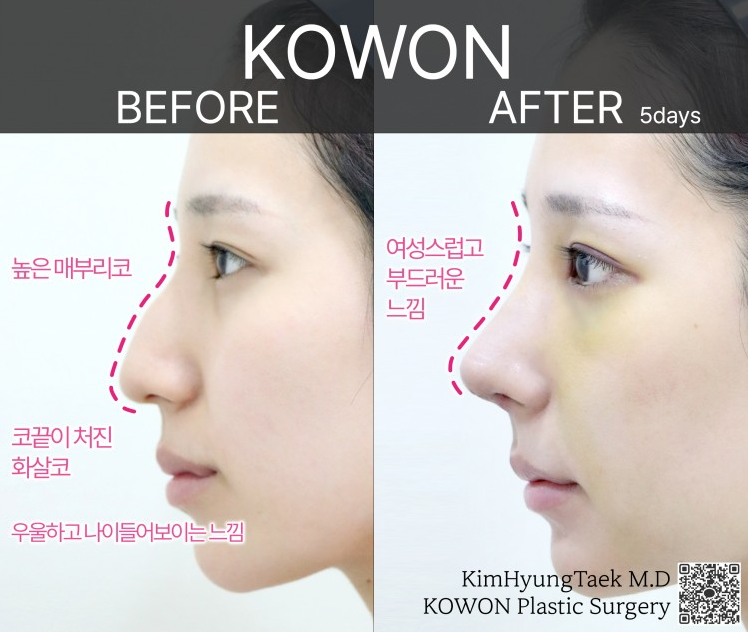
These before and after photos are used with the patient's consent.
This is a case of a woman with a long and large nose, a wide and protruding dorsal hump on the nasal bridge.
The nasal tip was also drooping, making the nose appear large and heavy overall, and from the side, the protruding nasal bridge was particularly noticeable.
Since the original nasal bridge was relatively high, the width of the wide nasal bridge was narrowed and the height adjusted through osteotomy, resulting in a smoother line.
In addition, the curved and hypertrophied tissues inside the nose were also checked, and rhinitis surgery was performed to address both aesthetic and functional aspects.
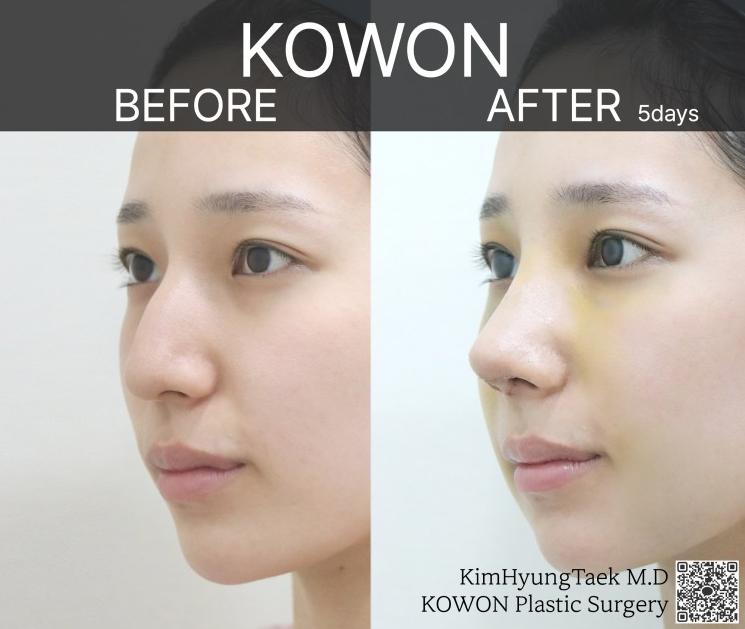
These before and after photos are used with the patient's consent.
After surgery, the previously protruding and wide nasal bridge and the overall volume of the nose were refined.
The line extending to the nasal tip also became more natural, resulting in a softer and more feminine impression than before, and the patient reported improved comfort in breathing.
Additionally, as the patient wished, a slight trace of the dorsal hump was left to reduce the appearance of surgery and to maintain some of the original image. By reviewing this case from KOWON Plastic Surgery, you can refer to how surgery may proceed for similar nasal shapes.
[In Summary]
This case involved a large dorsal hump, a wide nasal bridge, and a drooping nasal tip, making the nose appear large and heavy overall.
The high nasal bridge was adjusted in width and height through osteotomy, and a natural line extending to the nasal tip was created to refine the overall impression. In addition, the curved and hypertrophied tissues inside the nose were checked to consider not only aesthetic but also functional aspects.

Nose surgery should not focus solely on changing the shape,
but should seek a direction that suits the individual by considering the structure and function of the nose and the harmony of the entire face.
At KOWON Plastic Surgery, we carefully examine each individual's unique nasal shape and internal structure, and plan surgery with consideration for both natural changes and functional aspects.
KOWON Plastic Surgery Clinic
2nd Floor, KBL Center, 110 Dosan-daero, Gangnam-gu, Seoul
View the original Naver Blog post
This procedure/surgery may cause side effects such as bleeding, infection, swelling, or asymmetry depending on the individual. For accurate information, please consult with medical staff before making a decision.
— Dr. Hyung-taek Kim, KOWON Plastic Surgery