

Hello, this is Hyung-taek Kim, Director of KOWON Plastic Surgery.
There was a patient who came to see me after having a first-time rhinoplasty years ago, but over time developed nasal tip drooping and an overall collapse in the shape of the nose.
The causes of the nasal tip descending after surgery are much more varied than one might think.
If the basic framework supporting the nasal tip is not firmly established, if the fixation strength of the cartilage sutures is insufficient, or if the weight of the overlying skin and soft tissue is not adequately considered, the shape can become deformed over time.
Especially if the underlying structure is weak compared to the original cartilage tension or thickness, even if the nose looked quite nice immediately after surgery, it is common for the tip to gradually droop or for deformities to appear.
Furthermore, if you have a history of previous revision surgery, it is often the case that the internal cartilage has lost strength or has been damaged, resulting in a significant loss of support.
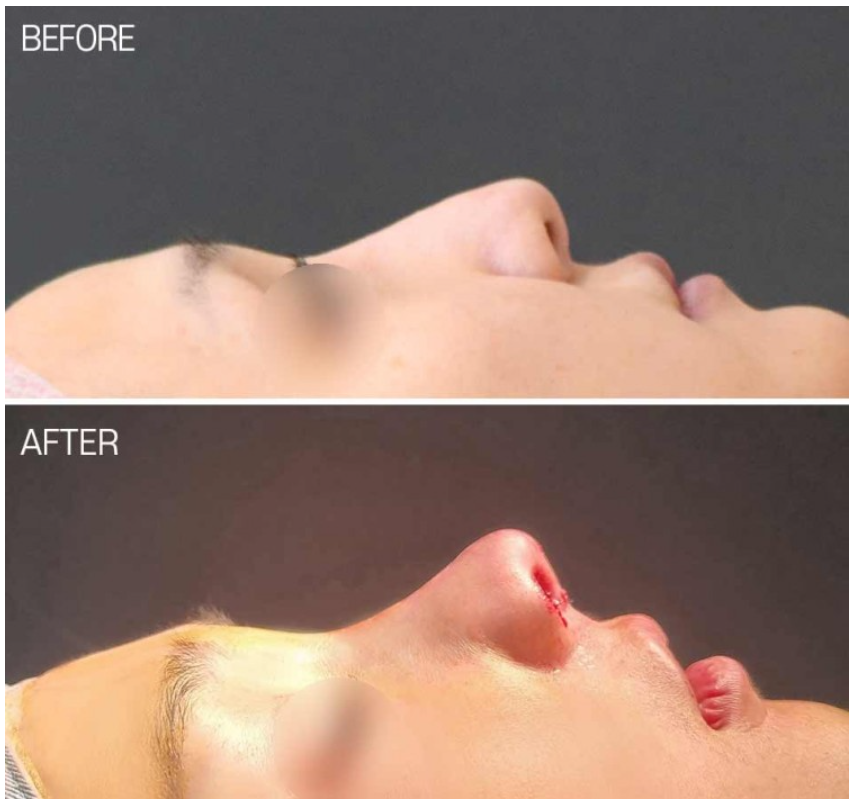
"Rather than simply lifting and fixing the outer shape, the key is to refine the internal scar tissue and reconstruct the support pillars step by step from the foundation."
After meticulously refining the tangled internal scar tissue, I performed cartilage repositioning and cartilage suturing to clearly define the nasal tip shape, and firmly established pillars between the cartilages to enhance structural stability so that the shape is maintained over time.
When performing a highly complex revision surgery, the most important factor is selecting the right implant material that can provide a solid foundation.
Autologous rib cartilage is very suitable for building a strong new pillar due to its excellent strength and sufficient length, and it is also very helpful in reinforcing previously weakened internal tissues.
Therefore, if you have been deeply concerned about nasal tip drooping or have already undergone multiple surgeries, I recommend a solution that reinforces the framework using autologous rib cartilage.
Through this process, the previously drooping appearance is neatly resolved, and a stable line that remains unchanged for years can be achieved.
Related reference case
[Reason for Visit and Condition]
Compared to the overall facial proportions, the nose was long and the tip pointed downward, especially when smiling, causing the nasal tip to drop significantly and making the midface appear longer. This resulted in a somewhat dark and aged impression.
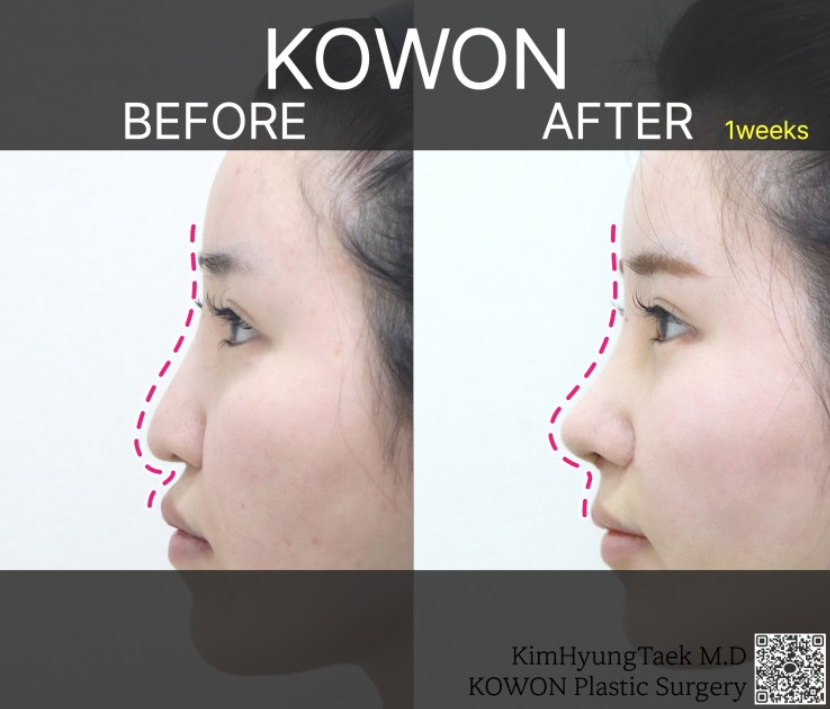
[Surgical Process and Correction Details]
At KOWON Plastic Surgery, we elevated the position and highlight point of the drooping nasal tip to create a soft straight-curved line. In addition, we performed nasolabial angle correction (J-curve line) to adjust the angle between the columella and philtrum, improving the side profile that previously emphasized the protruding mouth and chin. Furthermore, since the muscle that pulls the nose downward when smiling was strong, we performed nasal tip muscle correction surgery together to prevent recurrence of nasal tip drooping after revision surgery.
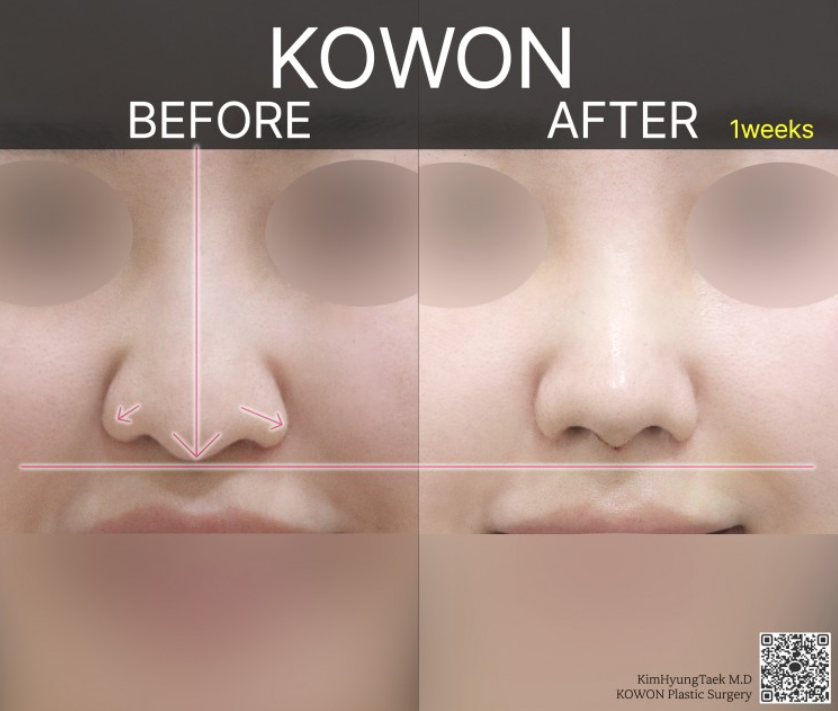
[Changes and Results]
After surgery, even when smiling, the nasal tip no longer droops and remains firm, making the overall nose appear shorter. The balance of the mouth and side contour was harmonized, transforming the previously dark and tired impression into a much brighter and more youthful appearance.
By applying revision rhinoplasty know-how to prevent repeated drooping, you can see results where a defined and soft line is stably maintained over time.

"The key to revision surgery for nasal tip drooping is not just lifting the outer shape, but firmly rebuilding the collapsed internal support from the foundation."
KOWON Plastic Surgery meticulously analyzes each individual's cartilage structure, skin thickness, and even the strength of the nasal tip muscles that act during facial expressions, based on extensive clinical experience in revision surgery. We provide a 1:1 customized structural reconstruction solution so that you can maintain a defined and natural line over time.
We consider even the emotional fatigue from repeated surgeries, and promise highly refined results from start to finish, always prioritizing precision and safety.
KOWON Plastic Surgery Clinic
2nd Floor, KBL Center, 110 Dosan-daero, Gangnam-gu, Seoul
View original post on Naver Blog
This procedure/surgery may cause side effects such as bleeding, infection, swelling, or asymmetry depending on the individual. Please consult with medical professionals for accurate information before making a decision.
— Dr. Hyung-taek Kim, KOWON Plastic Surgery