
KOWON Blog
2 weeks after tip surgery — the nose looks lower and the alae wider: side effect or recovery process?
If your nose looks lower and the alae spread 2 weeks after tip surgery and non-incision alar reduction — organized through an actual consultation case: how smiling·expressions affect tissue, the action of the depressor septi muscle, and criteria for evaluation at the one-month point.

Key points
- At 2 weeks post-op, the alae looking spread has various causes — swelling, shooting angle, thread tension — so you can't conclude the effect wore off just because you smiled or talked.
- The tip looking pulled downward when smiling is the action of the depressor septi nasi muscle, which can give the impression that the tip is lower than right after surgery.
- Two weeks post-op is mid-recovery — follow the hospital's precautions, and if changes are large or pain persists, get checked without waiting for the one-month point.
"From a week after surgery I kept meeting people and smiling — now at 2 weeks the nose looks lower than before and the alae feel wide again. Could it be because I smiled?"
This is a question left by someone who had tip surgery and non-incision alar reduction. Whether a small change in recovery is temporary or a problem needing confirmation has to be judged together with symptoms and direct examination.
This article organizes — based on the answer given to that question — what to check when the nose's shape feels different after surgery.
01
Why does the feeling that the alae widened again arise?
Multiple factors — swelling, shooting angle, thread tension — are involved, so you can't judge that the effect wore off just because you smiled or talked a lot. Before/after photos and the current state of threads and wounds must be checked together at the hospital where you had surgery.
02
Is the feeling that the nose got lower a side effect?
The tip looking pulled downward when smiling is due to the depressor septi nasi muscle — this muscle pulls the tip toward the mouth, giving the impression that the tip is lower than right after surgery.
Because it's muscle action, the nose may only look lower in expressions — but if the change is large even at rest, or pain·redness accompany it, direct confirmation is needed.
| Timing | What to check |
|---|---|
| 2 weeks post-op | Tissue is still settling — refrain from excessive expressions·smiling |
| When discomfort persists or shape change is severe | Direct care at the operating hospital |
| Around one month post-op | The reassessment point the original advised — actual timing follows the hospital's course check |
At 2 weeks post-op, follow the recovery-period precautions the hospital gave — no need to blame yourself for ruining the surgery over everyday expressions. If the shape change is large or discomfort continues, get checked at the operating hospital. Overall recovery-period care can be seen in more detail in the rhinoplasty recovery guide.
03
Are there cases where the tip tidies without alar reduction?
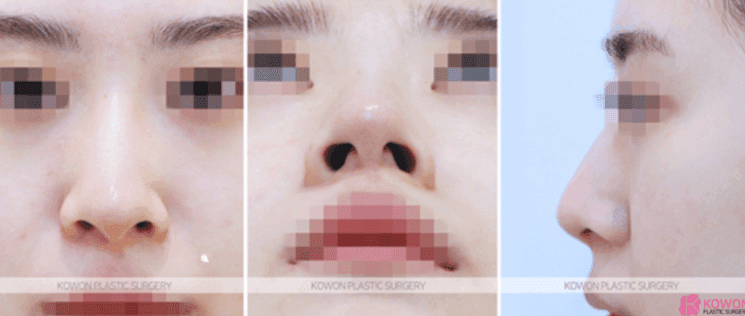
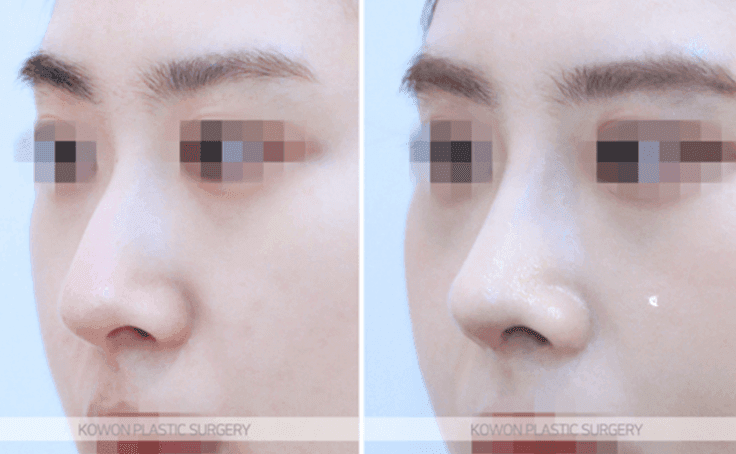
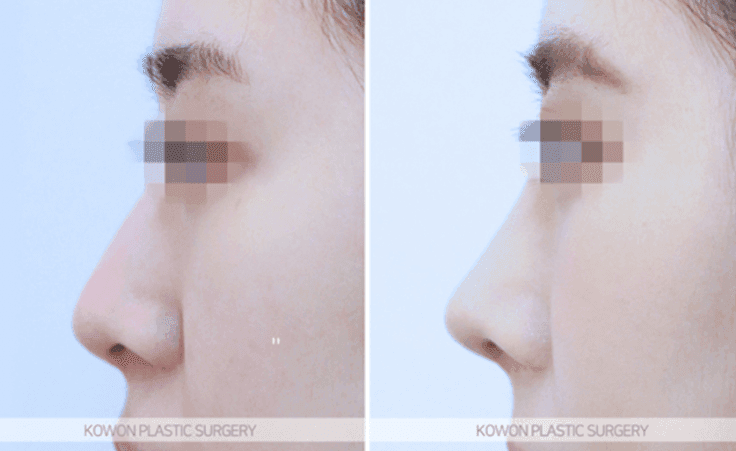
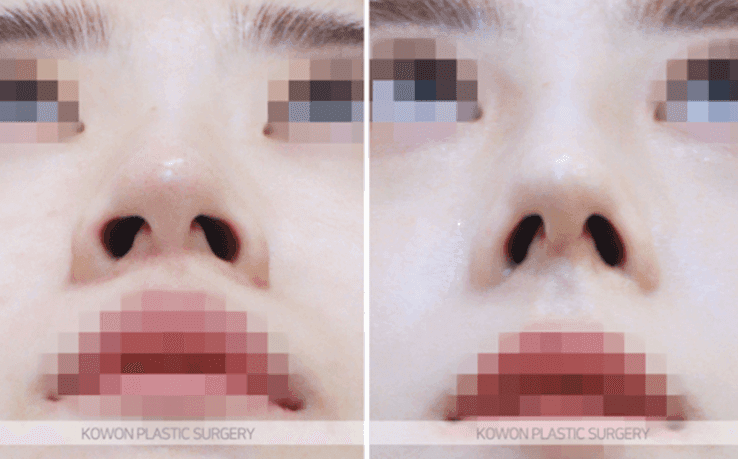
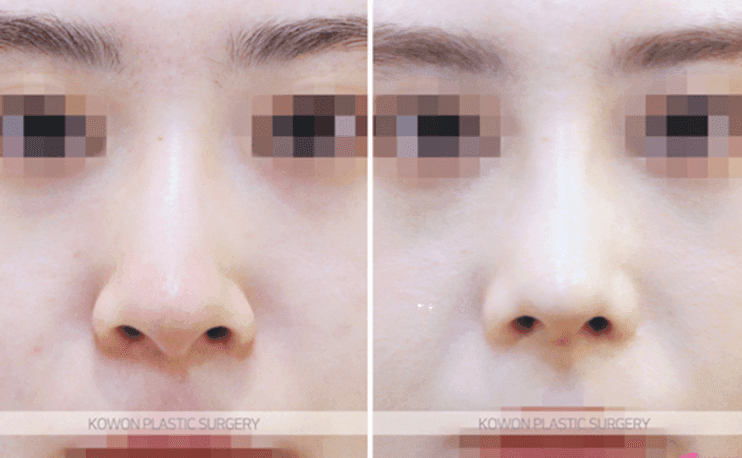
There's a related case worth viewing together — a female patient who had worried since childhood about a bulbous nose that was crooked and spread. It proceeded as follows.
- 01Crooked dorsum — the dorsum was bent to the right, so osteotomy was planned.
- 02Spread tip — a low, round-looking tip was tidied with tip-plasty, and the impression of drooping seen from the front was improved with depressor septi correction.
- 03Bridge height — the bridge wasn't fully low, so an implant-free method was chosen instead of silicone.
Many people think a bulbous nose requires alar reduction too — but in fact, cases that improve sufficiently with cartilage-tying or the implant-free method alone are common. This case was also corrected without unnecessary incision. When the implant-free method is possible can be seen at implant-free rhinoplasty.
04
Summary — a change at week 2 is not the point of judgment
The lowered·spread feeling at 2 weeks post-op must be viewed together with swelling, shooting conditions, muscle movement, and thread state. Don't conclude you ruined the surgery over everyday expressions — if the change is large or discomfort continues, getting checked at the operating hospital comes first.
If you're worried about the recovery course, you can get it checked based on your current state in a 1:1 video consultation.

Frequently asked questions
Answers to common questions patients ask before a consultation.
You can't judge that the non-incision alar reduction effect wore off just from having smiled or talked. Before/after photos and the current state of threads and wounds must be checked at the operating hospital.
If the tip only looks lower when smiling, the depressor septi nasi's action can be influencing it. If the change is large even at rest or discomfort continues, get direct confirmation at the operating hospital.
The original advised reassessment around one month — but if changes are large or there's pain·redness, get checked without waiting for that point. Judging the final result from the week-2 shape alone is too early.
Responses to treatment and recovery progress vary by individual. Outcomes and side effects vary from person to person. Bleeding, infection, swelling and asymmetry may occur. Please consult our medical team before making a decision.
Consultation