
KOWON Blog
Straight nose surgery — if the real-life look seems flatter than photos: why T-zone and material are viewed together
A man's straight-nose concern where photos come out well but the real-life impression looks flat — organized the T-zone running forehead·glabella·dorsum·tip, skin thickness and angle, the difference between silicone·Gore-Tex and autologous rib cartilage (RIBFIT™ Ribfit), and the recovery process.
Key points
- Front-view dimension is governed not by the nose alone but by the whole T-zone running forehead·glabella·dorsum·tip — so straight nose surgery is designed within the T-zone's flow.
- For material, beyond implants like silicone·Gore-Tex there's an approach using autologous rib cartilage — KOWON applies RIBFIT™ Ribfit, autologous rib particles processed to match each person's nasal structure.
- Swelling is heavy in the first 1~2 weeks and gradually stabilizes over 1~3 months — management during recovery is part of the surgery.
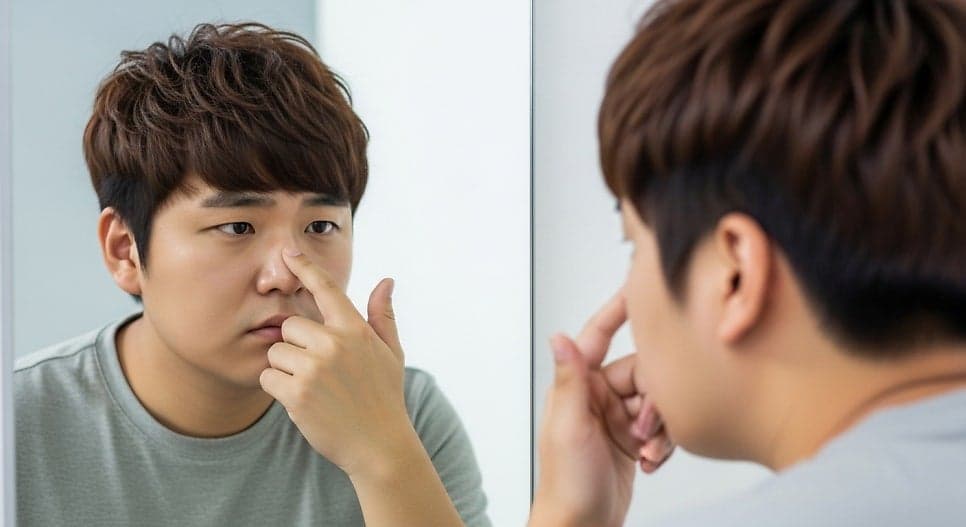
"Photos come out well, but in person the dimension is lacking."
It's a concern often heard from men looking into straight nose surgery — the features seem somewhat refined but don't come through in the impression. A straight nose means a shape running in one line from tip to dorsum, preferred mainly by men. But if photos and real life feel different, you must look not only at the nose shape but also at what creates dimension on the front of the face.
This article organizes why the whole T-zone is viewed in straight nose surgery, material choice, and what to check during recovery.
01
What decides front-view dimension?
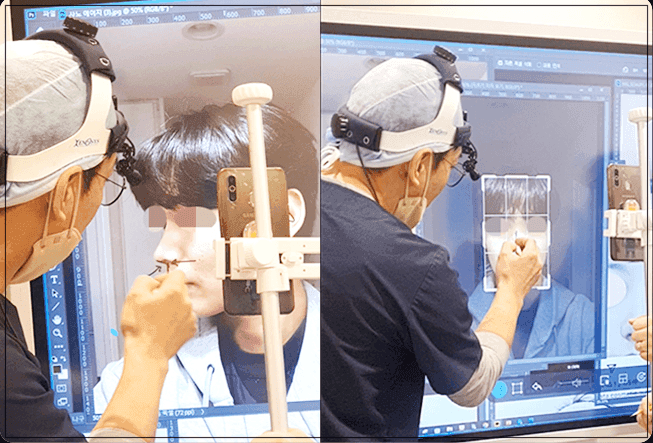
For overall dimension and clear lines in the front view, you mustn't check the nose alone. You have to view the entire so-called T-zone — running from the forehead through the glabella and dorsum to the tip.
In photos this part stands out clearly depending on angle, but real life may not be so. Also, if the forehead and glabella stand out but the dorsum doesn't continue cleanly, the real-life look can seem flat.
So in consultation, shape isn't the only thing viewed — the following are considered together.
- Skin thickness
- The angle between bridge and tip
- Proportions seen from the side
For those who can't visit in person, 1:1 video consultation is also offered — based on it, virtual example images are shown while explaining what result may come out. After listening to what kind of straight nose you want, realistic limits are also told without sugarcoating.
02
If artificial implants feel burdensome, what options exist?
A straight nose's design method and resulting look differ by which material is used. Many picture straight nose surgery as using implants like silicone or Gore-Tex at the bridge, but lately methods utilizing one's own tissue like autologous rib cartilage are also widely used.
| Material | Features |
|---|---|
| Synthetic implants like silicone | Comparatively easy, immediate shape correction, but surrounding reactions like inflammation must be considered — can be a burden |
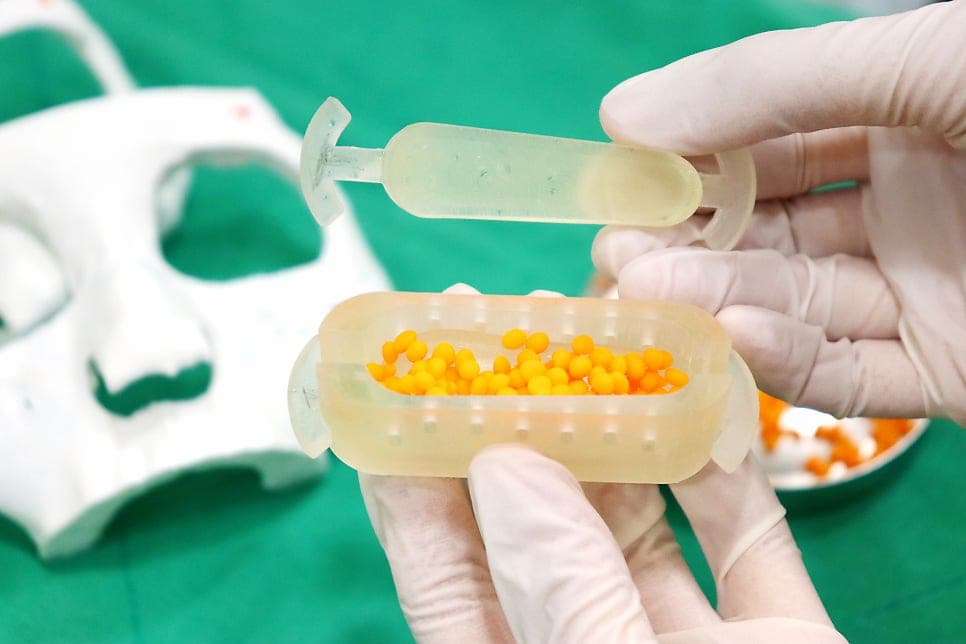
| Autologous rib cartilage (RIBFIT™ Ribfit) | Autologous rib particles processed to match one's nasal structure replacing implants — less inflammation possibility since not silicone, and almost no lifting |
Among those who actually came for revision consultation, there were cases wanting to exclude artificial implants from options because of inflammation. What can be considered for such people is RIBFIT™ Ribfit.
The conventional method of wrapping rib particles in fascia or injecting them had a deformation problem due to high absorption rate — RIBFIT™ Ribfit improves on the absorption part so there's less deformation, and since it doesn't need additional processes like fascia harvest, recovery tends to be fast. Still, making the 3D mold and processing harvested rib cartilage into fine sizes is high-difficulty work, so it's important it be done at a place with long experience. The principle of RIBFIT™ Ribfit can be seen in more detail in the autologous-tissue implant RIBFIT™ Ribfit guide.
03
What should you watch during recovery?
Many people worry about swelling, bruising, and discomfort during recovery. The course generally proceeds along this flow.
- 01First 1~2 weeks — a period of heavy swelling.
- 021 month~3 months — swelling gradually stabilizes.
- 03Throughout recovery — avoiding strong impact or pressing on the nose keeps the desired straight line maintained.
Inflammation possibility is low but can't be completely ruled out — so if there's a suspicious change, getting it checked quickly matters. Only when this recovery process goes properly can you approach the desired result.
04
Summary — a straight nose is a matter of whole-face harmony
A straight nose isn't just about the line being straight — it's a matter requiring consideration of the face's overall harmony. To keep a refined impression long-term, designing comprehensively across T-zone flow, skin thickness and angle, and material characteristics matters. Rather than deciding in haste, it's recommended to choose after sufficient understanding.
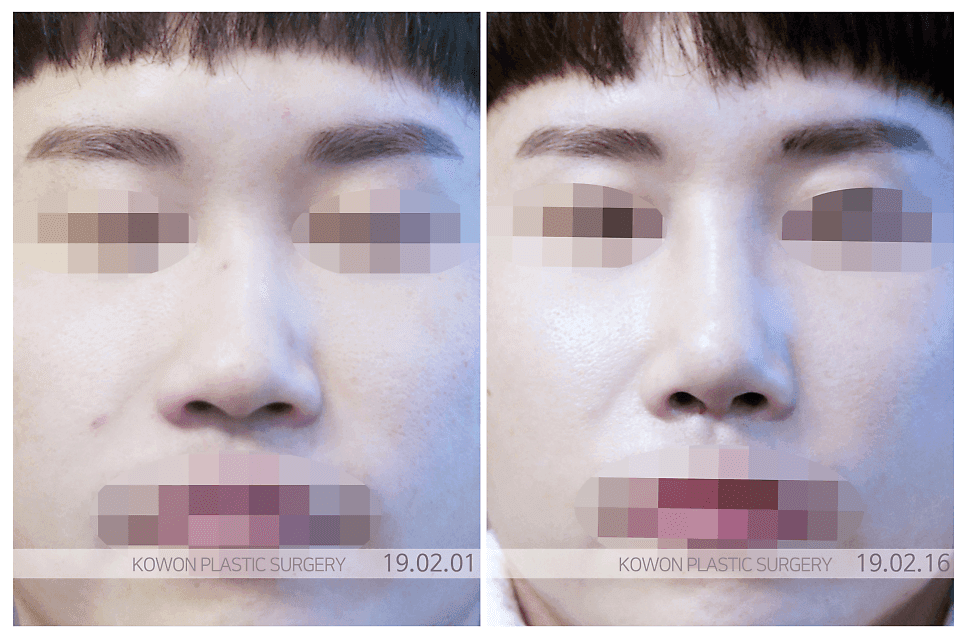
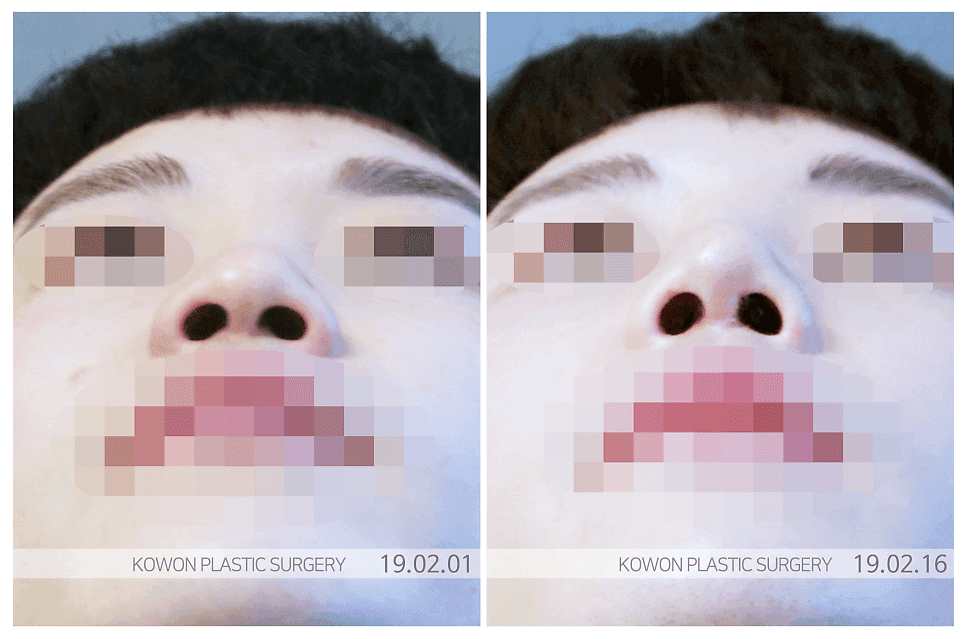
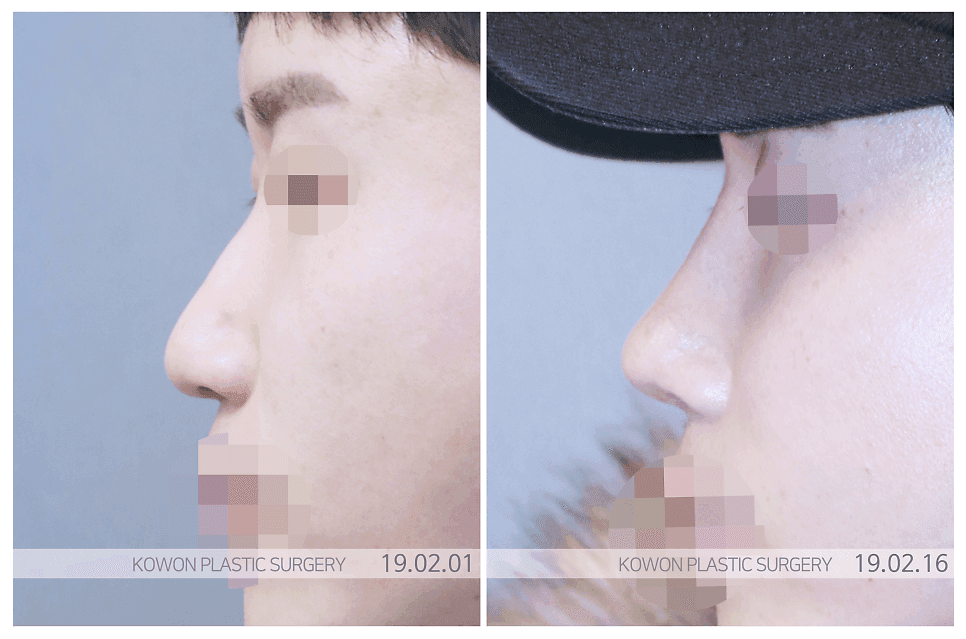
If curious how a straight nose would look on your face, you can confirm with virtual example images in a 1:1 video consultation. Actual cases can be seen in before-and-after photos.

Frequently asked questions
Answers to common questions patients ask before a consultation.
Because front-view dimension is made by the flow running forehead·glabella·dorsum·tip, not the nose alone. If the forehead and glabella stand out but the dorsum doesn't continue, real life can look flat — so skin thickness, angles, and side proportions are viewed together.
Not necessarily. Synthetic implants like silicone allow relatively easy shape correction but surrounding reactions like inflammation must be considered. If artificial implants feel burdensome, the RIBFIT™ Ribfit method processing autologous rib particles can be considered.
Swelling is heavy for the first 1~2 weeks, then gradually stabilizes over 1 to 3 months. During this period, avoiding strong impact or pressing on the nose matters.
Responses to treatment and recovery progress vary by individual. Outcomes and side effects vary from person to person. Bleeding, infection, swelling and asymmetry may occur. Please consult our medical team before making a decision.
Consultation