
KOWON Blog
Small nose surgery — why material and structure come first: the criteria that decide durability
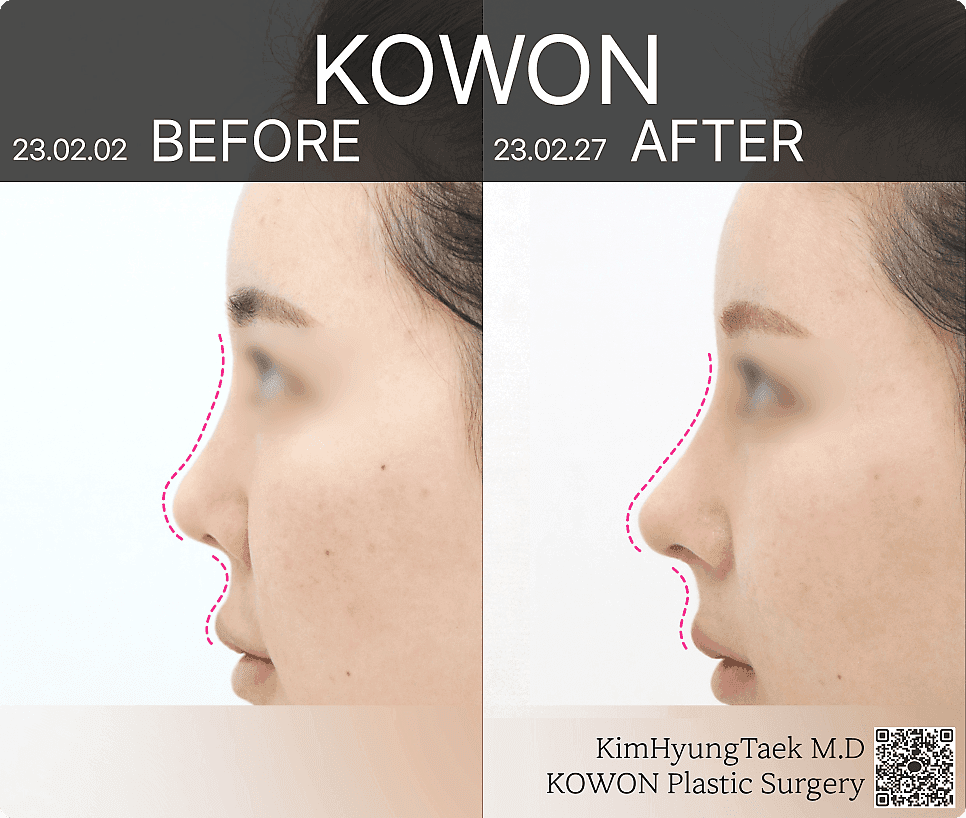
A small nose may have a weak internal support structure, so only supplementing the exterior can make it spread or look lower again over time. Organized three things checked before material choice, features of autologous rib cartilage and RIBFIT™ Ribfit, and design criteria governing durability.
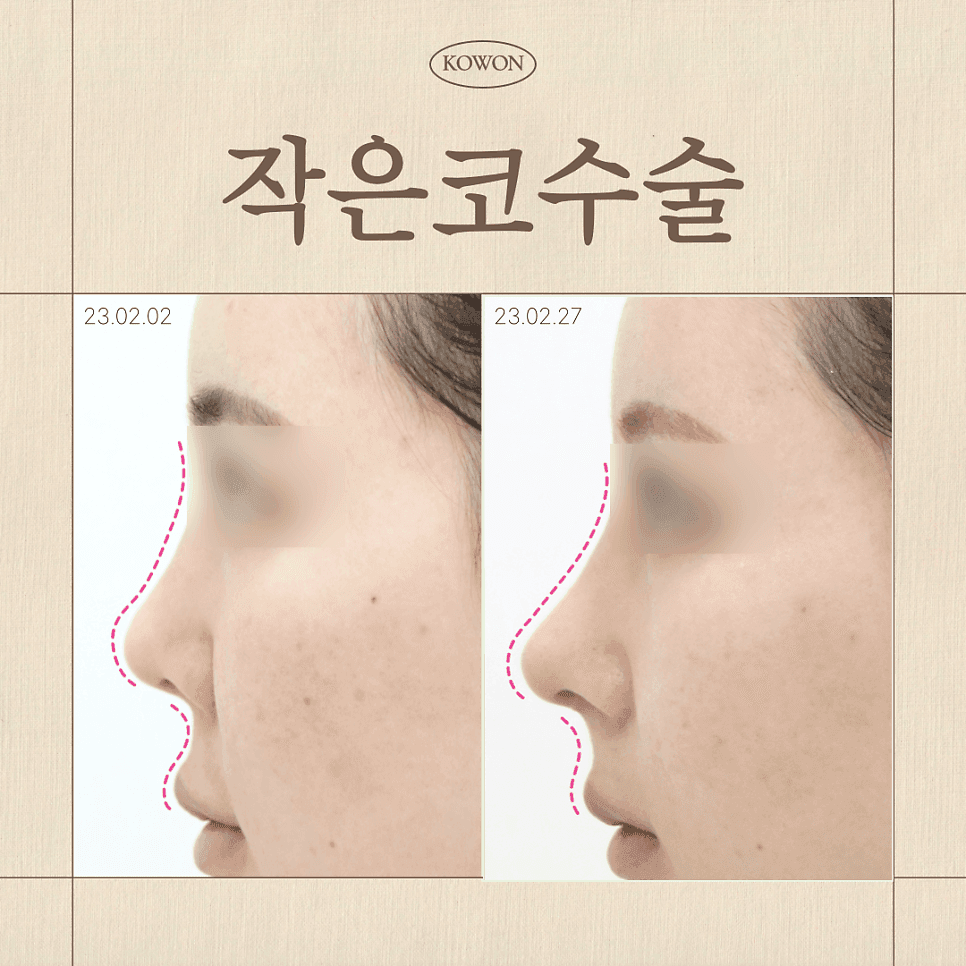
Key points
- A nose looking small isn't decided by nostril or bridge size alone — dorsal width, tip-end structure, skin thickness and height all have an effect.
- A small, low nose may have a weak internal support structure, so supplementing only the exterior without considering it can make it spread or look lower again over time.
- Material is decided after checking septal cartilage quantity, tip skin tension, and past correction history — when support is needed, autologous rib cartilage or its 3D-structured form RIBFIT™ Ribfit is reviewed.
"My nose is on the small side so my face looks flat — it bothers me when taking photos."
Searching small nose surgery with this concern often leads to material or durability talk coming up and decisions getting deferred as it gets more confusing. This article organizes why material and structure matter in a small nose, and criteria that help the decision.
01
Why does my nose look particularly small?
A nose looking small isn't decided by nostril or bridge size alone. Even at a similar size, some noses look particularly low and small — because dorsal width, tip-end structure, skin thickness and height all exert an effect.
Those considering small nose surgery mostly want to bring out lacking dimension. But a dimensional face sometimes isn't solved by changing bridge height alone, so in diagnosis the face's overall proportions and the nose's support structure are approached together.
02
Why does material choice matter more the smaller the nose?
A small, low nose may have a weak support structure — meaning cartilage quantity able to hold up may not be sufficient. If the exterior alone is supplemented without considering this, it can spread or look lower again over time. This is why material choice is viewed as more important the smaller the nose surgery.
Three things get closely examined before deciding material.
- Whether septal cartilage quantity is sufficient
- Whether tip skin tension is sturdy
- Whether there's past nose-related correction history
After checking these three, a matching material is chosen — options from ear cartilage to autologous rib cartilage are typically reviewed. Since each material has both advantages and limits, consultation follows the principle of explaining unfavorable conditions together, not only good points. Per-material features can be seen further in the materials guide.
03
What material is used a lot for a small nose?
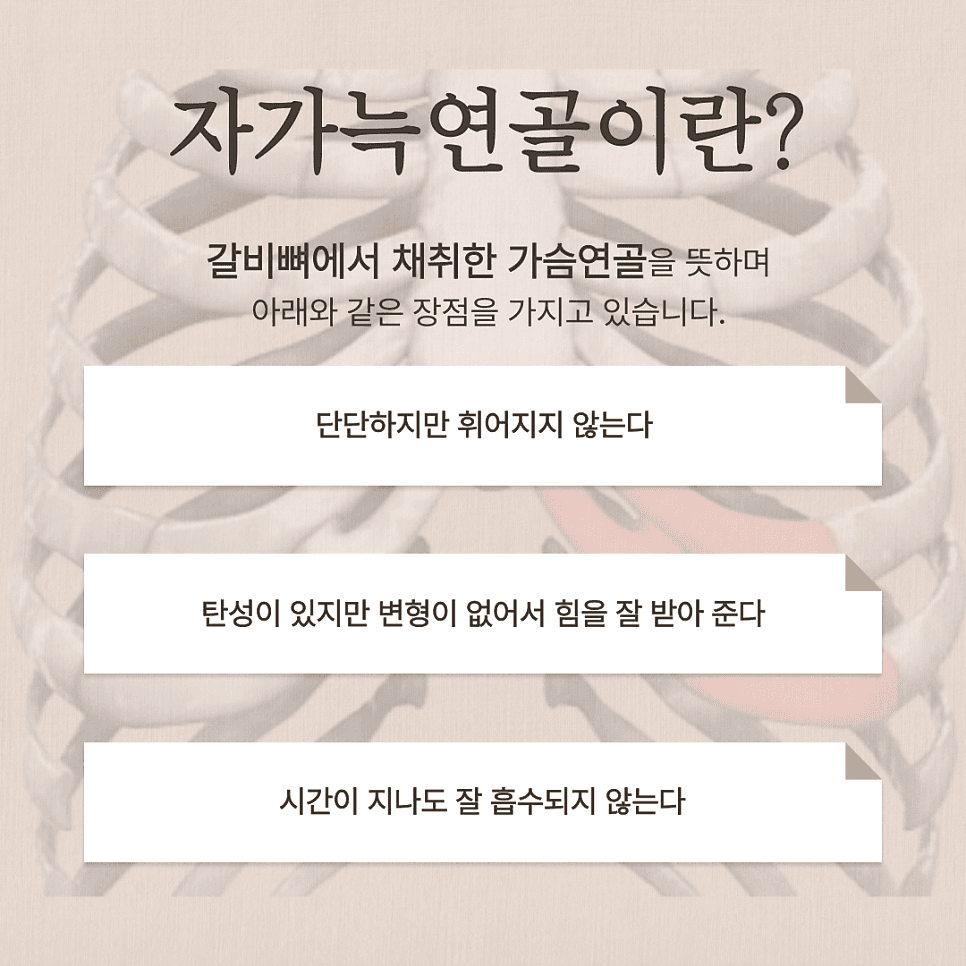
Autologous rib cartilage is used a lot because its support is stronger than ear cartilage or septal cartilage. Strong support doesn't mean simply hard — it means solid while also having proper elasticity.
| Material | Features |
|---|---|
| Autologous rib cartilage (harvested from rib) | Solid with proper elasticity so it bears force well, and tends not to absorb much over time |
| Ear cartilage · Septal cartilage | Thinner and more flexible than rib cartilage, tending to absorb and warp as years pass |
This is why autologous rib cartilage is heavily utilized for a small nose lacking cartilage whose skin doesn't stretch well.
Lately utilization of RIBFIT™ Ribfit, which uses this autologous rib cartilage through a 3D structuring process, has also grown. CT-based 3D simulation processes harvested rib cartilage into fine particle units, a 3D model matching one's nose shape is made then compressed — completing the bridge without using silicone. Compared to conventional autologous rib cartilage, shape can be set more finely and absorption rate is lower, so it can be one option for those hesitant about artificial implants.
04
Why do some cases not keep their shape long?
Even if the shape was set well at first, deformation can occur over time — a phenomenon that appears when internal support structure is insufficient. The nose continuously receives various forces in daily life, like when talking or smiling, even without direct pressure.
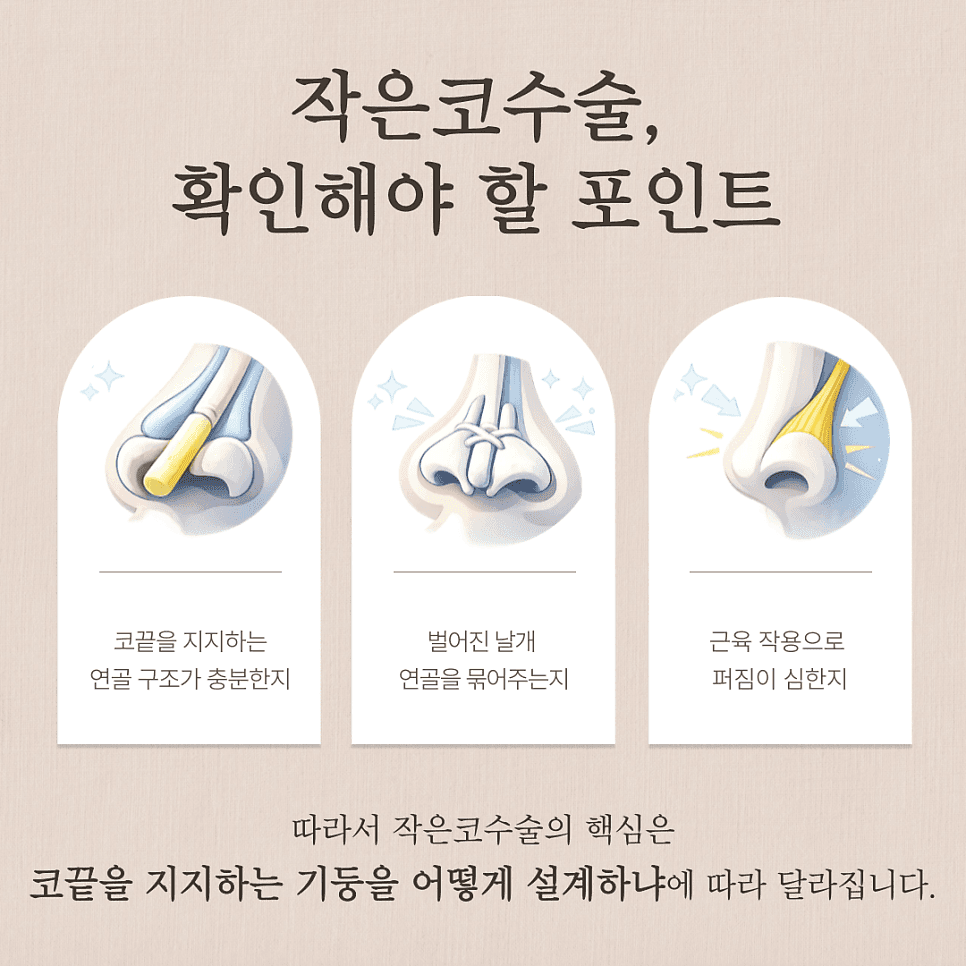
So the core of small nose surgery comes down to how the pillar supporting the tip is designed.
- 01Whether cartilage structure supporting the tip is sufficient
- 02Whether spread wing cartilages need tying
- 03Whether spread from muscle action is severe
This is why such parts must be examined closely. For design, deliberating based on changes at 3 years, 5 years onward rather than right after surgery matters.
05
Summary — structural check comes first
A small nose must consider structure and proportion together, not just size — and the smaller the nose, the weaker internal support may be, making material choice important. If material isn't chosen well, maintenance can become difficult over time. For small nose surgery, grasping the structural problem then designing accordingly matters.
I hope this article serves as a criterion for distinguishing for yourself whether your current stage is one needing structural check or one where observation comes first. If curious about your nose state, you can get checked directly in a 1:1 video consultation.

Frequently asked questions
Answers to common questions patients ask before a consultation.
Not necessarily. Material is decided after checking septal cartilage quantity, tip skin tension, and past correction history. Still, for a small nose lacking cartilage whose skin doesn't stretch well, strongly supportive autologous rib cartilage is often reviewed.
RIBFIT™ Ribfit is a method where autologous rib cartilage is processed into fine particle units then compressed into a 3D model matching one's nose shape. Compared to conventional autologous rib cartilage, shape can be set more finely and absorption rate is lower.
It's a phenomenon that can appear when internal support structure is insufficient. Since the nose continuously receives force even when talking or smiling, pillar design supporting the tip governs durability.
Responses to treatment and recovery progress vary by individual. Outcomes and side effects vary from person to person. Bleeding, infection, swelling and asymmetry may occur. Please consult our medical team before making a decision.
Consultation