
KOWON Blog
Can a nose line be made without silicone? — Implant-free rhinoplasty and the principle of RIBFIT™ Ribfit
Whether rhinoplasty is possible without a silicone implant — organizes the principle and surgery process of RIBFIT™ Ribfit, which fabricates a custom implant by processing autologous rib cartilage into particle form, and in which cases it's considered.
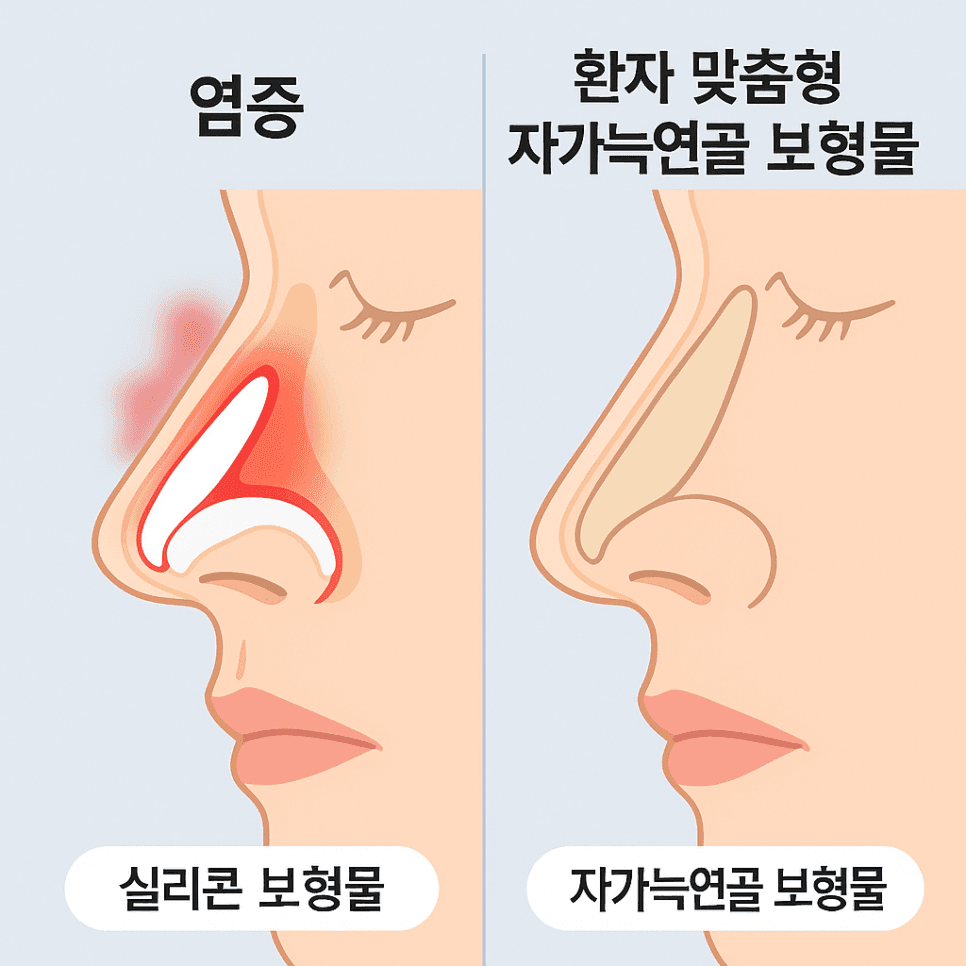
Key points
- As a way to make a nose line without a silicone implant, there's a custom autologous tissue implant made by processing autologous rib cartilage (RIBFIT™, RIBFIT™ Ribfit).
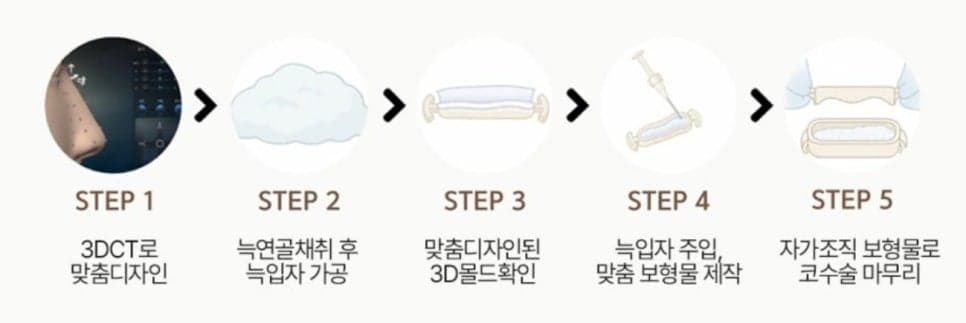
- Based on CT data, cartilage harvested from the rib is processed into particle form and pressed into a 3D-printed mold — a method making an implant fitting my nose structure.
- It can be considered when skin is thin, inflammation is a worry for revision, or warping from conventional autologous rib cartilage surgery was a concern.
"Can I get a pretty, natural nose even without a silicone implant?"
It's a question often heard from people considering rhinoplasty. Especially for those with thin skin or with inflammation worries after going through several revisions, interest naturally goes to rhinoplasty without a silicone implant. However, depending on the nose's state, there are conditions where making the desired nose line without an implant is hard.
This article organizes the principle and surgery process of RIBFIT™ Ribfit — a custom autologous tissue implant made by processing autologous rib cartilage — a method that can be considered in such cases, and who considers it.
01
Why do people seek implant-free rhinoplasty?
Silicone is a material widely used in rhinoplasty, but as an artificial material, some people worry about foreign-body reaction or inflammation. Especially in the following cases, inserting silicone again can feel burdensome.
- Cases with thin skin — the implant's contour can show or burden the skin, so material selection is more cautious.
- Cases considering revision — since revision raises the probability of inflammation over a first surgery, the burden of inserting an artificial implant again grows.
- Cases wanting a natural, undetectable nose — cases wanting to avoid the foreign feel characteristic of artificial material.
However, depending on the nose's conditions, there are cases where making a nose line without an implant is hard. Then, a method making the body's own tissue take the implant role instead of an artificial implant is RIBFIT™ Ribfit.
02
What kind of method is RIBFIT™ Ribfit?
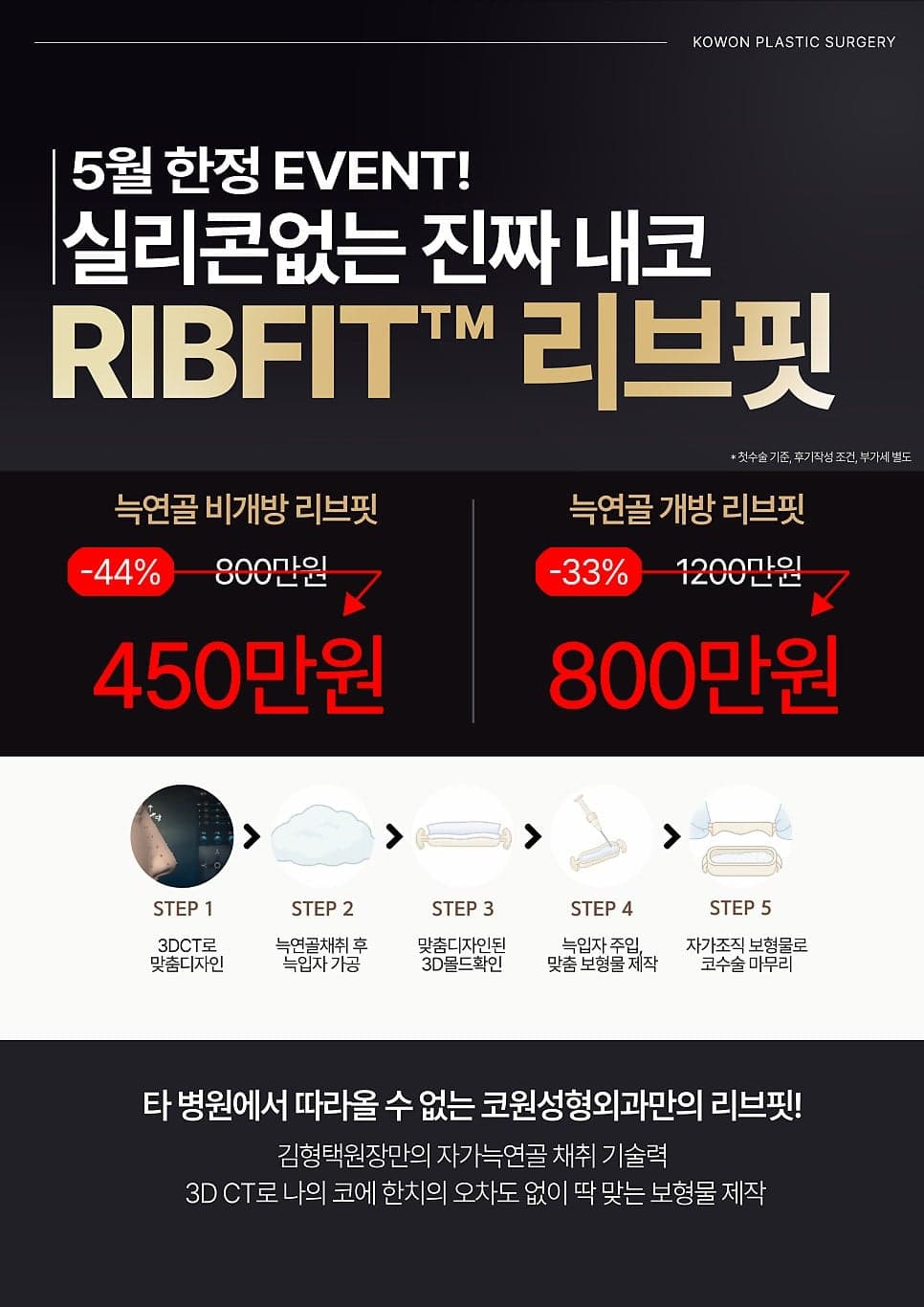
RIBFIT™ Ribfit is a rhinoplasty method that, based on the individual patient's CT data, processes cartilage harvested from the rib (autologous rib cartilage) into fine particle form to make a custom 3D autologous tissue implant. Put simply, it makes a nose implant fitting my face out of material that came from my body.
Since no artificial implant goes in at all, it's an option people worried about inflammation from artificial material like silicone can consider. The warping problem that was a concern in conventional autologous rib cartilage surgery carved from a whole piece is also approached by processing cartilage into particle form and pressing it into a mold. More detail on the fabrication process and material can be seen in the RIBFIT™ Ribfit autologous tissue implant guide.
03
How does surgery proceed?
RIBFIT™ Ribfit surgery proceeds in the following order.
- 01CT scan — my nose's structure is precisely analyzed.
- 02Cartilage harvest·processing — cartilage is harvested from the rib and processed into fine particle form.
- 03Custom implant fabrication — the processed cartilage is pressed into a 3D-printed mold, completing an implant fitting my nose.
- 04Bridge line formation — the finished autologous tissue implant creates the bridge line without silicone.
| Category | Conventional autologous rib cartilage surgery | RIBFIT™ Ribfit |
|---|---|---|
| Material | Autologous rib cartilage (whole piece) | Autologous rib cartilage (particle-processed) |
| Form determination | Hand-carved during surgery | Pre-designed with CT-based 3D mold |
| The concern | Warping | Approached via particle compression method |
04
In which cases can RIBFIT™ Ribfit be considered?
Under the following conditions, RIBFIT™ Ribfit can be considered as an option.
- Those who find an artificial implant uncomfortable
- Those considering revision but for whom an implant is burdensome because of inflammation
- Those wanting a natural, undetectable nose
- Those who were worried about 'warping' felt in conventional autologous rib cartilage surgery
Whether the nose state allows implant-free rhinoplasty or is a condition needing RIBFIT™ Ribfit differs by the individual's nose structure — diagnosis comes first. For the implant-free approach overall, the implant-free rhinoplasty guide can be referenced.
05
Summary — checking my nose's conditions comes before material
Whether rhinoplasty is possible without silicone differs by the nose's structure, skin state, and surgery history. The order of first confirming whether it's a condition possible implant-free or a state needing an autologous tissue implant, then deciding the method, is natural. If curious which case your nose falls under, you can check in a 1:1 video consultation.

Frequently asked questions
Answers to common questions patients ask before a consultation.
It differs by the nose's state. There are conditions where making a nose line without an implant is hard — in such cases, a method making the bridge line with an autologous tissue implant (RIBFIT™ Ribfit) fabricated from autologous rib cartilage instead of an artificial implant can be considered.
Since revision raises the inflammation probability over a first surgery, inserting an artificial implant again can feel burdensome. In such cases too, an autologous rib cartilage implant can be used — suitable material is judged after checking the existing tissue state.
Both use rib cartilage, but RIBFIT™ Ribfit processes cartilage into fine particle form instead of carving it whole, then presses it into a CT-based 3D-printed mold. The difference is a different approach to the warping that was a concern in the conventional method.
Responses to treatment and recovery progress vary by individual. Outcomes and side effects vary from person to person. Bleeding, infection, swelling and asymmetry may occur. Please consult our medical team before making a decision.
Consultation