
KOWON Blog
Rhinoplasty swelling — how long and how much does it swell? Progress by stage and cold·warm compress care
When swelling is worst after rhinoplasty (2 weeks), when it starts looking natural (week 3), when the final shape completes (6 months–1 year), plus the care sequence: cold compresses for the first 3 days post-surgery, then warm compresses.
Key points
- The worst swelling runs from right after surgery to 2 weeks; around week 3 it subsides enough to look natural. The final shape is considered complete after 6 months–1 year.
- For compresses, the order is cold compresses right after surgery through day 3, then warm compresses that help blood circulation — done consistently.
- Swelling subsiding unevenly or reaching the eyes·lips·glabella is often a natural reaction, but if pain or changes in nose color·shape are observed, visiting quickly to identify the cause is best.
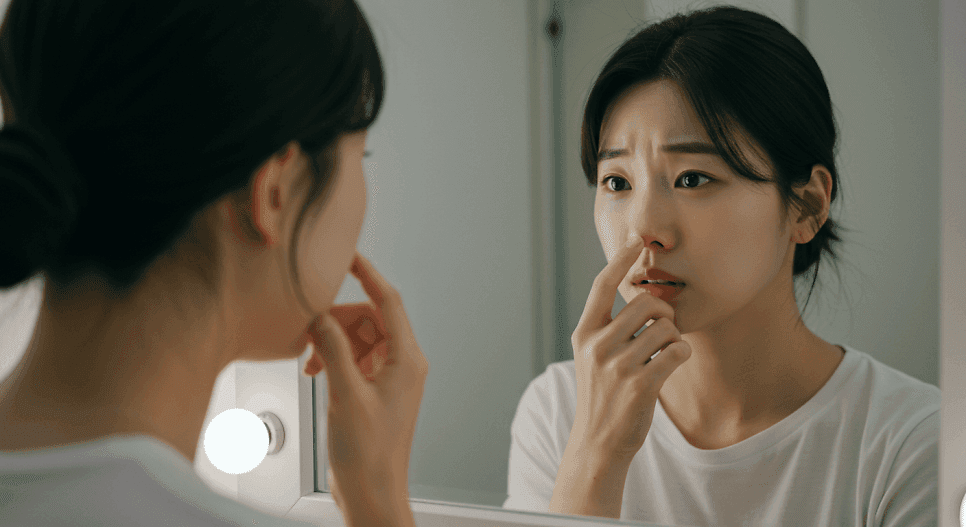
"I'm worried about rhinoplasty swelling — is there a good method?"
The nose is the center of the face and greatly shapes the impression, so when post-surgery swelling will subside is what everyone wonders about. This article organizes the progress of swelling by stage after rhinoplasty, and care methods that help reduce it.
01
How long and how much does rhinoplasty swelling last?
From right after surgery to 2 weeks is when swelling is worst. The eyes or lips can swell too — this is also a natural reaction. Glabella swelling can appear early on because blood pools there, and afterward because of blood circulation in the glabella area. If it's not excessively swollen, watching over time is best.
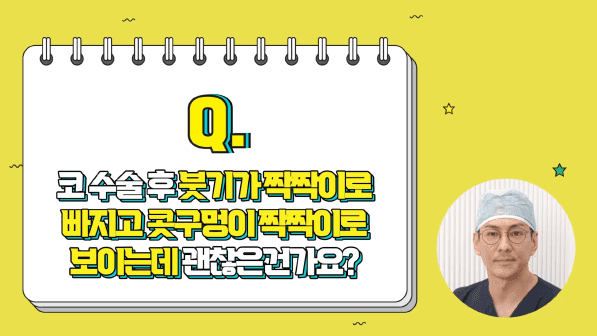
We occasionally get inquiries that post-rhinoplasty swelling subsides unevenly and the nostrils look uneven too. This is a normal reaction, so there's no need for major worry — we recommend watching the progress for about 2 weeks.
| Period | Progress |
|---|---|
| Right after surgery ~ 2 weeks | Worst swelling period — eyes·lips·glabella may swell too |
| Week 3 | Period when swelling subsides enough to look natural |
| 6 months ~ 1 year | Period when the nose's final shape completes |
In nearly 20 years practicing in the single field of rhinoplasty, I've truly heard many concerns about swelling — but through week 2 we recommend watching without major worry. If the inside of your nose feels stuffy, don't blow your nose or wipe inside it — rinsing briefly with saline is preferable.
02
Cold and warm compresses — when and how?
The nose is a respiratory organ and a protruding area, so it needs special care. Just as you'd ice a sprain — what people casually call a twist — after rhinoplasty too we start with cold compresses to reduce bleeding.
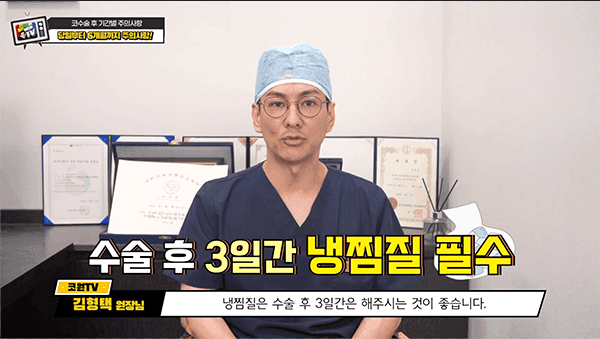
- 01Right after surgery ~ day 3: cold compress — helps remove swelling, relieve pain and reduce bleeding.
- 02After that: warm compress — helps blood circulation, so doing it consistently is important.
Some people ask whether cold or warm compresses are better — starting warm compresses after a fixed period of cold compresses is best. Also, wrap the compress pack in a towel or check the temperature so there's no frostbite or burn risk, proceeding only in a not-too-hot state.
Recovery speed can differ by how you manage care, so consistently visiting the clinic to check your own state also helps. Precautions across the whole recovery period are organized in the rhinoplasty recovery guide.
03
Visit the clinic if you see these changes
The nose is sensitive and delicate, so inflammation may already be progressing even if it's not visible to the eye. So if the following changes are observed, visiting quickly to identify the cause and proceed with matching response is best.
- If pain persists or worsens
- If a change in nose color is visible
- If a change in nose shape is observed
Because understanding even minor symptoms accurately matters, asking comfortably is also a good method.
04
Summary — everyone swells, but recovery differs by care
Everyone experiences swelling after rhinoplasty, but recovery speed differs by lifestyle habits and care methods. Knowing the progress by stage lets you drop unnecessary worry — and conversely, not miss signals that a visit is needed.
If you're worried about swelling or recovery progress, you can comfortably inquire about your current state in a 1:1 video consultation.
Frequently asked questions
Answers to common questions patients ask before a consultation.
The worst swelling runs from right after surgery to 2 weeks, and it subsides enough to look natural around week 3. The nose's final shape is considered complete 6 months to 1 year post-surgery.
Swelling subsiding unevenly and nostrils looking uneven is a normal reaction, so there's no need for major worry. Watch the progress for about 2 weeks, and if swelling is excessive or accompanied by pain·color change, visit for verification.
From right after surgery through day 3, manage swelling and pain with cold compresses; after that, consistently doing warm compresses that help blood circulation is best. Wrap the compress pack in a towel so there's no frostbite·burn risk.
Responses to treatment and recovery progress vary by individual. Outcomes and side effects vary from person to person. Bleeding, infection, swelling and asymmetry may occur. Please consult our medical team before making a decision.
Consultation