
KOWON Blog
Pain after rhinoplasty — inflammation could be the problem: 5 signals that distinguish it from swelling
Inflammation after nose surgery doesn't recover on its own. Five signals of inflammation easily mistaken for mere swelling, three situations where inflammation occurs easily, and why autologous rib cartilage is rated as an inflammation-preventing material — organized.
Key points
- Inflammation after nose surgery can hardly be expected to recover on its own — many miss the treatment window delaying a clinic visit thinking "let's watch a few more days."
- If pain keeps worsening, the shape suddenly becomes asymmetric, warmth is felt, or swelling keeps worsening for days instead of settling — visit quickly and have the state checked.
- Material selection also matters for inflammation prevention — autologous rib cartilage is evaluated as a material helping lower inflammation incidence, with little foreign-body reaction and good fusion with surrounding tissue.
"Doctor, I'm worried about pain after rhinoplasty — could this be inflammation?"
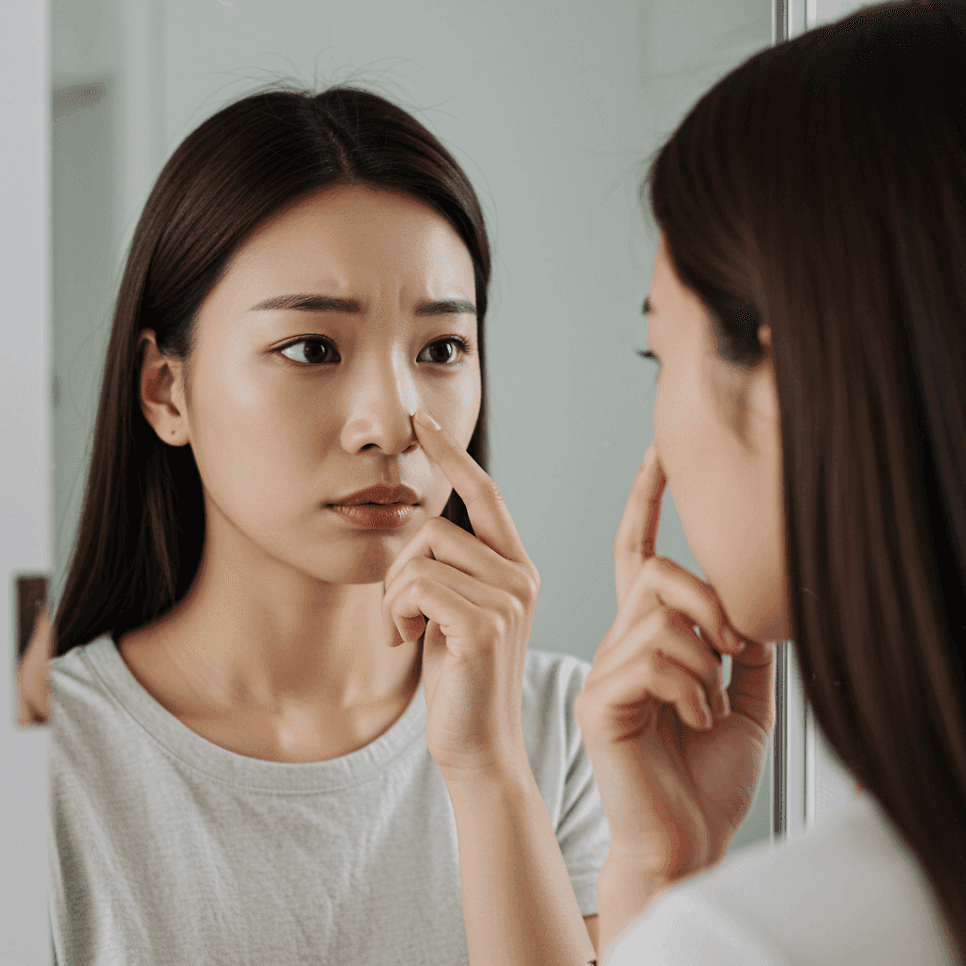
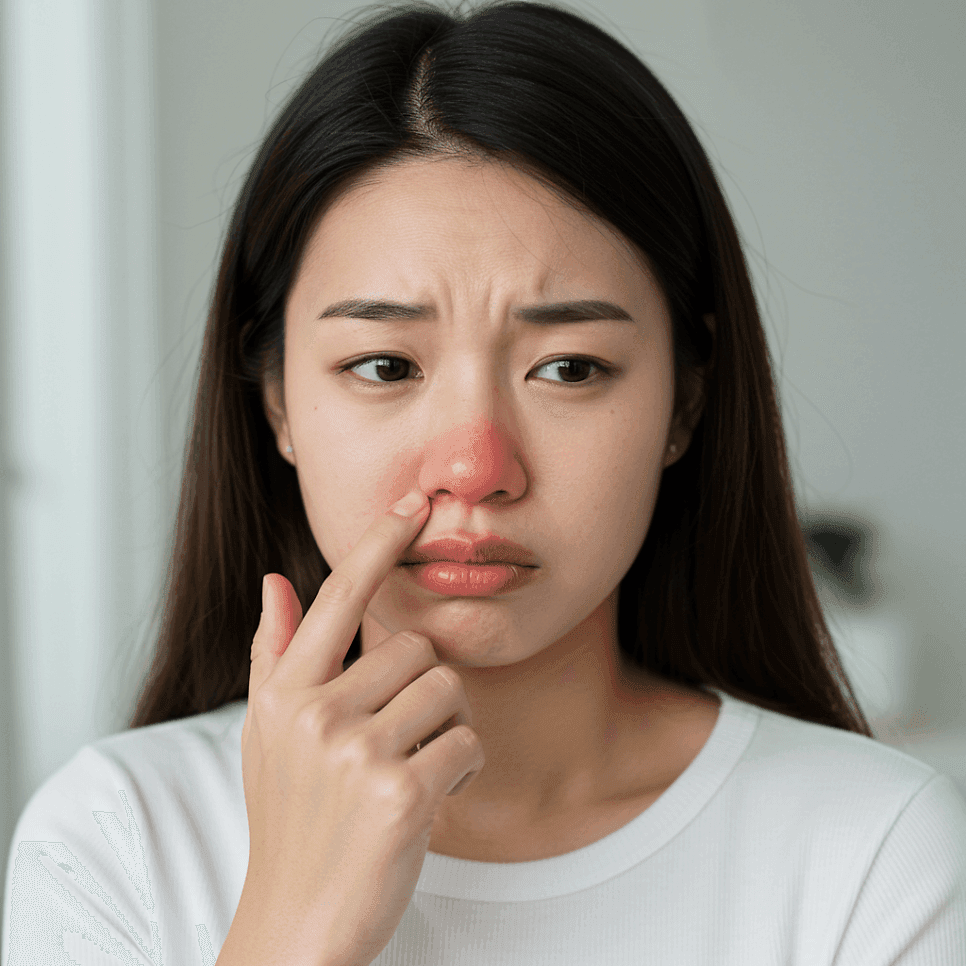
Before nose surgery, pain and inflammation are worries voiced as much as design or shape. Especially when post-surgery swelling or pain, pressure or heaviness inside the nose is felt, many deliberate over 'will it be okay with time?' To be clear, inflammation arising after nose surgery can hardly be expected to recover naturally. This article organizes how to distinguish inflammation — a leading cause of rhinoplasty pain — and when to visit the clinic.
01
How do you distinguish mere swelling from inflammation?
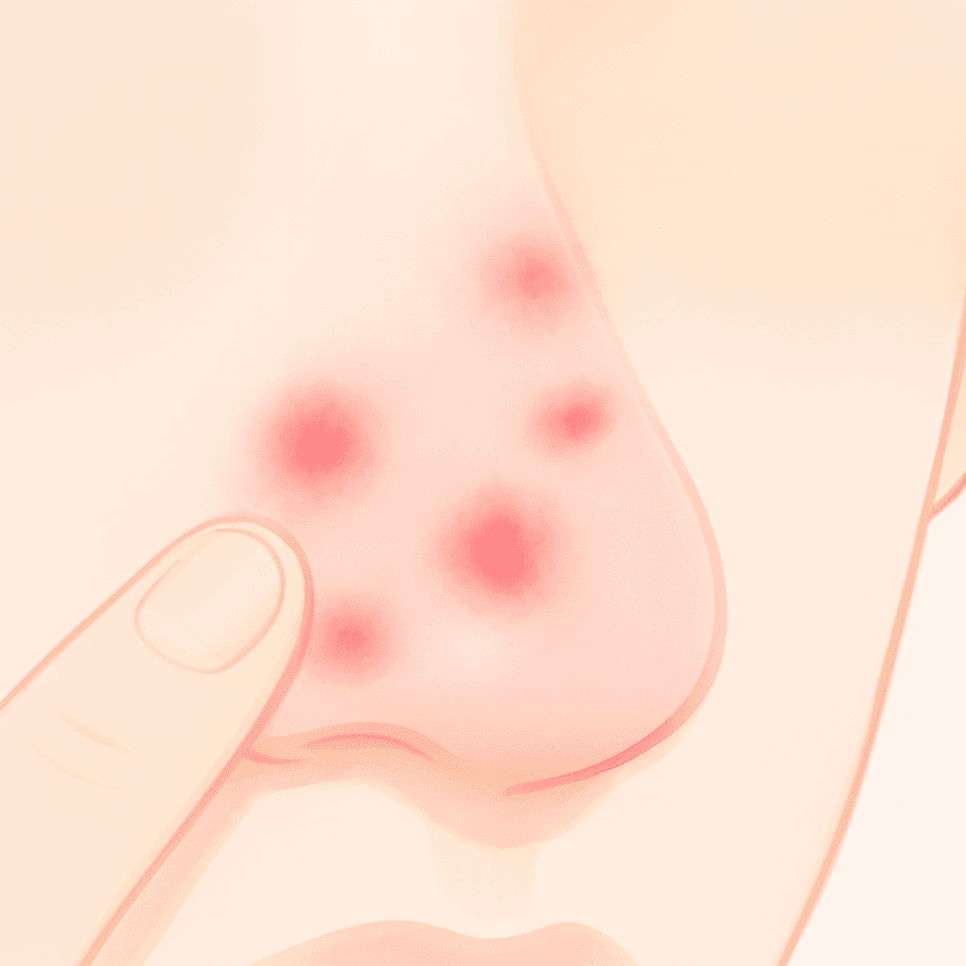
There are several causes of pain after rhinoplasty, but a commonly appearing one is inflammation. Inflammation can look like mere swelling early on, but over time pus can build around the implant or tissue can be damaged, producing deformation and pain.
The unfortunate part is that it's easy to mistake it for 'just swelling' and miss the treatment window. In fact, not a few people delay visiting thinking 'let's watch a few more days' or 'it'll get better with medication' and miss the timing. If the following signals appear, it's good to visit quickly and have the state checked.
- Pain keeps worsening
- The shape suddenly becomes asymmetric or deformed
- Warmth is felt inside or outside the nose
- Swelling doesn't settle for days and keeps worsening
- Pain feels severe
What a normal recovery course after surgery looks like can also be viewed in the recovery guide.
02
In what situations does inflammation occur easily?
Inflammation doesn't just happen from bad luck — several compounding factors combined can become a problem.
| Situation | Why it's a problem |
|---|---|
| When hygiene care is insufficient | If cotton or stitches remain inside the nose or rinsing isn't done properly, bacteria multiply easily. Frequently touching the nose or dusty environments also raise infection risk. |
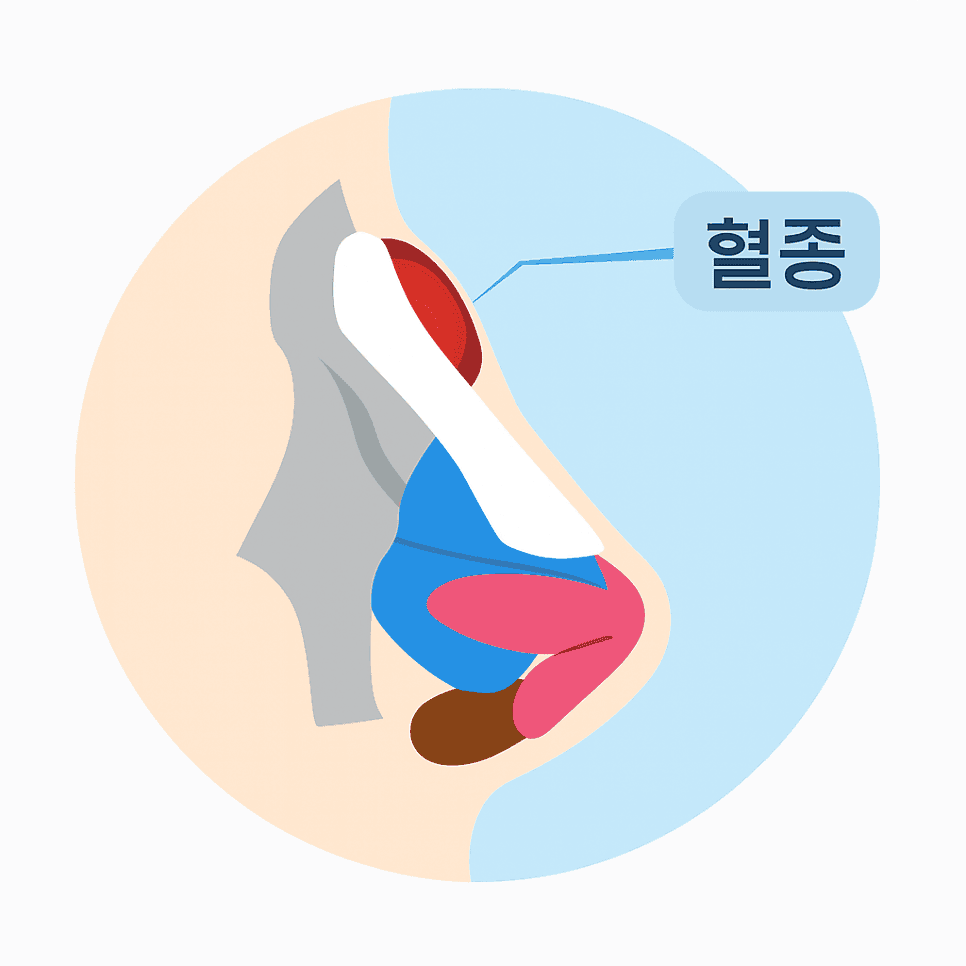
| When hematoma·discharge pool | If hematoma or discharge inside the nose isn't drained and pools after surgery, it becomes a breeding ground for bacteria. The inside of the nose is an enclosed space, so once a problem starts it can spread quickly. |
| When infection occurs during surgery | Rare, but if sterile measures aren't perfect or immunity is temporarily weakened, infection can occur during implant placement. |
03
Why does material selection matter for reducing inflammation?
In inflammation prevention, material selection is very important. Among them, autologous rib cartilage is evaluated as a material that helps lower inflammation incidence in nose surgery. There are three reasons.
- 01Being your own tissue, foreign-body reaction is on the low side — because autologous tissue is used, the likelihood of triggering rejection or inflammatory response in the body like an implant is very low.
- 02It fuses well with surrounding tissue — autologous rib cartilage bonds well with surrounding tissue and vascularizes naturally, giving it high resistance to inflammation. Artificial implants, in contrast, don't receive blood supply and are vulnerable to inflammation.
- 03Bacterial adhesion is on the low side — implants like silicone easily become problematic as bacteria adhere to the surface, but this phenomenon is less with autologous rib cartilage, so infection likelihood also appears lower.
That said, autologous rib cartilage isn't a perfect material either. Inflammation risk is on the low side, but surgical difficulty is on the high side, and detail is required in the cartilage-harvesting process. Even a slight misalignment from harvest to grafting can lead to problems like contracture — so the process of planning which cartilage to harvest at what angle and process to what thickness matters.
04
Summary — sometimes watching isn't the answer
If rhinoplasty pain worries you, remember two things. First, pain, asymmetry, warmth, and worsening swelling may not be mere swelling but signals of inflammation — in that case, have it checked at the clinic rather than watching. Second, inflammation can be reduced starting from the material-selection stage, not just hygiene, hematoma, and surgical environment. If you have questions before or after surgery, verify in a 1:1 video consultation.
Frequently asked questions
Answers to common questions patients ask before a consultation.
No. Swelling itself after surgery appears during recovery. However, if swelling doesn't settle for days and instead worsens, pain keeps growing, or warmth·deformation appear together, suspect inflammation and it's good to come in for a check.
Inflammation arising after nose surgery can hardly be expected to recover naturally. Over time pus can build around the implant or tissue can be damaged leading to deformation — so when a signal appears, checking the state quickly matters more than watching.
Not exactly. It's evaluated as relatively low inflammation risk because foreign-body reaction and bacterial adhesion are on the low side — other factors like hygiene care, hematoma drainage, and surgical environment must also be managed together.
Responses to treatment and recovery progress vary by individual. Outcomes and side effects vary from person to person. Bleeding, infection, swelling and asymmetry may occur. Please consult our medical team before making a decision.
Consultation