
KOWON Blog
Pros and cons of rhinoplasty materials — how do silicone and autologous cartilage differ?
Pros and cons by rhinoplasty material — silicone's convenience vs. show-through·contracture risk, autologous cartilage's low foreign-body reaction vs. demanding handling, and why rib cartilage is considered when tip support is needed. Criteria for finding the material that fits your nose, organized.
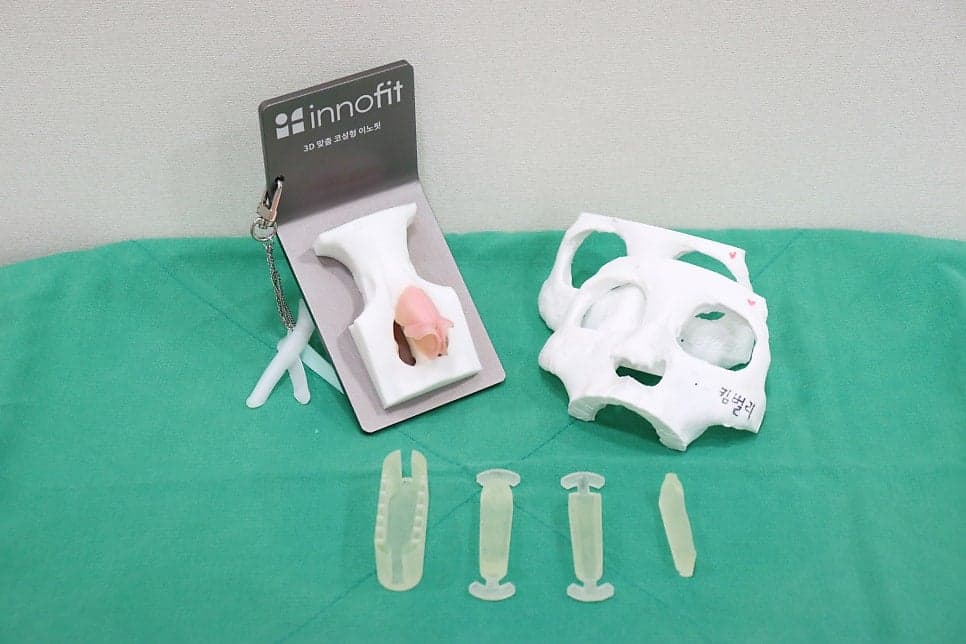
Key points
- Rhinoplasty materials include cartilage, silicone, Gore-Tex, and more — each material's pros and cons differ clearly.
- Silicone offers varied designs and easy replacement·removal, but with thin skin it can show through or cause inflammation·contracture. Autologous cartilage has almost no foreign-body reaction but is demanding to handle and requires experience.
- Material isn't decided as good/bad — it should be chosen according to your nose's condition and goals.
"Which material is good to use for rhinoplasty?"
Unless you're a specialist, it's hard to know what material goes into the nose, what traits that material has, and which material suits your nose better. Searching the internet floods you with conflicting claims, easily deepening the dilemma of what to choose.
Based on 20 years of nose surgery research, this article organizes the types and pros·cons of rhinoplasty materials, and criteria for finding the material that suits you.
01
What kinds of rhinoplasty materials are there?
Materials used in rhinoplasty include many kinds — cartilage, silicone, Gore-Tex, and more. Among them, lately I get the most questions about silicone and autologous cartilage.
Silicone is the most widely used material for forming the bridge line. Designs are varied, the price is relatively low, and since it's easy to replace or remove if needed, it's often used for simple bridge augmentation. But with thin skin or insertion too high, the implant can show through or press and thin the skin, and if inflammation or contracture develops over time, the hassle of needing re-operation can arise.
The alternative many look to is autologous cartilage — cartilage harvested from your own body: septal cartilage, ear cartilage, or rib cartilage. Being your own tissue, it has almost no foreign-body reaction, relatively low infection risk, and the advantage of fusing naturally with tissue over time. However, the material itself can be soft or prone to twisting, so shaping it requires more experience and technique.
| Material | Pros | Cons |
|---|---|---|
| Silicone | Varied designs, low price, easy replacement·removal | Show-through·skin thinning on thin skin, re-operation if inflammation·contracture |
| Autologous cartilage | Almost no foreign-body reaction, low infection risk, fuses with tissue | Demanding to handle — experience·technique needed to shape |
Autologous cartilage is used more often for those needing delicate tip refinement, those needing structural support, and those needing revision surgery. Material-by-material traits can also be checked in the rhinoplasty materials guide.
02
How do you find the material that suits you?
"So which material suits me?" is a question I truly get a lot in consultations. The answer I give every time is the same — material isn't a matter of simply deciding good or bad; you must find the material suited to your nose's condition and goals.
For example, there are cases where the tip is drooping or collapsed and the skin is thick too. In that case silicone alone lacks support, making the desired result hard to get, and the tip can sink back down over time. For such cases I discuss rib cartilage, which has strong support and high stability. The method of processing autologous rib cartilage into fine particles and fabricating it into a form fitting the nasal structure is called RIBFIT™ — more detail is in autologous rib cartilage RIBFIT™.
03
Does using rib cartilage leave a scar?
When deliberating on rib cartilage harvest, many people worry about the scar.
The harvest process leaves a scar of about 2cm on the flank area — the usual course is that it gradually fades and blurs over time. If it still bothers you, there's also the option of tidying it with a simple scar procedure.
04
Summary — the standard is your nose's condition, not trends
Rhinoplasty material isn't something to decide by trend, price, or the material alone. You should understand which nasal condition silicone's convenience and autologous cartilage's stability each suit, consider together the result you want and your nose's current condition, and choose the most appropriate material.
If you're curious which material fits your nose, you can check directly in a 1:1 video consultation.
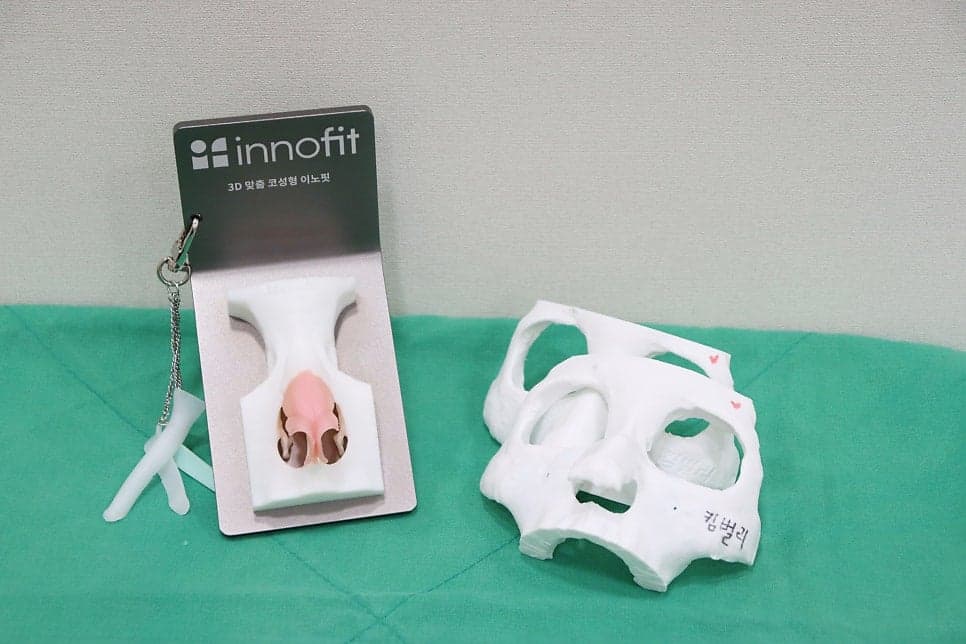



Frequently asked questions
Answers to common questions patients ask before a consultation.
Neither side is always better. Silicone is widely used for simple bridge augmentation but carries show-through or contracture risk on thin skin; autologous cartilage has almost no foreign-body reaction but is demanding to handle. The suitable material differs by your nose's condition and goals.
It's considered in situations where silicone lacks support — like a drooping or collapsed tip with thick skin. Rib cartilage has strong support and high stability, so it's used more often for those needing structural support and those needing revision.
A scar of about 2cm forms on the flank. The usual course is gradual fading over time, and if it bothers you, it can be tidied with a simple scar procedure.
Responses to treatment and recovery progress vary by individual. Outcomes and side effects vary from person to person. Bleeding, infection, swelling and asymmetry may occur. Please consult our medical team before making a decision.
Consultation