
KOWON Blog
What to weigh before nose surgery — facial-harmony angles, materials, consultation format
What to check before nose surgery — why reference figures like ~105° for the columella-upper-lip angle (nasolabial angle) and 120–135° for the forehead-nose angle aren't absolute standards, the strengths and limits of autologous rib cartilage, and non-face-to-face consultation for those who can't visit.

Key points
- Nose surgery isn't just about adding height — it's about custom design considering skin thickness, face shape, and existing nasal structure.
- A columella-upper-lip angle (nasolabial angle) around 105° and a forehead-nose angle of 120–135° are reference figures for a soft flow — but not absolute standards.
- Among materials, autologous rib cartilage offers ample support and volume but is demanding to process — it's chosen by weighing strengths and limits together.
"For nose surgery, where do I even start weighing things?"
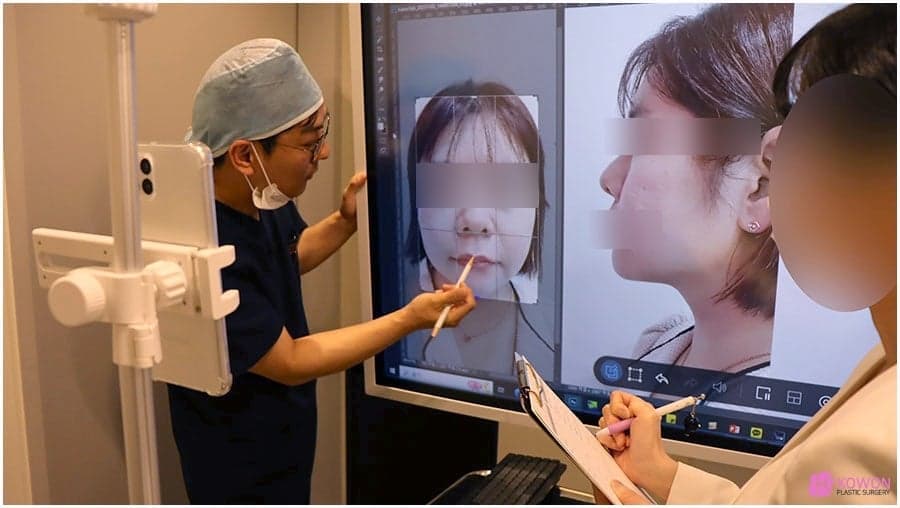
There's something easy to miss while deliberating on nose surgery: a 'customized surgical plan.' Since the nose sits at the face's center, surgery that only adds height can hardly yield a natural, harmonious result. That's why 1:1 design considering skin thickness, face shape, and existing nasal structure is needed.
This article organizes what to weigh when looking into nose surgery near Sinsa Station — facial-harmony angles, materials, then consultation format.
01
Does a high nose always suit you?
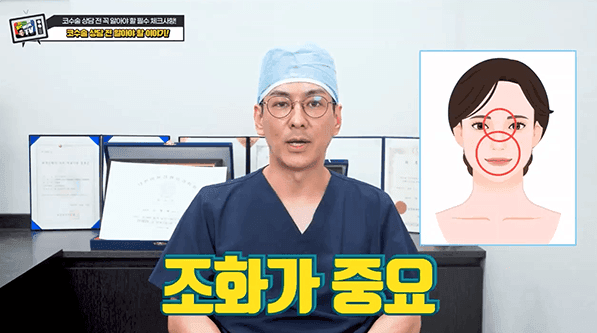
Not necessarily. A nose raised only high can rather float apart from the face. The keys are the flow from forehead to nose, and the line running from glabella to lips.
There are angle figures worth referencing.
| Angle checked | Reference figure |
|---|---|
| Angle between columella and upper lip (nasolabial angle) | Around 105° |
| Angle between forehead and nose | 120–135° |
But these numbers aren't absolute standards. Everyone's face shape, skin thickness, and bone structure differ, so the same angle can look natural on one person and awkward on another. That's why what matters in nose surgery isn't finding a fixed answer but finding the harmony that suits you.
02
When is autologous rib cartilage considered as a material?
The material used in nose surgery is a factor important enough to decide the result. Autologous rib cartilage can be an option especially in these cases.
- 01Lower infection likelihood and less rejection — because it's your own tissue.
- 02It maintains a stable support structure over time — it's firm and ample in volume.
- 03It's demanding to process and can deform — so it's a material that requires skill and experience to handle.
- When revision surgery is needed
- When existing cartilage is insufficient
- When a sturdier, more stable support structure is wanted
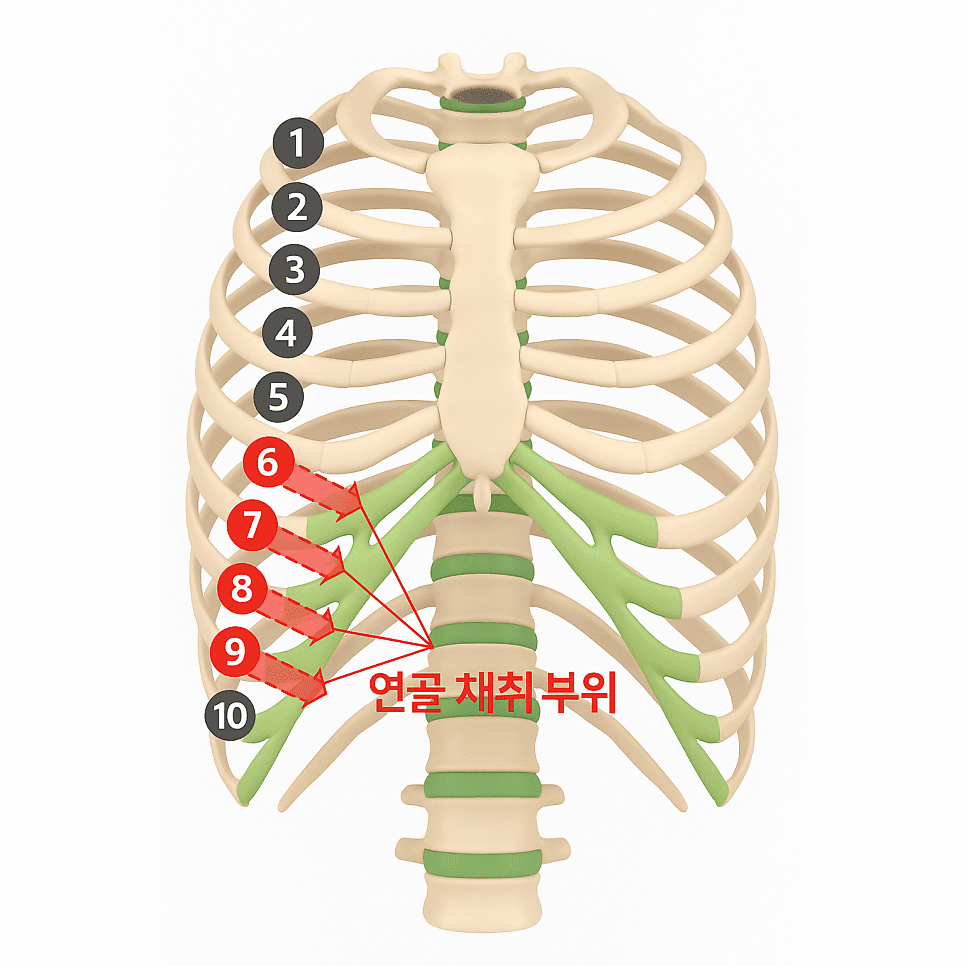
Autologous rib cartilage is cartilage harvested from your own rib, with traits like these.
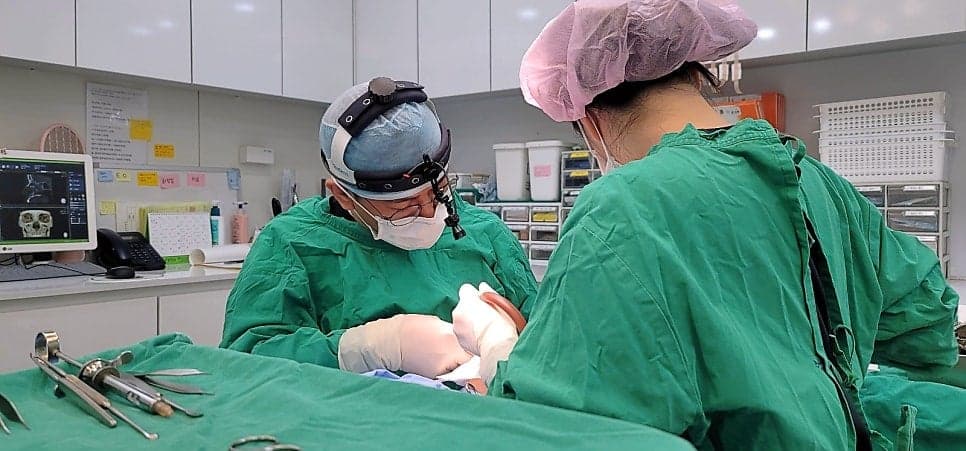
At KOWON Plastic Surgery, the entire process — harvesting, processing, fixation — is performed personally by the head director. Firm cartilage is smoothly trimmed into curved form without asymmetry, and especially the structure supporting the tip must keep a soft curve, so each fine angle is checked and adjusted by eye. Included in this process is fixation so the cartilage doesn't warp or shift as time passes after surgery. How autologous rib cartilage is handled is covered in more detail in the autologous rib cartilage guide.
03
What if you live far or are too busy to visit?
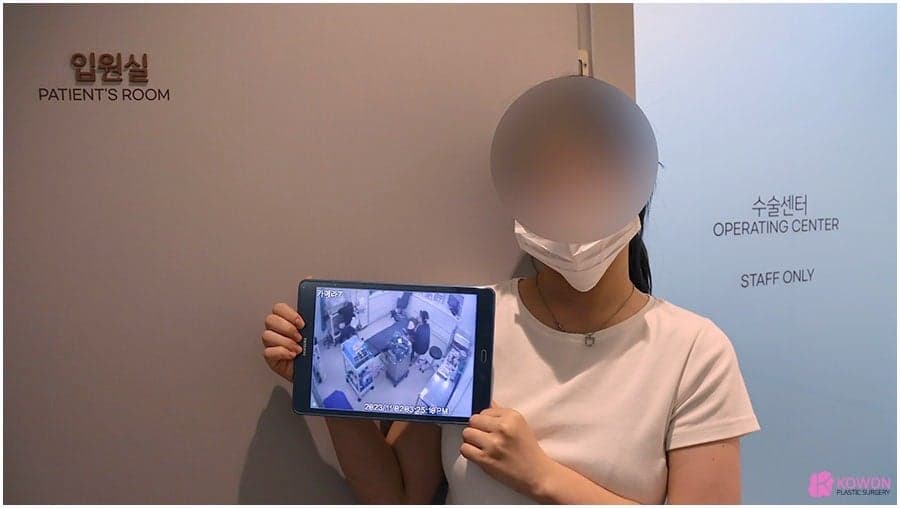
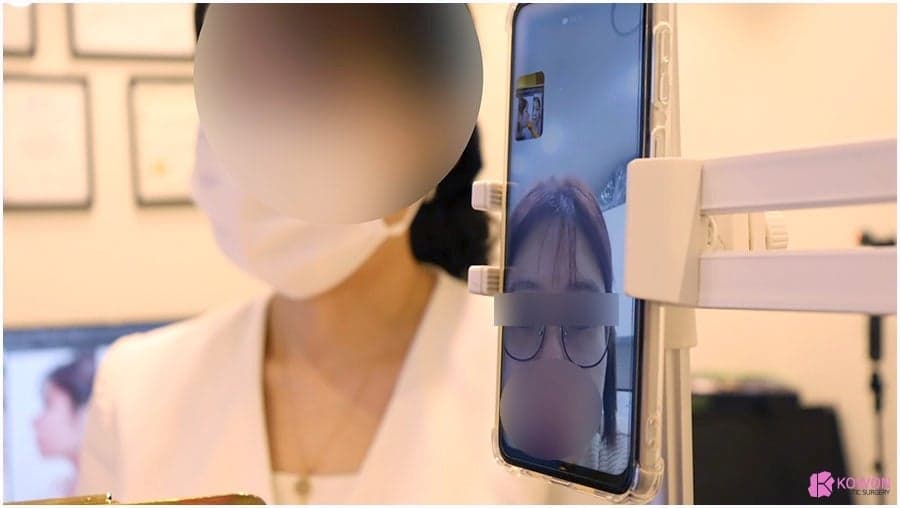
For those who can't visit easily, we run a non-face-to-face consultation system. Send front·side face photos and a brief description of the look you want, and we analyze them to set a direction, then explain and answer directly over video call.
With this format you can plan ahead before visiting, and even for cases with much deliberation like revision surgery, you can start a consultation without burden. Apply directly at 1:1 video consultation.
04
Summary — look at the whole face, not just the nose
Nose surgery isn't a process of making just the nose pretty. Natural results come only when overall facial harmony and customized design are considered together. Keep the angle figures as a reference, and start by organizing what to check for your face shape, skin thickness, and nasal structure. How actual design differs can be checked in before & after photos.
Frequently asked questions
Answers to common questions patients ask before a consultation.
No. These figures are only a reference range where a soft flow is created — not absolute standards. The same angle can look different by face shape, skin thickness, and bone structure, so finding the range that suits each face's harmony comes first.
It's a material with strengths and limits together. Infection likelihood is low, rejection is minimal, and support is stable — but it's demanding to process and can deform, so handling experience is needed. It's reviewed under needed conditions like revision or insufficient existing cartilage.
No. Face shape, skin thickness, and bone structure differ per person, so how natural the same angle looks varies. Take the figures as a reference and check the whole face's harmony together.
Responses to treatment and recovery progress vary by individual. Outcomes and side effects vary from person to person. Bleeding, infection, swelling and asymmetry may occur. Please consult our medical team before making a decision.
Consultation