
KOWON Blog
Three things to check when choosing a nose surgery clinic — inflammation preparedness, nasolabial angle, expected result
What should you look at when choosing a nose surgery clinic? Whether inflammation burden is reduced with autologous rib cartilage, whether the design considers even the nasolabial angle, whether virtual simulation previews the expected look — three check criteria organized.

Key points
- When choosing a nose surgery clinic, rather than how much height they add, check three things — whether inflammation possibility is considered in advance, whether angle details like the nasolabial angle are designed, and whether the expected result is shown beforehand.
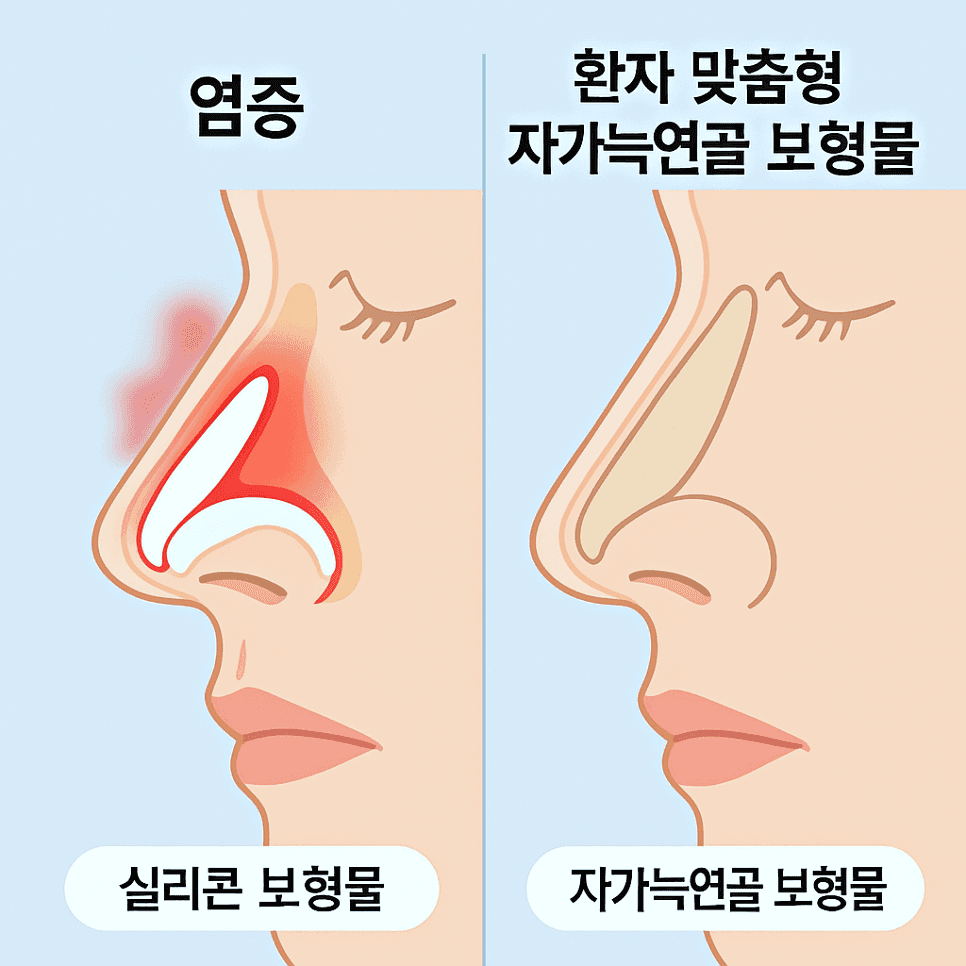
- Using autologous rib cartilage instead of artificial implants like silicone eases the burden of foreign-body reaction — there's also the RIBFIT™ method, which processes it into particles for a custom-made implant.
- If the nasolabial angle (the angle from the nose to the philtrum·lips) is under 90°, an illusion of a protruding mouth can appear regardless of actual nose height — design must cover angle, not just height.
"Will fixing my low nose alone make my face prettier?" "I want to, but I can't bring myself to decide rashly."
This is a common concern among people looking into nose surgery. The nose sits at the face's center and greatly affects the overall impression — but once you start researching, it's unclear where to go, and some face results different from what they expected.
Based on 20+ years of nose surgery, this article organizes three criteria worth checking when choosing a clinic — inflammation preparedness, angle detail, and expected-result confirmation.
01
For inflammation concerns, what material should you check?
A big share of the hesitation about nose surgery is fear of inflammation. Since silicone implants are commonly used, the burden of artificial materials is inevitably large.
An option to check in that case is autologous rib cartilage — harvesting cartilage from the tip of your own rib to replace the nasal implant. Because artificial material like silicone isn't used, the burden of foreign-body reaction or inflammation can be reduced accordingly.
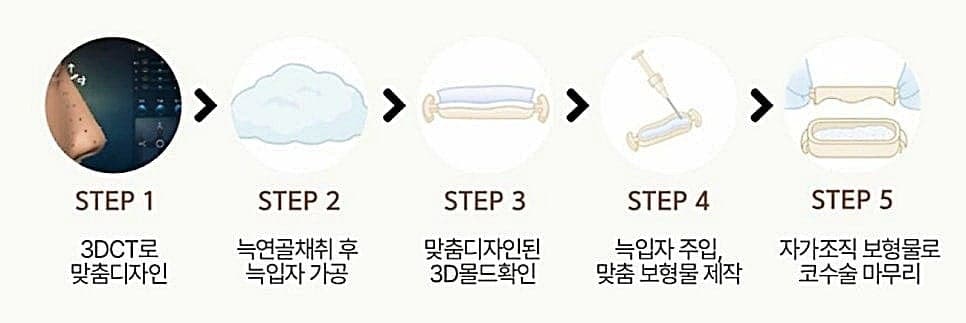
A step further is RIBFIT™ — a hybrid method that harvests autologous rib cartilage, processes it into particle form, and builds a custom implant from it.
| Material approach | Traits |
|---|---|
| Artificial implant (silicone etc.) | Relatively easy to shape, but foreign-body reaction burden must be considered |
| Autologous rib cartilage | Uses cartilage harvested from your own rib tip — no artificial material |
| RIBFIT™ (autologous rib cartilage processed into particles) | Uses autologous tissue while forming a custom structure — reduces foreign-body sensation and frees shape design |
Because it can be designed into the desired shape while using autologous tissue, it's also advantageous for capturing detailed shapes. More on autologous rib cartilage and RIBFIT™ is in the autologous rib cartilage rhinoplasty guide. Ultimately, the first check criterion is not just a slim design but whether the clinic considers inflammation possibility in advance.
02
Why shouldn't you decide by nose height alone?
What decides a sleek, refined bridge isn't absolute height. Raising only the height without capturing detail can instead emphasize just the mid-face and produce an unnatural result.
Something to look at together especially is the nasolabial angle — the angle from the nose down to the philtrum and lips.
- 01The closer the nasolabial angle is to 90°, the more the face's overall dimension comes alive.
- 02Under 90°, the mouth looks like it juts forward similar to the nose tip. Regardless of actual nose height or whether the mouth protrudes, an illusion appears of a protruding mouth and a flattened-looking face.
- 03In this state the mid-face can look longer and the center of the face can appear sunken.
So when having nose surgery, the second criterion is checking whether they do custom design that considers such angles — matching overall balance — not just bridge height.
03
Can the expected result be checked before surgery?
Nose surgery involves placing an implant, so it should be approached carefully. Rather than vaguely expecting 'it'll get better,' it's better to check in advance how it will change and then decide.
For that, in consultation we photograph your face directly and show a virtual surgical result — so you can see the expected post-surgery look before judging. If the virtual simulation doesn't look like a big improvement, we don't push surgery — we guide based on clinical data built over the past 20 years.
Also, a single director operates, and the surgical-process CCTV is disclosed transparently. If you're curious about actual surgical cases, check before & after photos.
04
Summary — check three things
When choosing a nose surgery clinic, checking the following three things helps.
- Whether they consider inflammation possibility in advance (whether they guide options like autologous rib cartilage·RIBFIT™)
- Whether they provide custom design that captures even nasolabial-angle detail
- Whether they let you check the expected result beforehand via virtual simulation etc. and guide honestly
Since it's work that re-organizes the center of your face, meticulous review and a careful approach are needed. If you're curious what to check for your nose's condition, you can preview a virtual result in a 1:1 video consultation.
Frequently asked questions
Answers to common questions patients ask before a consultation.
Not every case needs the same material. But if the burden of artificial implants is large, autologous rib cartilage — or the RIBFIT™ method that processes it into particles for a custom implant — can be reviewed. Which material fits is judged after checking your nose's condition.
Because if the nasolabial angle is under 90°, an illusion can appear where the mouth looks protrusive and the center of the face looks sunken — even without actual protrusion. Raising only height while missing the angle can lead to an unnatural result, so it's examined together at the design stage.
Yes. Judge after checking the expected look via virtual simulation, and if the improvement doesn't look large, surgery isn't recommended. Checking the expected result and choosing yourself is the order.
Responses to treatment and recovery progress vary by individual. Outcomes and side effects vary from person to person. Bleeding, infection, swelling and asymmetry may occur. Please consult our medical team before making a decision.
Consultation