
KOWON Blog
Rhinoplasty clinic selection criteria — why to check the line that suits you and the difference in materials first
Does raising the bridge alone make you prettier? The viewpoint of finding a line that suits you within facial balance, the difference between silicone·ear cartilage methods and autologous rib cartilage (RIBFIT™), and what to check in consultation — organized as clinic-selection criteria.

Key points
- A high bridge and pointed tip doesn't suit everyone — finding a line fitting your face within facial balance comes first.
- The common method uses silicone for the bridge and ear cartilage·septum for the tip, but artificial implants require weighing inflammation·contracture risk — autologous rib cartilage is the alternative.
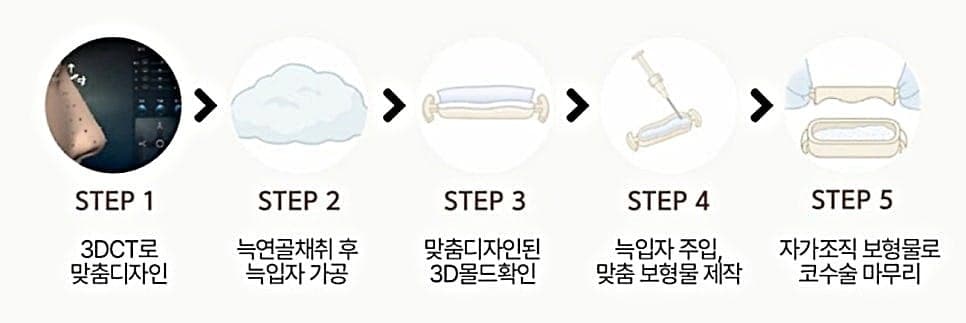
- RIBFIT™ makes autologous rib cartilage into fine particles, then builds and applies a form custom-designed via 3D CT — an autologous-tissue implant method.
"Will raising just the nose change my impression?" "I don't know which line would suit me."
Doing 1:1 video consultations with people who can't easily visit, I hear these questions often. Even those for whom a rhinoplasty consultation isn't their first often don't know which shape would bring out their charm. Most ask to apply a high bridge and pointed tip as-is, thinking that's what beauty means — but from the standpoint of 23 years focused on nose surgery, I think a bit differently.
This article organizes the viewpoint of finding a nose line that suits you, and how material traits and methods differ.
01
Does raising the bridge alone make you prettier?
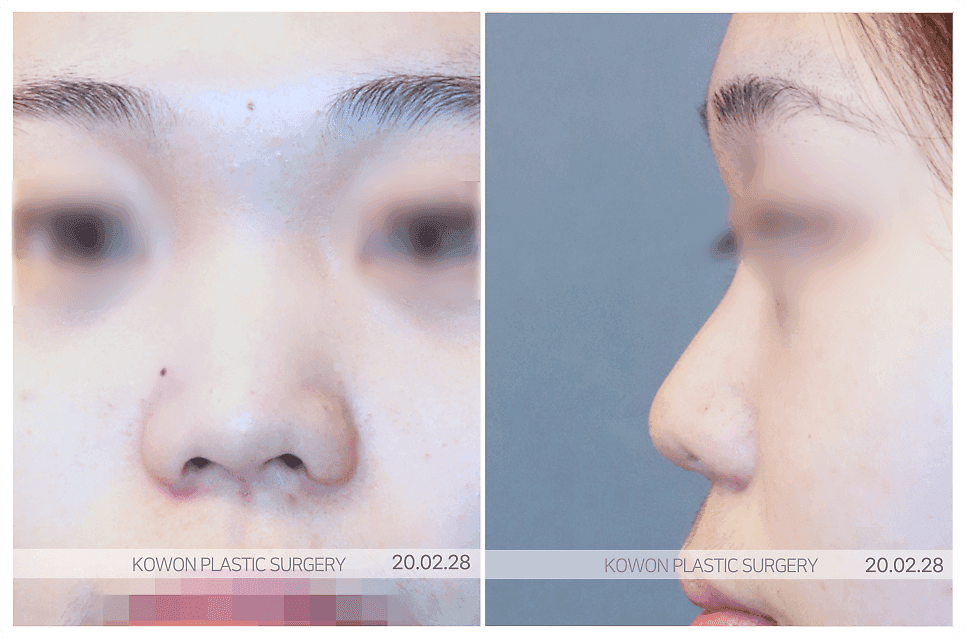
There's the case of a woman in her 20s who'd consulted at several rhinoplasty clinics. She had deep double eyelids and big, open eyes — yet something felt stuffy about her impression, and dissatisfaction grew. The cause lay in the nose, the face's center. Her bridge wasn't low, but a blunt-tipped 'bulbous nose' was breaking facial balance and even hiding her eyes' advantage.
The nose is where others' gaze lands first — so bringing out its dimension matters for a refined impression. But simply raising the bridge or trimming the tip won't do it; deliberation on how to set the face's center is needed. Even when adjusting balance, design should use harmonious proportion and angle so your other strengths can shine.
02
Are there materials besides silicone or ear cartilage?
Common rhinoplasty often uses silicone for the bridge and ear cartilage or septal cartilage for the tip. But analyzing long-term cases using those materials showed artificial implants had shortcomings. Depending on material traits and the team's proficiency, unnaturalness, inflammation, or contracture can occur. Because of this burden, more people are looking for implants other than silicone.
The alternative used is autologous rib cartilage.
| Category | Artificial implant (silicone etc.) | Autologous rib cartilage |
|---|---|---|
| Tissue reaction | Inflammation·contracture possibility must be considered | Harvested from your body — tends toward less inflammatory reaction |
| Retention | Differs by material·proficiency | Rib cartilage sturdier than ear·nasal cartilage — advantage in retention |
03
How does RIBFIT™ differ from existing rib cartilage methods?
RIBFIT™ makes autologous rib cartilage into fine particles, then builds and applies a form custom-designed via 3D CT. Since only autologous-tissue implants are used, it's an approach that raises the probability of avoiding the risks existing artificial implants carried.
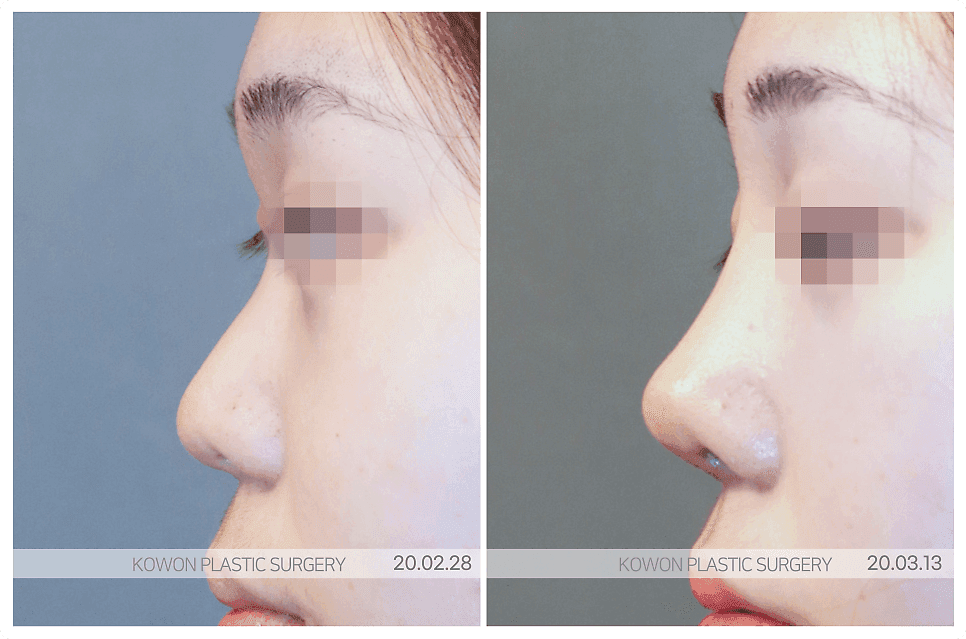
Autologous rib cartilage is commonly known as something that, even if it doesn't absorb, can look rough or warp later. After long handling and research of such autologous traits, we achieve sleek, precise lines with high-density compressed RIBFIT™. It's an option worth considering even for those with naturally thin skin worried about show-through. Principles and application criteria are in the autologous-tissue implant RIBFIT™ guide.
Of course, no method is unconditional. To avoid even low-probability problems, deciding after sufficient prior consultation and design is good. In consultation we explain using virtual images for easy understanding and go through coordinating with the image you want. Also, to focus on each patient, we operate only 2 cases a day and disclose OR CCTV.
04
Summary — choosing a clinic means looking at line and material together
When choosing a rhinoplasty clinic, it's important to check together which line suits your face and which material makes that line. Artificial implants and autologous-tissue methods have different traits, and even with the same material, results can differ by handling experience.
If you're curious which line suits your face, check with virtual images in a 1:1 video consultation. Actual cases are in before & after photos.
Frequently asked questions
Answers to common questions patients ask before a consultation.
No. The nose must be viewed within facial balance, and designing with harmonious proportion and angle so your other strengths shine matters. Even without a low bridge, impressions can differ because of tip shape.
Harvested from your body, it tends toward less inflammatory reaction, and uses rib cartilage sturdier than ear·nasal cartilage — cited as an advantage in retention. But traits like roughness or warping are known, so handling experience and processing method matter.
No method is unconditional. To avoid even low-probability problems, deciding after sufficient prior consultation and design is good.
Responses to treatment and recovery progress vary by individual. Outcomes and side effects vary from person to person. Bleeding, infection, swelling and asymmetry may occur. Please consult our medical team before making a decision.
Consultation