
KOWON Blog
Post-rhinoplasty precautions — after splint removal, when can face washing·scabs·exercise start?
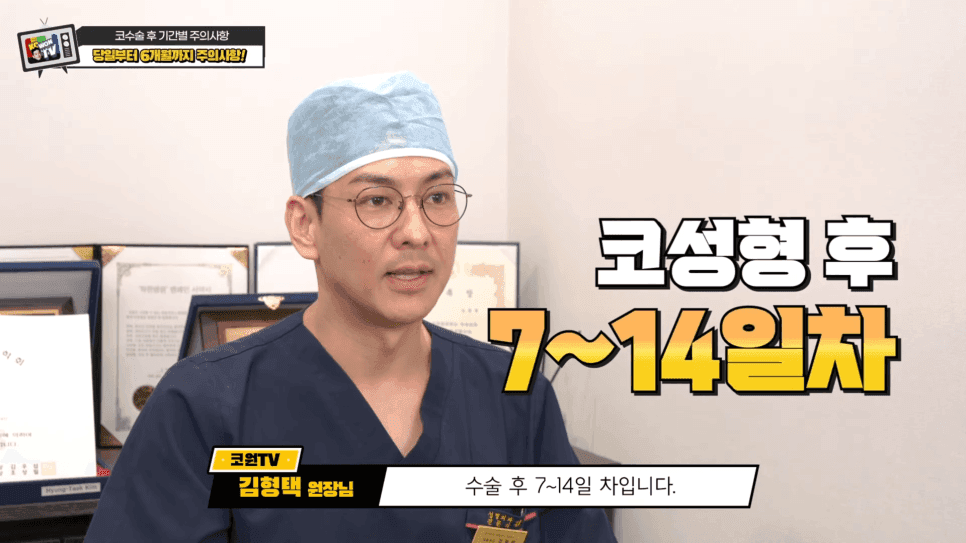
7–14 days after nose surgery, care to keep after splint removal — when face washing is allowed, why scabs shouldn't be picked off, when exercise resumes (intense exercise only after minimum 3–4 weeks), and indoor humidity control — organized by stage.
Key points
- Days 7–14 post-op are when external change and internal tissue recovery progress together, so careful management is needed even after the splint comes off.
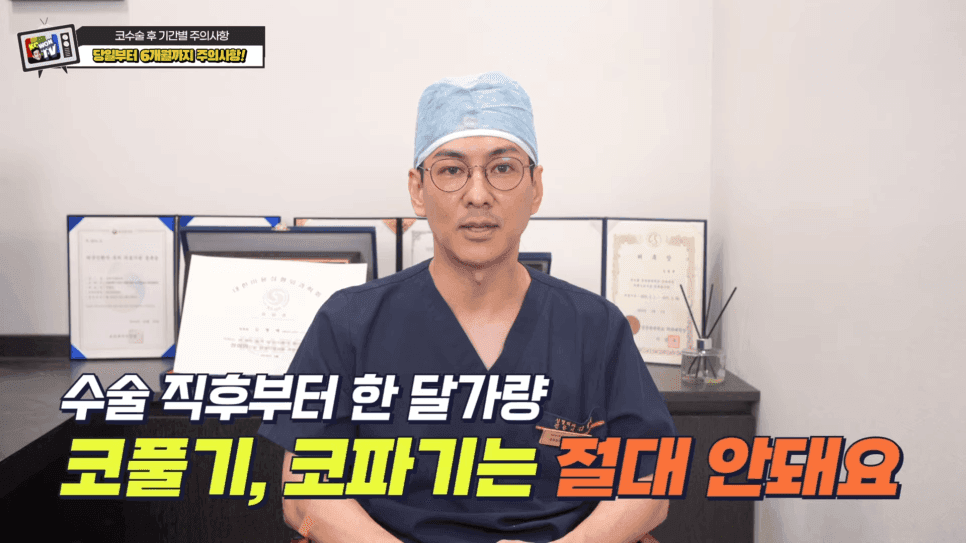
- Don't forcibly pick scabs inside the nose — wait for them to fall naturally. Avoid blowing·picking the nose for about a month right after surgery.
- Light jogging·stretching become possible as recovery progresses, but decide whether to resume intense exercise only after consulting the medical team at minimum 3–4 weeks post-op.
After nose surgery there are precautions to keep during recovery. Especially the 7–14-day window — when external change and internal tissue recovery progress together — so removing stitches and splint doesn't mean care is finished.
This article organizes when and how to do face washing, scabs, exercise, and humidity control, based on the period after the first week as the surgical site settles.
01
When can I start washing my face?
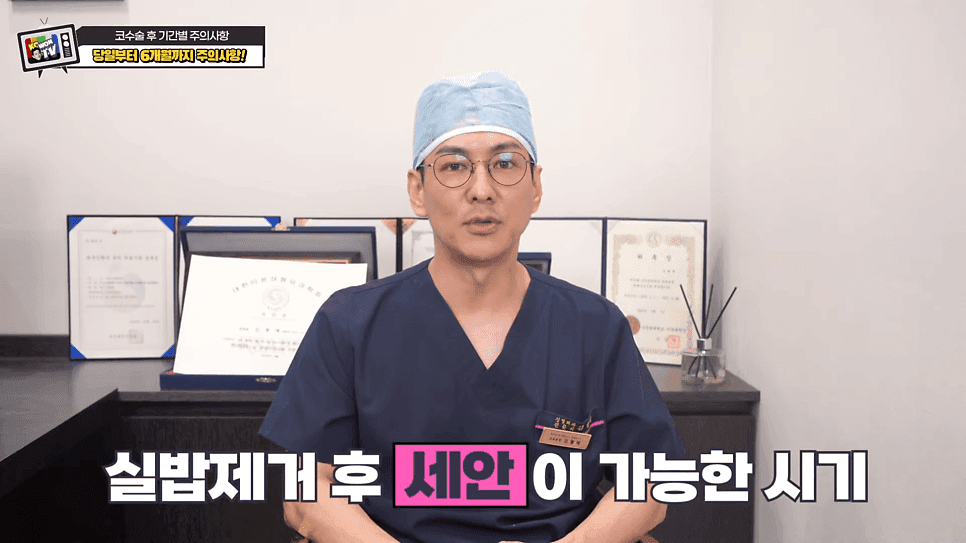
Around one week after nose surgery, stitches are removed along with the splint that was attached on the nose. From this point, light face washing becomes possible.
Still, surgical-site recovery isn't fully finished, so proceed very carefully. Avoid rubbing or applying pressure — use lukewarm water and a non-irritating cleanser to wipe gently.
02
Can I pick scabs inside the nose after surgery?
For a certain period after surgery, avoid forcibly picking scabs inside the nose or blowing your nose. Picking a scab can directly irritate the surgical site and cause bleeding, inflammation, or in severe cases damage to internal structures.
Especially refrain from habitual actions like blowing or picking the nose for about a month right after surgery, and avoid touching the nose more than necessary.
Scabs inside the nose fall off naturally over time. If too uncomfortable, don't treat them yourself — getting proper treatment under a doctor's judgment at the hospital is safe.
03
When can I exercise after rhinoplasty?
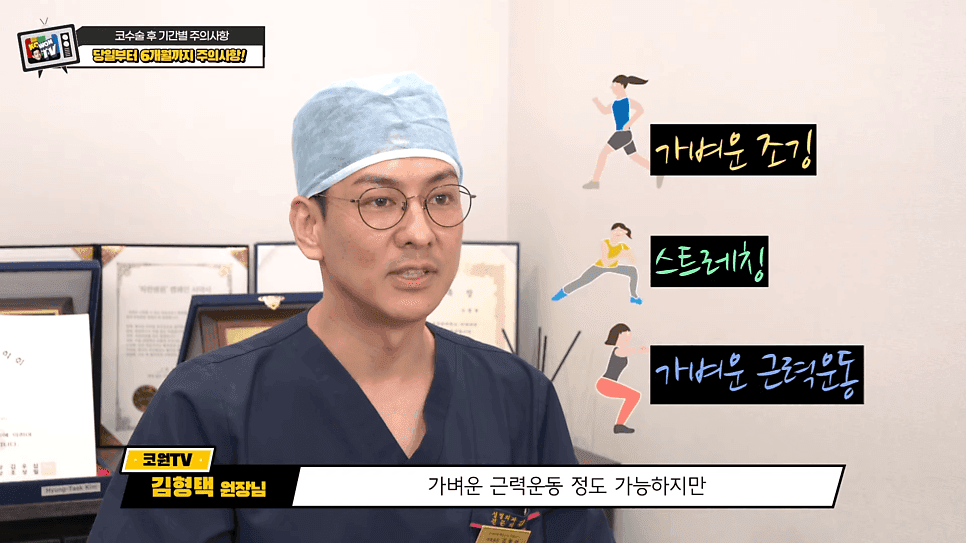
As recovery progresses, you can start with light jogging, stretching, and simple strength exercises that don't strain. Intense exercise is usually safe to resume at minimum 3–4 weeks post-op, deciding with the medical team whether to resume.
Still, intense and high-intensity exercise should be avoided. Activities like hard cardio, weight training, or ball sports — where blood pressure spikes or pressure loads the upper body — carry risks of bleeding, recurring swelling, or surgical-site deformation.
04
What should I do when the inside of the nose feels dry?
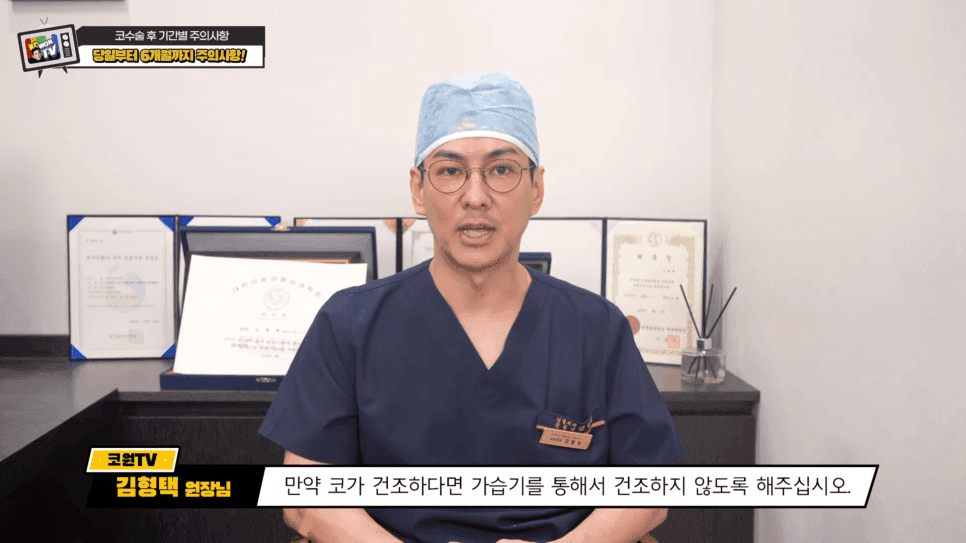
If the inside of the nose feels dry, keeping indoor humidity at a proper level helps. Using a humidifier to keep air from drying prevents the mucosa from drying out and can help the recovery process.
Dry environments can lead to scab formation, itching, or in severe cases nosebleeds — so pay attention to humidity control for at least 2–3 weeks after surgery.
05
Stage-by-stage care at a glance
| Item | From when / until when | How to keep it |
|---|---|---|
| Face washing | After stitch·splint removal (~1 week) | No rubbing·pressure; lukewarm water + non-irritating cleanser |
| Scabs·blowing nose | Avoid for about a month right after surgery | Wait for natural shedding; if uncomfortable, get treated at hospital |
| Light exercise | Possible once recovery progresses | Only up to jogging·stretching·simple strength level |
| Intense exercise | Minimum 3–4 weeks later | Decide on resuming after consulting the medical team |
| Humidity control | At least 2–3 weeks | Maintain indoor humidity via humidifier etc. |
06
Summary — care begins once the splint comes off
The core of post-rhinoplasty precautions is distinguishing what's allowed at each stage from what's still early. Gentle face washing, leaving scabs alone, exercise in stepped intensity, keeping indoor air from drying — keeping just these four greatly reduces unnecessary irritation during recovery. The full stage-by-stage recovery flow is in the recovery guide.
If questions arise during recovery or you need care fitted to your state, get checked in a 1:1 video consultation.
Frequently asked questions
Answers to common questions patients ask before a consultation.
Forcibly picking directly irritates the surgical site and can cause bleeding·inflammation or even internal-structure damage — avoid it. Scabs fall naturally over time; if very uncomfortable, get treated at the hospital under a doctor's judgment.
Intensity is the criterion, not the point in time. Light jogging·stretching is possible once recovery progresses, but intense exercise where blood pressure spikes or pressure loads the upper body should be decided with the medical team at minimum 3–4 weeks.
Splint removal means external fixation ended — not that recovery ended. Days 7–14 post-op are when internal tissue recovery progresses, so face-wash method, nose-touching habits, exercise intensity, and humidity all need careful management.
Responses to treatment and recovery progress vary by individual. Outcomes and side effects vary from person to person. Bleeding, infection, swelling and asymmetry may occur. Please consult our medical team before making a decision.
Consultation