
KOWON Blog
Uneven nostrils — is it normal? Three causes of asymmetry and the order of checking
Most uneven nostrils are within normal range. Three criteria warranting structural checks, the causes of asymmetry (septum·tip cartilage·alar tissue), and a 4-step home-check method.
Key points
- Left-right nostril differences are mostly within normal range — no face is perfectly symmetric, so a certain level of difference exists in everyone.
- But if the difference persists at every angle, left-right breathing feels different, or the same pattern repeats across photos·videos, we view it as a state needing structural checks.
- Asymmetry causes divide into three — septal deviation·tip cartilage asymmetry·alar tissue difference — and different causes mean different correction methods.
Many first notice while looking in the mirror or after taking a photo. That moment of wondering, "Were my nostrils always like this?"
First, most cases are within normal range. No face is perfectly symmetric, and a certain level of difference exists in everyone. The judgment criterion isn't shape but structure and function.
This article organizes why nostril asymmetry occurs, how to check at home, and when correction gets considered.
01
Why does nostril asymmetry occur?
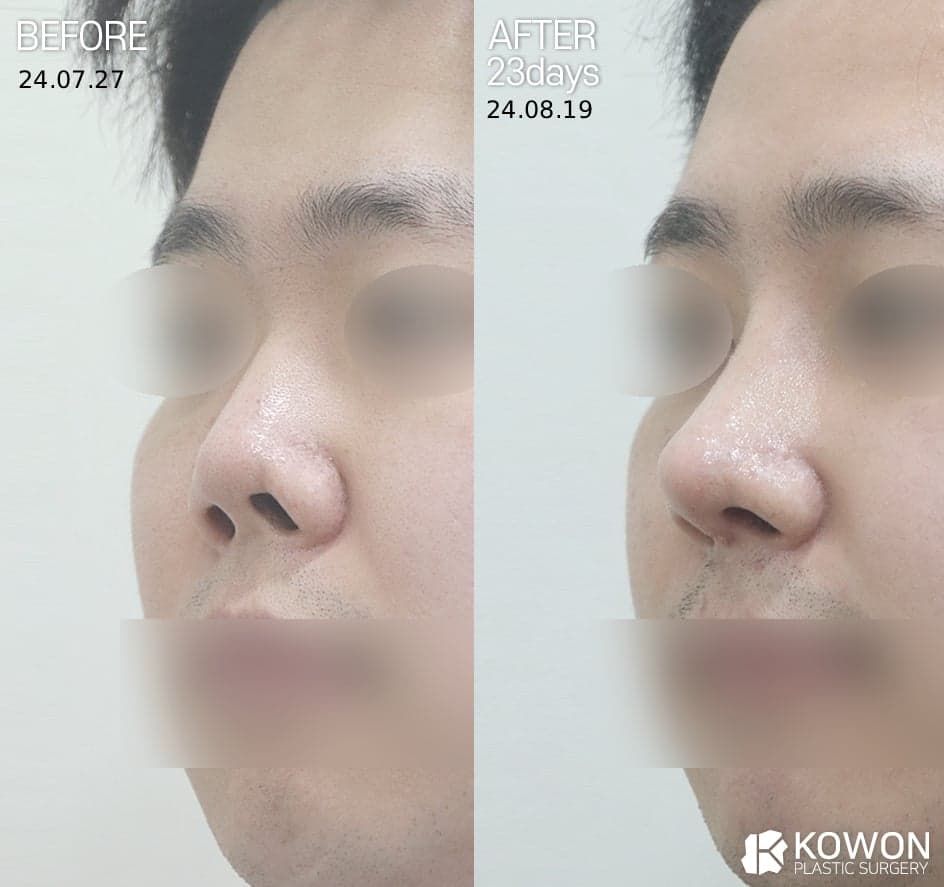
If the difference persists at every angle including frontal, left-right breathing feels different, or the same pattern repeatedly appears across photos·videos, checking the structure is advisable. Nostril asymmetry divides into three by causative structure — and different causes mean different correction methods.
| Cause | Structure | Check criterion |
|---|---|---|
| Septal deviation | The internal central axis shifts to one side | One-sided congestion, same-direction difference at every angle |
| Tip cartilage asymmetry | Left-right position difference of the alar cartilages | Asymmetry grows when smiling |
| Alar tissue difference | Skin·soft-tissue thickness difference | Width difference from below |
The septum serves as the nose's internal central axis. If this wall shifts to one side, nostril size itself differs. Tip cartilage is the structure determining external balance — when left-right positions differ, asymmetry stands out more during expression. Alar tissue handles external volume, and thickness differences appear as width differences at certain angles.
A question heard often in consultation: "It became uneven after surgery — did the surgery go wrong?" On checking, a fair number of cases turn out to be structural differences present since before surgery. This is why it matters whether asymmetry was sufficiently checked and the correction scope discussed together before surgery.
02
How do you check at home?
Self-checking proceeds in the following order.
- 01Take a frontal photo — shoot the front at eye level to check left-right size difference. Differences show more clearly in photos than to the naked eye.
- 02Check from below — photograph with the camera angled upward from under the nose to compare nostril shape and width.
- 03Check with expression change — if asymmetry grows when smiling, check for a tip cartilage (alar cartilage) position difference.
- 04Check breathing function — block each side and breathe to compare. If one side is notably stuffier, the septal structure needs checking.
One important point: asymmetry visible in photos doesn't match actual structure one-to-one. Cases are confirmed where it looks like an alar problem on the surface but the actual cause lies in the septum or cartilage structure. If self-checking hits limits, the inside structure must be examined directly for accurate judgment.
03
When can it be watched without surgery?
Mild asymmetry can be watched without separate correction. Within 3 months after rhinoplasty, residual swelling can make things look uneven too. But when the cause is structural — septal deviation, cartilage position problems, alar tissue difference — it isn't solved by shape adjustment alone.
| Cause | Correction direction |
|---|---|
| Septal problem | Central-structure correction straightening the internal axis |
| Cartilage asymmetry | Tip realignment restoring external balance |
| Alar difference | Alar balance adjustment matching external volume |
Even what looks like the same uneven nostrils differs completely in method depending on which structure it stems from. So rather than which surgery to get, figuring out where your asymmetry's cause lies first matters more. When looking for a clinic, it's good to check whether it has long focused on nose surgery, whether the same medical team takes responsibility from consultation through surgery, and whether it examines individual structure with ample time.
04
Summary — knowing the cause is the fastest solution
The longer a worry has been on your mind, the more knowing its cause properly is the fastest solution. Even with the same symptom, causes differ — and only different methods produce different results. If a left-right nostril difference has kept bothering you, please check first where your asymmetry stems from — by structure and function rather than shape.
If visiting is difficult, your nasal state can be checked first via 1:1 video consultation.
Frequently asked questions
Answers to common questions patients ask before a consultation.
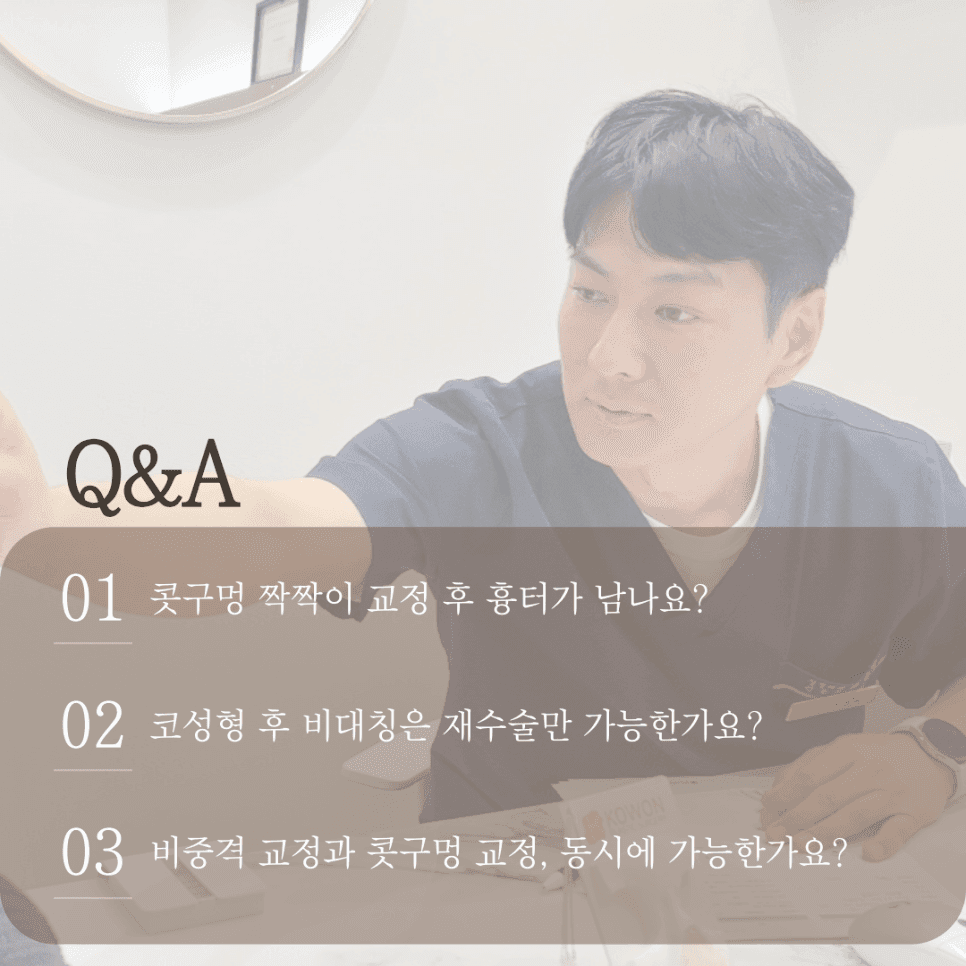
The closed approach accesses only through inside the nose, leaving no external incision line. The open approach creates an incision line under the columella, but it settles to a barely noticeable level after recovery.
Within 3 months after surgery, remaining swelling can make things look asymmetric. If the difference stays clear past 3 months, the cause gets identified first, then the method decided. Judgment criteria for cases where revision gets reviewed can be seen in the revision guide.
If structural causes are confirmed together, they're planned to proceed simultaneously. Simultaneous surgery is high-difficulty work requiring deep understanding of overall nasal structure and broad case experience behind it.
Responses to treatment and recovery progress vary by individual. Outcomes and side effects vary from person to person. Bleeding, infection, swelling and asymmetry may occur. Please consult our medical team before making a decision.
Consultation