
KOWON Blog
A flat, spread-out nose — nostril reduction or nose-width narrowing? Organized through four consultation questions
A consultation answer on whether a flat, spread-out nose with flared, lifted alae falls under nostril reduction or nose-width narrowing. The effect of inner incision, whether the philtrum will look longer — four questions organized.

Key points
- For a flat, spread-out nose whose alae look flared and lifted, even when the procedure being researched is nostril reduction, it can actually fall under nose-width narrowing surgery.
- How the philtrum will look after width adjustment differs by alar position and facial proportions — it must be checked in pre-surgery design.
- Inner incision is also an option, but the range of change it can make differs by structure — the incision method shouldn't be decided by scar worry alone.
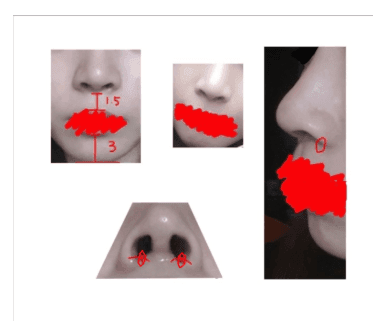
"I'm thinking about nostril reduction, but my alae seem lifted and my nose feels flat and spread out. The alae especially feel very flared and I want to improve it — but when I went for consultations, they said an outer incision leaves an obvious operated look and can make the nostrils unnatural, so they don't recommend it. It's been a severe complex since childhood — is there no way?"
This was a question received in an actual consultation. The questioner asked four things — and organizing the answers one by one first clarifies which surgery is actually wanted.
01
Organizing the answers to the four questions?
The change the questioner wanted was closer to gathering the flared alae and adjusting overall nose width rather than the nostrils alone — and the incision method had to be decided by weighing the needed amount of change against scar location together.
| Question | Answer |
|---|---|
| 1. Is there no way to improve a flat nose and the lifted-alar feel? | Looking at the state, this appears to be a case wanting **nose-width narrowing surgery** |
| 2. They say outer incision shows — is there no way to incise the marked area (trapezoid shape)? | Even looking at the marked area, what you want falls under nose-width narrowing |
| 3. Won't nostril reduction make the philtrum look longer? | The impression change by alar position and facial proportions gets checked in pre-surgery design |
| 4. Is it true that inner incision doesn't improve a flat spread nose? | There's a range possible via inner incision, but an outer approach is also reviewed depending on the needed change |
The core is in the first two answers. The procedure name the questioner was researching was nostril reduction — but measured by the wanted change (gathering flared alae and reducing the flat, spread feel), the surgery that actually applied was nose-width narrowing. Rather than researching after fixing the procedure name first, confirming which surgery the change you want falls under is the order.
02
Can a flat spread nose be improved with inner incision too?
Inner incision is also an option for adjusting nose width, but the amount of change it can make differs by alar base and alar structure. If the needed change exceeds the inner-incision range, an outer approach can be reviewed together.
Outer incision carries the burden that surgical marks can show on the surface — which may be why you heard it isn't recommended in consultation. But that doesn't mean giving up improvement; incision location and method can be chosen differently — including inner incision — depending on nasal state.
Worry about the philtrum likewise requires weighing alar position and facial proportions together. It's good to confirm in pre-surgery design what change width adjustment would bring to the philtrum's impression.
03
How is a spread nose actually corrected?
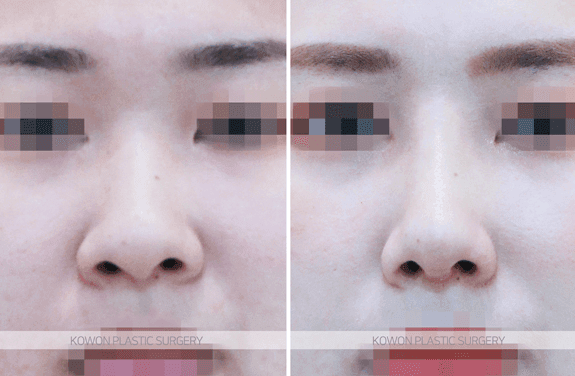
Even a wide, spread nose gets approached differently by state. Examples from actual consultations·surgeries are as follows.
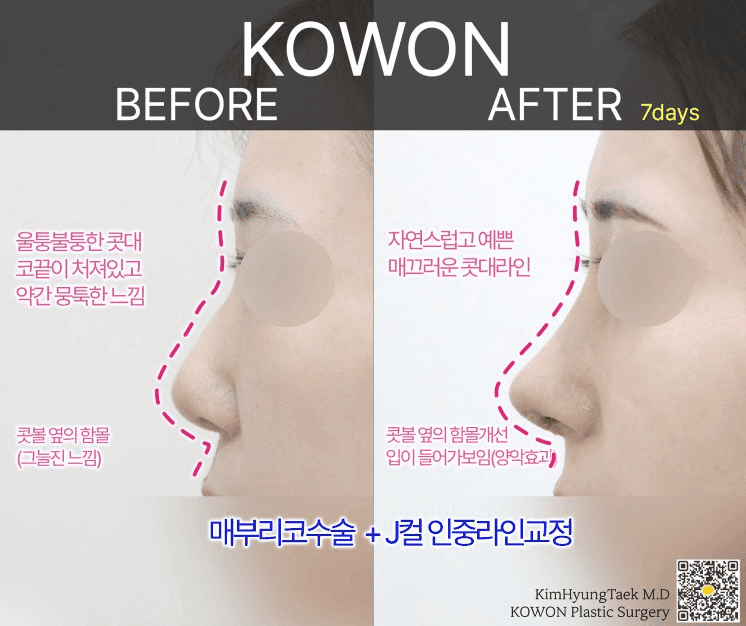
- 01A tip splayed widely with the columella tucked inward — height was built with tip cartilage support alongside cartilage tying, and the columella was brought out to balance the whole.
- 02A bulbous nose that's overall short and upturned — pulling the columella and the whole nose forward improved the bulbousness, and the buried alae emerged, changing to a refreshed impression.
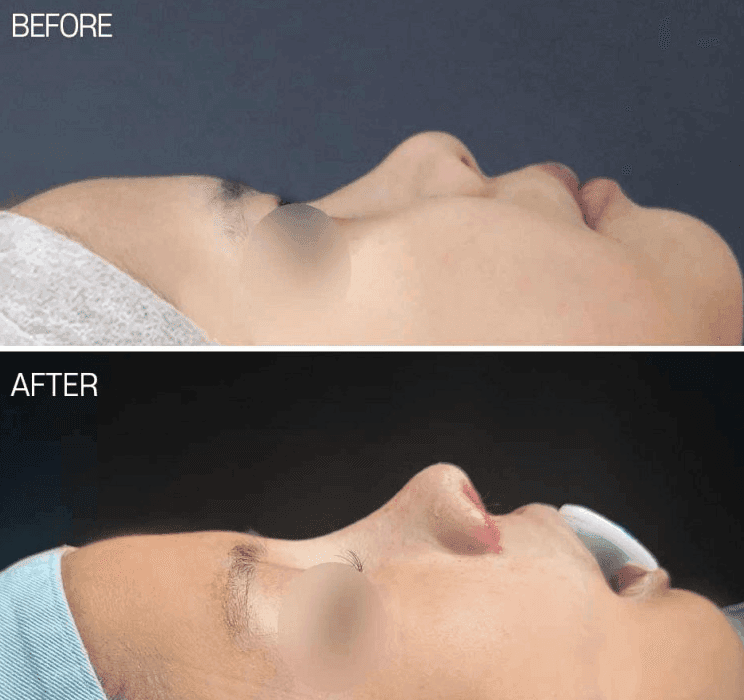
- 03A small-but-wide type with tip cartilage and alae spread sideways — non-incisional alar reduction was performed together.
Actual correction cases can be seen in before & after photos. As shown, even with the same 'spread nose,' which of tip cartilage·columella·alae gets treated differs — so the nasal line gets planned considering each person's face shape and features.
04
Summary — the change you want comes before the procedure name
If a flat spread nose is your concern, rather than picking a procedure name like nostril reduction or width narrowing first, the order is distinguishing first whether what you want to change is the nostril size or the flared alae and nose width. As in this case, the procedure name being researched can differ from the surgery that actually applies — and the incision method too can be chosen to fit the state, including inner incision.
If curious which case your nose falls under, it can be checked directly in a 1:1 video consultation.


Frequently asked questions
Answers to common questions patients ask before a consultation.
Even when the procedure names being researched look similar, the goals differ. If you want to reduce a flared-alar, flat-spread feel, it often falls under nose-width narrowing. It's good to confirm in consultation first which surgery your wanted change falls under.
The philtrum's impression can differ by alar position and facial proportions — the expected change should be checked before surgery.
There's a range possible via inner incision, but an outer approach can also be reviewed depending on the needed change. Incision location gets decided by nasal state and the change wanted.
Responses to treatment and recovery progress vary by individual. Outcomes and side effects vary from person to person. Bleeding, infection, swelling and asymmetry may occur. Please consult our medical team before making a decision.
Consultation