
KOWON Blog
Non-incision rhinoplasty vs closed rhinoplasty — what's the difference? Criteria for creating a line without scars
Non-incision rhinoplasty (thread·filler procedures) and closed rhinoplasty (incision inside the nostril) aren't the same thing. The two methods' approach depth·change range difference, design conditions for elevation without scars, and material criteria — organized.
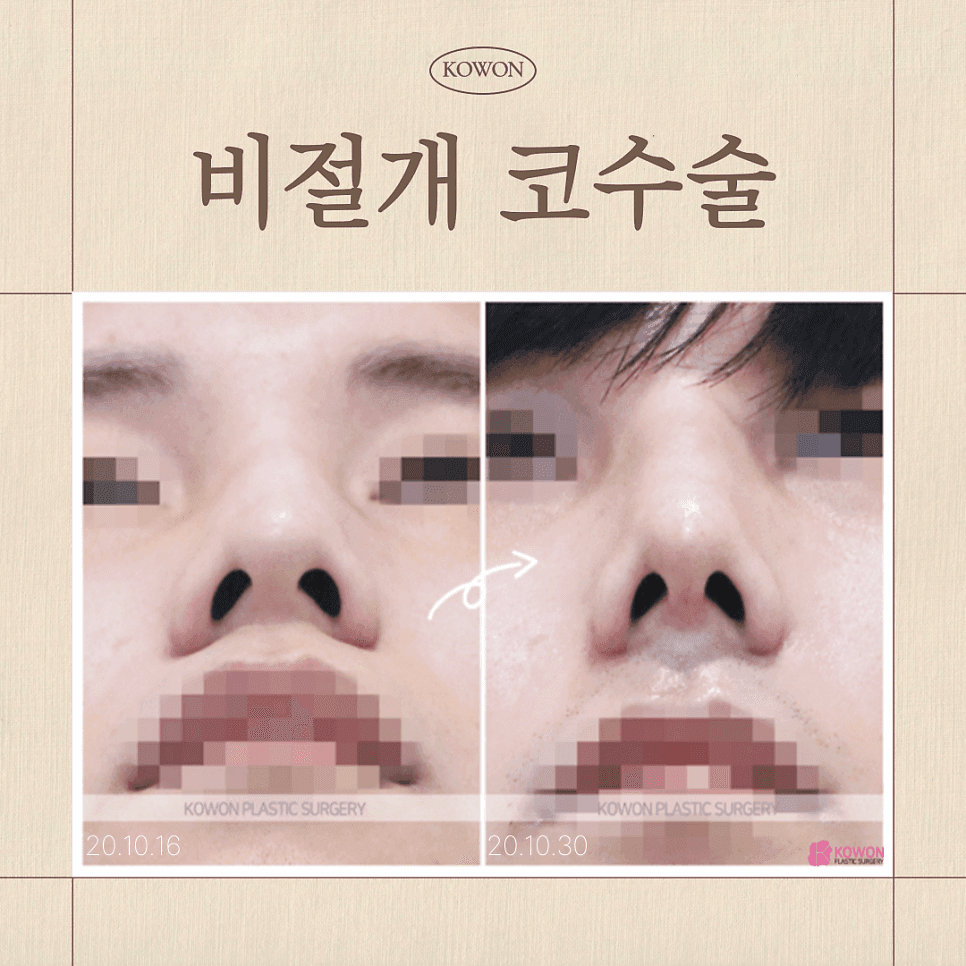
Key points
- Non-incision rhinoplasty (thread·filler procedures) and closed rhinoplasty (incision inside the nostril) aren't the same term — approach depth and change range differ.
- Non-incision recovers fast but has trouble with structural correction handling bone·cartilage; closed rhinoplasty is closer to structural design correcting the skeleton itself without external scars.
- Scar-free alone doesn't complete a natural result — what matters isn't whether there's an incision but structure understanding and design criteria.
"I absolutely hate scars — can the nose get higher without cutting?"
It's the question heard most in the consultation room — people hesitating over surgery itself because of surgical marks that can remain on the columella or a long recovery period. Especially, confusing the terms non-incision rhinoplasty and closed rhinoplasty leads to deliberating options unfitting for oneself. This article organizes, based on over 20 years concentrated on rhinoplasty alone, criteria for choosing how to create a line without externally visible scars.
01
How far can non-incision rhinoplasty go?
Non-incision rhinoplasty usually means procedures using thread or filler — like Hiko or Misko. It's a method injecting special threads etc. through fine needle holes to lift the tip or supplement the bridge.
It has the advantage of fast recovery and low burden, so it gets considered for minor bridge supplementation or tip-angle adjustment. But structural correction handling bone or repositioning cartilage is hard — so it has limits when hump correction or definite tip redesign is needed. In short, knowing the change range is limited and choosing accordingly is the criterion.
02
How is closed rhinoplasty different?
Closed rhinoplasty is surgery proceeding without incising the outside of the columella — opening only a minimal passage in the mucosa inside the nostril. It's a method correcting structure directly without leaving externally visible traces.
The biggest feature is reducing scar burden. Because the incision line sits inside, no mark checkable from outside remains. Also, unlike the thread-pulling method, it corrects the skeleton itself via autologous cartilage or an implant. Not mere supplementation — an approach close to structure design.
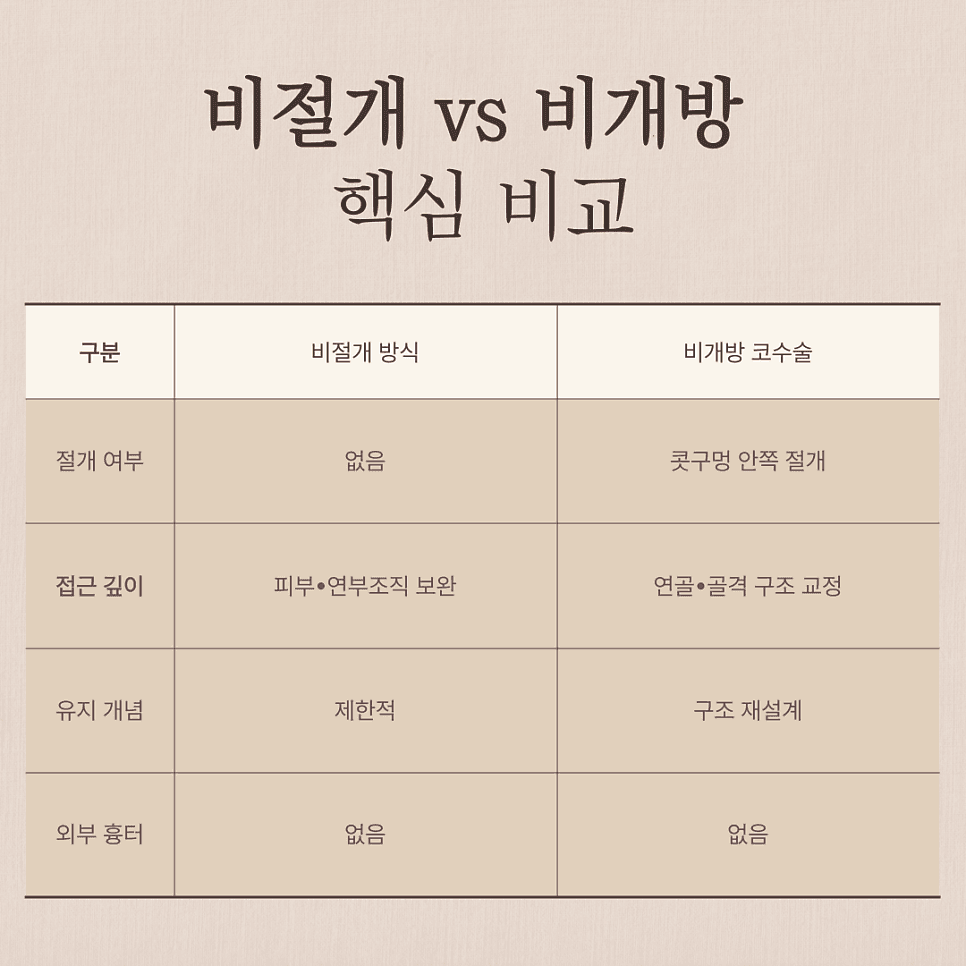
| Category | Non-incision rhinoplasty | Closed rhinoplasty |
|---|---|---|
| Incision | None | Incision inside the nostril |
| Approach depth | Skin·soft-tissue supplementation | Cartilage·skeleton structure correction |
| Change range | Minor supplementation (bridge·tip angle) | Structure redesign |
| External scar | None | None |
03
What's needed for elevation without scars?
With the closed method, no external scar remains. But because surgery proceeds within the limited view inside the nostril, a process predicting cartilage position and implant-seating direction beforehand matters.
So pre-surgery analysis matters. At KOWON, septal-cartilage direction, bone thickness, and skin characteristics get confirmed via 3D-CT before design proceeds. A process of understanding the unseen part first, then deciding approach direction. The reason a system concentrating on each patient's structure — rather than running many surgeries a day — stays maintained is to spend time on this design process.
Scar-free alone doesn't complete a natural result. More important than height is the flow running bridge-to-tip — because if the angle mismatches, even a higher nose can look awkward. So what matters isn't whether there's an incision but structure understanding and design criteria.
04
If you chose closed surgery, what are the material criteria?
If you decided to correct structure via the closed method, the next deliberation is material. "Silicone is burdensome, but doesn't autologous cartilage warp?" — after the scar question gets settled, this question naturally follows. Recently, the concept of an autologous-tissue implant gets explained as one option.
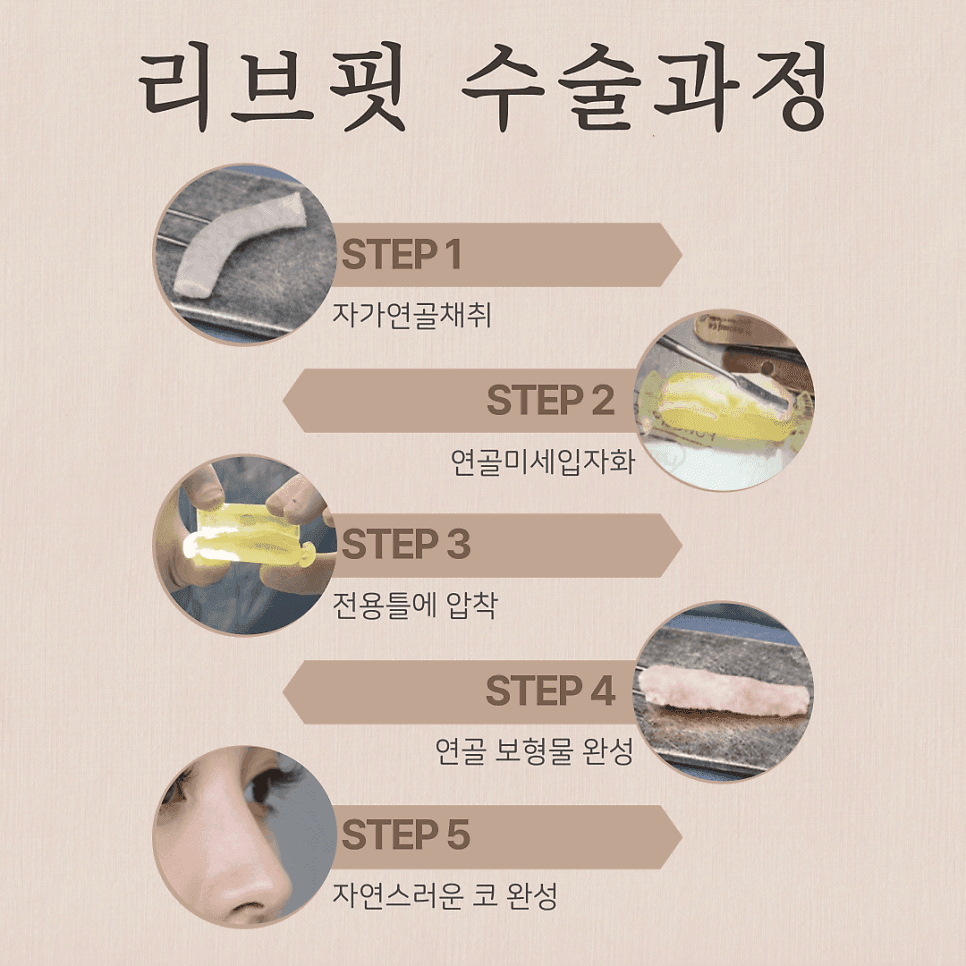
RIBFIT™, applied at KOWON, is an autologous-tissue implant processing autologous rib cartilage into fine-particle form, produced in a shape fitting the individual's nose structure — used instead of bridge silicone. Because particles get compressed to form shape, warping likelihood is low; being autologous tissue, it's an approach reducing foreign-body-sensation and inflammation burden. The detailed method can be seen in the RIBFIT™ autologous rib cartilage guide.
Ultimately material is also part of design, separate from the incision method. When approach, structure, and material mesh together, the line runs naturally.
05
Summary — it's design criteria, not incision position
Non-incision rhinoplasty and closed rhinoplasty aren't the same meaning. Hating scars doesn't unconditionally make non-incision the answer either. What matters isn't the incision position but design criteria fitting your nose structure — and choosing after understanding those criteria sways the result.
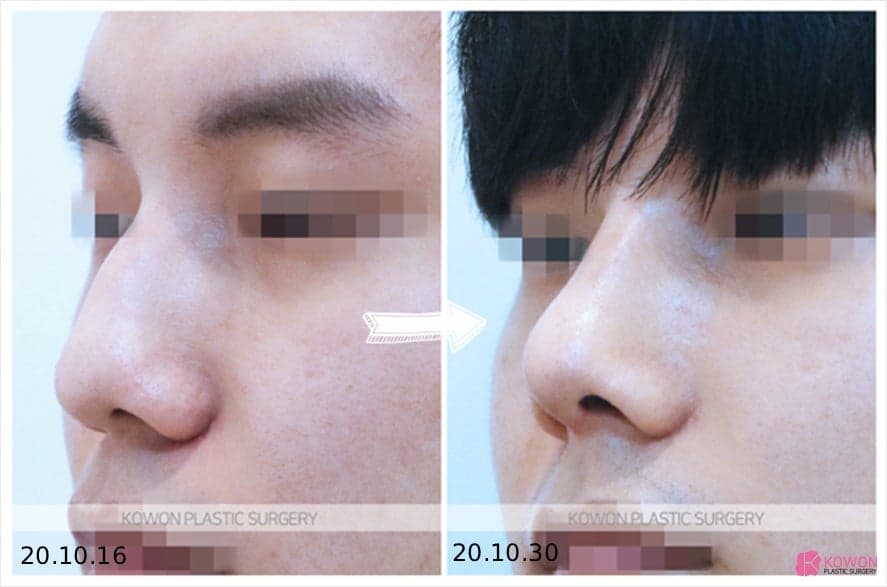
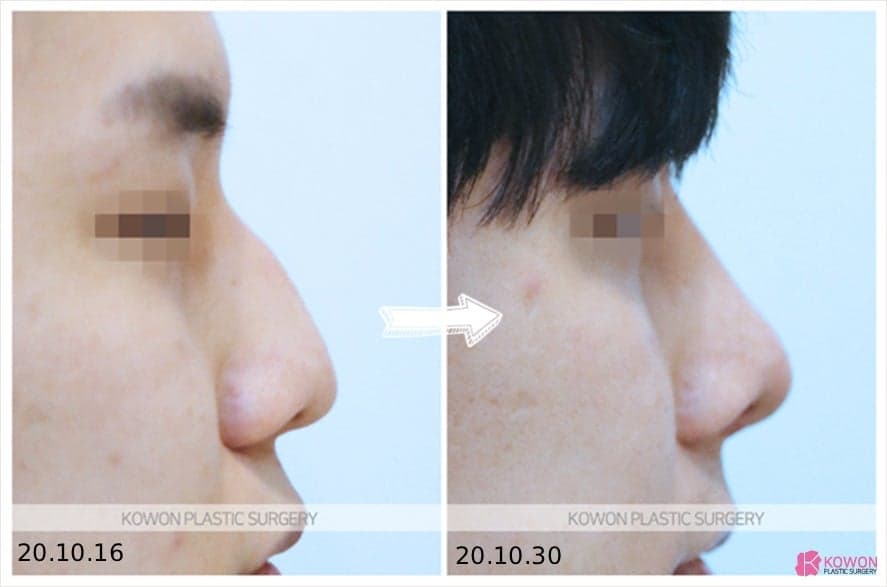
If curious which approach fits your nose, virtual-surgery results can be checked in advance in a 1:1 video consultation. Actual cases can be seen in the before & after photos.


Frequently asked questions
Answers to common questions patients ask before a consultation.
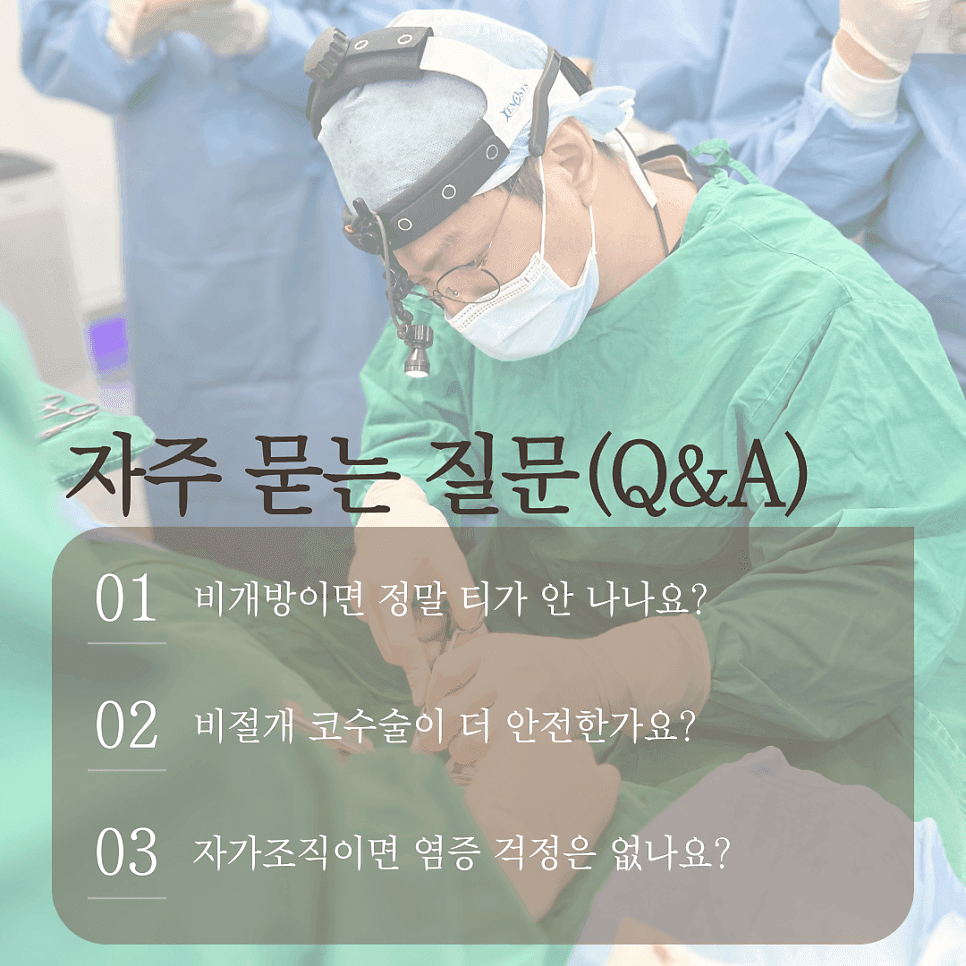
No external scar remains. But swelling and the recovery course vary per person.
Because the approach differs, selection criteria differ by the change range you want.
Autologous tissue is a concept reducing foreign-body-reaction burden. But every surgery needs care and follow-up observation.
Responses to treatment and recovery progress vary by individual. Outcomes and side effects vary from person to person. Bleeding, infection, swelling and asymmetry may occur. Please consult our medical team before making a decision.
Consultation