
KOWON Blog
Midface depression — can nose surgery improve it? Why the nasolabial angle and fat grafting get read together
If midface·nasolabial fold·alar depression makes the face look sunken, nose surgery and fat grafting can be reviewed together. Organized: the principle of lifting the columella depression by forming the nasolabial angle, and the surgery plan of an autologous rib cartilage revision case.
Key points
- Midface depression — where the face's center looks sunken — is a concern where nose surgery and fat grafting can be reviewed together.
- Raising the nose while forming the nasolabial angle (nose-to-lip angle) lifts the columella's depressed area running nose-to-philtrum — an effect making the mouth area look less sunken plus E-line organization can be expected.
- For sunken areas like the forehead·temples·nasolabial folds·under-eyes, whole-face fat grafting can be added to plan improvement.
"I had nose surgery, but the center of my face still looks sunken."
More people are considering rhinoplasty because of midface, nasolabial-fold, and alar depression. The case reviewed here also visited over midface depression unresolved after nose surgery — needing the entire process of surgery received at another clinic redone. How revision rhinoplasty with autologous rib cartilage and fat grafting were planned is organized below.
01
Why might the face look sunken?
The face's center looking sunken can have various causes. One direction that can be reviewed for this concern is the combination of nose surgery and fat grafting.
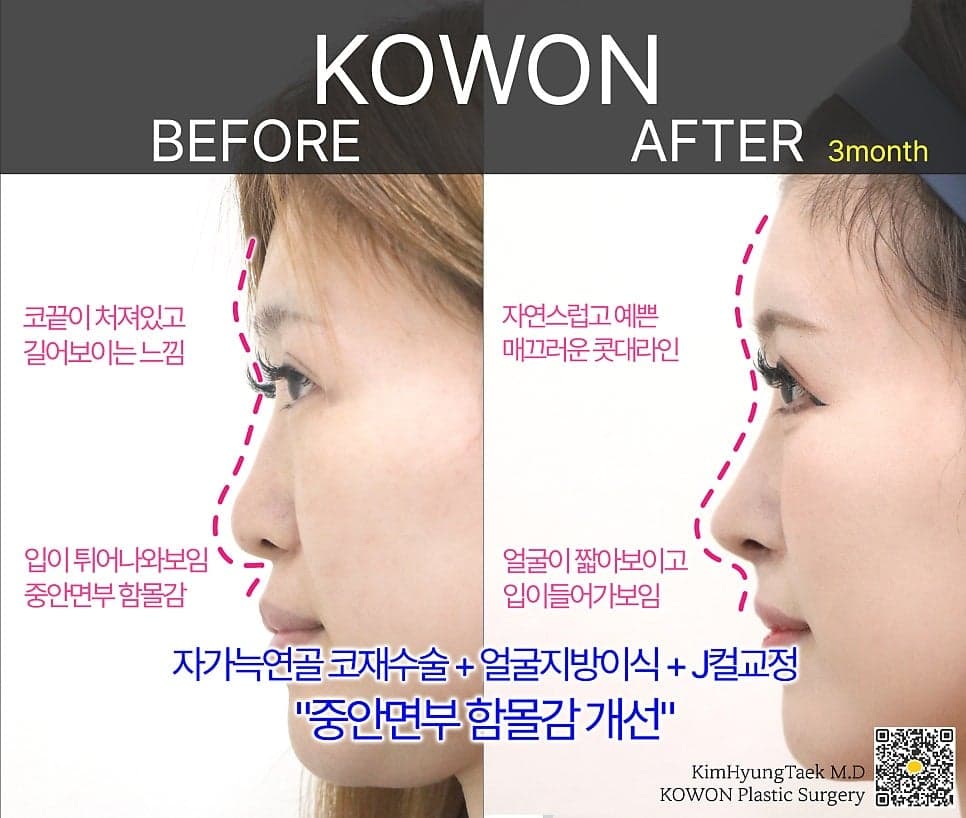
Raising the nose while forming the nasolabial angle — the angle the nose and lips make — can plan an effect lifting from the nose through the philtrum area (the columella's depression). With the angle organized, the E-line tidies alongside, and an effect of the mouth area looking less sunken can be expected. From the front too, the change runs toward facial contours showing more clearly.
Adding fat injection across the whole face can plan change supplementing sunken, depressed areas like dark circles, nasolabial folds, and forehead — making the face feel smaller and rounder. But the criterion is not doing every surgery — it's recommending only the surgeries truly needed for a balanced result, considering the concern and complex.
02
How was this case's surgery plan set?
This case needed revision since midface depression remained unresolved after nose surgery. Its surgery plan was as follows.
| Category | Planned content |
|---|---|
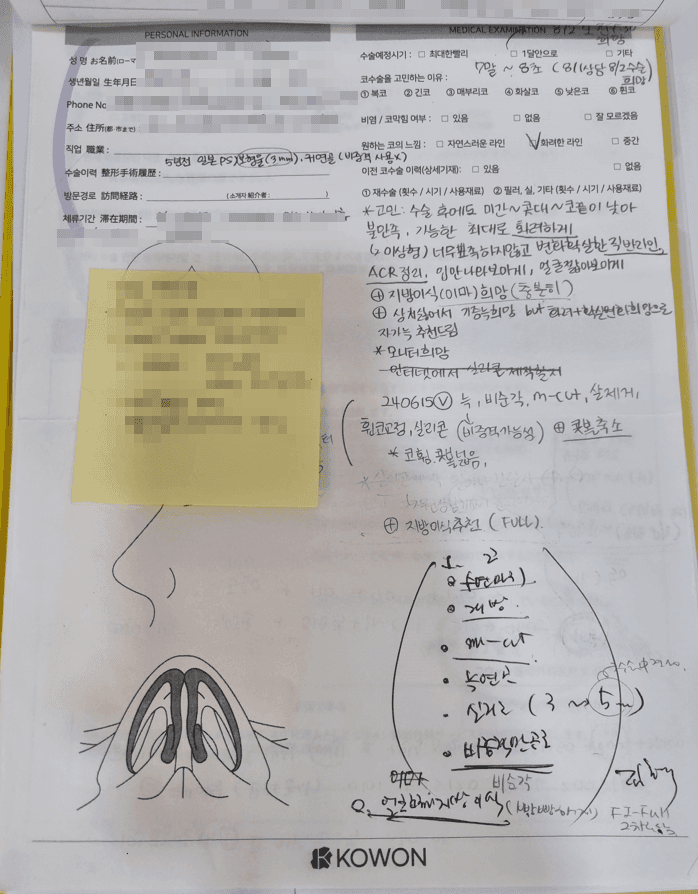
| Nose surgery | Autologous rib cartilage graft · nasolabial angle formation · tip muscle resection · bridge implant insertion · deviated septum correction |
| Fat grafting | Whole-face fat grafting (including 2nd session) — forehead·temples·nasolabial folds·under-eyes, etc. |
Being a revision, distinct change was wanted — and considering even autologous rib cartilage's nature of warping over time, surgery using autologous rib cartilage was guided. A case where rebuilding the nose's structure and filling sunken areas were read together within one plan.
03
What change was confirmed after surgery?
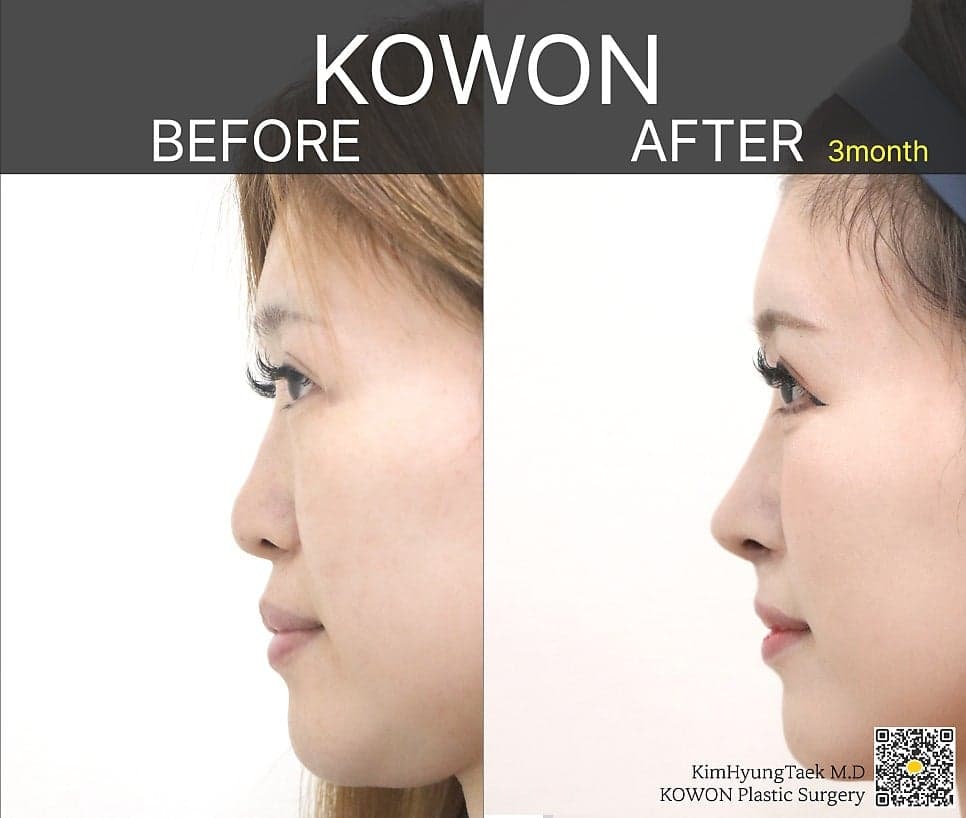
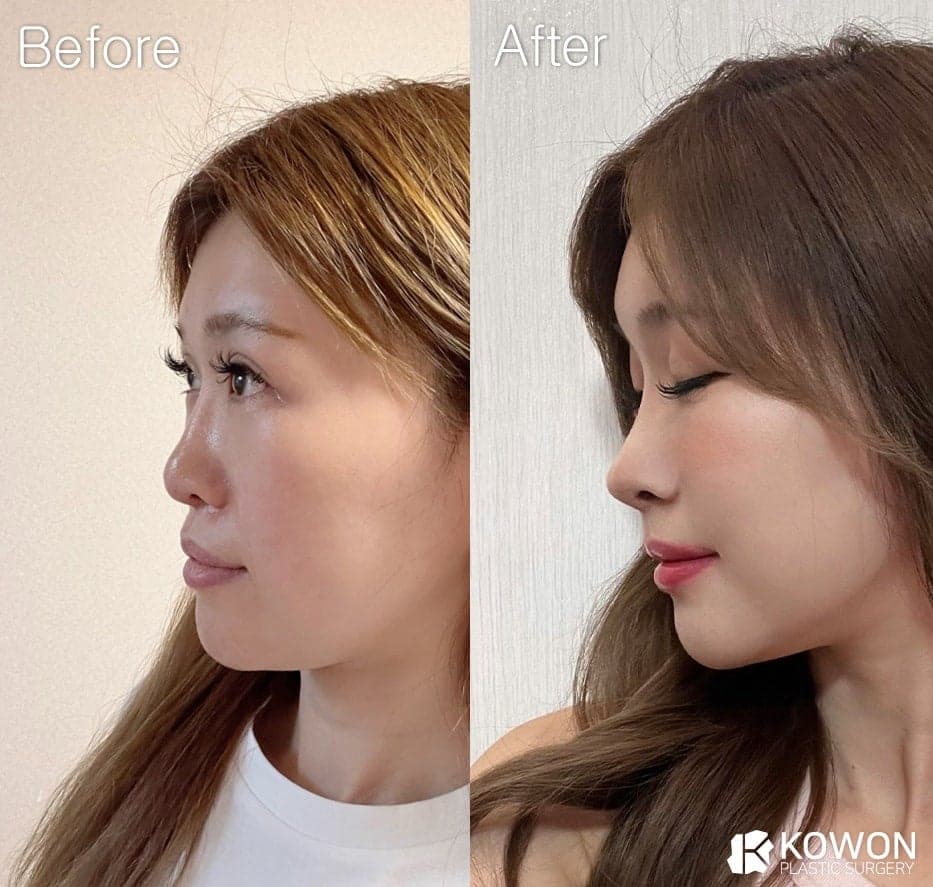
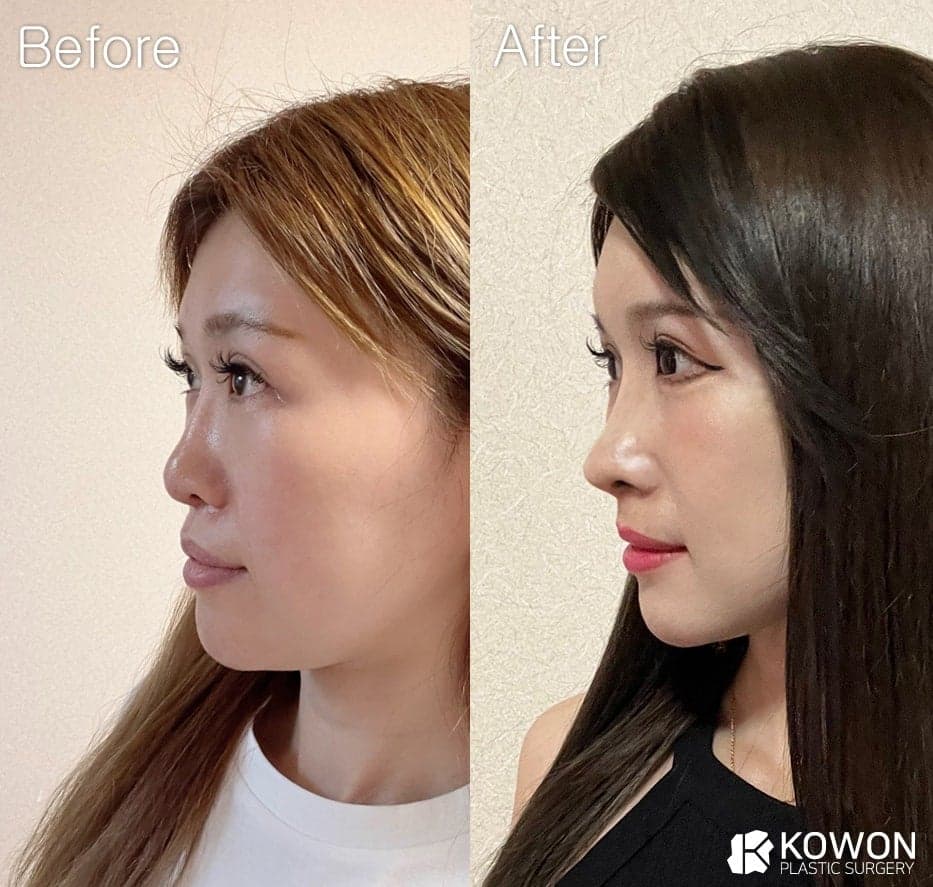
Laterally, the nasolabial angle between columella and lip got adjusted, and with the bridge running straight, the midface's sunken-looking feel reduced was confirmed. Actual before/after change can be seen in the before & after photos.
In summary, the flow of change confirmed in this case is as follows.
- 01Reconstruction of nose structure — basic structure of bridge and tip rebuilt with autologous rib cartilage
- 02Nasolabial angle formation — lifting nose-to-philtrum area, organizing mouth-area impression and the E-line
- 03Fat grafting — supplementing sunken areas like forehead·temples·nasolabial folds·under-eyes
04
Summary — the nose and sunken areas get read in one plan
Midface depression is hard to see as a problem of the nose alone. The face-center impression change can be read together when reviewing — within one plan — lifting the columella's depression by raising the nose and forming the nasolabial angle, plus supplementing sunken areas like forehead·nasolabial folds·under-eyes with fat grafting. What's needed differs per person — so the criterion is choosing only the surgeries truly needed for a balanced result.
If a part that didn't improve after nose surgery is a concern, a direction fitting the current state can be confirmed in a 1:1 video consultation.
Frequently asked questions
Answers to common questions patients ask before a consultation.
Since causes can vary, it's hard to settle on one method. Depending on the state, a direction lifting the columella-depression area by raising the nose and forming the nasolabial angle, plus a direction adding fat grafting to sunken areas, can be reviewed together.
In this case it was planned as whole-face fat grafting (including a 2nd session) covering sunken, depressed areas — forehead, temples, nasolabial folds, under-eyes. Which areas are needed varies with each person's depression pattern.
Like this article's case, there are cases approached via revision redoing the prior surgery's process. But whether revision is needed and its scope can be judged only after directly confirming the nose's current structure and tissue state.
Responses to treatment and recovery progress vary by individual. Outcomes and side effects vary from person to person. Bleeding, infection, swelling and asymmetry may occur. Please consult our medical team before making a decision.
Consultation