
KOWON Blog
Male rhinoplasty — what an undetectable line gets designed by: line, material, support
Three things checked in male rhinoplasty — a straight line fitting face shape, material matching thick skin and heavy bone, and support preventing tip droop. Why rib cartilage gets used and design criteria — organized.

Key points
- Male rhinoplasty's three essentials differing from female — maintaining a straight, firm line, overall facial balance, and design matched to thick skin and heavy bone.
- Raising the bridge too much makes the glabella look stuffy; making the tip excessively sharp can blur the masculine impression — harmony comes first.
- A male nose with thick, heavy skin can droop at the tip if support is weak — so high-strength rib cartilage gets used as the support material.
"Doctor, I don't want it to show."
One of the lines heard most at consultation. Where those seeking surgery used to be mostly women, men's interest in appearance care and image improvement has grown greatly too. Nose surgery is now perceived not as an extraordinary choice but as an investment in one's image. Still, a male nose has different conditions to check than a female one — so results can differ largely depending on where and how it's designed.
This article organizes what an undetectable, natural line in male rhinoplasty gets designed by — along three axes: line, material, support.
01
How does a male nose line differ from a female one?
Male nose design has different conditions from female. Three things get checked as essential.
- Maintaining a straight, firm line
- Considering overall facial balance
- Design matched to thick skin and heavy bone
| Check item | What gets looked at |
|---|---|
| Line fitting face shape | Harmony with features and face shape |
| Width and height | Design fitting skin thickness and bone·cartilage structure |
| Per-angle curves | Whether it looks natural front, side, and at 45 degrees |
A straight, firm line matters more than making it excessively high or thin — insert a line that doesn't fit face shape and features and it shows immediately, giving an awkward impression instead. Bridge height and thickness, glabella depth, and tip angle must balance each other for a crisp profile and natural front.
The opposite case makes it easy to understand. Raise the bridge too much and the eye spacing looks narrow — a stuffy impression; make the tip excessively sharp and the face's overall masculine impression can drop. So the following gets checked at the design stage.
A line designed to fit this way blends into the face without dissonance even over time.
02
Why does male rhinoplasty use rib cartilage a lot?
In male rhinoplasty, tip support matters greatly. Men often have thick skin with firm bone and cartilage structure — thin material or weak support can't hold the wanted shape long. Then switching the material to something firm helps — which is why rib cartilage gets used a lot.
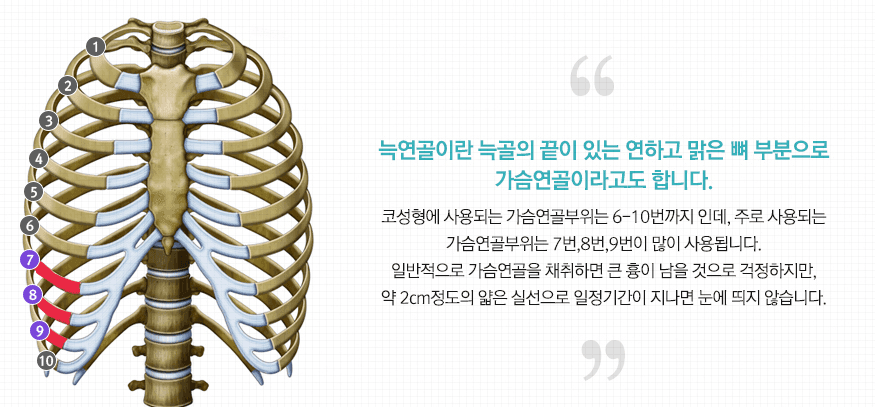
Rib cartilage is high-strength with little deformation — advantageous for raising the tip firmly and keeping it. Even when existing cartilage is lacking or damaged, it can build a stable structure. How autologous rib cartilage gets used can be seen in more detail in the autologous rib cartilage procedure guide.
03
They say the tip droops over time — why?
Tip drooping downward over time can appear more often in men. Since skin is thick and heavy, weak support structure takes gravity's influence more largely.
Then high-strength rib cartilage firmly supporting the tip structure helps reduce the chance of shape collapsing or drooping over time. It's the material acting as a pillar for those wanting a straight, firm male nose line.
Material also participates in realizing a sharp line. For men with thick skin and a thick subcutaneous fat layer, thin material easily blurs the bridge-tip boundary — high-strength, high-elasticity rib cartilage is advantageous for raising the tip firmly while clearly setting the line's angle. When the tip-to-bridge connection revives smoothly, impressions at profile and 45 degrees get organized together.
04
Summary — surgery harmonizing, not raising
Male rhinoplasty isn't just raising the nose — it's a precise process completing a masculine line and whole-face harmony at once. Since it builds a face and image meant to hold for years rather than ending in one change, checking line harmony — material strength — tip support each and designing matters.
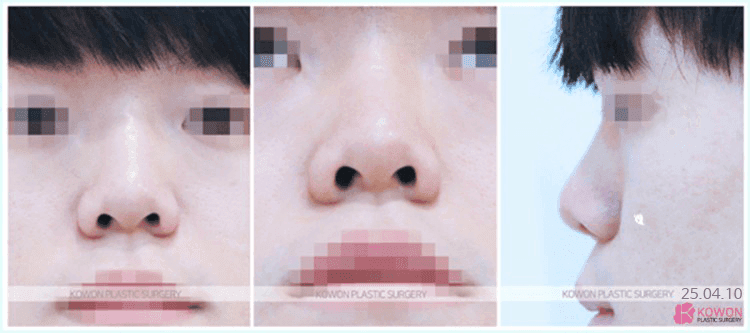
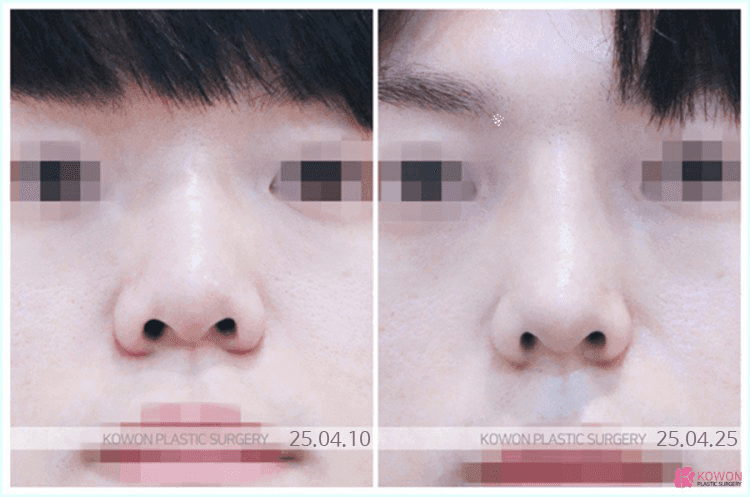
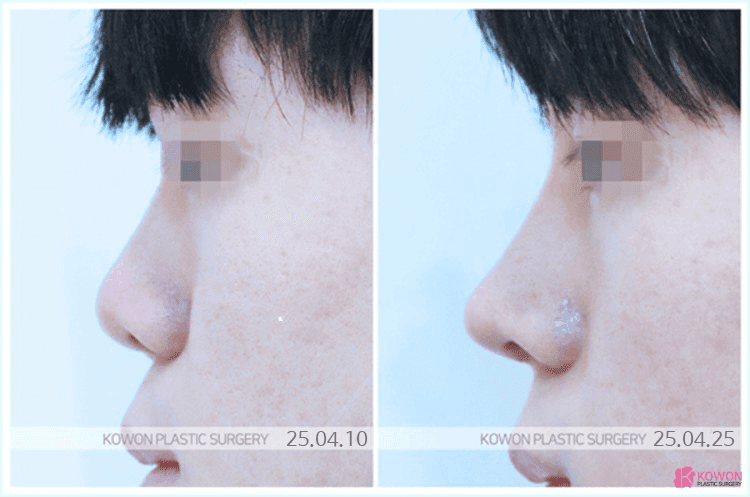
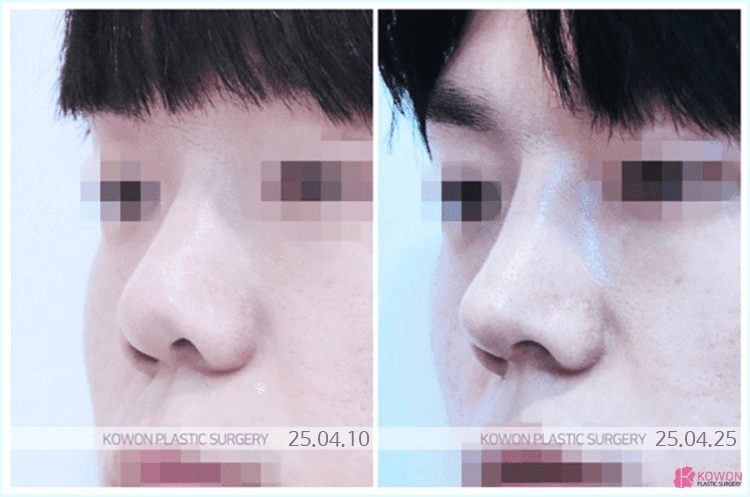
If curious about a line fitting your face, it can be designed together in a 1:1 video consultation. Actual cases can be seen in the before & after photos.
Frequently asked questions
Answers to common questions patients ask before a consultation.
Not every case needs the same material. But in a male nose with thick skin and heavy bone, thin material or weak support sometimes can't hold shape long — then high-strength, low-deformation rib cartilage gets used. It's judged after checking the existing cartilage's state.
The basics are designing width and height fitting face shape, skin thickness, and bone·cartilage structure — not excessively high or thin — confirmed together at front, side, and 45 degrees. A line departing from facial harmony shows immediately and gives an awkward impression.
It's a principle for making results tailored to each person through sufficient consultation, design, and a meticulous process per case — a choice for proceeding safely without strain, and for satisfaction and retention.
Responses to treatment and recovery progress vary by individual. Outcomes and side effects vary from person to person. Bleeding, infection, swelling and asymmetry may occur. Please consult our medical team before making a decision.
Consultation