
KOWON Blog
T-zone dimension that changes with male rhinoplasty — how are the glabella and bridge supplemented?
If the impression looks flat from lacking T-zone dimension running forehead·brow bone·glabella to bridge — supplement methods split by area (filler·silicone·fat grafting), plus a case where glabella cartilage reinforcement went with severe male hump-nose correction — organized.

Key points
- Among men, many feel the impression looks flat not from the nose itself but from lacking T-zone dimension running forehead·brow bone·glabella to bridge.
- If only the glabella lacks volume, options start from partial supplements like nose filler; if you want to change the nose's whole dimension, bridge-line surgery — choices differ by area and degree.
- When hump and bent dorsum coexist, a plan can be set bringing dimension via glabella cartilage reinforcement together with bridge correction.
"My nose itself isn't that low, but there's almost no bridge between the glabella and the forehead and brow bone lack dimension too — so the whole impression looks less masculine. Is there a way to supplement within a non-excessive range?"
A concern from an actual consultation inquiry — a case wanting a crisp, defined bridge line between brow bone and eye seen from the side. Such T-zone dimension concerns can't be answered by looking at the nose alone. This article organizes the answer to that inquiry, plus a male hump-nose case that proceeded with glabella reinforcement.
01
If the glabella bridge lacks, how does it get supplemented?
The approach differs by which area lacks and how much change is wanted.
| Concern area | Supplement method |
|---|---|
| Only glabella volume lacks | Supplement glabella bridge with nose filler — a relatively simple, low-burden option for confirming change |
| Improve the nose's whole dimension | Surgery using silicone on the bridge line — a change making the bridge line crisp from front and side |
| Forehead·brow bone volume lacks | Supplement dimension with fat grafting or filler at those areas |
Which method fits gets decided after direct confirmation — since the current forehead·brow bone·bridge heights and harmony must be considered together. Suitable methods differ by facial structure and skin state; per-material features can be seen further in the rhinoplasty materials guide.
02
When hump and bent dorsum coexist, how is it planned?
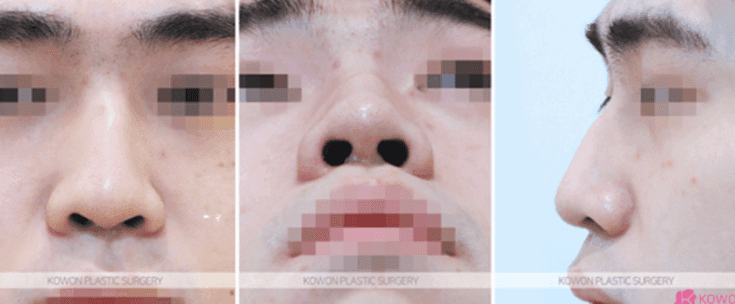
When glabella deficiency overlaps with bridge·hump problems, the supplement direction changes. Another case was someone who'd long deliberated over a severe male hump nose. Seen from the front, the dorsum showed a clear large bend; the bridge was on the high side, but the glabella was low and harmony lacked.
Such forms may look temporarily better with simple correction alone, but deformation can reappear over time. Especially when bridge surgery proceeds alone, retention can drop — so a plan considering overall structure together and post-op course checks matter.
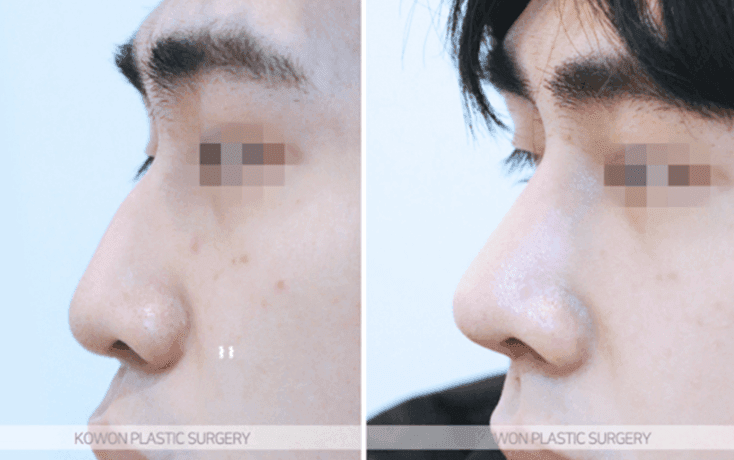
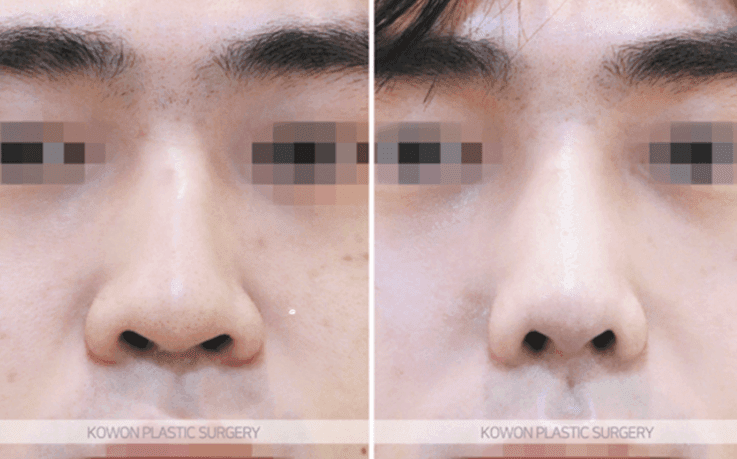
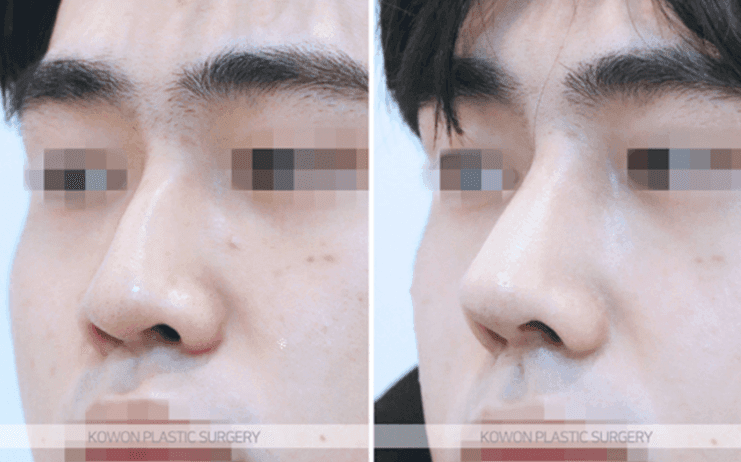
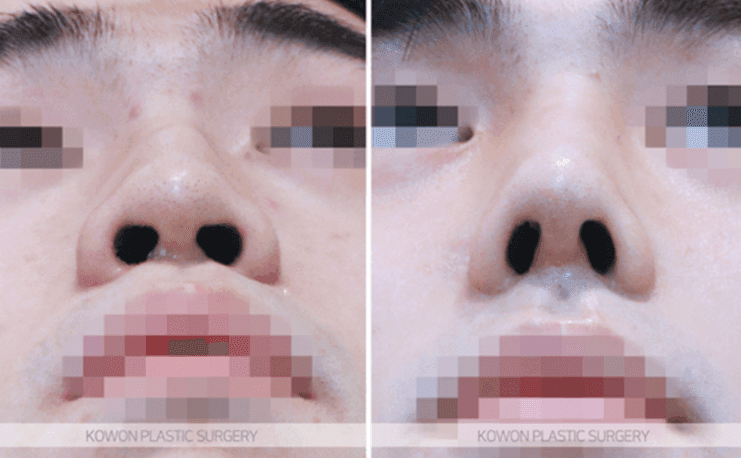
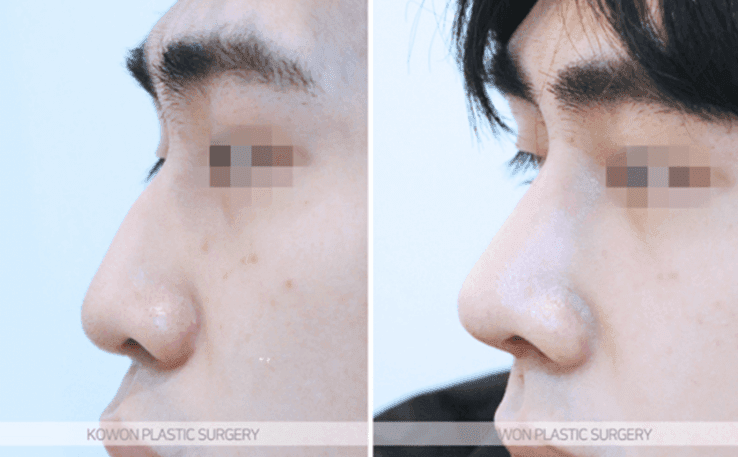
In this case, the protruding hump and spread-looking nasal width were organized; the widely splayed tip cartilages were gathered via tip cartilage tying, then height supplemented with septal cartilage. And at the glabella — the core of T-zone dimension — prepared cartilage was reinforced, reviving the sunken-looking glabella and setting harmony with the bridge.
As a result, the glabella that looked sunken from the severe hump revived — into a crisper, more balanced image — and the bridge line organized straight, changing toward emphasizing a masculine impression. Tip and nostril shape got organized together too. Per-angle changes can be seen in the before & after photos.
03
Why can bridge surgery alone fall short?
As this case shows, T-zone dimension isn't completed by the bridge alone. Even with a high bridge itself, a low glabella makes harmony look lacking; splayed tip cartilages let tip direction and width disturb the whole line. So stable results can be expected when connected areas — tip cartilage tying, glabella cartilage reinforcement — get planned together with bridge correction.
Also, a severely bent dorsum can show change over time even after correction — so closely watching the post-op course is included in the plan.
04
Summary — the T-zone must be read split by area
When T-zone dimension feels lacking, the supplement method differs by whether the cause is the glabella, the whole bridge, or the forehead·brow bone. From low-burden options like filler for partial supplement, to a plan bundling bridge correction with glabella reinforcement when hump and bent dorsum coexist — finding the combination fitting your facial structure is the key.
If curious which area of your T-zone needs supplement, you can confirm directly in a 1:1 video consultation.



Frequently asked questions
Answers to common questions patients ask before a consultation.
If only the glabella needs supplement, relatively simple methods like nose filler can be considered first. Bridge-line surgery becomes an option when you want to improve the nose's whole dimension together.
Forehead·brow bone volume deficiency is approached by adding dimension at those areas via fat grafting or filler — not the nose. What to supplement and how can only be decided by reading forehead·brow bone·bridge harmony together.
The possible range differs by current forehead·brow bone·bridge heights, skin state, and facial structure. Checking the exact surgery range and feasibility through direct consultation is good.
Responses to treatment and recovery progress vary by individual. Outcomes and side effects vary from person to person. Bleeding, infection, swelling and asymmetry may occur. Please consult our medical team before making a decision.
Consultation