
KOWON Blog
Male rhinoplasty — what do you decide by? Criteria seen through a Q&A question and a bulbous-nose correction case
In male rhinoplasty: whether to look at bridge or alae first, the procedure vs surgery difference when longevity matters, and the surgery composition of a bulbous-nose correction case combining non-incisional alar reduction — organized.

Key points
- Male rhinoplasty isn't just raising height — direction gets set by proportion and harmony with face shape, with functional parts considered together.
- If longevity matters, surgery capable of structural correction may fit better than a simple procedure.
- The case introduced corrected a low bridge and spread bulbous nose together via 4mm silicone, ear cartilage, septal cartilage reinforcement, and non-incisional alar reduction.
Sitting at the face's center, the nose changes the whole impression greatly even with small shifts. So when deliberating surgery, functional parts must be read alongside shape — and especially for surgeries involving structural change like male rhinoplasty or bulbous-nose correction, image changes during recovery are worth knowing in advance.
Based on an actual Q&A question about male rhinoplasty, its answer, and a bulbous-nose correction case — this article organizes what gets judged by in male rhinoplasty.
01
Bridge or alae — how is which surgery's needed judged?
Front photos alone can't accurately capture height and angle — the correction range gets set by checking nose structure from multiple angles together with face shape. If a spread part like a bulbous nose and a low-looking impression coexist, a method supplementing tip and bridge simultaneously can be considered.
Judgment criteria organized are as follows.
| Concern | Judgment criterion |
|---|---|
| Longevity matters | Surgery capable of structural correction fits better than a simple procedure |
| Can't tell bridge vs alae | Surgery direction gets decided together on harmony with face shape |
| Deliberating material | Whether bridge implant / tip cartilage correction is needed gets decided after diagnosis |
Male rhinoplasty isn't simply raising height — it values overall proportion and harmony, and since functional parts get considered too, it goes beyond simple shape correction.
02
How was a low bulbous nose actually corrected?
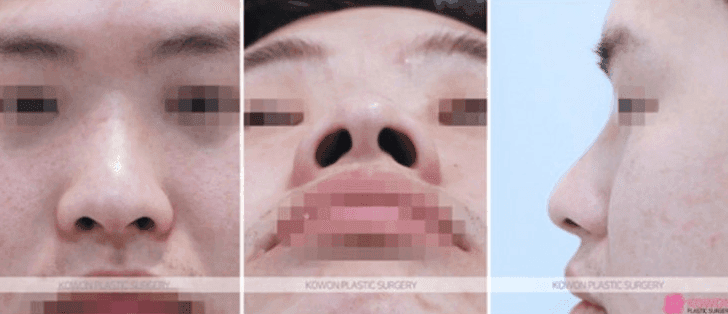
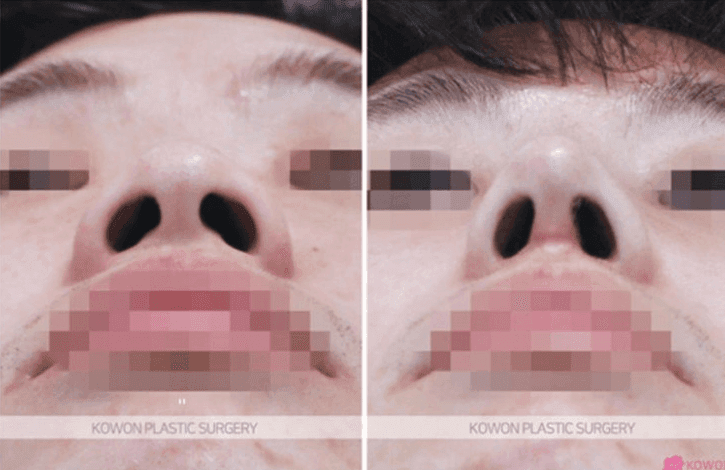
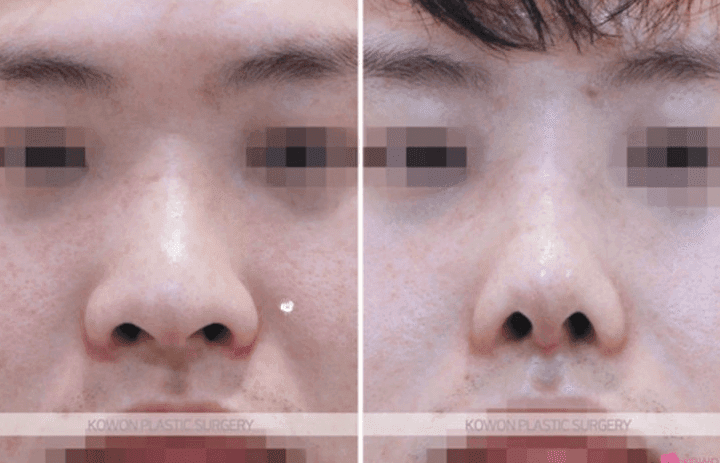
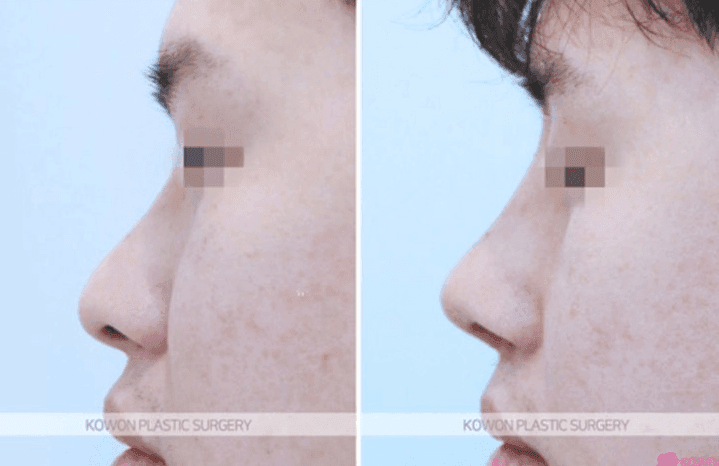
The man in this case had a typical bulbous form — low and laterally spread — and the nose had long been a complex. Checking nose state at multiple angles including front, below, and side showed thick skin, widely spread alae, and a low glabella making the bridge look even lower.
Surgery was composed as follows.
- 01Bridge — height built with 4mm silicone; the hump at dorsum center was tidied.
- 02Tip — ear cartilage and septal cartilage reinforced, tip cartilage tying performed, and the tip-depressor muscle removed.
- 03Alae — non-incisional alar reduction proceeded together.
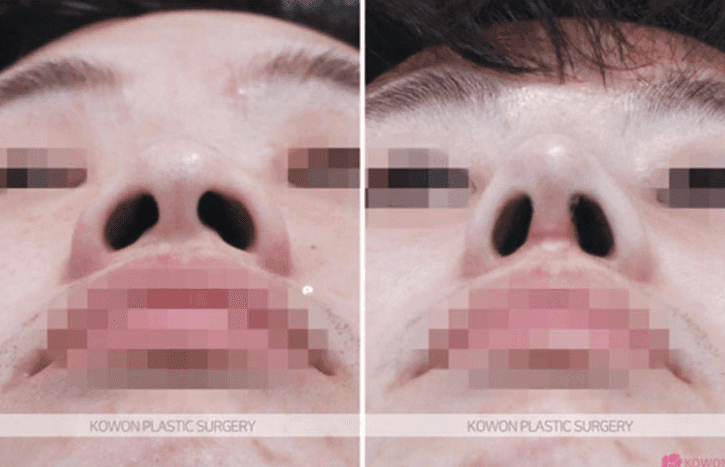
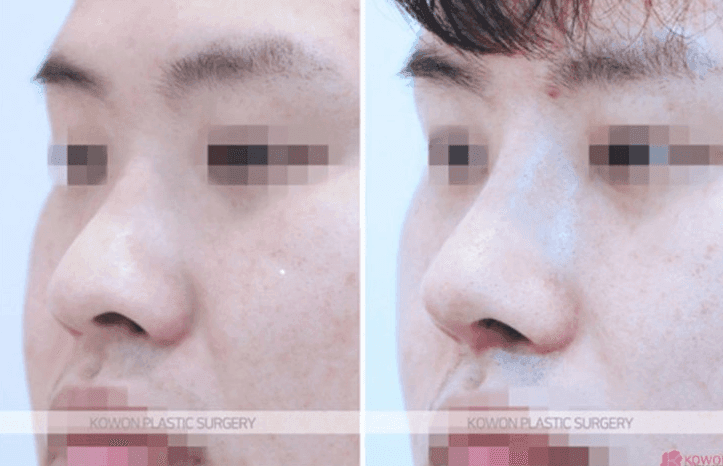
After surgery, the large blunt nostrils organized and the bridge line connected — bringing dimension to the once dull, spread impression. Non-incisional alar reduction is a method many prefer since no distinct scar remains — and in this case too it was recovering cleanly despite scar worry. Actual correction cases can be seen in the before & after photos.
03
What especially gets attention in male bulbous-nose correction?
When a man improves a bulbous nose, how well the tip's length and firmness get brought out matters. With thick skin or strong pulling force, the nose can look shorter post-op than before — resolved by a method layering cartilage to compensate.
Also, it can look awkward right after surgery — but as time passes, recovers, and stabilizes, satisfying results are often reached. So at the consultation stage, hearing sufficient explanation down to possible post-op side effects and swelling changes — and confirming realistically achievable results in advance — helps reduce anxiety. What gets checked in tip correction can be seen in more detail in the nasal tip procedure guide.
04
Summary — harmony is the criterion, not height
For male rhinoplasty, proportion and harmony with face shape — and functional parts — are the criteria, more than "how high." Which of bridge, tip, and alae to correct can't be concluded from a few photos; it's safely decided after checking nose state at multiple angles. If curious about the surgery range your nose needs, you can confirm directly in a 1:1 video consultation.


Frequently asked questions
Answers to common questions patients ask before a consultation.
If longevity matters, surgery capable of structural correction fits better than a simple procedure. But the surgery range needed differs by nose state — it gets decided after diagnosis.
Not in every case. When alae are widely spread like this case, non-incisional alar reduction can combine — but bridge and tip correction alone can suffice too, judged by harmony with face shape.
With thick skin or strong pulling force, the nose can look shorter than before. But since layering cartilage to supplement tip length and firmness resolves it, it gets considered together at the surgery-planning stage.
Responses to treatment and recovery progress vary by individual. Outcomes and side effects vary from person to person. Bleeding, infection, swelling and asymmetry may occur. Please consult our medical team before making a decision.
Consultation