
KOWON Blog
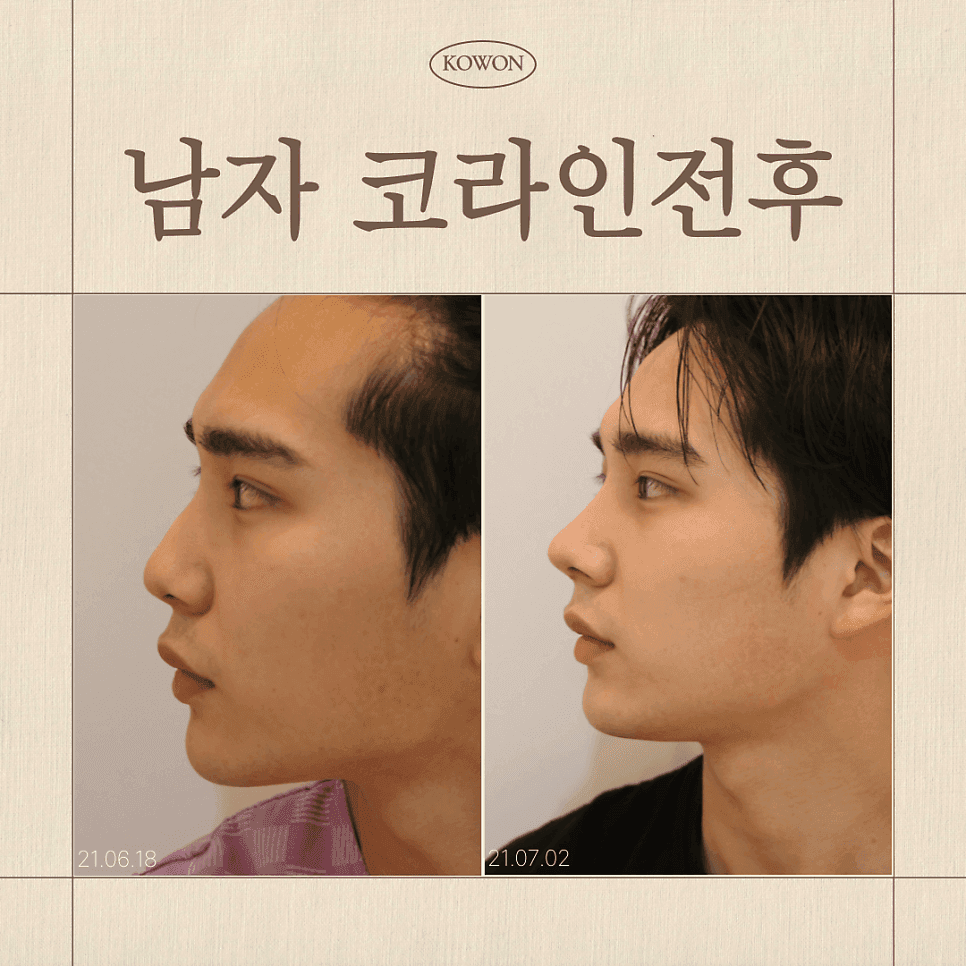
Male rhinoplasty before & after photos — how to choose a nose line: criteria to set before photos
If no amount of male rhinoplasty before & after photos settles your criteria — nose line types (straight, gentle straight, tip-focused), why virtual surgery checks your nose structure first, and why autologous-tissue implants get reviewed for male nose lines.
Key points
- The reason more before & after photos bring more confusion: photos carry almost no explanation of "which line this nose chose".
- Male nose lines broadly split into straight, gentle straight, and tip-focused tidy types — and a trendy line isn't the right answer among them.
- A nose line gets decided by your nose structure, not before & after photos — that's why possible lines get checked first via virtual surgery images.
"There are tons of male rhinoplasty before & after photos — but I still don't know which nose line to get."
When deliberating nose surgery, many end up browsing before & after photos before even consulting. But the more you look, the more they all look similar — what's different, what exactly 'natural' means, and which line you should choose can rather get more confusing.
This article organizes how to think about nose lines before viewing male rhinoplasty before & after photos.
01
Why does browsing before & afters bring more confusion?
Browsing male rhinoplasty before & after photos, eyes often go to photos where the impression looks different more than just a 'higher nose.' What makes that difference is the nose line.
The problem: before & after photos carry almost no explanation of 'which line this nose chose.' So you end up having seen many photos but with no criteria of your own. In such cases, sorting even just the below before viewing results helps.
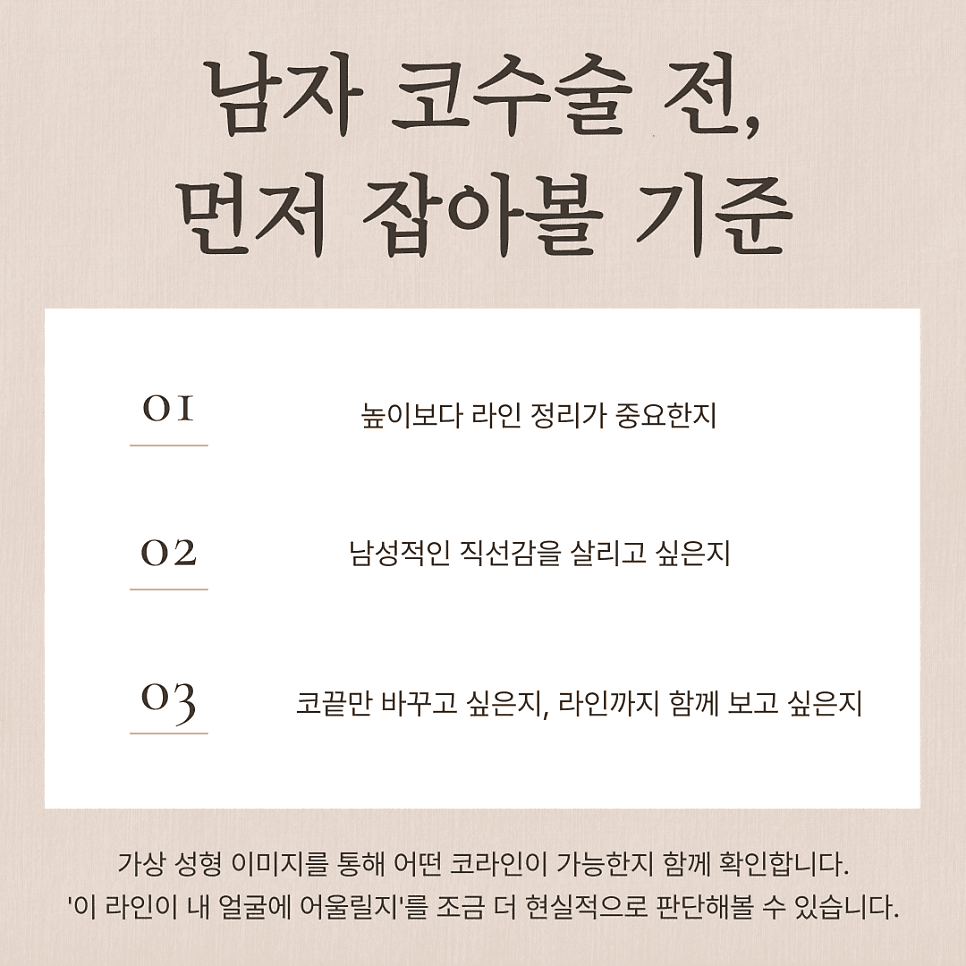
- Whether line organization matters more than height
- Whether you want to keep a masculine straight feel
- Whether you want only the tip changed or the line read together
Once criteria get set this way, the way you look at photos itself often gets much more organized.
So in consultation, rather than showing before & afters first, we first confirm together which nose lines are possible from your current nose structure via virtual surgery images. Because drawing the line in advance lets you judge more realistically 'would this line suit my face' rather than vaguely 'this photo is pretty.'
02
What types of male nose lines exist?
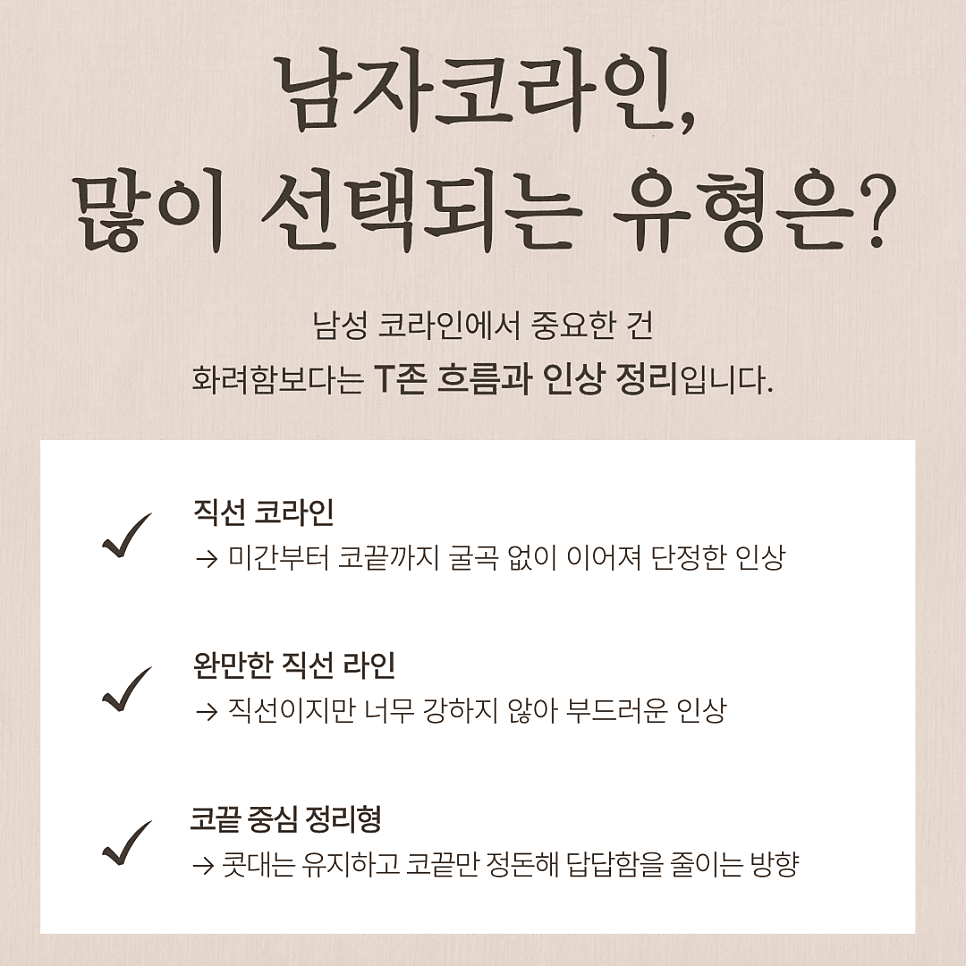
Nose lines frequently seen in male rhinoplasty before & afters split roughly into a few directions.
| Type | Traits |
|---|---|
| Straight nose line | Runs glabella to tip without curvature — a neat impression |
| Gentle straight line | Straight but not too strong — a soft impression |
| Tip-focused tidy type | Direction keeping the bridge while tidying only the tip to reduce stuffiness |
What matters in a male nose line is T-zone flow and impression organization more than flashiness. So even when before & after difference looks small, the impression often reads more defined.
03
Why does implant choice matter when deliberating nose line?
Men deliberating nose surgery commonly say: "I don't want it too obvious." "I want it natural but with the masculine feel kept."
So among those browsing male rhinoplasty before & afters, eyes often go to lines that are organized but don't feel heavily operated — over excessively raised noses. Because of this need, which material gets used when making a nose line also becomes an important criterion.
Autologous tissues like ear cartilage and septal cartilage have long been used in tip plasty. But when making a strong line continuing through the bridge along with tip angle — like a male nose line — support can feel insufficient.
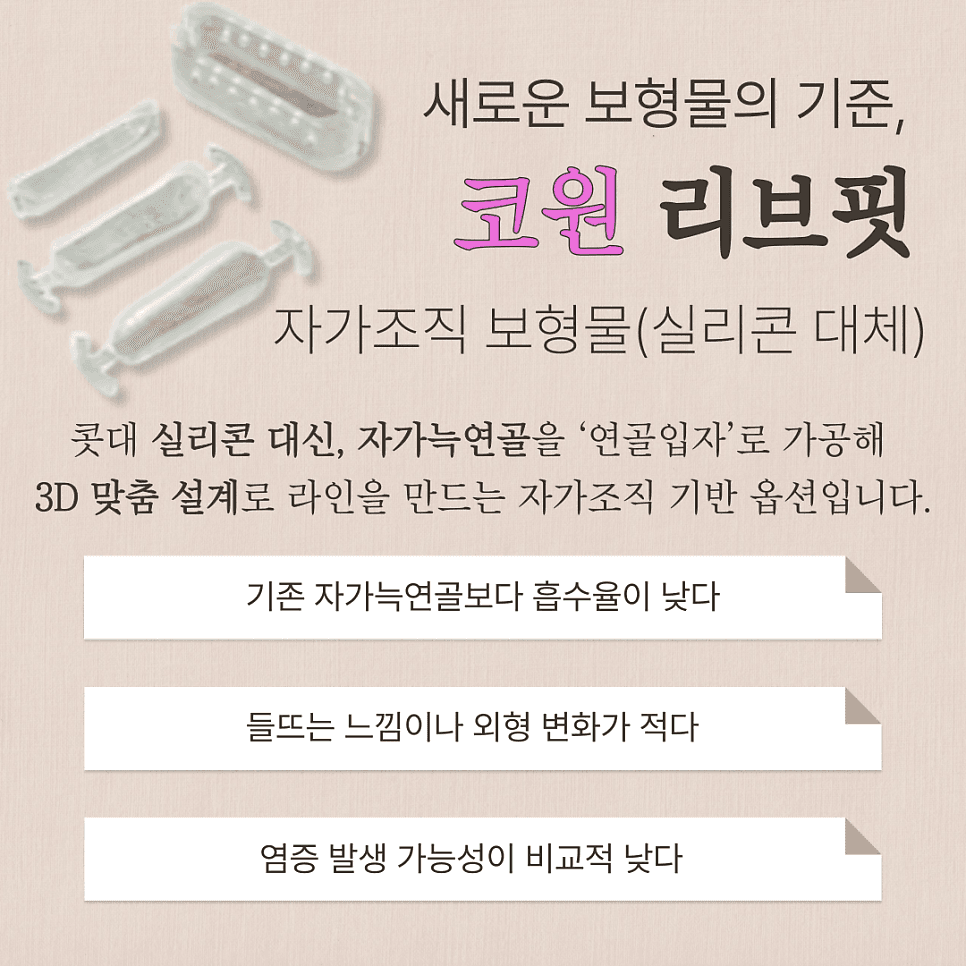
So lately, a method that props the line moderately while avoiding artificial implants' foreign-body feel or burden is being used — autologous-tissue implants processed from rib cartilage. Our clinic has been using the method of processing autologous rib cartilage into fine particles, then fabricating it into a form fitting nose structure, under the name RIBFIT™ since before such methods became widespread.
RIBFIT™ isn't inserting a fixed implant to make a shape — it's an autologous-tissue implant made by processing autologous rib cartilage into fine particles, fabricated into a form fitting each person's nose structure and line, aimed at naturally supporting the line. Details can be seen in the RIBFIT™ autologous rib cartilage guide.
04
Summary — not "which nose is pretty" but "which line is possible on my nose"
The more before & after photos you browse, the harder choosing can get. In such cases it's fine to first sort "which line is possible on my nose" over "which nose is pretty." The reason for seeking male rhinoplasty before & afters is often wanting to know direction more than results — and that direction comes from your nose structure, not photos.
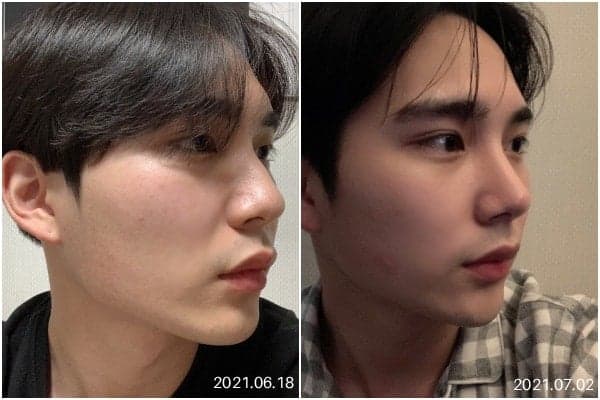
If curious which lines are possible on your nose structure, you can check via virtual surgery image in a 1:1 video consultation. Actual cases can be seen in the before & after photos.
Frequently asked questions
Answers to common questions patients ask before a consultation.
Rather than photo count, look at whether they show only results or explain together why that nose line was chosen. Depending on whether such criteria are clear in consultation, the feel of viewing before & afters can differ greatly.
No. Directions split into straight, gentle straight, tip-focused tidy, and a trendy line isn't the right answer. A nose line gets decided by your nose structure, not before & after photos.
Autologous tissues like ear and septal cartilage have long been used for tip supplementation, but support can feel insufficient for a strong line continuing through the bridge. In such cases, an autologous-tissue implant custom-made from finely processed rib cartilage (RIBFIT™) can be reviewed as a way to prop the line moderately.
Responses to treatment and recovery progress vary by individual. Outcomes and side effects vary from person to person. Bleeding, infection, swelling and asymmetry may occur. Please consult our medical team before making a decision.
Consultation