
KOWON Blog
Male hump-nose surgery — can it be done naturally without silicone? Correction direction for a post-trauma hump
The direction for correcting a male hump nose formed after trauma without silicone — trimming the hump and raising the bent tip, recovery around 1 week, and what to know when a bent dorsum coexists — organized from a real inquiry.

Key points
- A hump nose commonly forms through trauma or growth, and since most hump noses have a high bridge, correction can be reviewed by trimming the hump or raising the bent tip.
- A method not using silicone or other implants is also possible — allowing a direction of correcting only the desired part without excessive change.
- If the dorsum is bent along with the hump, correction can have structural limits — it can bend weakly again over time, so steady course observation is needed.
"I had no hump as a kid, but the dorsum seems bent since hitting my nose a few times during sports. I don't want silicone — can it be corrected unnoticeably?"
A hump nose can commonly form through trauma or growth. Since the nose sits at the face's center where even small changes greatly change the impression, many report stress. Men especially most often ask whether natural, 'unnoticeable correction' is possible without silicone.
Based on a real inquiry, this article organizes which method reviews natural correction in male hump-nose surgery.
01
A hump nose formed after trauma — what state gets checked?
The inquirer said he had no hump at all through elementary school, but the nose seemed to change after hitting it hard several times playing basketball and soccer in middle school. Touching it, not only did the dorsum protrude — the part transitioning from bone to cartilage seemed bent downward, and it also looked slightly tilted to the left.
In such cases, what gets checked isn't the hump's height alone. Whether the dorsum bends to one side, whether tip cartilages are spread, and the height balance between glabella and bridge get read together. Though it looks like the single concern of a 'hump' on the surface, when actually reviewing correction, the whole nose's structure gets examined together.
The inquirer's wish was also clear. No artificial implant, no wish to greatly raise the bridge — just naturally returning the bent part to place so the line sets smoothly.
02
Is hump-nose correction possible without silicone?
The possibility can be reviewed. Because most hump noses have a high bridge.
If the bridge is already sufficiently high, rather than adding height with an implant, the line can be tidied by trimming only the protruding hump or slightly raising the bent-down tip. Since a method not using silicone is also possible, catching the desired natural line is relatively easy.
In male rhinoplasty, many people value naturalness. So a method correcting only the desired part — without excessively changing the tip or bridge — gets frequently reviewed. The conditions and limits of implant-free rhinoplasty can be seen in more detail in the implant-free rhinoplasty guide.
03
Won't surgery be noticeable — how long is recovery?
A question received together: "Does being able to return to daily life in 1–2 weeks really mean it won't show?"
About a week after surgery, major swelling subsides and daily life becomes possible in many cases. Especially with hump-nose surgery done without silicone, the change happens within the nose's original line — so surroundings find it hard to notice at return to work or school. Still, recovery speed and swelling degree differ by person, so the exact schedule gets judged after examination.
04
What gets read together in actual correction?
Looking at an actual correction case, not just the hump alone but several parts were judged together.
| Confirmed state | Correction direction |
|---|---|
| Hump protruding at nose's center | Appropriately trimmed and removed, organized into a smooth line |
| Spread tip cartilages | Gathered via tip cartilage tying into a narrower form; septal cartilage layered on top to stably support tip height |
| Glabella low against the bridge | Harvested cartilage crushed and grafted at the glabella to supplement volume |
| Dorsum bent to one side | Corrected within possible range, with course observation alongside |
Here's one thing to know in advance. When the dorsum is largely bent to one side from the front, correction proceeds as much as possible during surgery — but structurally, 100% perfect correction can be difficult in some cases. A phenomenon of bending weakly again over time after initial correction can appear, so such cases definitely need steady course observation.
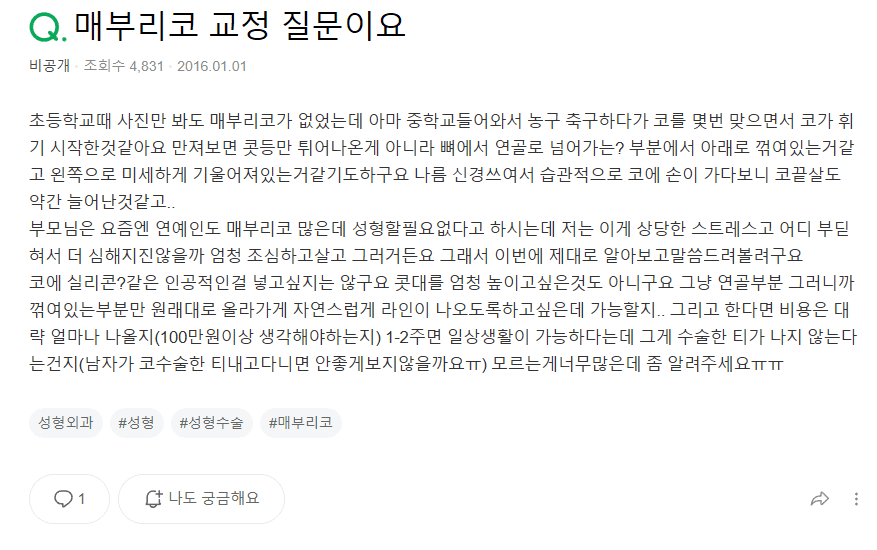
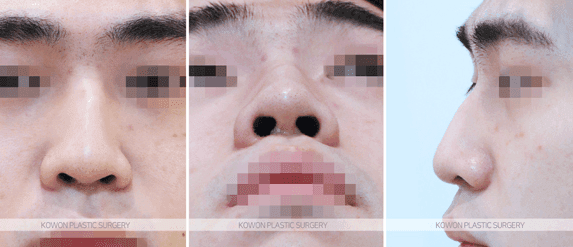
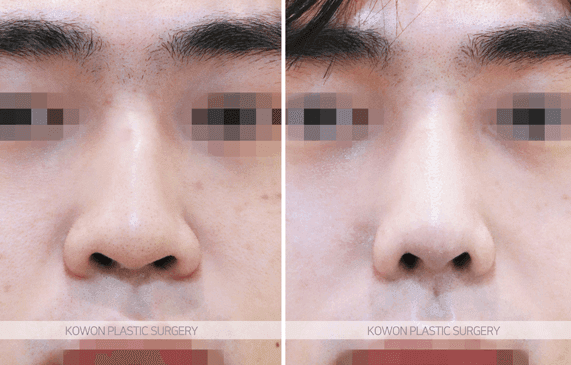
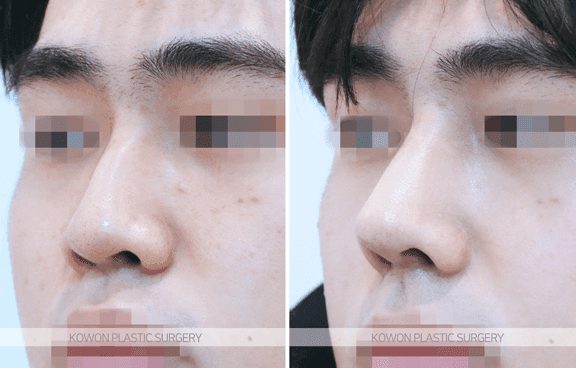
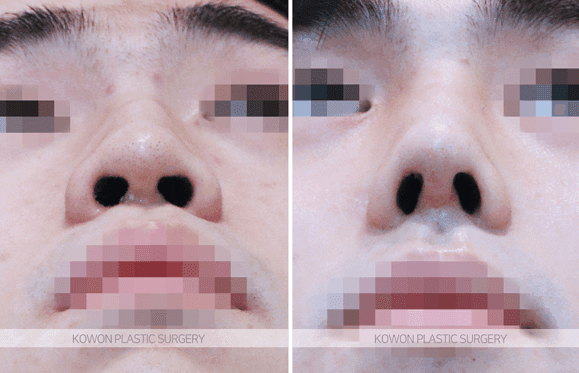
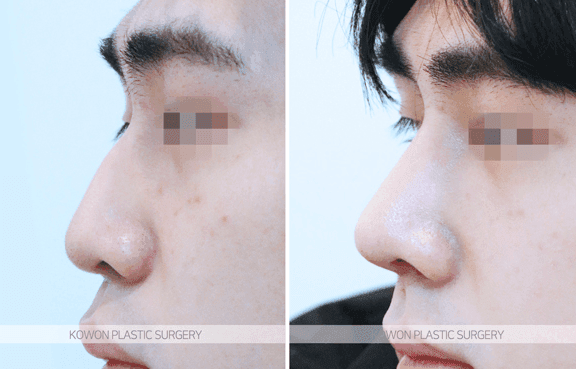
Checking hump, tip, glabella, and bend separately then setting the correction range this way lets a smoothly connecting line and stable tip form be the goal. Actual before & after changes can be confirmed in the before & after photos.
05
Summary — a direction correcting only the desired part
For a post-trauma hump nose, the correction range gets set after checking the hump's protrusion, tip's bend, dorsum's curve, and glabella balance separately. When bridge height is already sufficient, a direction of trimming only needed parts without silicone can be reviewed — aiming for a natural line without excessive change. When a bend accompanies though, understanding the correction limits and need for course observation in advance before deciding is good.
If curious which correction is possible in your nose's state, you can confirm directly in a 1:1 video consultation.
Frequently asked questions
Answers to common questions patients ask before a consultation.
With a method trimming the hump and raising the bent tip without silicone, the change happens within the original line so it tends not to show. When done silicone-free like this, major swelling subsides and daily life becomes possible about a week post-op in many cases — though recovery course differs by individual.
Most hump noses have a high bridge, so correction can often be reviewed without silicone via trimming only the hump or raising the tip. When tip support or glabella volume is needed though, methods using your own tissue — like septal cartilage or crushed cartilage grafting — get judged together.
Correction proceeds as much as possible, but 100% perfect correction can be structurally difficult in some cases. A phenomenon of bending weakly again over time after initial correction can appear — steady post-op course observation is needed.
Responses to treatment and recovery progress vary by individual. Outcomes and side effects vary from person to person. Bleeding, infection, swelling and asymmetry may occur. Please consult our medical team before making a decision.
Consultation