
KOWON Blog
Male hump-nose correction — why deviation and the nose's center line must be read together
A male hump nose with deviation alongside the protruding hump isn't enough with hump trimming alone. Organized: a plan adjusting the nose's center line, length, and tip direction together — and why deviation correction has limits requiring course checks.

Key points
- A male hump nose with deviation alongside the protruding hump needs a process straightening the nose's center and adjusting length and direction together — more than tidying the hump area alone.
- Considering the male nose's traits, the bridge flow gets tidied so a natural, straight line — rather than an excessive curve — stays maintained.
- Structurally, a deviated nose may not align perfectly and can show partial change over time — so continuous course confirmation matters.
A protruding hump, downward-drooping tip, and long-looking nose form can make the whole face look heavy and strong. With deviation added on top, the nose's center line looks skewed to one side — a state where tidying the bridge line alone doesn't finish it.
Through such a male hump-nose case, this article organizes why hump correction reads the nose's center line, length, and tip direction together — not just the bridge line.
01
Why is tidying only the hump insufficient?
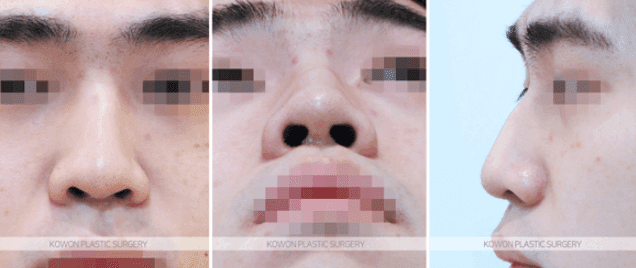
This case's protruding dorsum — characteristic of a male hump nose — made the line look bumpy; with the tip drooping downward the length was emphasized, creating an overall strong, heavy atmosphere. Deviation and deviated septum were also observed together, making the nose's center line look skewed to one side — a state where functional discomfort also had to be considered.
For such a male hump nose, rather than a method tidying only the hump area, a process straightening the nose's center and adjusting length and direction together matters. Because the hump is a bridge-line problem, while the center-line skew, drooping tip, and long-feeling length are each problems of different parts.
02
In what order does surgery get planned?
In this case it was planned in the following order.
| Step | Adjustment direction |
|---|---|
| 1. Hump tidying | Tidy the protruding hump area so the bridge flow continues smoothly — adjusted so a natural, straight line stays maintained rather than an excessive curve, considering the male hump nose's traits |
| 2. Tip direction | The downward-drooping tip gets organized upward via tip cartilage rearrangement and tying, with a support structure formed between cartilages so a stable form maintains over time |
| 3. Length & center line | Adjust the proportion of the long-looking nose, and considering deviated septum together, organize the nose's center line more stably |
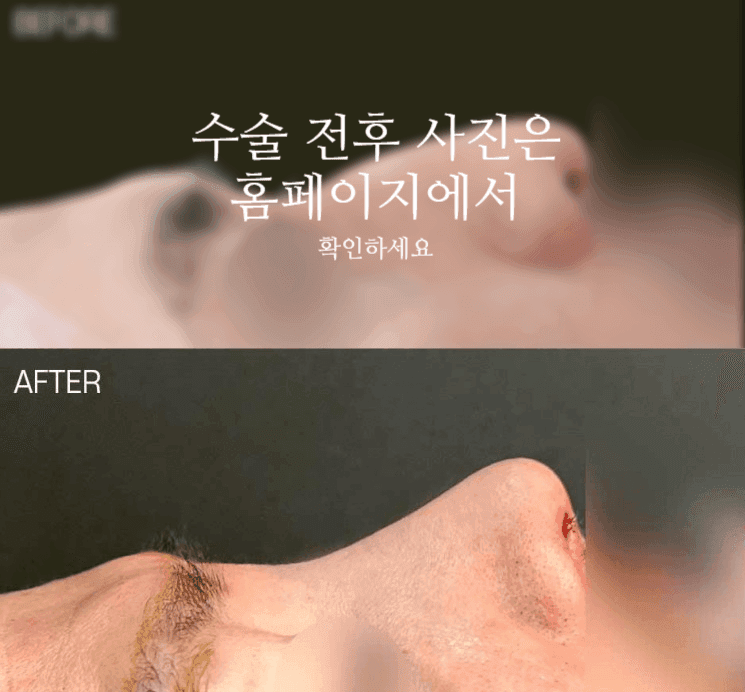
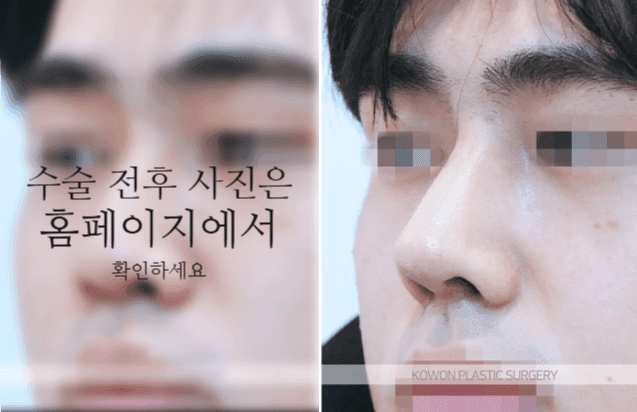
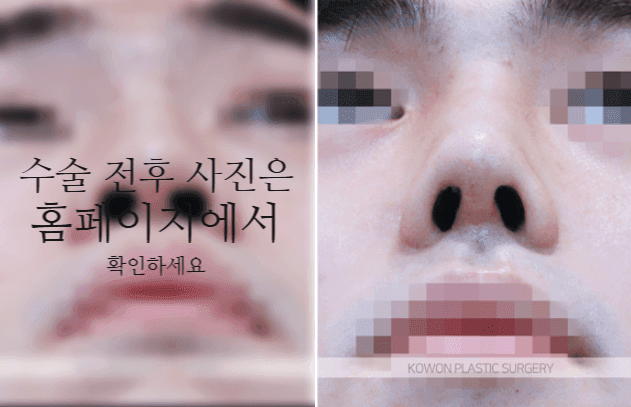
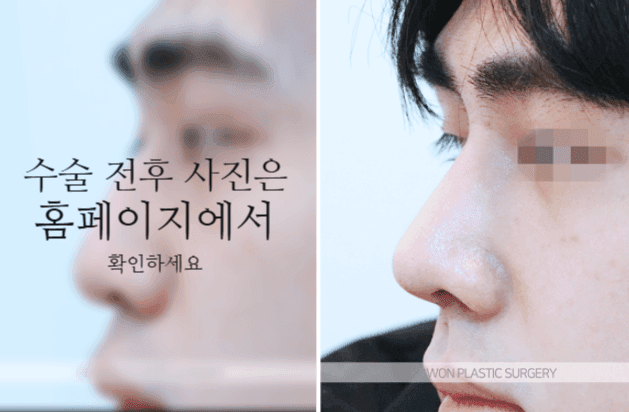
In detail, the left-right splayed tip cartilages were gathered and tidied via tip cartilage tying, then tip height was supplemented using septal cartilage. The pre/post-correction line change can be seen in the before & after photos.
03
Does a deviated nose straighten completely?
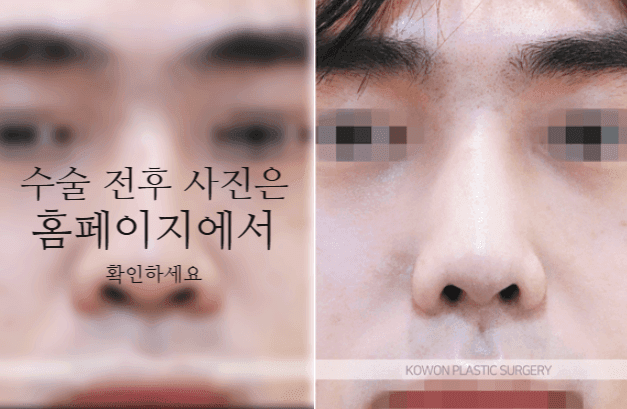
Viewed from the front, this was a case where the dorsum sat considerably skewed to one side. Such a deviated nose gets corrected toward centering as much as possible during surgery — but structurally it may not align perfectly, and partial change can appear over time. That's why continuous course confirmation matters.
In this case, the post-op front view showed the dorsum line — once tilted to one side — organized closer to center, and at 45 degrees the hump area protruding at the dorsum's center was tidied, confirming the bumpy flow smoothed out.
04
Summary — the plan completes only when the center line is read
A male hump nose overlapped with deviation and deviated septum isn't enough with bridge-line tidying alone — the center line, tip direction, and length must be adjusted together for a stable flow in both front and side views. But since a deviated nose can be structurally hard to align perfectly, understanding that limit beforehand and checking the post-op course along the way is part of the plan.
If curious about your nose's center line and hump state, you can confirm directly in a 1:1 video consultation.
Frequently asked questions
Answers to common questions patients ask before a consultation.
It's often considered when the mid-dorsum protrudes looking bumpy, or the tip droops downward giving a strong, heavy impression. Rather than tidying only the protruding part, planning while considering bridge-tip balance and overall facial proportion together matters.
Hump-nose surgery isn't a process removing only the protruding part — it proceeds toward naturally organizing the overall bridge line. Since height and flow get considered together fitted to facial proportion, it more often changes into a smoother, more balanced line than an unconditionally lowered feel.
When hump tidying, tip correction, and center-line adjustment proceed together as in this case, major swelling generally eases a lot within 1–2 weeks, and residual swelling and tissue stabilization can progress over months afterward. Early on the tip or bridge area can feel firm, but it often settles into a natural form over time. Period-by-period care is organized in the rhinoplasty recovery guide.
Responses to treatment and recovery progress vary by individual. Outcomes and side effects vary from person to person. Bleeding, infection, swelling and asymmetry may occur. Please consult our medical team before making a decision.
Consultation