
KOWON Blog
Male nose surgery — why does deviated-nose correction check the internal structure first?
A deviated nose is often not just surface appearance but a problem of the septum — the nose's internal central axis. Why functional issues like nasal obstruction accompany it, why surface-only correction risks recurrence, and what to consider with autologous rib cartilage (warping).
Key points
- People consulting for deviated-nose correction discover with high probability that the internal nose structure is bent — when severe, functional issues like nasal obstruction accompany it.
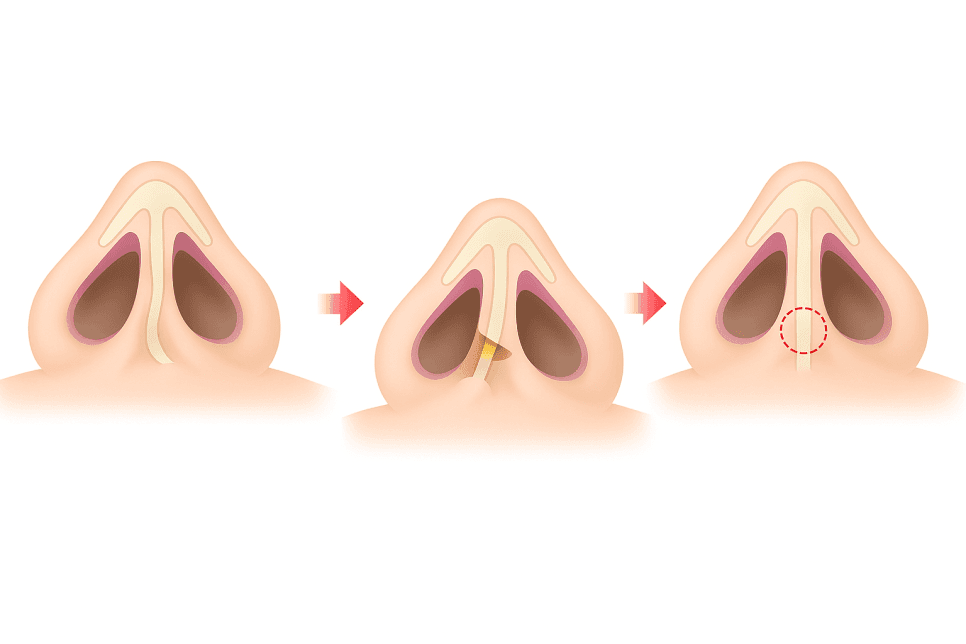
- When the septum — the central axis supporting the nose internally — bends, the nose easily looks bent externally too. Acquired factors like external impact exist, but it's mostly congenital asymmetry.
- Fixing only the surface without grasping the internal structure raises post-op functional problems or recurrence probability — so the plan gets set after analyzing bridge bone, septal cartilage, and overall facial asymmetry.
As interest in self-care grows regardless of gender, male nose surgery has become common. Still, many worry: "Won't it be too obvious?", "Won't the nose alone break facial harmony?"
Especially, many come for consultations saying a bent nose stresses them every time they take photos, making them turn their head to only one angle when shooting. This article organizes why, when considering deviated-nose correction, the internal nose structure must be checked before surface appearance.
01
Why does the nose look bent without any accident?
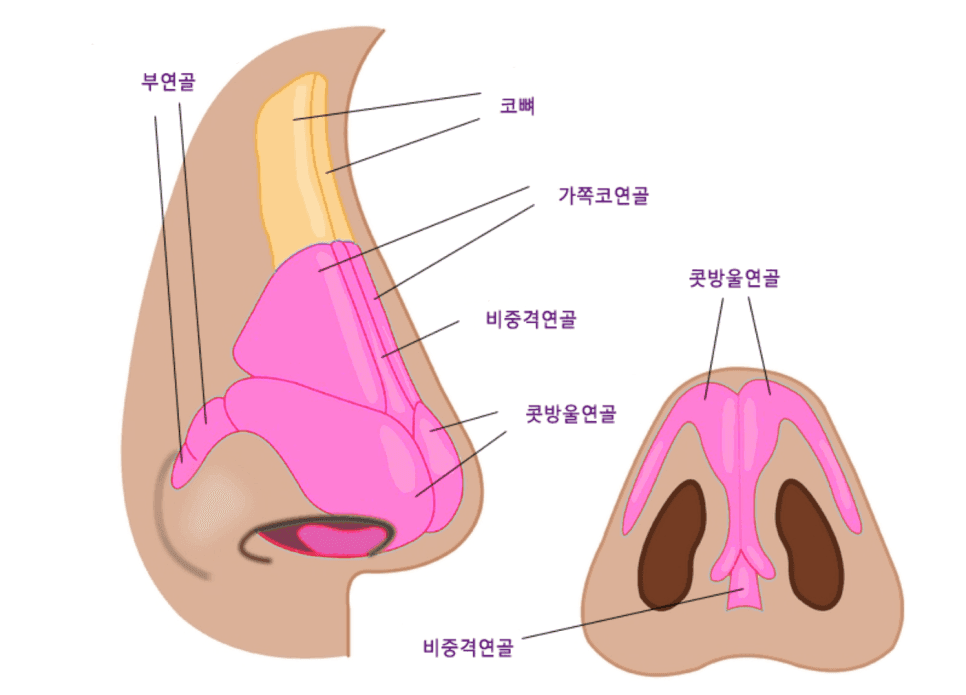
The nose's interior is a structure where bone, septal cartilage, tip, and dorsum intertwine complexly. Among these, when the septum — the central axis supporting the nose internally — bends, the nose easily looks bent externally too.
The septum can bend from acquired factors like strong external impact, but it's mostly congenitally asymmetric. So the nose can look bent even without any accident history.
When the bend is severe it doesn't stop at surface asymmetry — functional issues like nasal obstruction accompany it. Indeed, people consulting for male nose surgery to correct a deviated nose discover with high probability that the internal structure is bent.
02
Why can't only the surface be corrected?
Trying to correct only the surface without closely grasping the internal structure raises the probability that functional problems remain post-op or the nose returns to bent.
So before planning male nose surgery, the following get analyzed together.
- 01How much the bridge bone is bent — the externally visible axis problem
- 02Septal cartilage state — the internal central axis problem
- 03Subtle asymmetry of the whole face — balance within the face, not the nose alone
Because the nose's interior is a complex structure, examining the internal state closely with precise equipment first and setting the correction plan while weighing aesthetic improvement and function together matters.
03
How should the septum be corrected?
In deviated-nose surgery, standing the septum straight is key — but it's not a matter of simply swapping in a rigid material.
If the septal implant's material or position mismatches the body even slightly, it can cause inflammation — risking greater discomfort functionally, not just aesthetically. So along with a design straightening the bent nose's inner center, implant choice must be careful to avoid burdening the inflammation-prone tip.
04
What gets considered when correcting with autologous rib cartilage?
Ear cartilage or existing septal cartilage has been used so far — but recently, preference for autologous rib cartilage is rising in strength and amount. Still, autologous rib cartilage isn't advantages only.
| Item | Content |
|---|---|
| Advantage | Good strength and amount — favorable for corrections needing support |
| Point to consider | Being sturdy, a slight bend over time — **warping phenomenon** — is possible |
| Needed approach | Fixation design considering even the change pattern; refined harvest method |
Since fixation must consider even warping, knowing the material's traits and post-time change pattern matters. Alongside overall facial asymmetry diagnosis, skin elasticity and thickness also get confirmed without missing. How autologous rib cartilage gets used can be seen in more detail in the autologous rib cartilage guide.
05
Summary — the axis gets read before the surface
When asymmetry from a deviated nose bothers you, thinking of straightening the visible axis first comes easily. But if the septum supporting the nose internally is bent, correcting only the surface leaves functional problems or recurrence possibility. The order of deviated-nose correction is deciding material and method after analyzing bridge-bone bend, septal cartilage state, and overall facial asymmetry.
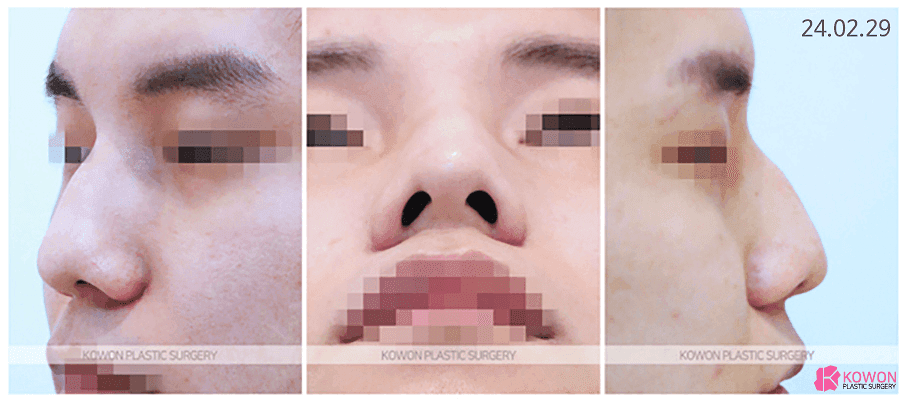
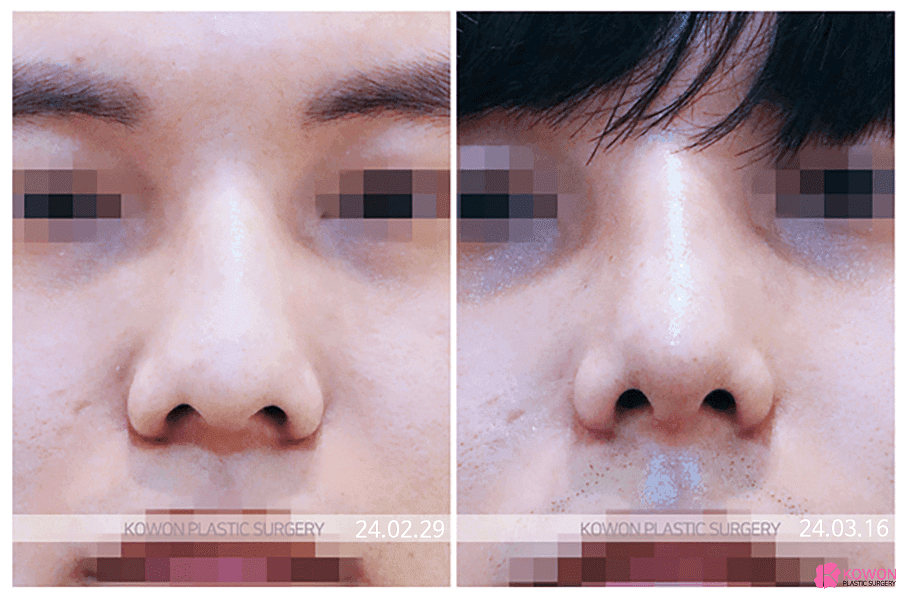
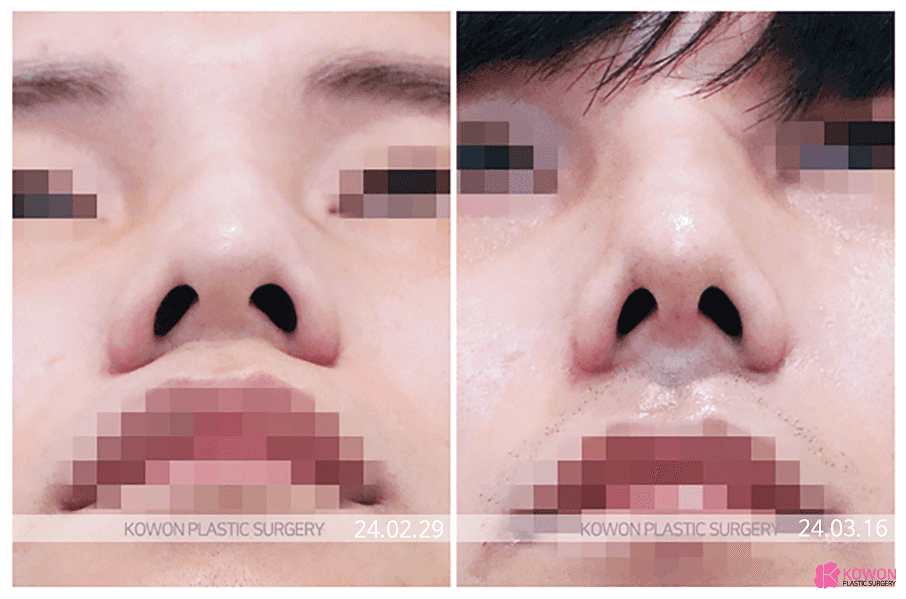
If curious where your nose's bend comes from, it can be checked in a 1:1 video consultation. Actual correction cases can be seen in the before & after photos.
Frequently asked questions
Answers to common questions patients ask before a consultation.
Yes. Acquired factors like strong external impact exist, but it's mostly congenital septal asymmetry. If it looks bent externally, checking the internal septum state is good.
They can be related. When the bend is severe, functional issues like nasal obstruction can accompany it beyond surface asymmetry. So deviated-nose correction plans while examining aesthetic and functional parts together.
It's not advantages only. In exchange for good strength and amount, a warping phenomenon — naturally bending slightly over time — exists, so fixation must consider even that. Designing while knowing the material's traits and change pattern matters.
Responses to treatment and recovery progress vary by individual. Outcomes and side effects vary from person to person. Bleeding, infection, swelling and asymmetry may occur. Please consult our medical team before making a decision.
Consultation