
KOWON Blog
The semi-upturned (jikban-beoseon) nose — how is the straight-to-curve balance set? Check order when nostril asymmetry accompanies
The jikban-beoseon nose is a line finding the midpoint between a straight bridge and an upturned tip. Why emphasizing only straightness or only the upturn isn't enough, and the order of checking septum and cartilage first when nostril asymmetry accompanies — organized.
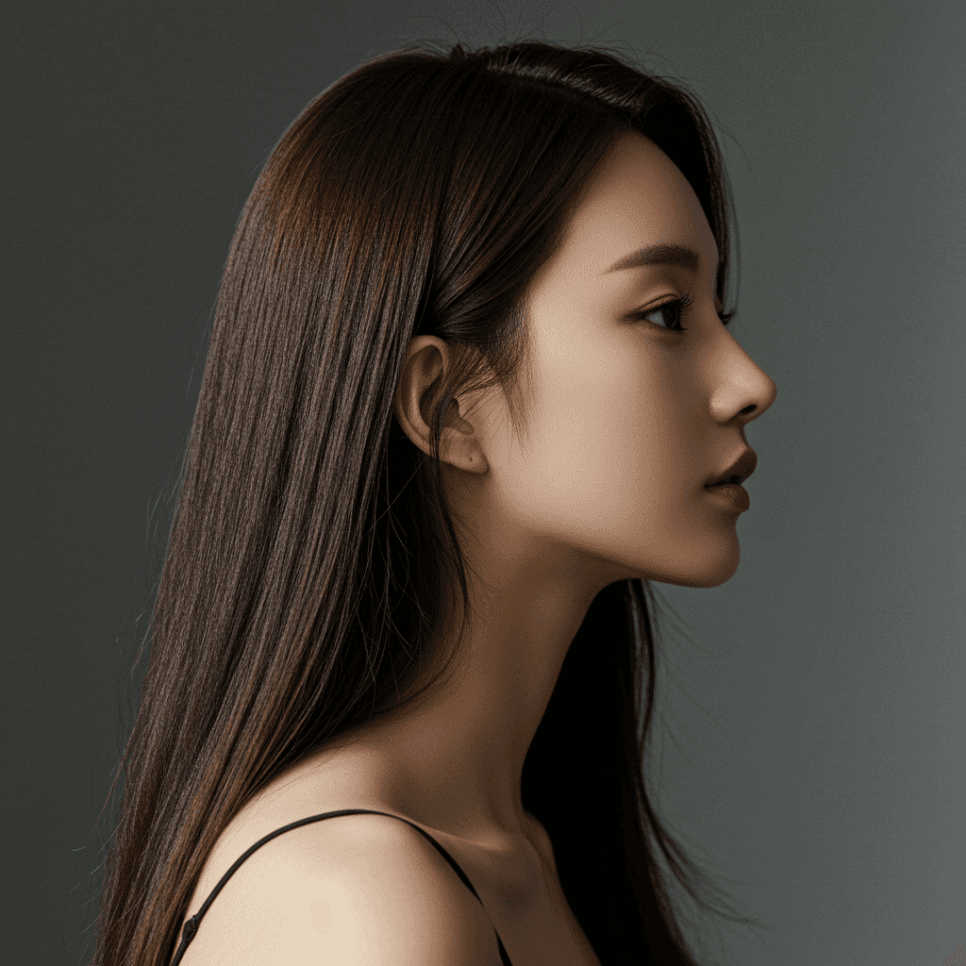
Key points
- The jikban-beoseon nose combines straight and upturned forms — a midpoint shape where a smooth dorsum and a soft tip connect naturally — emphasizing only the straight side can look sharp, and minding only the upturn can leave the tip looking unnaturally over-rotated.
- With nostril asymmetry alongside, raising the bridge alone may fall short — cartilage tilt or septal deviation can accompany, so whether breathing has been uncomfortable gets checked first.
- Line balance gets designed considering face shape and eye/mouth proportions too — and the desired direction gets tuned through a virtual predicted image.
Have you ever felt uncomfortable because the nose in the mirror wasn't to your liking? Many people want a soft, refined impression yet feel stressed because their actual look differs from the image in their mind. The nose sits at the face's center — even a small change can sway the whole impression.
This article organizes what the jikban-beoseon nose — where bridge line and curve harmonize — looks like, and what gets checked first when an issue like nostril asymmetry accompanies.
01
What does the jikban-beoseon nose look like?
The jikban-beoseon nose is a word combining straight-line and upturned (beoseon) forms. Each form leaves something to be desired if it tips too far to one side.
| Form | Impression when tipped too far |
|---|---|
| Straight only emphasized | Can give a somewhat sharp or strong impression |
| Upturned only emphasized | An excessively raised tip can look unnatural |
| Jikban-beoseon (midpoint) | A smooth dorsum and soft tip connect naturally |
The midpoint jikban-beoseon form is one where a smooth dorsum and soft tip connect naturally — a line creating harmony across the whole face rather than spotlighting only the nose.
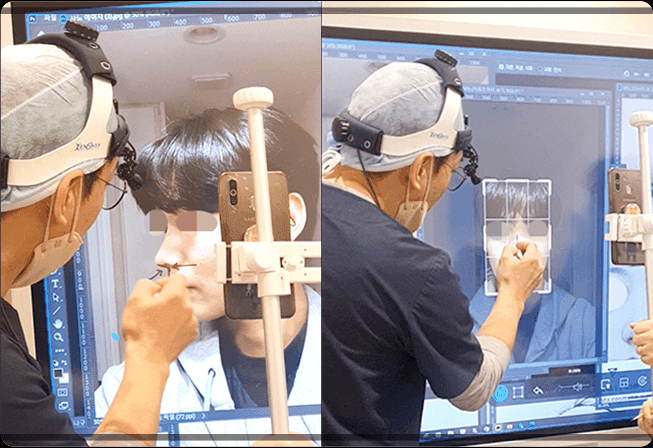
The core is how that midpoint's balance gets set. So the line gets designed considering everything down to face shape and eye/mouth proportions — and from the consultation stage, opinions get heard closely, then the desired direction and the medical team's opinion get tuned through a virtual predicted image. Because what matters isn't a moment's satisfaction but a result that stays satisfying over time.
02
If nostril asymmetry accompanies, what gets checked first?
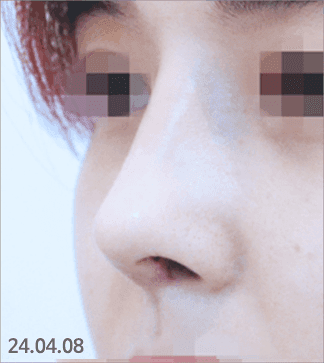
Whether breathing has been uncomfortable, and septal/tip cartilage state, get checked first. Because differing nostril sizes can accompany cartilage tilt or septal deviation — an approach raising only the bridge may fall short.
So in such cases, the check order matters.
- 01Whether breathing has been uncomfortable, or whether only the shape is the issue — confirmed first.
- 02If a bent septum is the cause, correction may be needed.
- 03If it's simply a shape issue, slightly adjusting the tip cartilage's tension alone can set a natural balance.
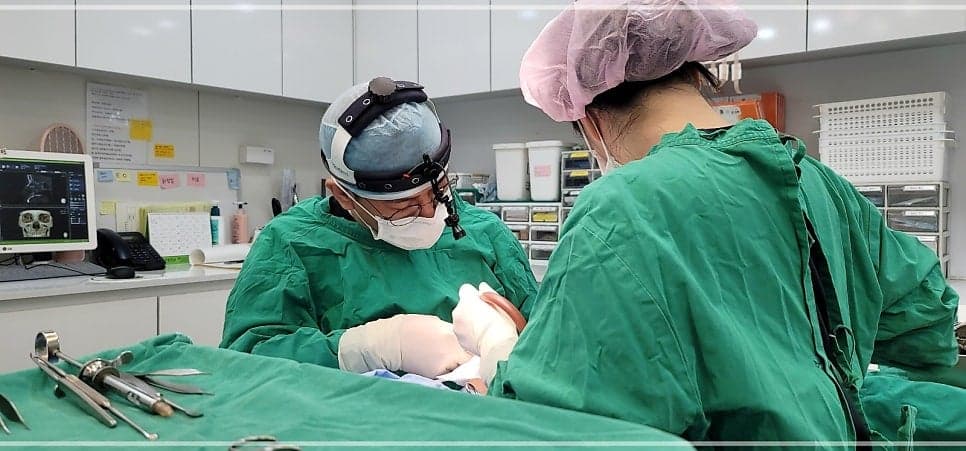
The bridge part usually gets connected smoothly using autologous cartilage or an implant, and the tip is made to continue naturally yet delicately from the bridge for a tidy jikban-beoseon shape. In the end, shape matters — but a balanced plan considering function too is the core.
03
How do consultation and the process proceed?
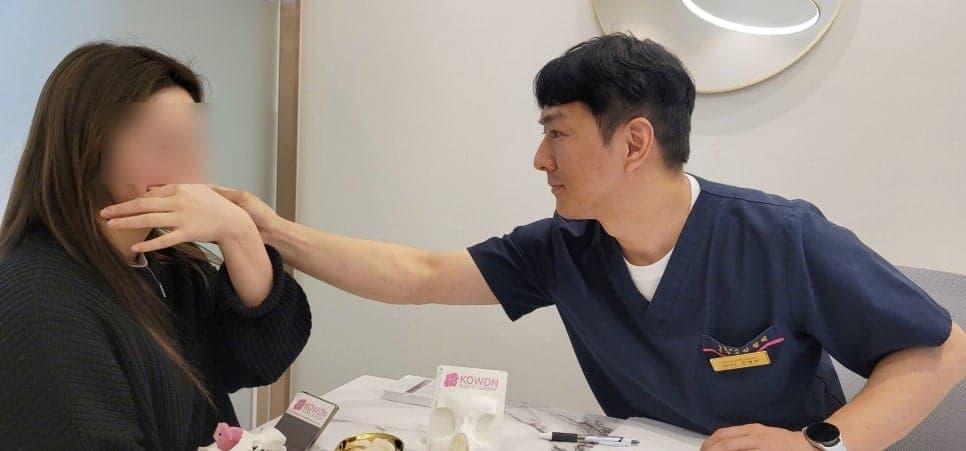
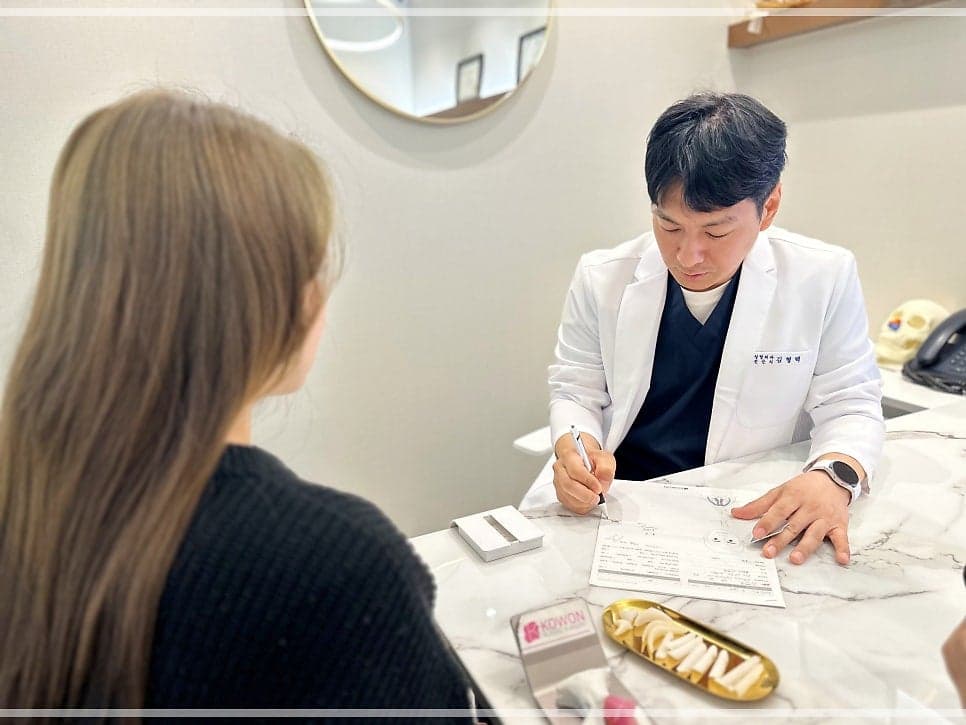
After confirming face shape and eye/mouth proportions, the straight-to-curve balance point gets tuned through a virtual predicted image. The desired direction and the actually feasible range get explained separately — and if nostril asymmetry exists, not just shape but breathing function and internal structure get checked together.
04
Summary — balance comes from the whole face
The jikban-beoseon nose isn't a matter of choosing one of straight or curved — it's a matter of setting the balance point between them to fit your face. If an issue like nostril asymmetry accompanies, don't look at shape alone — septal and cartilage state plus breathing function must be checked first, and custom design considering face shape and feature proportions must back it up.
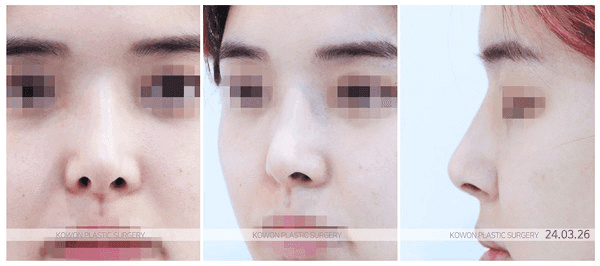
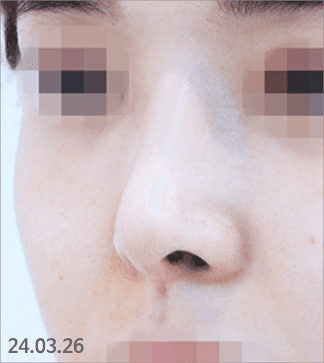
If you're curious about a jikban-beoseon line fitting your face, it can be checked together with a virtual design in a 1:1 video consultation. Actual correction cases can be seen in the before & after photos.

Frequently asked questions
Answers to common questions patients ask before a consultation.
Emphasizing only the upturned form can leave the tip looking unnaturally over-raised. The jikban-beoseon nose finds the midpoint between a straight bridge's definition and an upturned tip's softness — characterized by a smooth dorsum and soft tip connecting naturally.
An approach raising only the bridge may fall short. Because differing nostril sizes can accompany cartilage tilt or septal deviation. Whether breathing has been uncomfortable gets checked first — correction if the septum is the cause, tip cartilage tension adjustment if it's simply a shape issue.
Through a 1:1 video consultation, nasal structure gets checked via photos and video while opinions get exchanged. In consultation, the desired direction and the medical team's opinion get tuned through a virtual predicted image — guidance divides what is and isn't possible.
Responses to treatment and recovery progress vary by individual. Outcomes and side effects vary from person to person. Bleeding, infection, swelling and asymmetry may occur. Please consult our medical team before making a decision.
Consultation