
KOWON Blog
What is natural-glam nose surgery? — a small-nose case where the line was built implant-free after clearing threads & filler
Natural-glam nose surgery is an approach building a natural line that preserves bridge and tip detail while fitting facial proportions. A case organizing remaining threads and filler first, then building the line through septal extension and tip cartilage tying — organized.

Key points
- Natural-glam nose surgery is an approach building a natural line where bridge and tip detail stays alive within the facial proportions — rather than raising the nose excessively.
- If threads or filler from a prior procedure remain, a step clearing the remaining material first may be needed before building a new line.
- This case reorganized the tip structure implant-free through septal extension and tip cartilage tying after thread and filler removal.
A refined impression isn't completed just by changing the nose's height or size. Because depending on how the bridge and tip connect within the whole face's proportions, the atmosphere can differ greatly. A small nose especially can look lacking in dimension — so a process considering natural volume and line flow together matters.
This article organizes what gets checked in natural-glam nose surgery through a case where remaining threads and filler from a prior procedure were cleared, then a natural-glam line was built implant-free.
01
What line does natural-glam nose surgery mean?
The natural-glam nose line means a line where bridge and tip detail stays alive while keeping a natural atmosphere. Rather than looking excessively high or artificial, it focuses on building a refined flow fitting the facial proportions. Its characteristic is especially a soft connection of the curve running from forehead to tip.
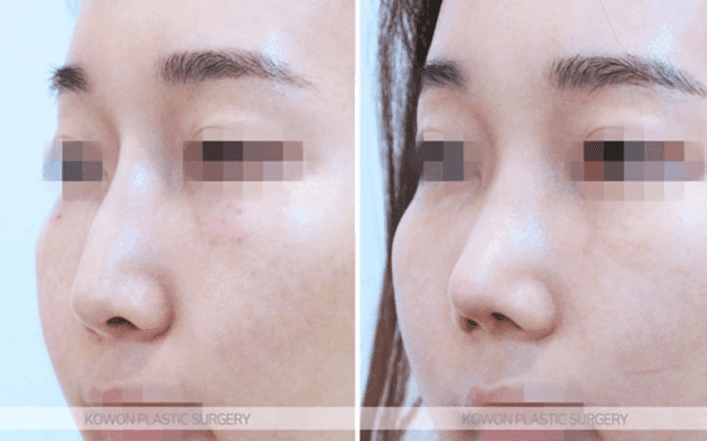
This case's patient had a generally low bridge and a small-looking nose — a form where central facial dimension was lacking and a flat atmosphere appeared. In such cases, looking at harmony with the whole face's proportions first matters more than simply raising the bridge.
So this surgery considered the following together.
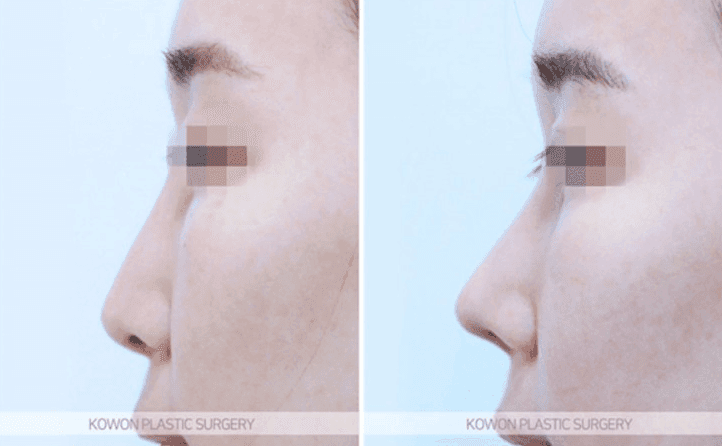
- Bridge height — adjusted so the flow from forehead to tip connects softly while supplementing without excess
- Tip — refined delicately so it doesn't look heavy or stuffy, forming a light atmosphere
- Columella, nasolabial angle (the angle between nose and upper lip), philtrum line — balance checked together so the midface looks more dimensional
02
Why were the remaining threads and filler cleared first?
This case had threads and filler remaining from a prior petit procedure. The plan was set toward clearing those materials first before building a new line.
Scaffolder threads are fabricated in a structure similar to tree branches — placed inside the nose, then pulled in the opposite direction to support tissue upward. They can be used to make a low-looking nose appear relatively higher and supplement tip length to a degree, but they have a property of not dissolving in the body — so cases considering removal over time are gradually increasing.
| Category | Characteristic | When removal gets considered |
|---|---|---|
| Some threads used in Hiko/Misko | Absorb over time | — |
| Non-dissolving threads (scaffolder etc.) | Material remains in the body | Removal considered by shape change or satisfaction |
| Filler | If remaining, affects line cleanup | Cleared together when tip drooping or the line feels awkward |
Threads used in petit procedures are often thought of as relatively simple — but actual removal is a process that must approach while precisely confirming structure. Branch-form threads especially have a structural feature of gripping tissue, so removal is tricky and can take longer. This case was judged to need overall structural cleanup together with filler removal because the threads were tangled with each other inside the tissue. What gets checked in thread removal can be seen in more detail in the thread removal guide.
03
How was the line built without an implant?
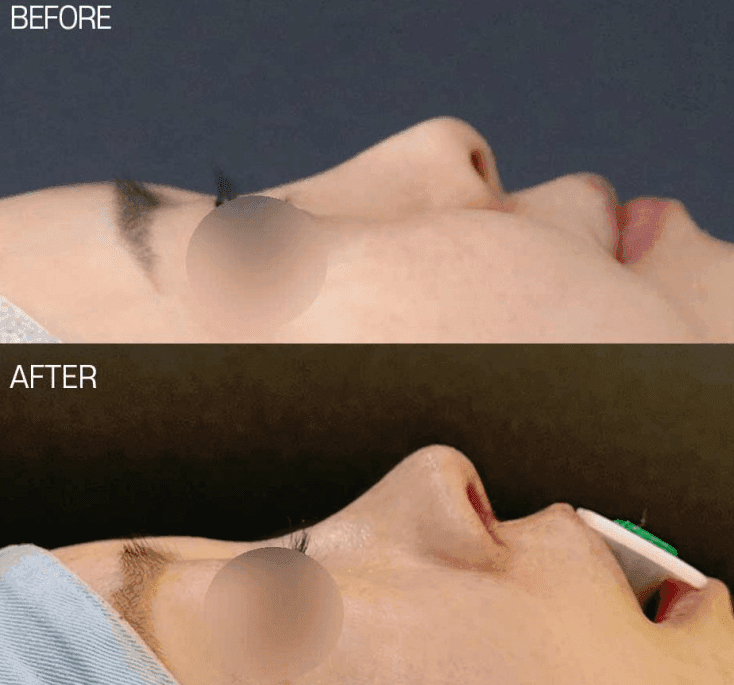
This surgery was planned toward proceeding without an implant after filler removal first. As a result, a process reorganizing the tip-centered structure took place.
- 01Thread & filler cleanup — removing remaining threads and filler, organizing internal structure
- 02Septal extension — performed for a stable tip form
- 03Tip cartilage tying — organizing the side-spread structure into better balance
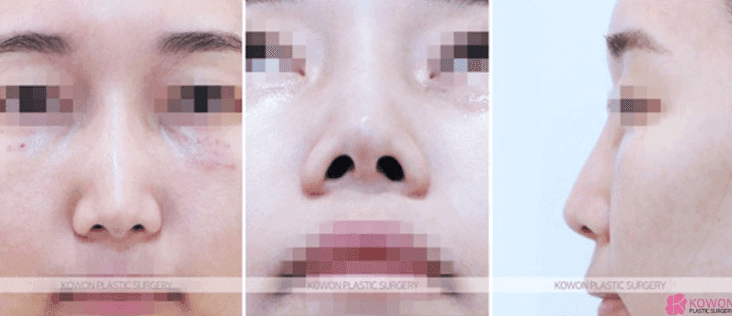
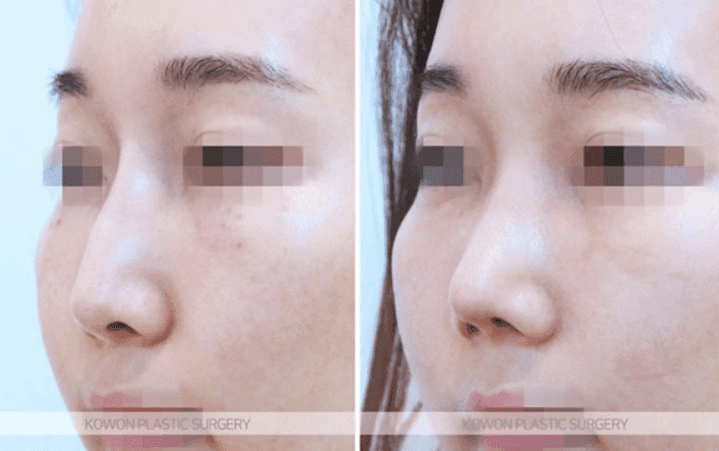
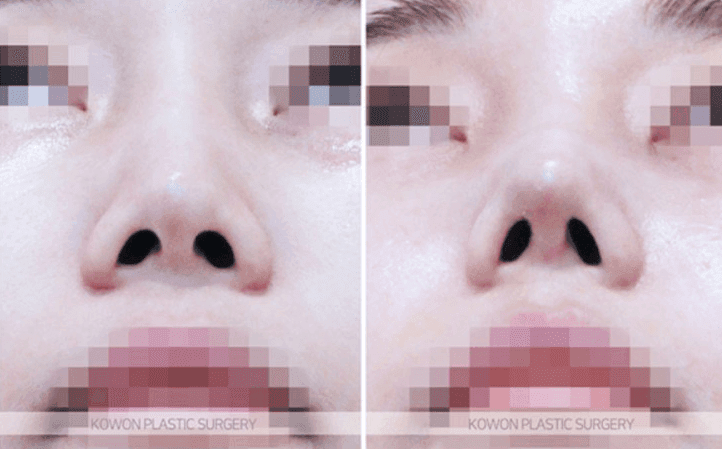
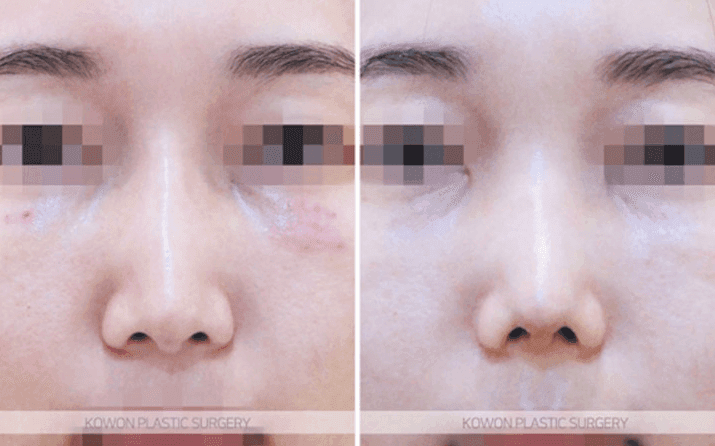
Through this process, the bridge line that had felt uneven connected smoothly — and as the bridge contour became defined, the eye-area impression that had looked relatively prominent also settled softer. From the front, not just the tip line but the nostril shape could be confirmed changed into better balance than before. Actual correction cases can be seen in the before & after photos.
A procedure can feel relatively low-burden — but cases needing removal or reorganization do occur over time by shape change or satisfaction. So confirming sufficient information before the procedure and choosing carefully matters.
04
Summary — checking remaining material comes first
Natural-glam nose surgery is an approach centering a flow that blends naturally with the face rather than excessive change. Still, if threads or filler remain from a prior procedure, a step confirming that state precisely and clearing it may be needed first. Like this case — clearing remaining material, then reorganizing structure through septal extension and tip cartilage tying — can lead to a natural, soft line even without an implant.
If you're curious whether prior-procedure material remains or what cleanup your current nose state needs, it can be checked directly in a 1:1 video consultation.

Frequently asked questions
Answers to common questions patients ask before a consultation.
A line where bridge and tip detail stays alive while keeping a natural atmosphere. Rather than looking excessively high, it focuses on building a refined flow fitting the facial proportions — characterized by a soft connection of the curve from forehead to tip.
Often considered when the tip looks wide and bluntly spread, or the nose looks overall large. Rather than simply shrinking size, it proceeds toward organizing tip structure and width together with the bridge line for harmony with the face — the applied method can differ by individual skin thickness and nasal structure.
Both directions are often done together. Recovery has individual differences, but major swelling usually eases a lot within 1–2 weeks — residual swelling and tissue stabilization proceed over several months. A natural line typically settles gradually around 3–6 months.
Responses to treatment and recovery progress vary by individual. Outcomes and side effects vary from person to person. Bleeding, infection, swelling and asymmetry may occur. Please consult our medical team before making a decision.
Consultation