
KOWON Blog
Worried the Tip Will Turn Up After Tip Reduction — Why Reduction and Angle Are Designed Together
If you worry the tip will turn up after tip reduction, no single maneuver is applied as the answer. Why reduction and changes in rotation/projection are designed together according to the current cartilage, skin, and support structure — organized.

Key points
- Tip upturn depends on the tip's angle.
- The direction the tip is gathered and the degree of rotation/projection are designed together around the current cartilage, skin, and support structure.
- If the tip is already upturned, the correctable range is set after identifying the cause.
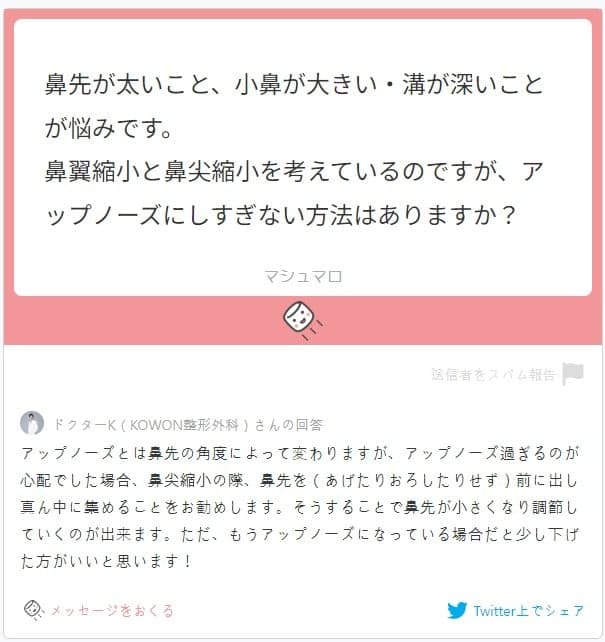
"My tip is thick and my nostrils are wide, so I'm thinking of alar reduction and tip reduction — is there a way to keep the tip from turning up too much?"
This question was sent from Japan. It's a case of wanting a smaller tip but hesitating for fear the tip will turn up in the process — and when reduction and angle are lumped together as one problem, an answer is hard to find.
01
What does tip upturn depend on?
Tip upturn depends on the tip's angle. It is a separate axis from how much the tip is reduced.
This matters because making the tip smaller and the tip looking upturned do not necessarily go together. Depending on how the angle is handled, upturn can be controlled even while reducing.
02
In what direction is it designed to avoid upturn?
If excessive upturn is a concern, the direction the tip is gathered and the degree of rotation/projection are designed together. Still, no single maneuver can block upturn or guarantee a desired size.
In summary, the direction is as follows.
- 01Check the current degree of rotation — the plan differs between an already upturned nose and a drooping one.
- 02Look at the limits of skin and cartilage — the same maneuver produces different changes depending on the structure.
- 03Predict reduction and projection together — the degree of size change and the profile change are explained together.
How angle and shape are considered together in tip correction can be seen in the nasal tip procedure guide.
03
What if the tip is already upturned?
If the tip is already upturned, causes such as cartilage support, skin tension, and any previous surgery are checked first, then a feasible correction direction is set.
| Current state | Which direction to take |
|---|---|
| Worried the tip will turn up | Design the reduction range together with rotation/projection changes |
| The tip is already upturned | Identify the cause and support structure, then set the correction range |
04
Summary — reduction and angle are assessed separately
If you want a smaller tip but don't want it upturned, reduction and angle change are looked at together. A single direction is not applied to every nose — the feasible range is set around the cartilage, skin, and support structure.
How much your tip is currently rotated can only be known through direct examination. The state can be assessed and a direction set through a 1:1 video consultation.
Frequently asked questions
Answers to common questions patients ask before a consultation.
Not necessarily — but rotation and projection can change together during reduction. The direction of change must be designed to fit the current structure.
Gathering toward the center is one option, but the result differs by cartilage shape, skin thickness, and support structure. It does not guarantee the degree of reduction or upturn.
If it is already upturned, the correctable range is judged after checking the cause and support structure.
Responses to treatment and recovery progress vary by individual. Outcomes and side effects vary from person to person. Bleeding, infection, swelling and asymmetry may occur. Please consult our medical team before making a decision.
Consultation