
KOWON Blog
Would hump shaving alone make a bent nose look less bent? — septal cartilage and lateral-hump Q&A
Does hump surgery also improve the bent look? Why hump and deviation often coexist, whether a laterally protruding hump gets refined too, and why septal cartilage bending is the likely cause of a bent look — organized from an actual Q&A.

Key points
- People with hump noses mostly have a bent nose alongside, so hump surgery and deviation correction are usually planned together. If the bend isn't severe, hump shaving alone is done sometimes.
- A laterally protruding hump is usually corrected together while removing the hump, but the specific scope must be confirmed directly with the operating surgeon.
- The cause of a bent-looking nose is probabilistically more often a bent septal cartilage than the hump itself. The bone itself could also be bent — direct examination is needed.
"I have a slight hump nose, and it looks a bit bent too. If I shave the hump, will it look less bent?"
Researching hump surgery naturally brings this kind of curiosity. The bridge and tip height are fine so only hump shaving was decided — yet the nose looks slightly bent in front view. Whether shaving the hump improves the bend too, or rather makes it stand out more, can be hard to judge.
Based on an actual consultation question, this article organizes what gets checked when a hump and deviation coexist.
01
Does hump surgery also improve the bent look?
People with hump noses mostly have a bent nose alongside. So when planning hump surgery, considering correction of the bent nose together is typical.
Still, deviation correction isn't mandatory in every case. If you feel the bend isn't severe, proceeding with hump shaving alone minus deviation correction is also done. In other words, two things get distinguished.
- When the bend is clear — the bent nose gets corrected along with hump surgery.
- When the bend isn't severe — an option doing hump shaving alone without deviation correction is also possible.
Which side you fall under is hard to conclude from photos or your own feeling alone — it gets judged by directly seeing the nasal state.
02
Does the laterally protruding hump get refined too?
Usually the laterally protruding part gets refined together while removing the hump. Still, the specific scope varies by nasal structure and surgical plan — it must be confirmed directly with the operating surgeon.
03
Is the bent look because of the hump?
Rather than the hump itself, a bend in the septal cartilage or nasal bone gets checked first. The septal cartilage is the wall dividing left and right inside the nose — when this structure bends, the whole nose can look tilted from outside too.
| Bent-look cause candidates | Explanation |
|---|---|
| Septal cartilage bend | Probabilistically the most common case — the main cause of the whole nose looking bent |
| Nasal bone's own bend | The bone could also be bent — checked together |
| Hump | Rather than the hump making it look bent, the influence of the two structures above is typical |
So the exact cause can only be judged by looking directly. Still, probabilistically a bent septal cartilage is the more common case.
04
How does surgery proceed when a hump and deviation coexist?
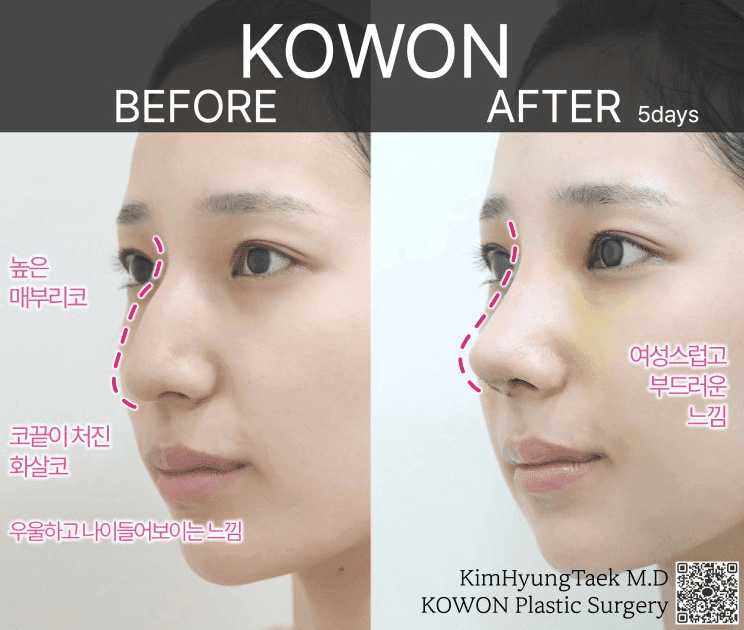
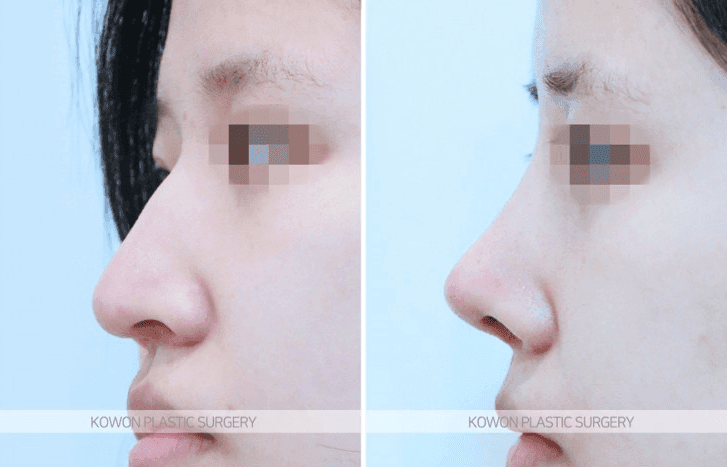
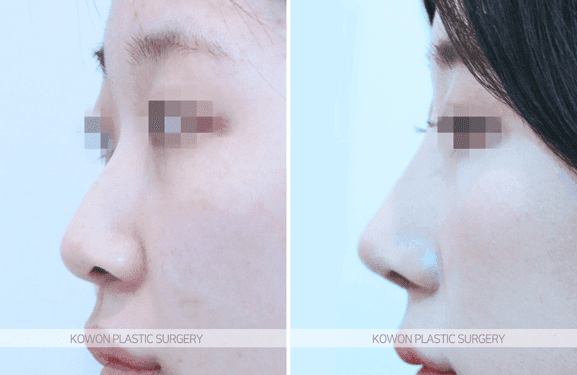
Looking at actual correction cases, when a hump and deviation coexist, a flow of accompanying osteotomy can be seen.
- 01A high nose with a hump — a process of narrowing and lowering the dorsum while performing osteotomy makes it smooth.
- 02A hump plus a long, deviated nose — osteotomy proceeds together to correct even the bent feel.
- 03A long nose with a slight hump — surgery grinding down the dorsum's hump is performed together.
Like this, even for the same hump nose, whether osteotomy applies and the correction scope differ by the nose's height, length, and bend degree. Actual correction cases can be confirmed in the before & after photos.
05
Summary — the hump and the bend get checked separately
If a bent impression overlaps a hump nose, separating two things is more accurate than bundling them into one question — "will shaving the hump improve the bend too?" The hump is a matter of refining the dorsum's protruding part; looking bent is mainly a matter of the septal cartilage or nasal bone. Since the two mostly coexist they're usually corrected together, but if the bend isn't severe, an option doing hump shaving alone also exists.
If you're curious whether your nose's bend degree is a level needing correction, it can be confirmed directly in a 1:1 video consultation.
Frequently asked questions
Answers to common questions patients ask before a consultation.
Rather than whether hump shaving itself makes the bend look worse, setting the correction scope by the bend degree comes first. Since hump noses mostly have a bent nose alongside, deviation correction is usually done together — and if the bend isn't severe, hump shaving alone is done sometimes.
Usually the laterally protruding part gets corrected together while removing the hump. Still, how far to refine varies by surgical plan — confirming directly with the operating surgeon is good.
Probabilistically a bent septal cartilage is the more common case, but the bone itself could also be bent. Which it is must be confirmed through direct examination.
Responses to treatment and recovery progress vary by individual. Outcomes and side effects vary from person to person. Bleeding, infection, swelling and asymmetry may occur. Please consult our medical team before making a decision.
Consultation