
KOWON Blog
When a hump nose needs septal extension — why a long nose and bent bridge are seen together (Q&A)
When the nose is long with a hump, should it be improved through septal extension? Tip septal insertion, hump removal, and septal depressor treatment — a director's answer to a Jisik iN question, organized.

Key points
- When the nose is long with a hump, the surgical direction emerges only by checking the bridge's curvature and the nose's bend together — not just the alae and tip.
- In this case, the direction suggested was opening the nose and inserting septum at the tip to lift the nose slightly while removing the hump — smoothing the bridge line.
- To keep the tip from drooping when smiling, treatment cutting the septal depressor muscle may be needed together.
"I want alar and tip surgery, but I don't know specifically which surgery I need."
A common question from people looking into their first nose surgery. This case's questioner had a consultation booked, but left a question wanting to know in advance which surgery would fit her nose while waiting for the appointment. The core of her worry: with a long-looking nose plus a hump, would alar and tip surgery alone suffice, or must the septum be touched too?
Based on the answer to that question, this article organizes the criteria for judging septal extension in a hump nose.
01
Is the long-looking impression only because of the hump?
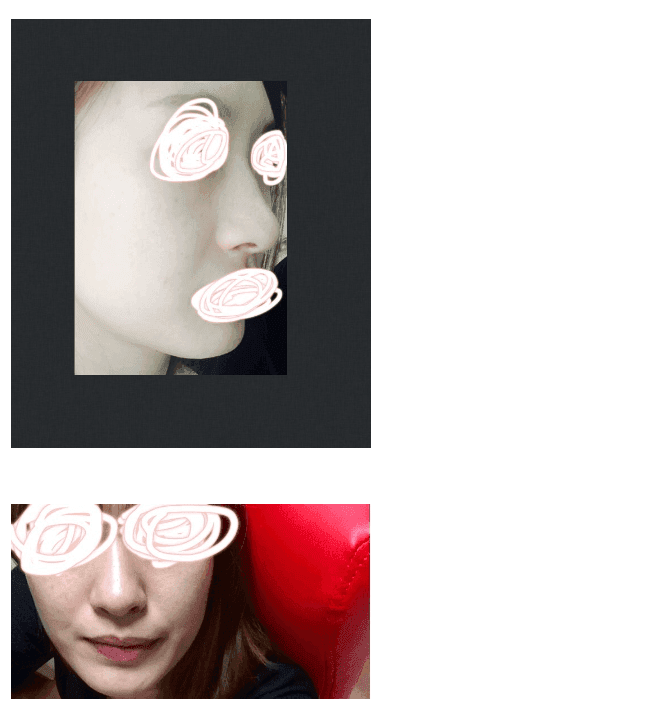
Looking at the photos, this questioner had a long-looking nose with a slight hump condition. However, her face was on the lean side overall, so the nose likely looked even longer — a condition where it's hard to say precisely since the face was covered in the photos.
What can be known here is that a long-looking impression isn't determined by the nose's own length alone. The same nose can look different by surrounding conditions like facial fat, so rather than judging from photos alone, direct confirmation is needed. Estimating direction before consultation like this questioner is good, but the final judgment must be made by seeing the nasal state directly.
02
In which state is septal insertion considered?
The nasal conditions confirmed in this case and the judgments following them organize as follows.
| Confirmed state | Suggested direction |
|---|---|
| The nose is bent | Open the nose and correct while confirming the whole structure |
| A curve with slight curvature on the bridge (hump) | Remove the hump condition for a smooth bridge line |
| The tip looks slightly long | Insert septum at the tip to lift the nose slightly upward |
In short, the direction suggested for this case was opening the nose, inserting septum at the tip to lift the nose slightly, while removing the hump condition so the bridge becomes a smooth line. Rather than seeing the alae and tip separately, the bent nose and the bridge's curvature go into one plan. What gets checked in tip correction can be seen in more detail in the nasal tip surgery guide.
03
Why is the septal depressor treated together?
Even with correction lifting the tip upward, if the force pulling the tip downward when smiling remains, drooping can stand out again. So in this case, it was answered that treatment cutting the septal depressor muscle to prevent the tip from drooping when smiling was needed together.
To summarize, this case's surgical plan rests on three axes.
- 01Tip septal insertion — lifts the nose slightly upward, reducing the long-nose impression.
- 02Hump removal — organizes the curved bridge into a smooth line.
- 03Septal depressor treatment — prevents the tip from drooping when smiling.
How actual correction proceeded can be seen by case in the before & after photos.
04
Summary — don't look at just the alae and tip
When researching hump correction, it's easy to think by parts like "alar surgery" or "tip surgery." But when a long nose, hump, and bent bridge overlap as in this case, tip septal insertion, hump removal, and muscle treatment preventing smile droop all get judged as one plan. Which surgery is needed gets decided only after directly confirming the nose's whole state.
Frequently asked questions
Answers to common questions patients ask before a consultation.
It depends on the nasal state. In a case like this one — where the nose is bent, the bridge has curvature, and the tip looks long — a direction inserting septum at the tip to lift the nose while organizing the hump together can be suggested. Still, photos have limits, so it must be confirmed in direct consultation.
Since cost differs by hospital, you must call each hospital directly or visit to confirm. In the online answer, even a rough amount wasn't guided.
A rough direction can be estimated but has limits. In this case too, a caveat was attached that accurate judgment was hard since the face was covered in the photos. Discussing while seeing the nose directly is most accurate — there's also the method of getting your state checked via 1:1 video consultation before visiting.
Responses to treatment and recovery progress vary by individual. Outcomes and side effects vary from person to person. Bleeding, infection, swelling and asymmetry may occur. Please consult our medical team before making a decision.
Consultation