
KOWON Blog
Hump surgery methods and causes — organized through a Jisik iN question and a deviated hump correction case
Hump nose causes (congenital bone/cartilage structure, trauma) and correction methods organized through an actual Jisik iN Q&A. Explained through a case: osteotomy correction of a deviated hump, ear cartilage supplementation when septal cartilage runs short, and tip design.

Key points
- Hump nose causes mostly stem from congenital bone and cartilage structure, though some cases gradually deform through trauma or lifestyle habits.
- Correction proceeds by resecting or refining the protruding part — but since the tip or glabella can look relatively different after hump removal, cartilage is reinforced if needed to balance the whole.
- A deviated hump nose needs nostril asymmetry and possible septal deviation checked together — surgical method is decided considering not just external correction but breathing function and internal nasal structure.
Because the nose sits at the center of the face, even small changes alter the whole image greatly. Especially with hump noses — where the middle of the dorsum protrudes — the impression shows strongly in profile, and many people agonize over it.
Hump nose causes include cases where the bone structure developed that way congenitally, and cases gradually deformed by trauma or lifestyle habits. So the surgical method must be decided considering not just external correction but breathing function and internal nasal structure. What matters most is setting a line harmonizing with the whole face rather than forcing a high nose.
Based on an actual questioner's story, this article organizes hump nose causes and correction methods, and explains the surgical course of a deviated hump correction case together.
01
What did the 21-year-old questioner ask?
This is an actual question posted on HiDoc–Naver Jisik iN. A 21-year-old questioner who said "I was often praised for my high bridge as a child, but I like my nose less as I age" asked five things.
- 01If there are problems or parts to improve in my nose, what are they?
- 02Is my nose on the big side, or average?
- 03Is my current nose actually a hump nose?
- 04If it's a hump nose, is the condition severe?
- 05If I get hump surgery, which approach would be good?
Summarizing the answer: the nose itself showed no particularly large problem, and the size looked average rather than big in the photos. The shape was indeed a hump nose but not severe — the hump was somewhat prominent, a level correctable with light correction. If the hump bothered her, surgically removing it was the most common hump surgery method, and it was recommended that the exact plan be decided through specialist consultation.
02
Why do hump noses form, and how are they corrected?
Hump nose causes mostly stem from congenital bone and cartilage structure, and can become more pronounced during growth. Some cases deform gradually from trauma or lifestyle habits.
Correction proceeds by resecting or refining the protruding part. One point to know here — removing a hump can make the tip or glabella look relatively high, so cartilage is sometimes reinforced depending on the case. Such reinforcement helps balance the whole nose. Which cartilage gets used varies by individual nasal structure — material characteristics can be seen in the rhinoplasty materials guide.
Also, swelling and awkwardness can remain right after surgery, but things stabilize over time and blend naturally with the face. Since the hump surgery method can differ by individual state and cause, accurate diagnosis and custom design are needed.
03
What's trickier about a deviated hump nose?
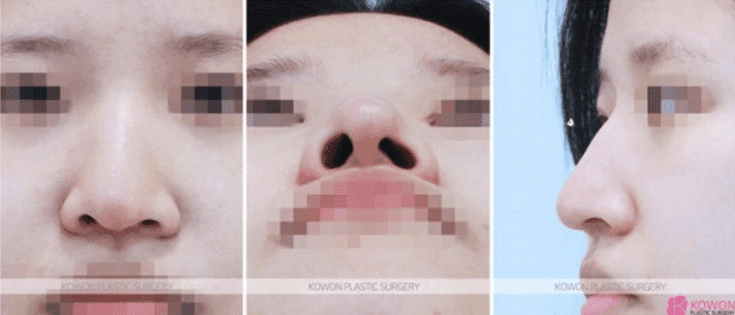
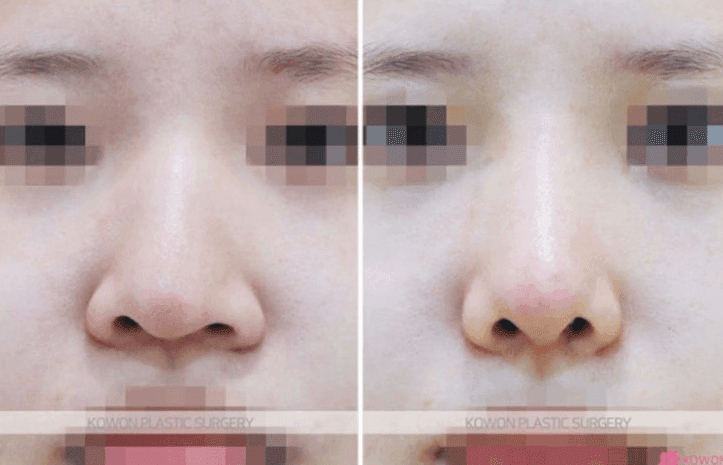
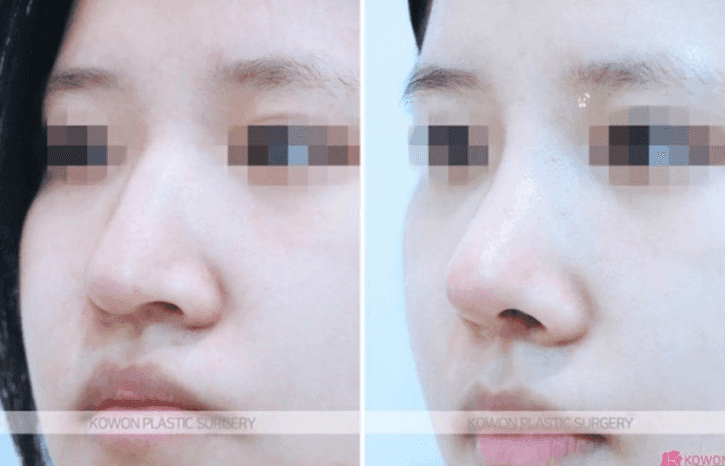
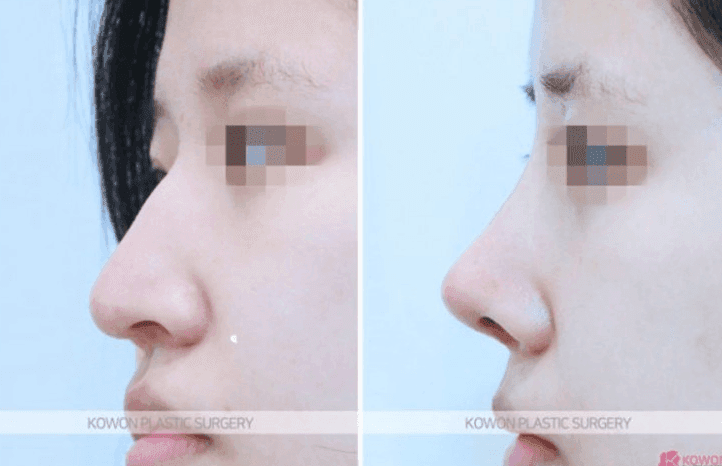
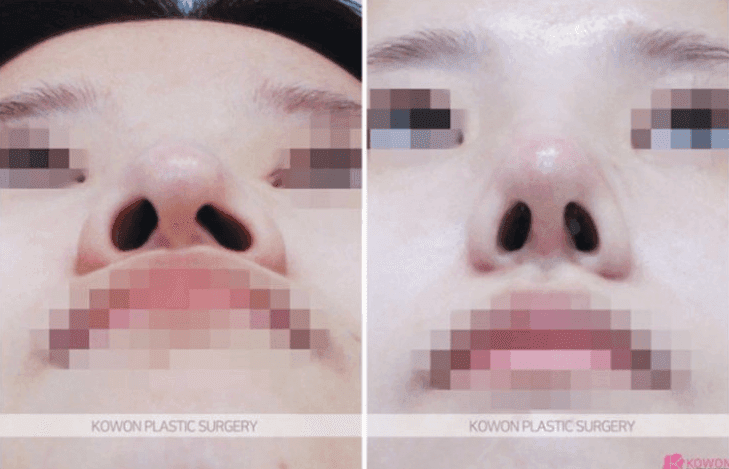
Let's look at a case with a hump and deviation together. This woman had a clear hump nose condition while the nose simultaneously bent to one side — leaving visibly different nostril sizes as a result.
Correcting a deviated hump nose is somewhat trickier depending on the nasal base's height levels. Because a hump nose's problem isn't just the protruding part — the imbalance in the cartilage and bone structure cited as the cause must be considered together for a stable result. Since the nose can return to its original shape over time after surgery, choosing a more effective surgical method matters.
This case's surgical course proceeded as follows.
| Confirmed state | Correction performed |
|---|---|
| Nasal line bent largely in front view — possible septal deviation | Osteotomy to straighten the hump after identifying the cause |
| Septal cartilage for graft material could run short | Ear cartilage additionally supplemented for stable correction |
| Asymmetric nostril size and shape | Near-symmetric form confirmed after correction |
| Originally high bridge | Height adjusted slightly more while performing tip lowering |
| Tip's tendency to descend over time | Designed slightly higher at surgery, stabilized through depressor resection and muscle correction |
Swelling and redness remained right after surgery but disappeared naturally through recovery — the bent nose was corrected straight, and the nostril width and size improved too. In the 45-degree view, the hump that had protruded at the bridge's middle was organized into a smoothly continuing line. Other cases can be seen in the before & after photos.
04
Summary — identifying the cause comes before choosing the method
Hump correction doesn't end with removing the protruding part. The imbalance in bone and cartilage structure causing the hump, accompanying deviation and nostril asymmetry, and the tip's tendency to descend over time must all be considered together for a stable result. If there's discomfort or a complex, setting a surgical plan fitting your state matters.
If you're curious how prominent your hump is or which correction fits, it can be confirmed directly in a 1:1 video consultation.



Frequently asked questions
Answers to common questions patients ask before a consultation.
If the hump is prominent to that degree, correction proceeds by resecting or refining the protruding part — this is the most common hump surgery method. Still, accurate state judgment and surgical planning are best decided through specialist consultation.
Removing a hump can make the tip or glabella look relatively high. So depending on the case, cartilage is reinforced to balance the whole nose — and if septal cartilage is short, ear cartilage gets additionally used.
Because the tip tends to descend naturally over time. So it's designed slightly higher at surgery, and if needed, depressor resection and muscle correction proceed together so the result settles stably.
Responses to treatment and recovery progress vary by individual. Outcomes and side effects vary from person to person. Bleeding, infection, swelling and asymmetry may occur. Please consult our medical team before making a decision.
Consultation